Photographs and printed items from the Viljandi Museum’s displays, and the same streets in October 2026.
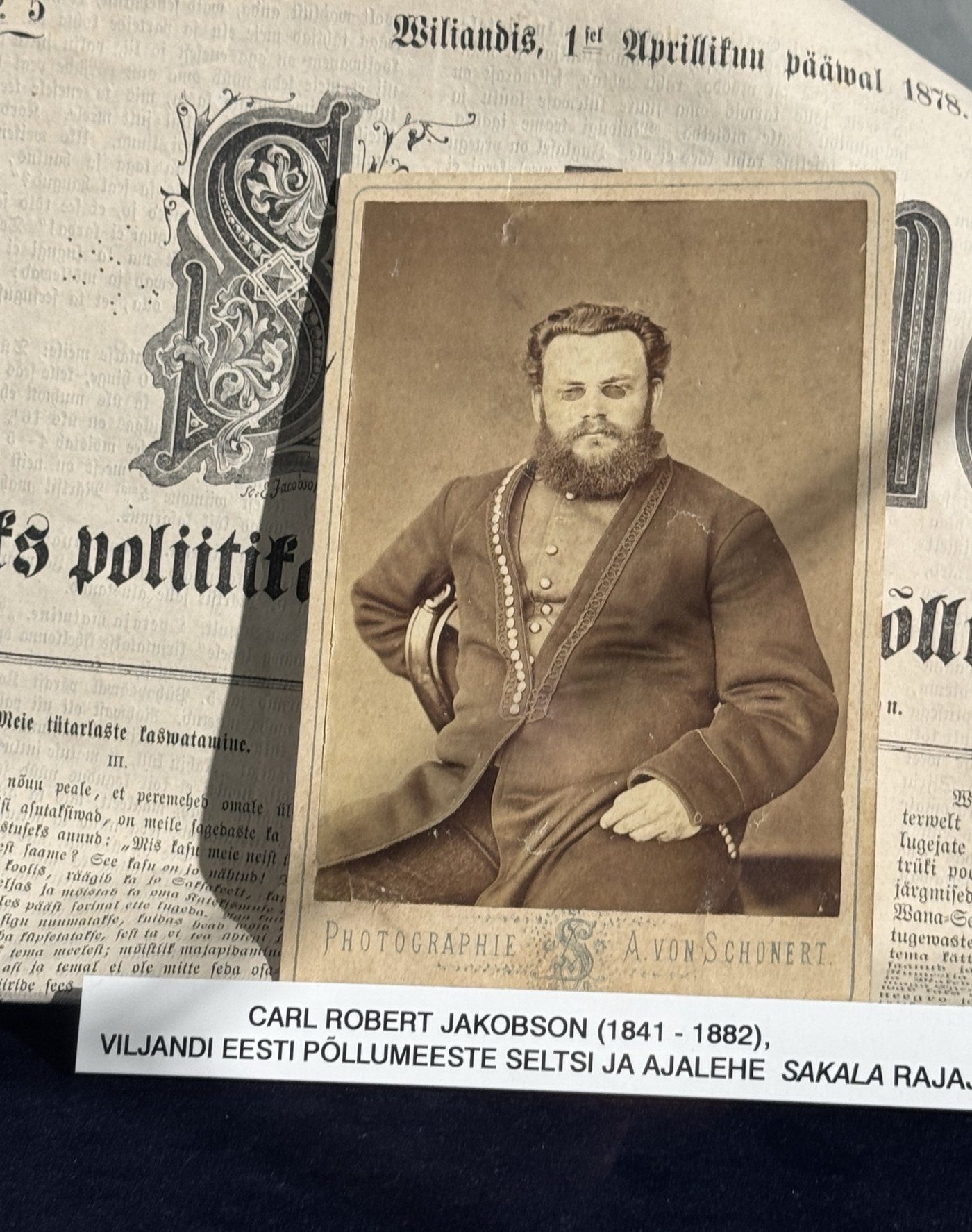
Leoke · Carl Robert Jakobson, whose ideas Hans supported, with an 1878 issue of his newspaper Sakala, which Hans wrote for while schoolmaster at Arumetsa.Viljandi Museum.
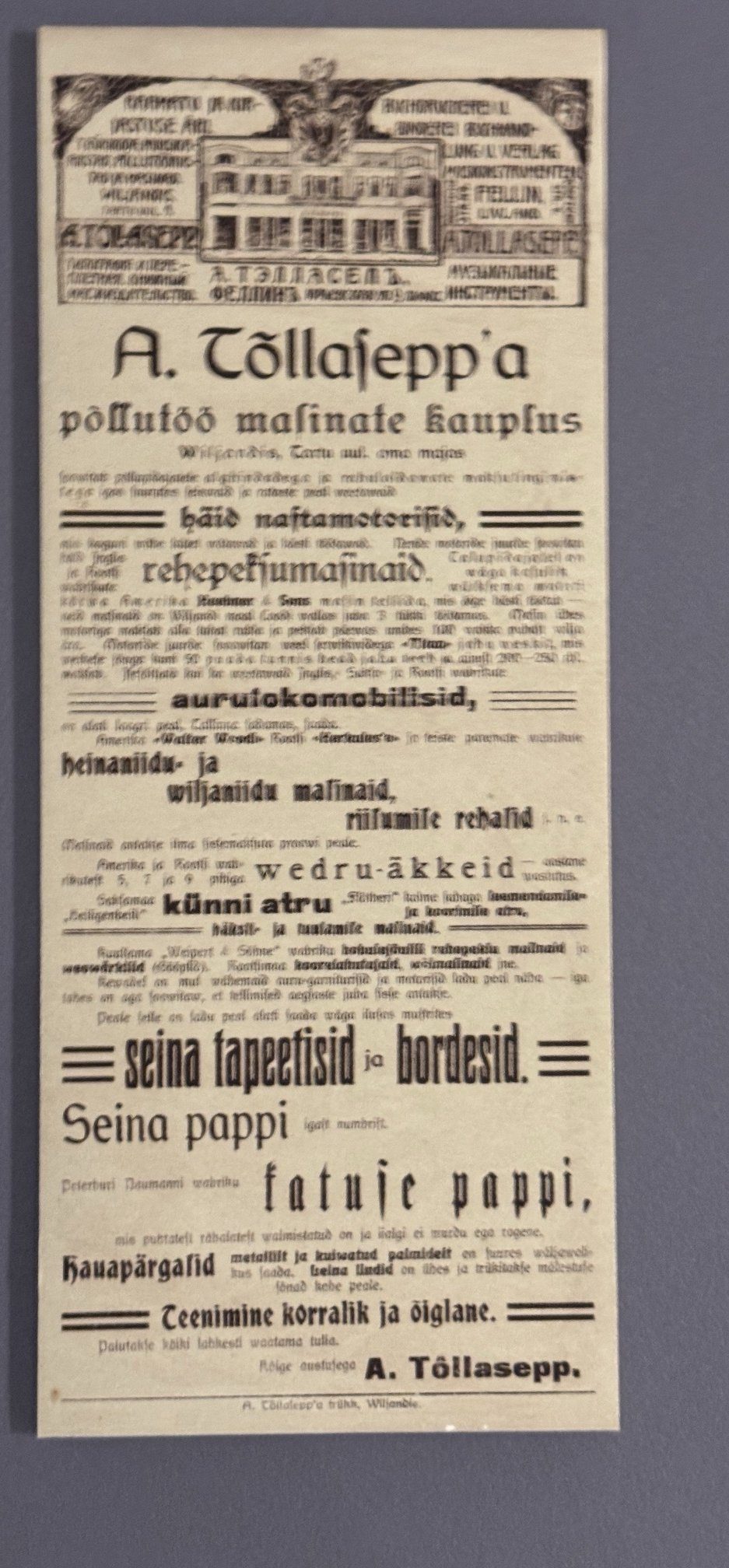
Leoke · An advertisement for Ado Tõllasepp’s shop “in his own house” on Tartu street: Tartu 9, the building shown in its header. Mari’s brother printed much of what Hans published.Viljandi Museum.
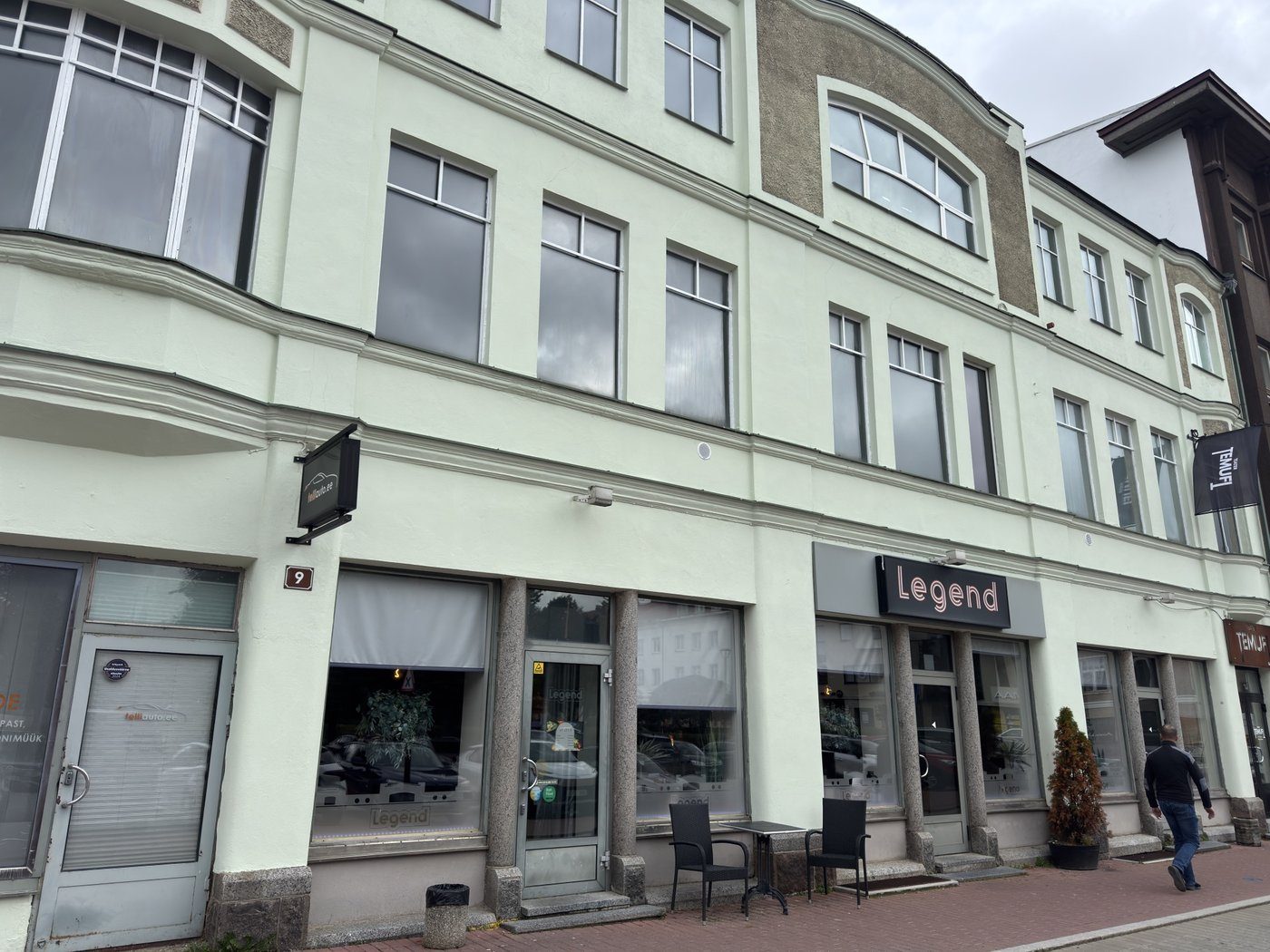
Leoke · Tartu 9 in October 2026: the only one of the family’s shop buildings securely identified as still standing. Hans’s shop was here in about 1907–09.
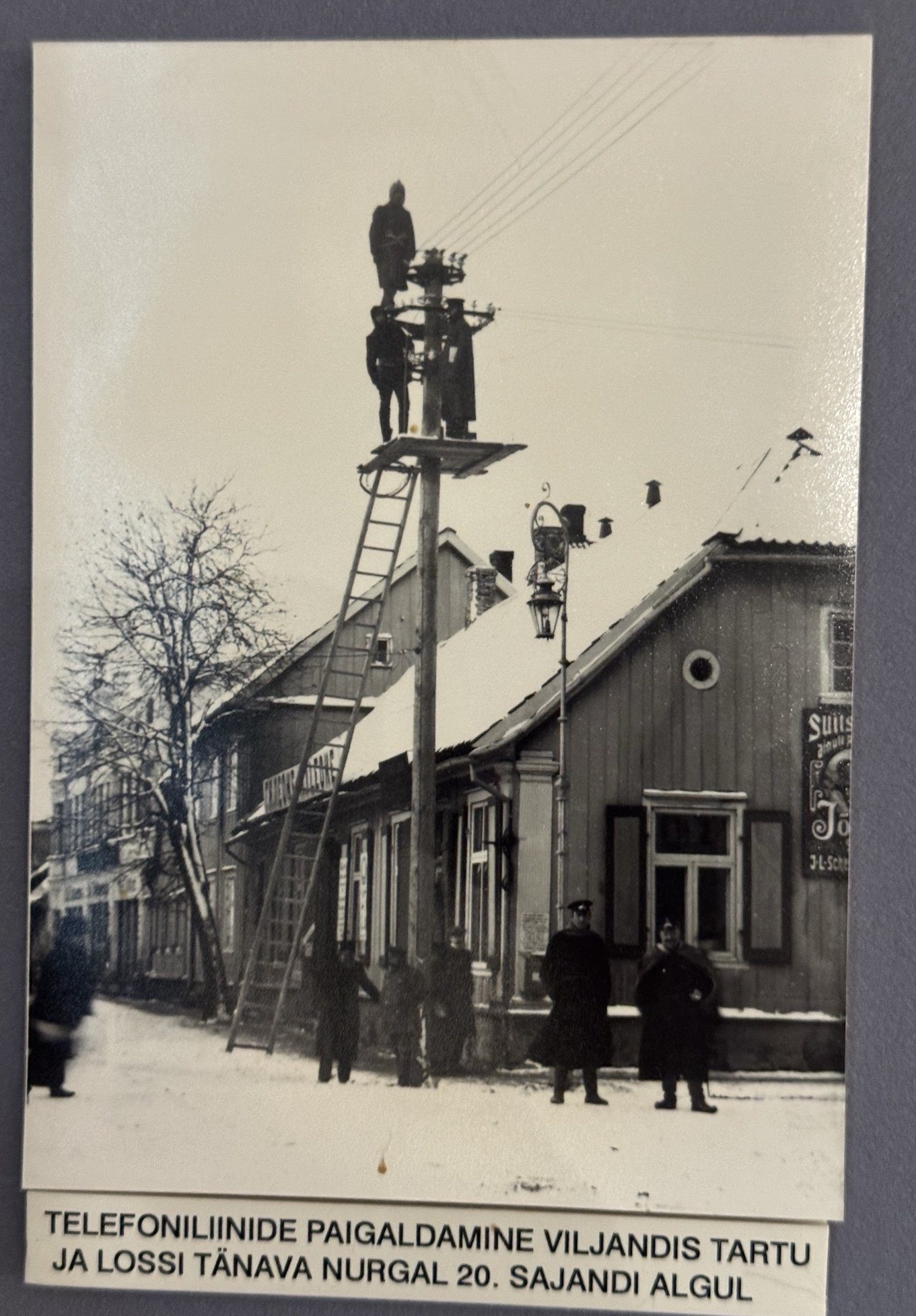
Leoke · Telephone lines going up at the corner of Tartu and Lossi streets in the early 1900s. The long building behind the corner house is very likely the Leoke shop.Viljandi Museum.
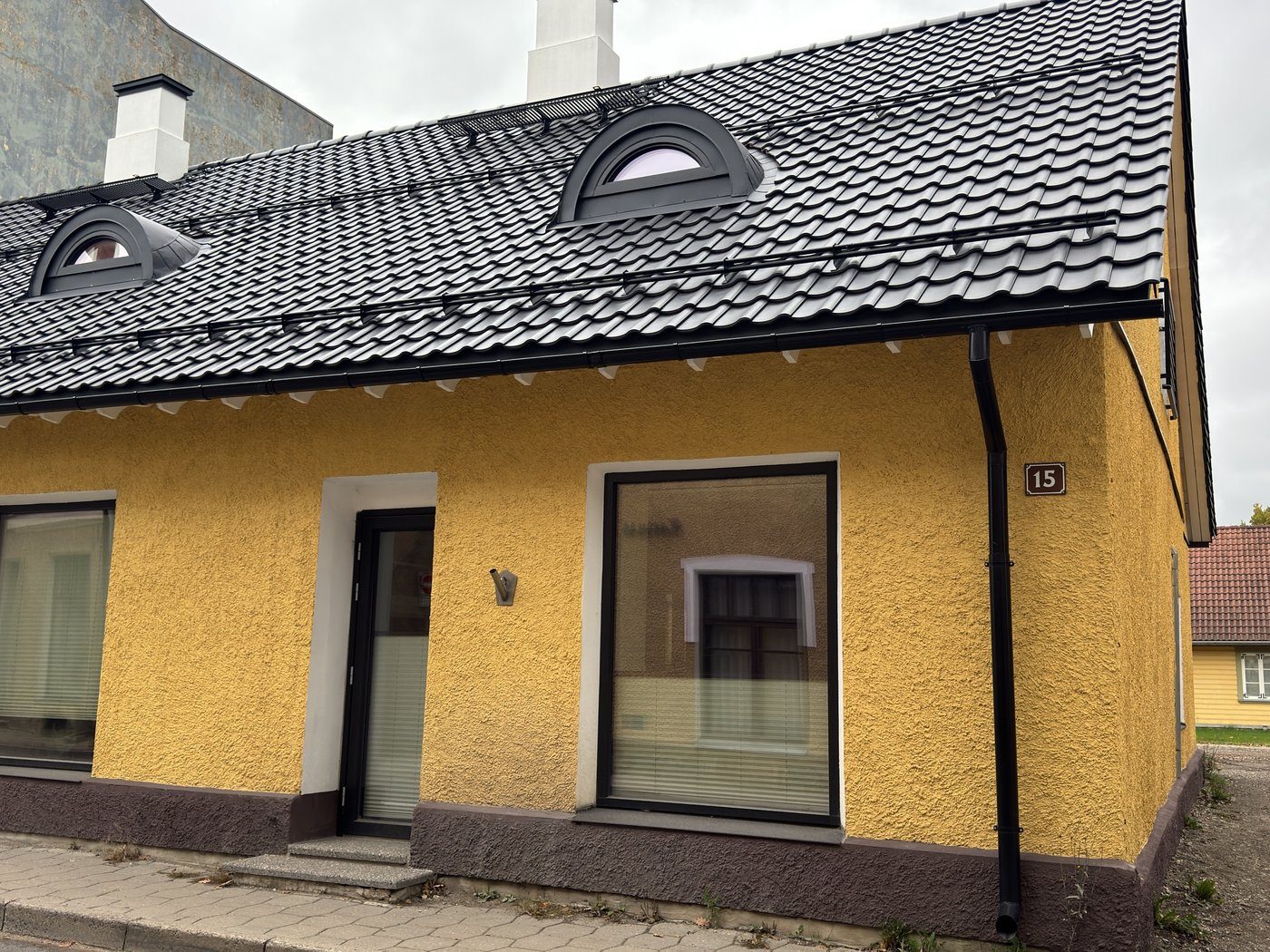
Leoke · Today’s Tartu 15, where the shop stood in 1900–07 in the Graf house, a former tavern. Street numbers may have changed since then.
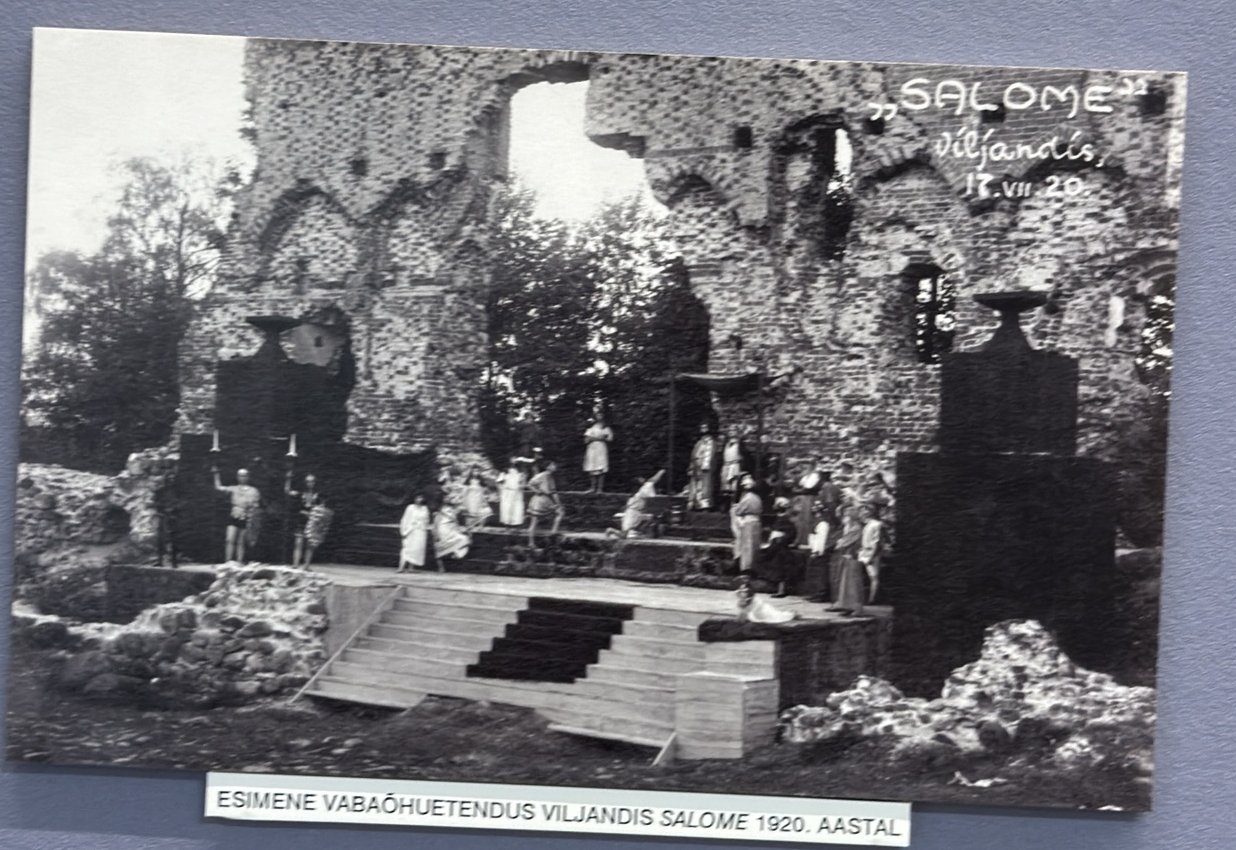
Leoke · Salome in the castle ruins, 1920: Viljandi’s first open-air performance.Viljandi Museum.
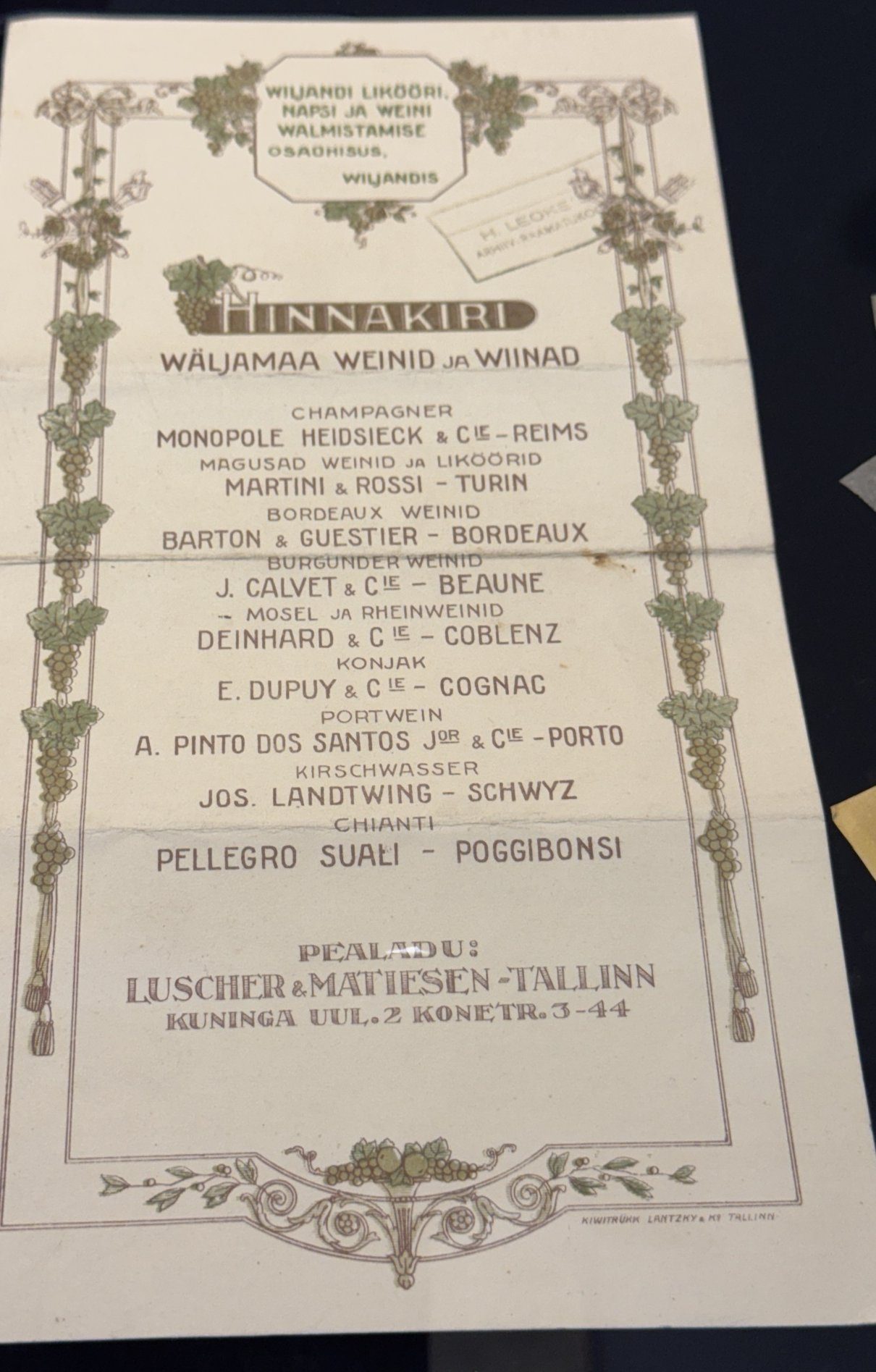
Leoke · A 1920s price list of the Viljandi liqueur and wine company, with the Leoke archive stamp.Viljandi Museum.
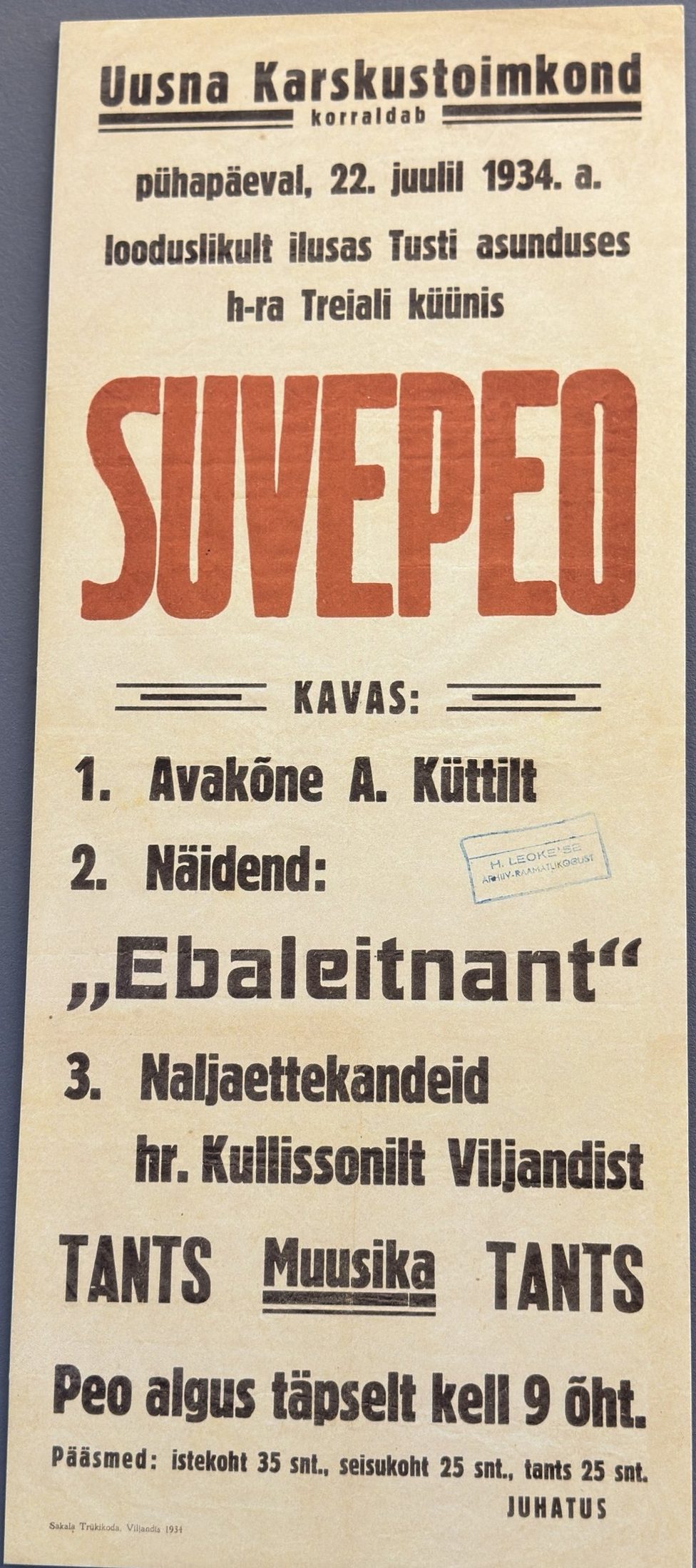
Leoke · A 1934 poster for a temperance society’s summer party “in Mr Treial’s barn at the naturally beautiful Tusti settlement”, with a play and dancing. Stamped by the Leoke archive library.Viljandi Museum.
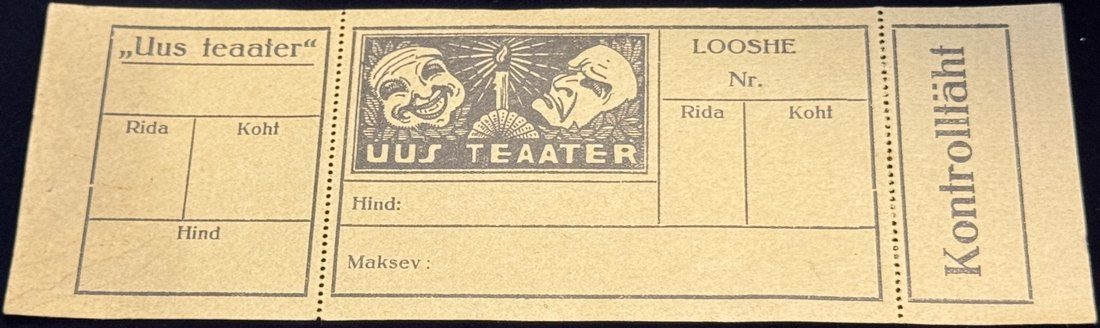
Leoke · A ticket for Viljandi’s “Uus teater” (New Theater), with spaces for box, row, seat and price, from the museum’s display on the town’s cultural life. The Leoke shop sold theater tickets, though this one carries no shop stamp.Viljandi Museum.
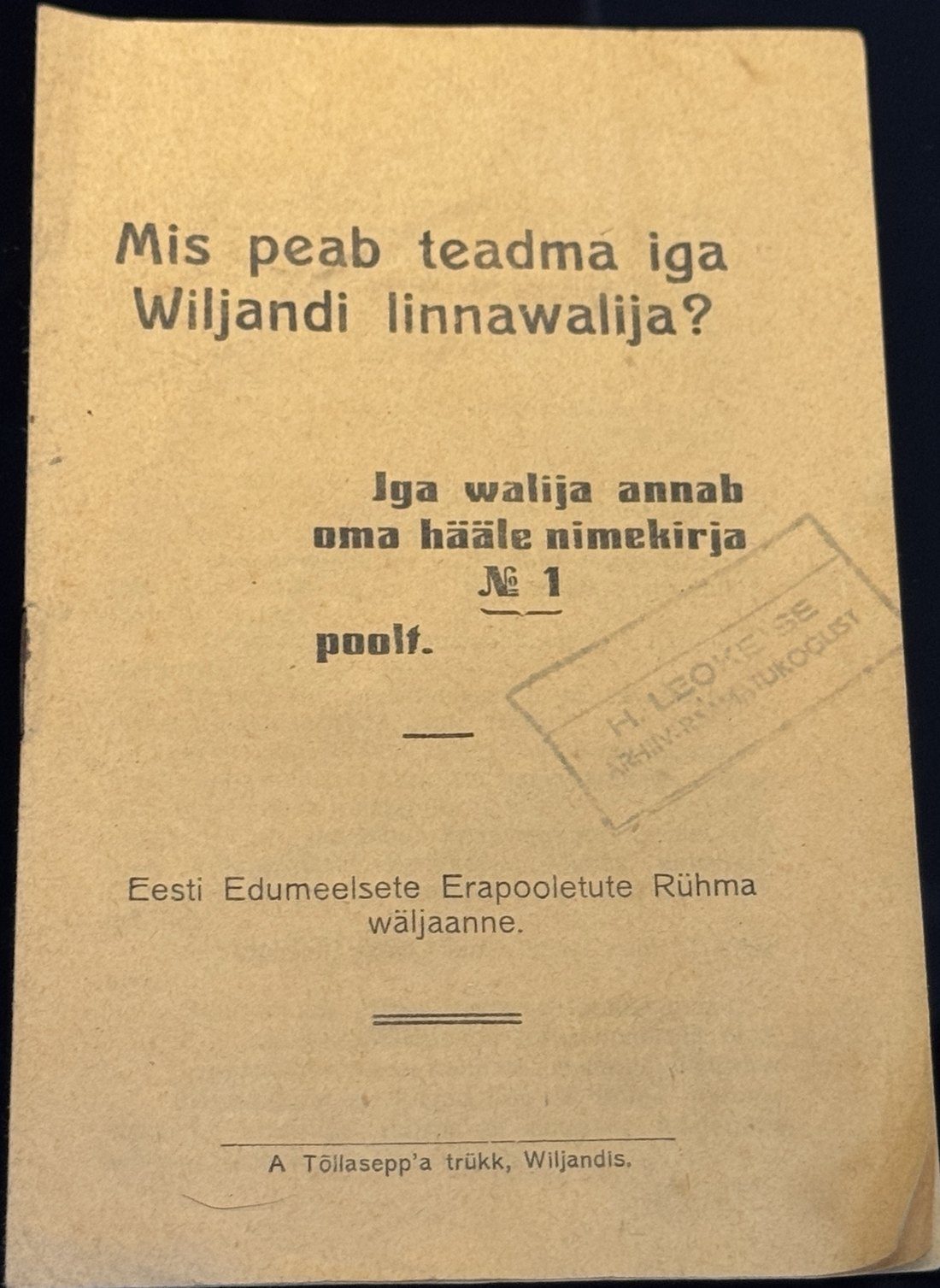
Leoke · “What every Viljandi town voter must know”: an election leaflet urging votes for List No. 1, printed by Ado Tõllasepp and stamped by Hans’s archive library. From 1910 Hans could vote in these elections himself.Viljandi Museum.
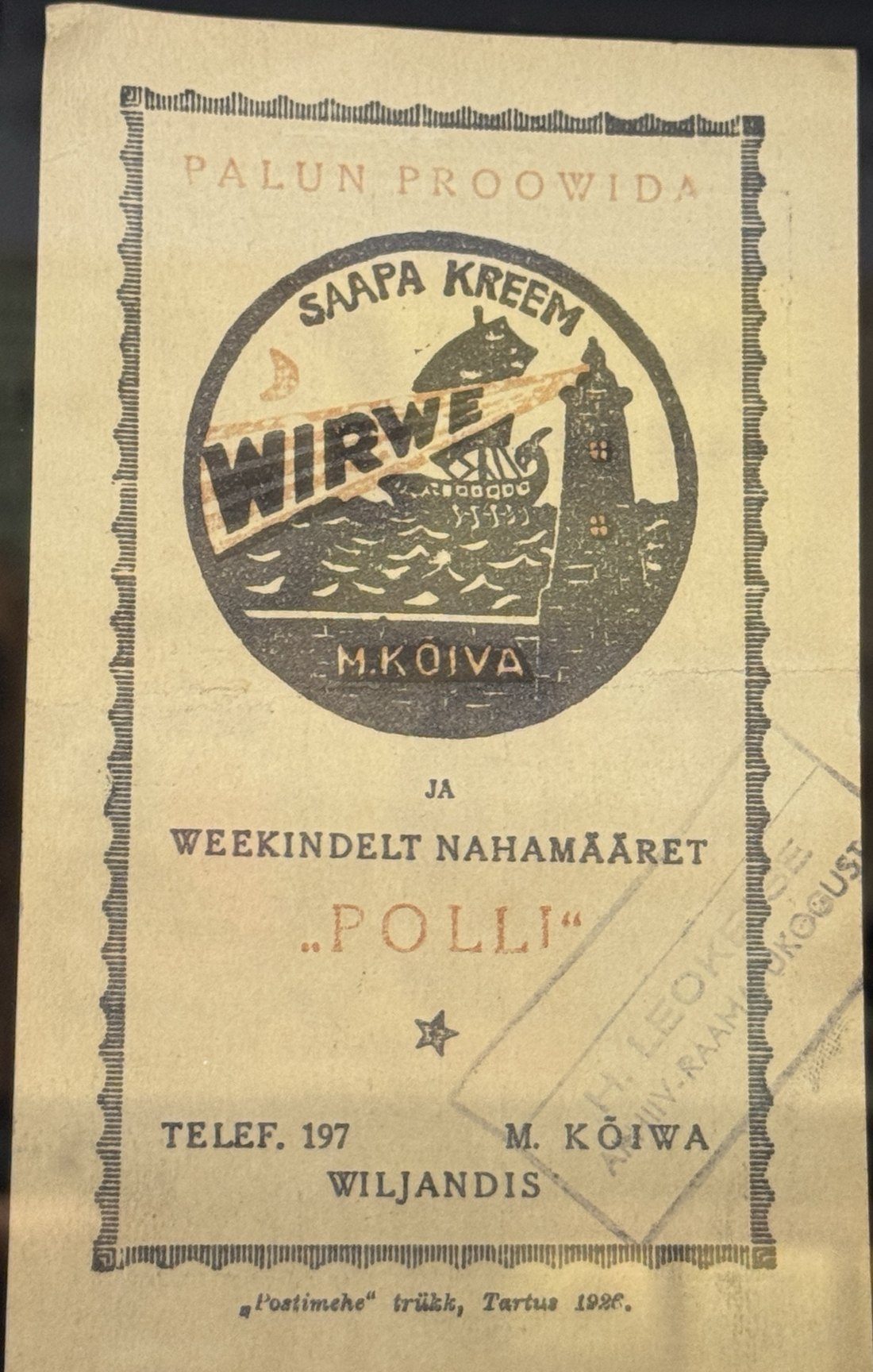
Leoke · “Please try WIRWE boot cream and ‘Polli’ waterproof leather grease”: a 1926 advertisement for M. Kõiva of Viljandi, collected and stamped seven years after Hans died.Viljandi Museum.
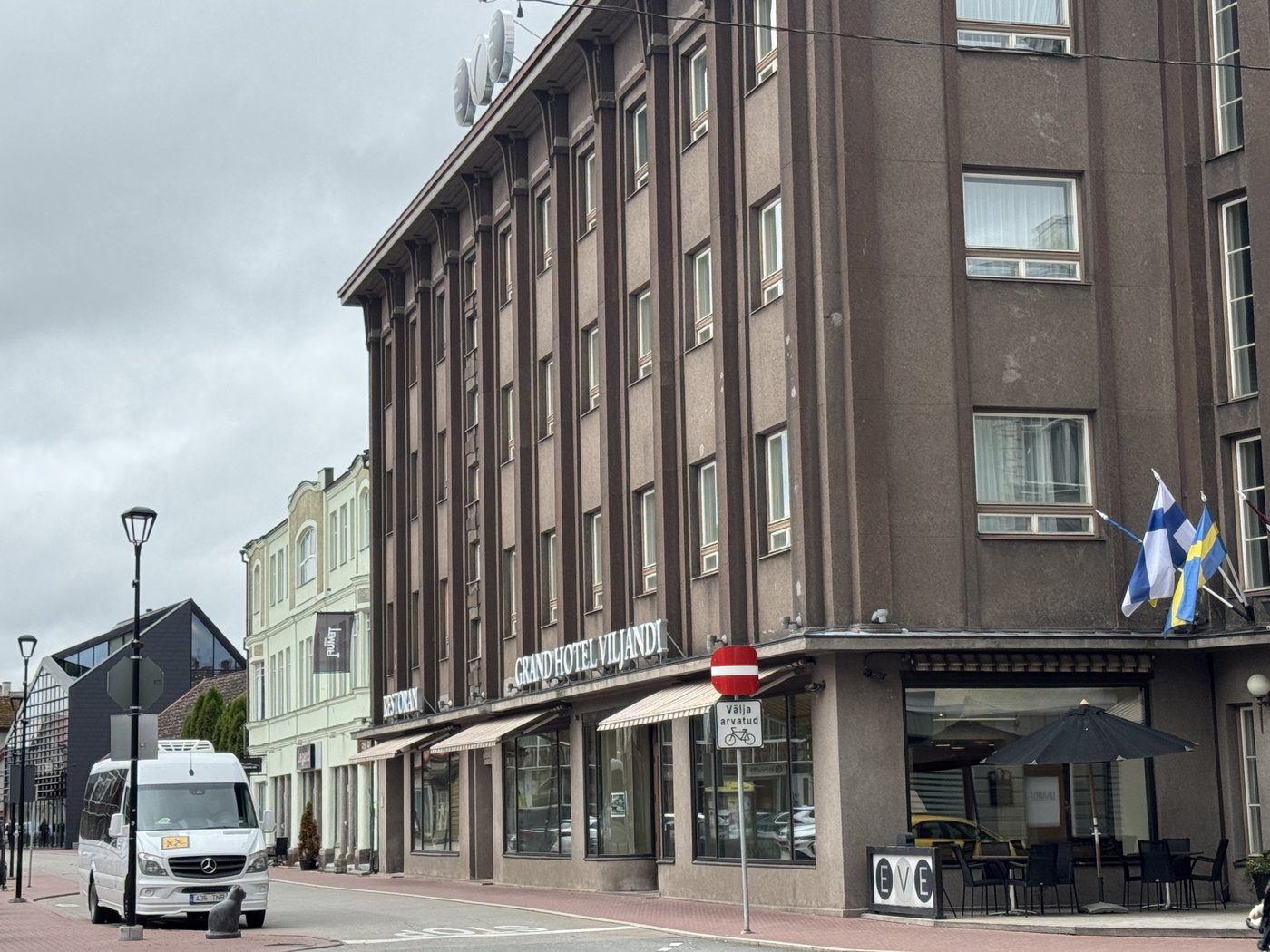
Leoke · The corner of Tartu and Lossi streets in October 2026. The wooden buildings were cleared in the late 1930s for the EVE building, now the Grand Hotel Viljandi. Beyond it, the pale Art Nouveau house is Tartu 9, where the shop stood in 1907–09.
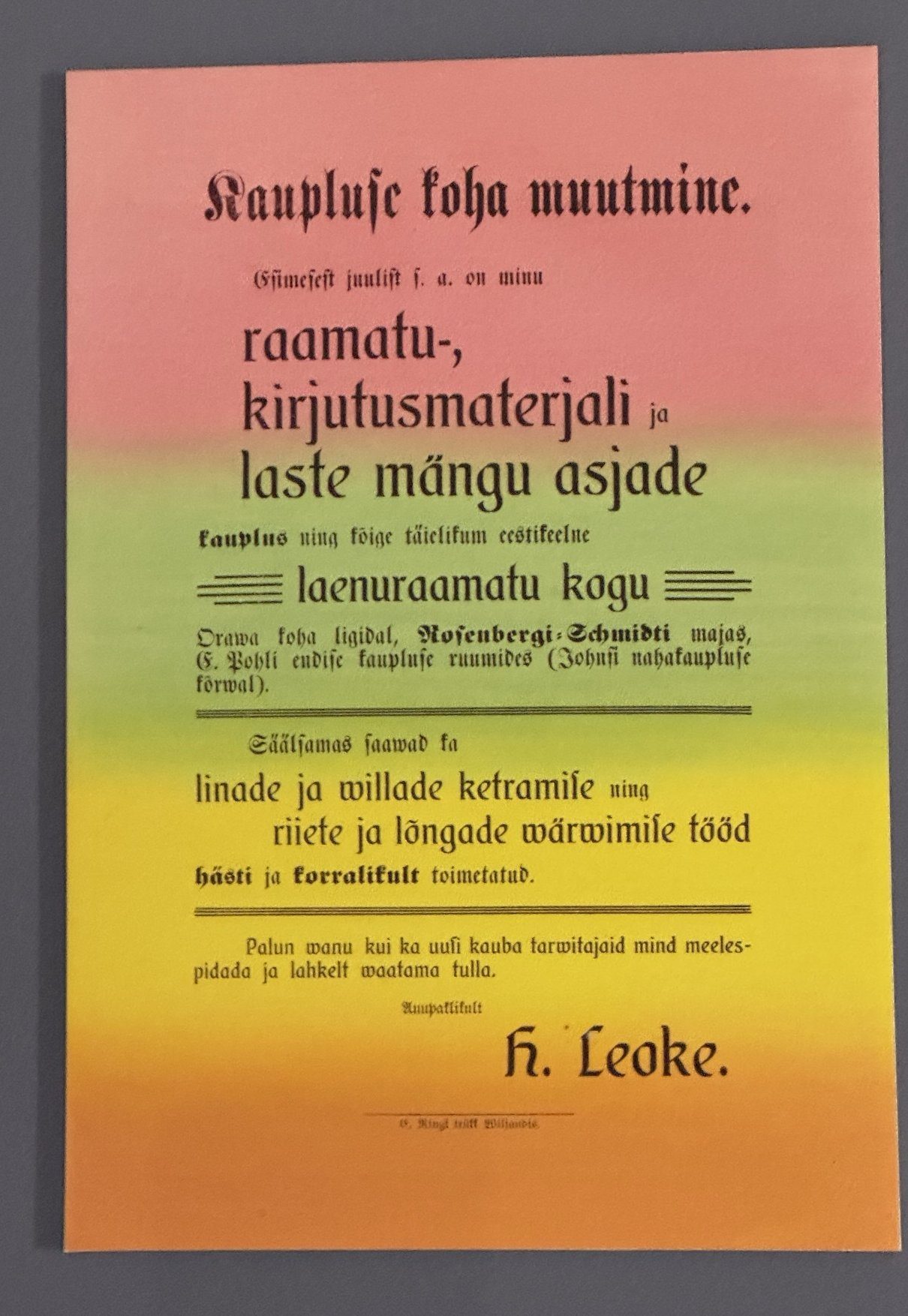
Leoke · Hans’s own poster announcing a move: “From the first of July this year my book, stationery and children’s toy shop and the most complete Estonian-language lending library will be in the Rosenberg-Schmidt house… Flax and wool spinning and the dyeing of cloth and yarn will also be done well and properly. Respectfully, H. Leoke.” Which move it records is not yet known.Viljandi Museum.
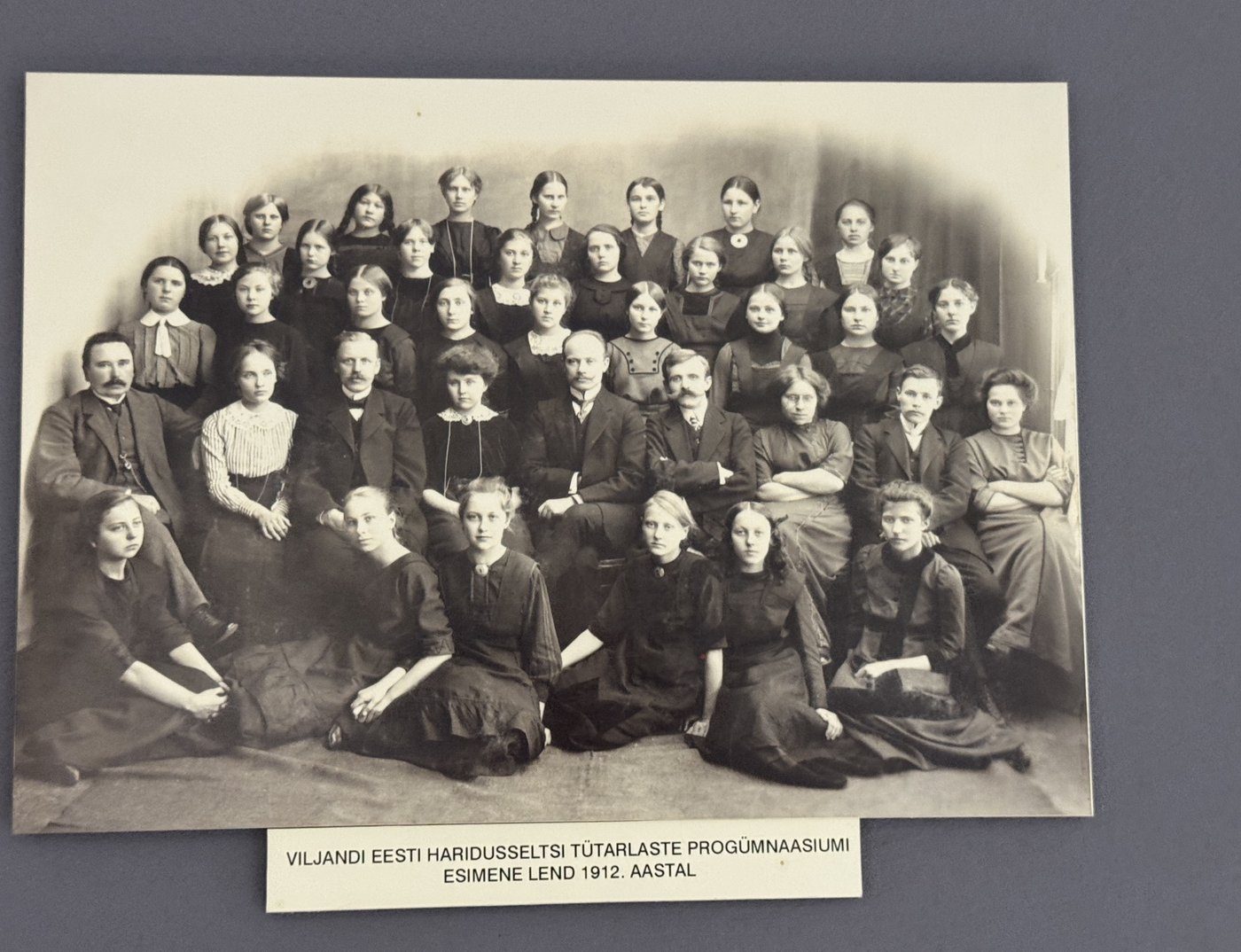
Leoke · The first class of the Viljandi Estonian Education Society’s girls’ progymnasium, 1912. Photographed before Pilvi’s birth; this is not her class.Viljandi Museum.
Koik familyWar on the manor, January 1919
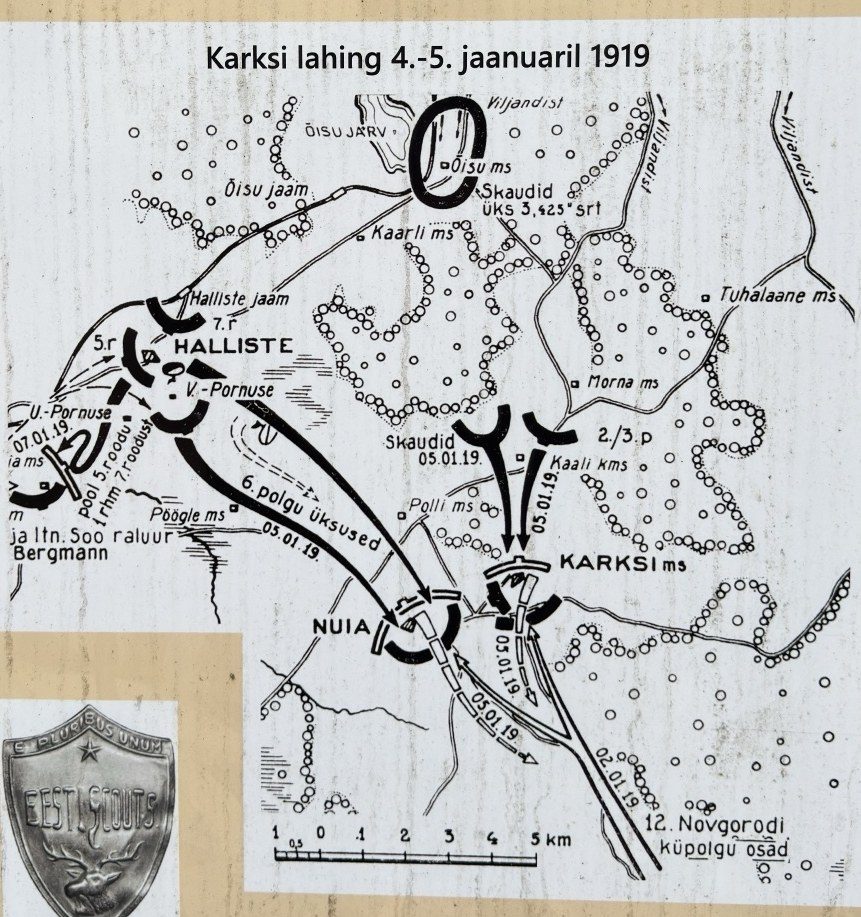
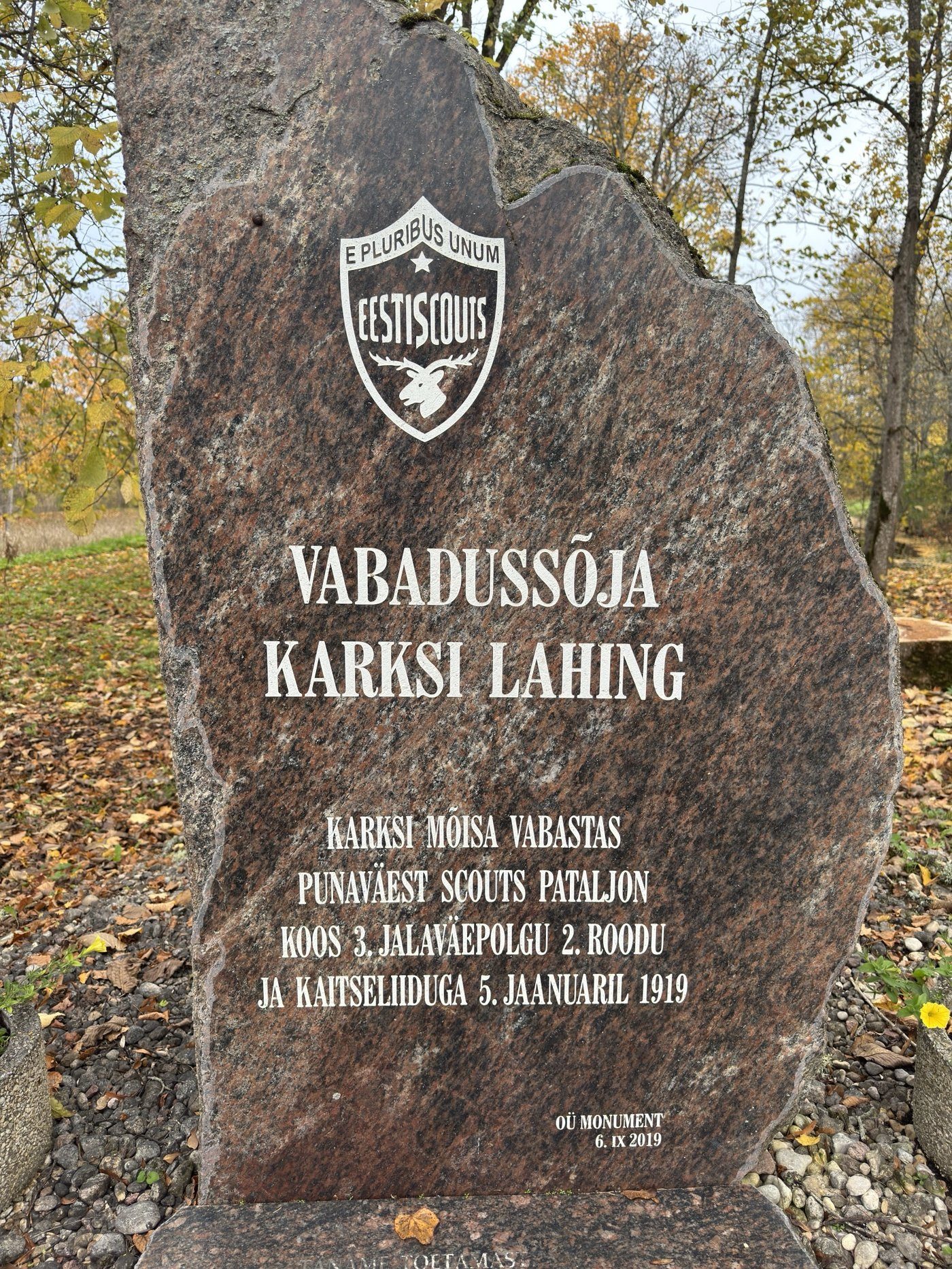
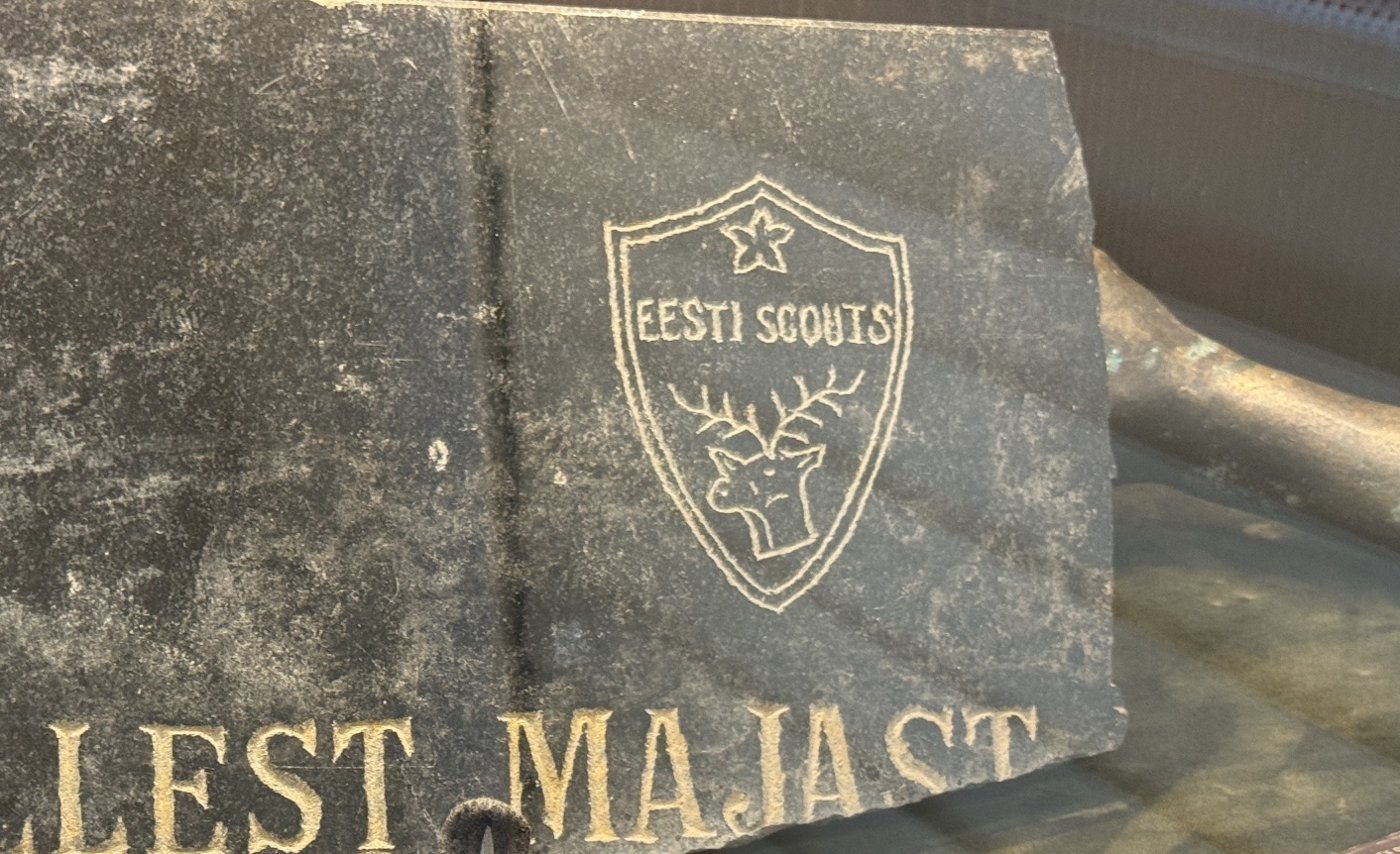
In the first days of 1919 the War of Independence reached Karksi. The Red Army held Karksi manor and Nuia, and on the night of 4–5 January they were driven out, almost without a shot, by the newly formed Scouts Battalion, the 2nd company of the 3rd Infantry Regiment and men of the Defence League. Jaan Kutsar walked into the manor posing as a Communist courier and convinced the Red commanders that a thousand English, Finnish and Swedish troops had reached Halliste station; a field gun fired from Morna on cue, and the Reds withdrew. The date when the Koiks settled on the estate has not been established. A memorial stone of 2019 marks the battle, and a fragment of a plaque carved with the Scouts’ badge, taken from the manor house wall, is in the Viljandi Museum.
Koik · The battle of Karksi, 4–5 January 1919, on a map that covers the Koiks’ home district: Õisu, Halliste, Polli, Nuia and Karksi manor.Information board, Karksi.
Koik familyKarksi, then and now
Photographs from the visit in October 2026, with two from the Viljandi Museum.
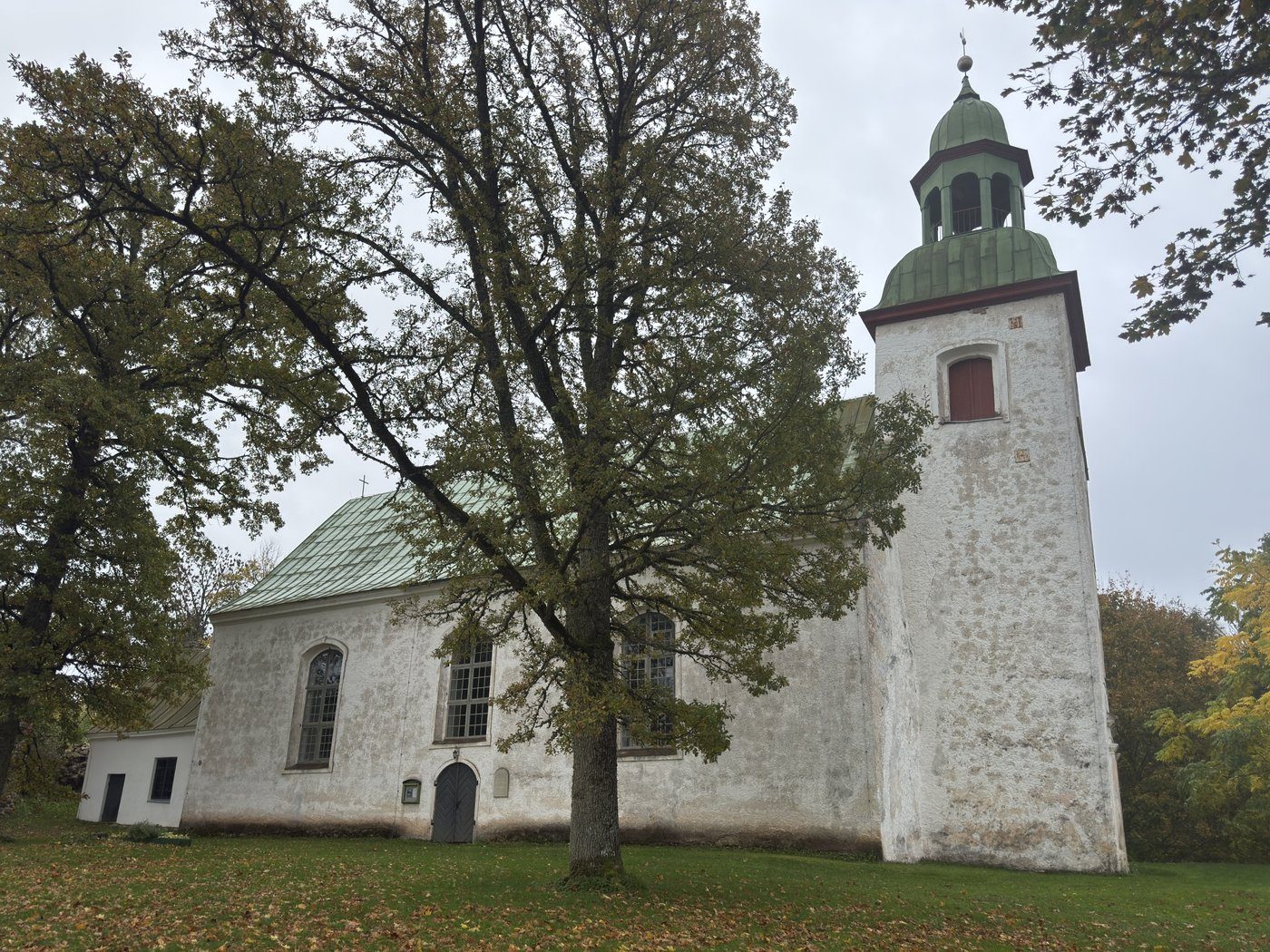
Koik · St Peter’s Church, Karksi, built in 1778 on the old castle site: the Koiks’ parish church, where Ida was confirmed in 1926.
Koik · The memorial stone of 2019: “War of Independence. The battle of Karksi. The Red-occupied Karksi manor was freed by the Scouts Battalion with the 2nd company of the 3rd Infantry Regiment and the Defence League on 5 January 1919.”
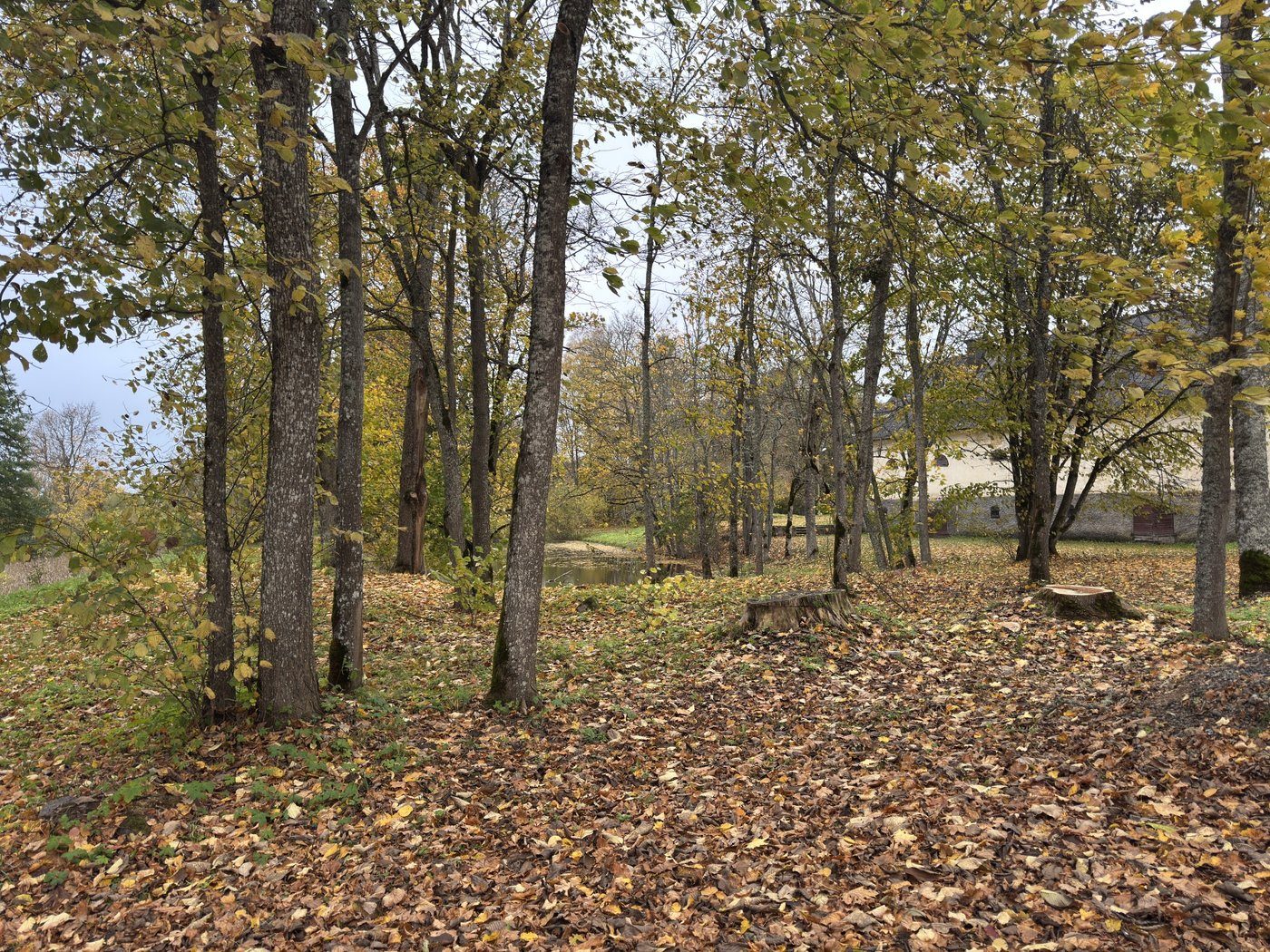
Koik · The manor park in October 2026, with one of the ponds and a surviving manor building beyond.
Koik · Fragment of a memorial plaque with the Scouts’ elk-head badge, “Sellest majast…” (“From this house…”), taken from the wall of the manor house.Viljandi Museum.
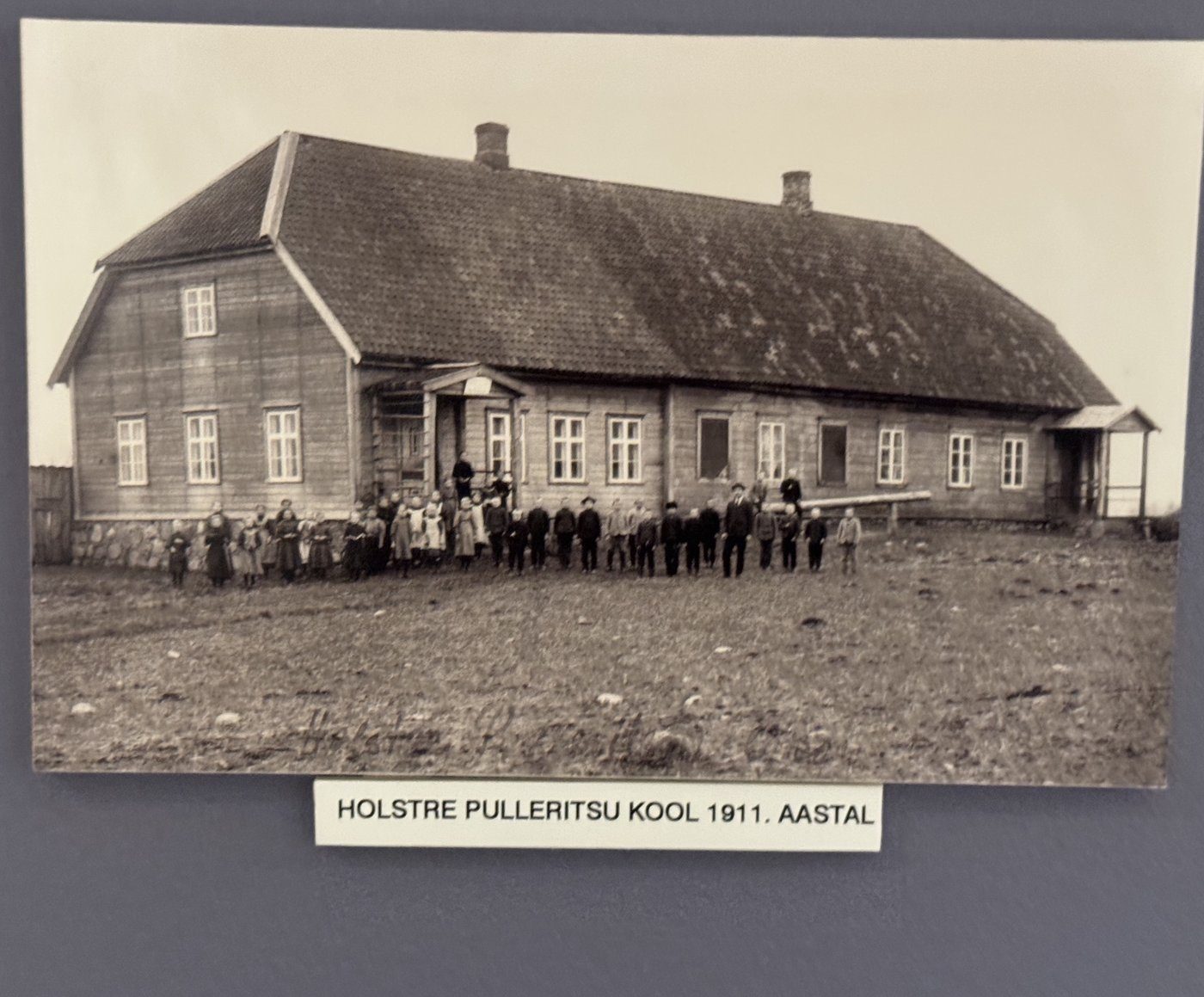
Koik · Holstre-Pulleritsu school, 1911. Some early Koik households came from a farm recorded as Koiga on Holstre manor, in Paistu parish; Elmar Koik’s own line is traced to Vana-Kariste.Viljandi Museum.
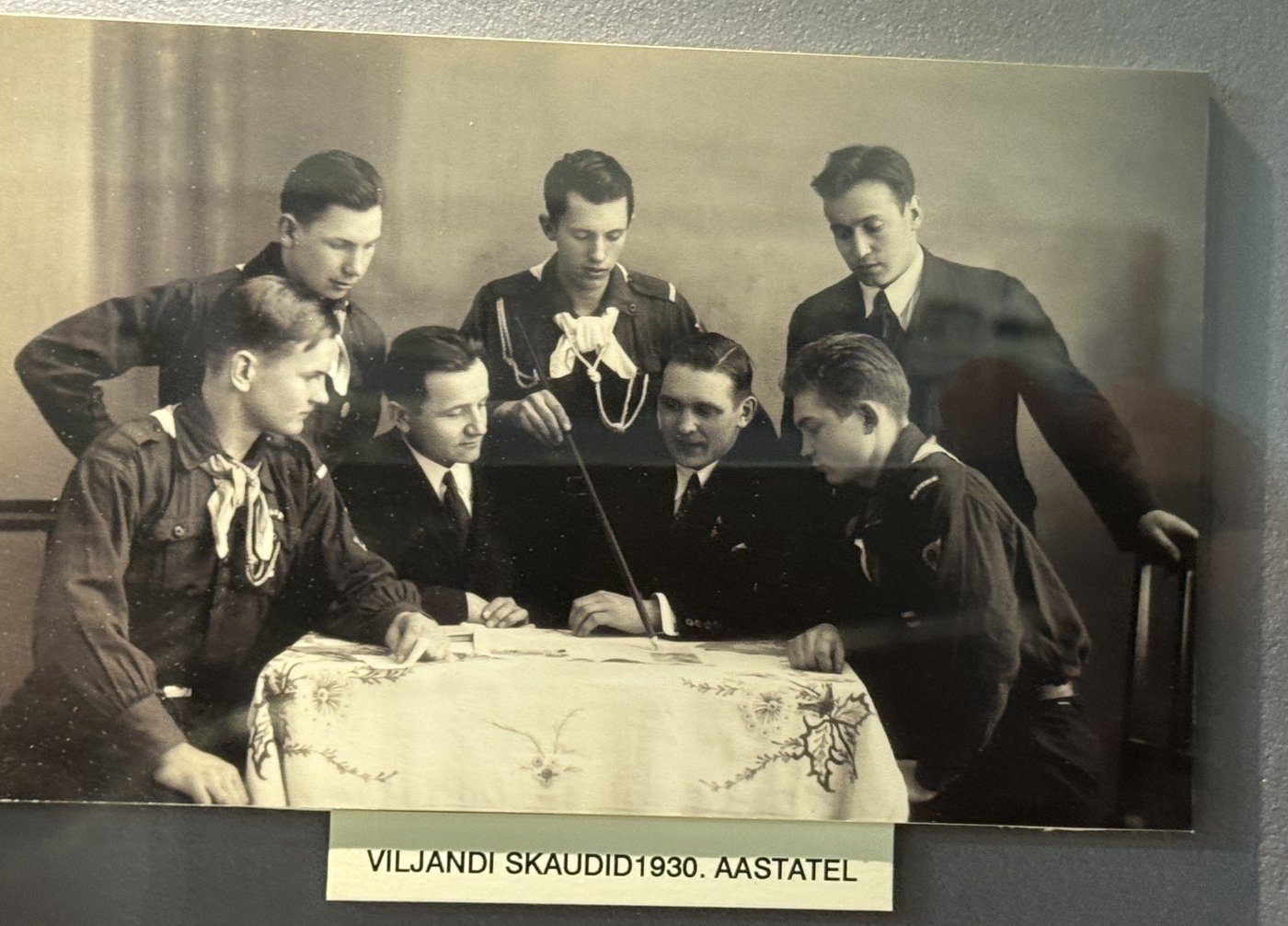
Koik · Scouts in Viljandi in the 1930s. Elmar Koik joined the movement in Karksi-Nuia in 1938; he is not identified in this photograph.Viljandi Museum.
Leoke familyAn evacuation account: Wartheland
This account describes one possible vessel, not an identified family voyage.
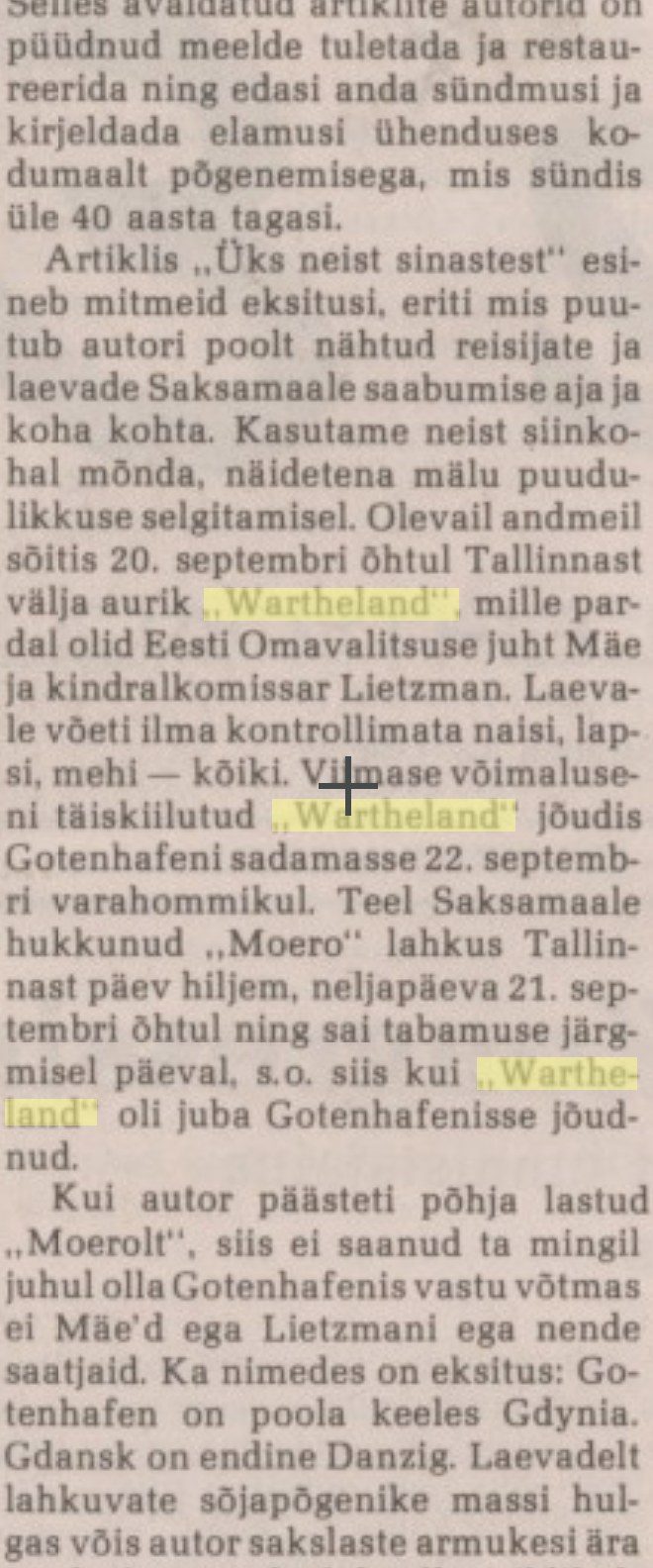
Leoke · Meie Elu (Toronto), 15 October 1987.DIGAR.
The steamer Wartheland sailed from Tallinn on the evening of 20 September, with the head of the Estonian Self-Administration, Mäe, and General Commissioner Litzmann aboard. Women, children and men were taken aboard without checks — everyone. Filled to the last possible place, the Wartheland reached Gotenhafen harbour in the early morning of 22 September. The Moero left Tallinn a day later and was hit the following day, when the Wartheland had already reached Gotenhafen.
— Meie Elu, Toronto, 15 October 1987 (translated from the Estonian). Another account gives the departure as midday on the 20th.