Every photograph and document illustrated in the history, in the order they appear there, with their captions.
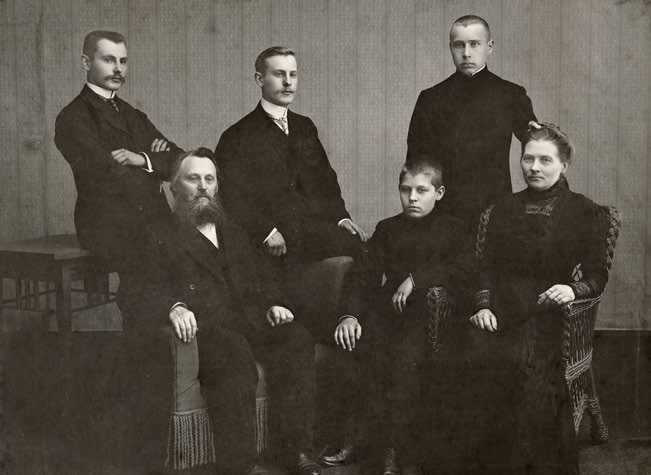
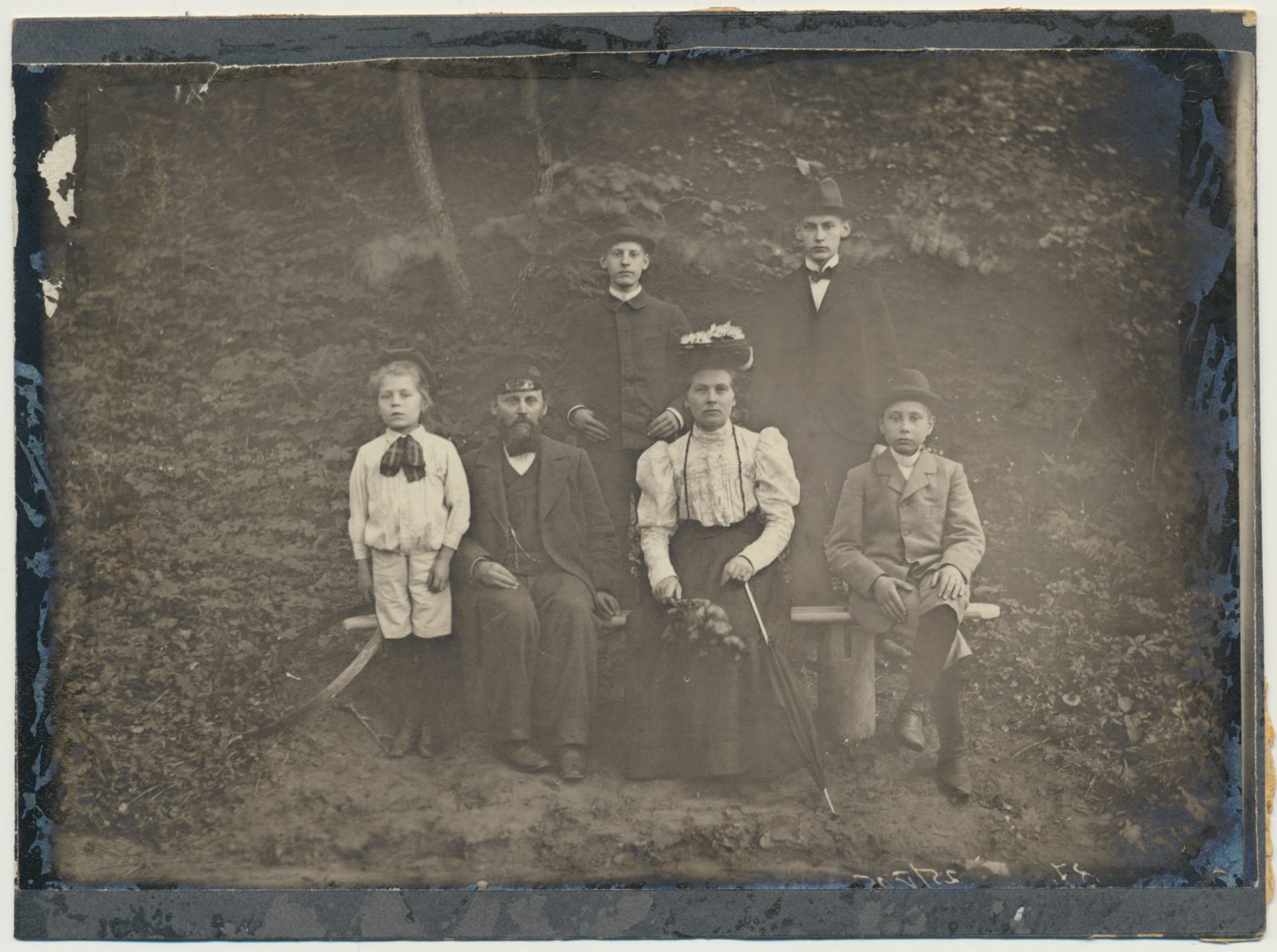
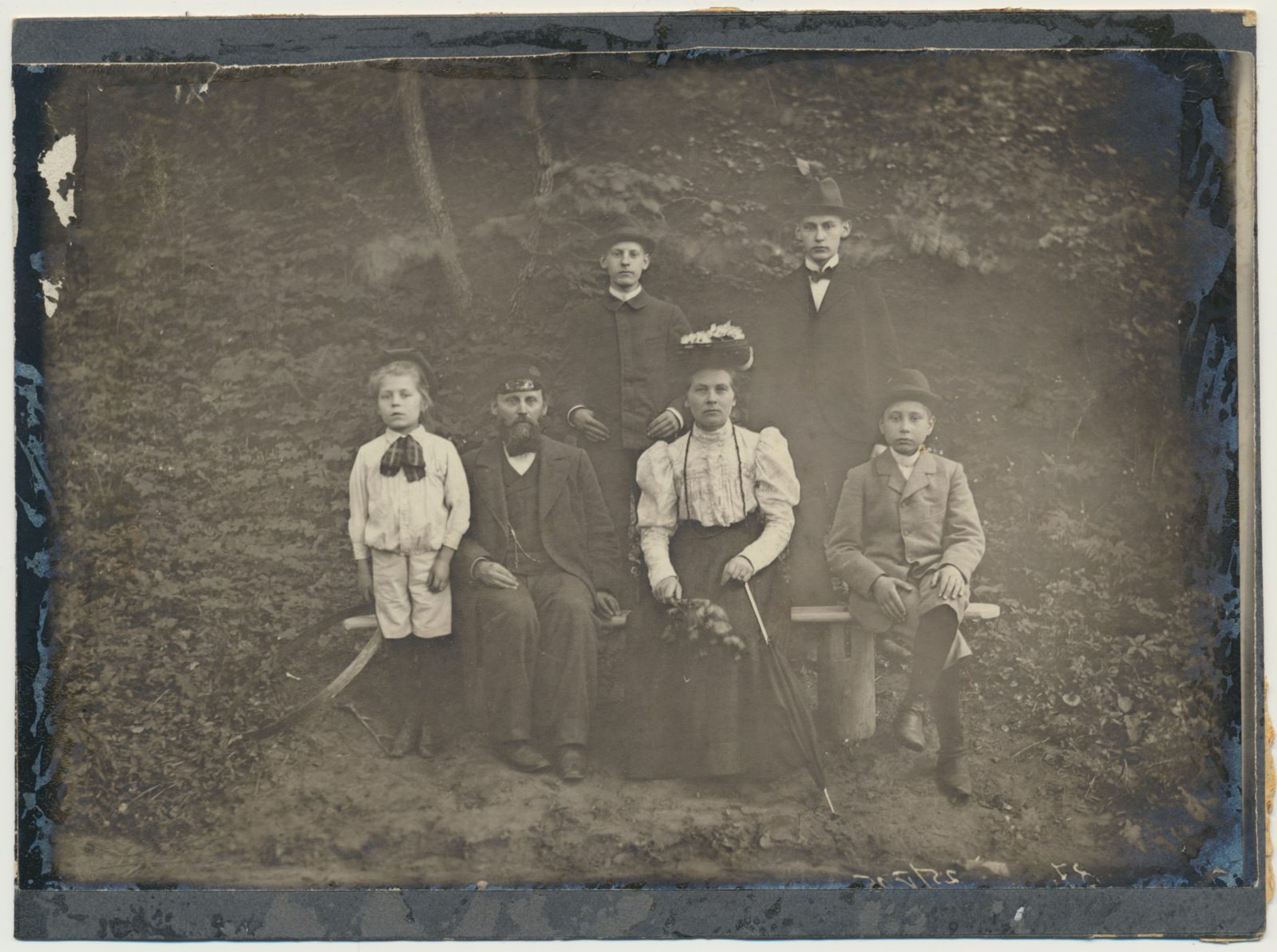
The Leoke family on 26 August 1910. As identified by Viljandi Museum, front row, from left: Hans, Elmar and Mari; back row: Jaan, Hans and Peeter (Peter). The boy in the front row is Elmar Oswald Leoke, Pilvi’s father.Viljandi Museum, VMF 176:92.
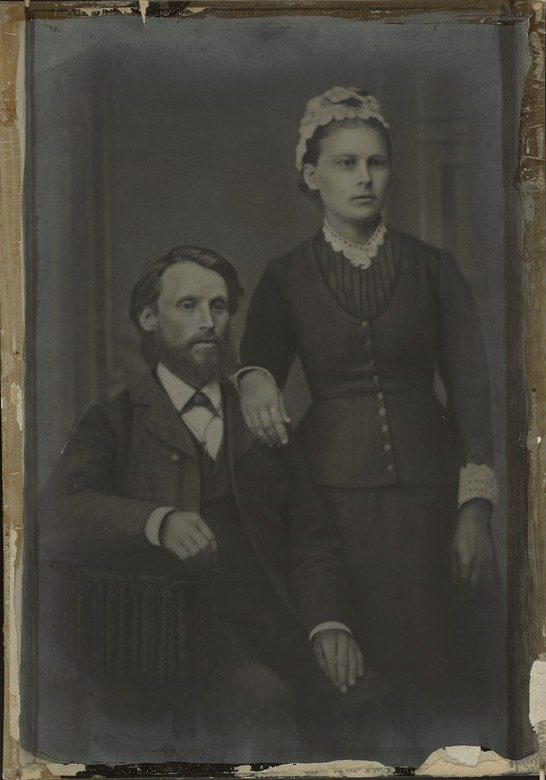
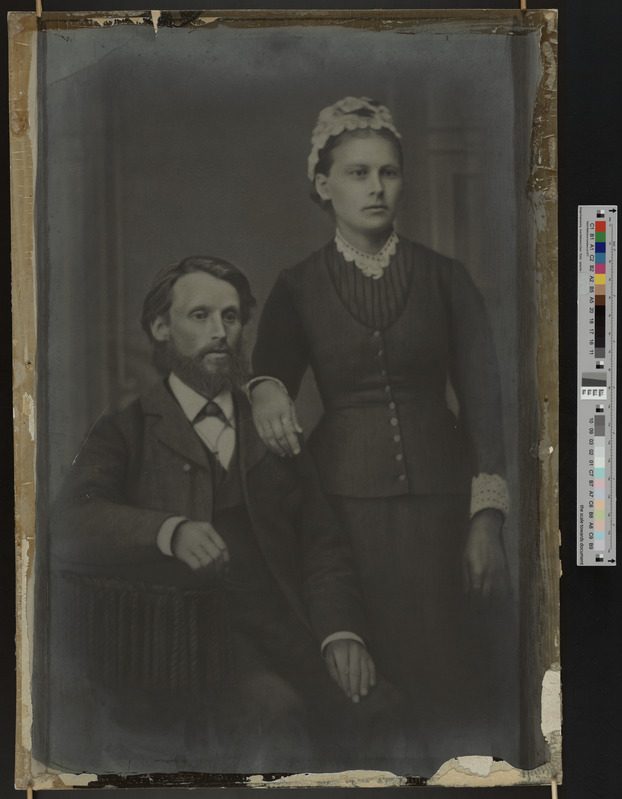
Hans and Mari Leoke, dated about 1900 by Viljandi Museum.Viljandi Museum, VMF 75 F 713.In The Leokes of Viljandi →
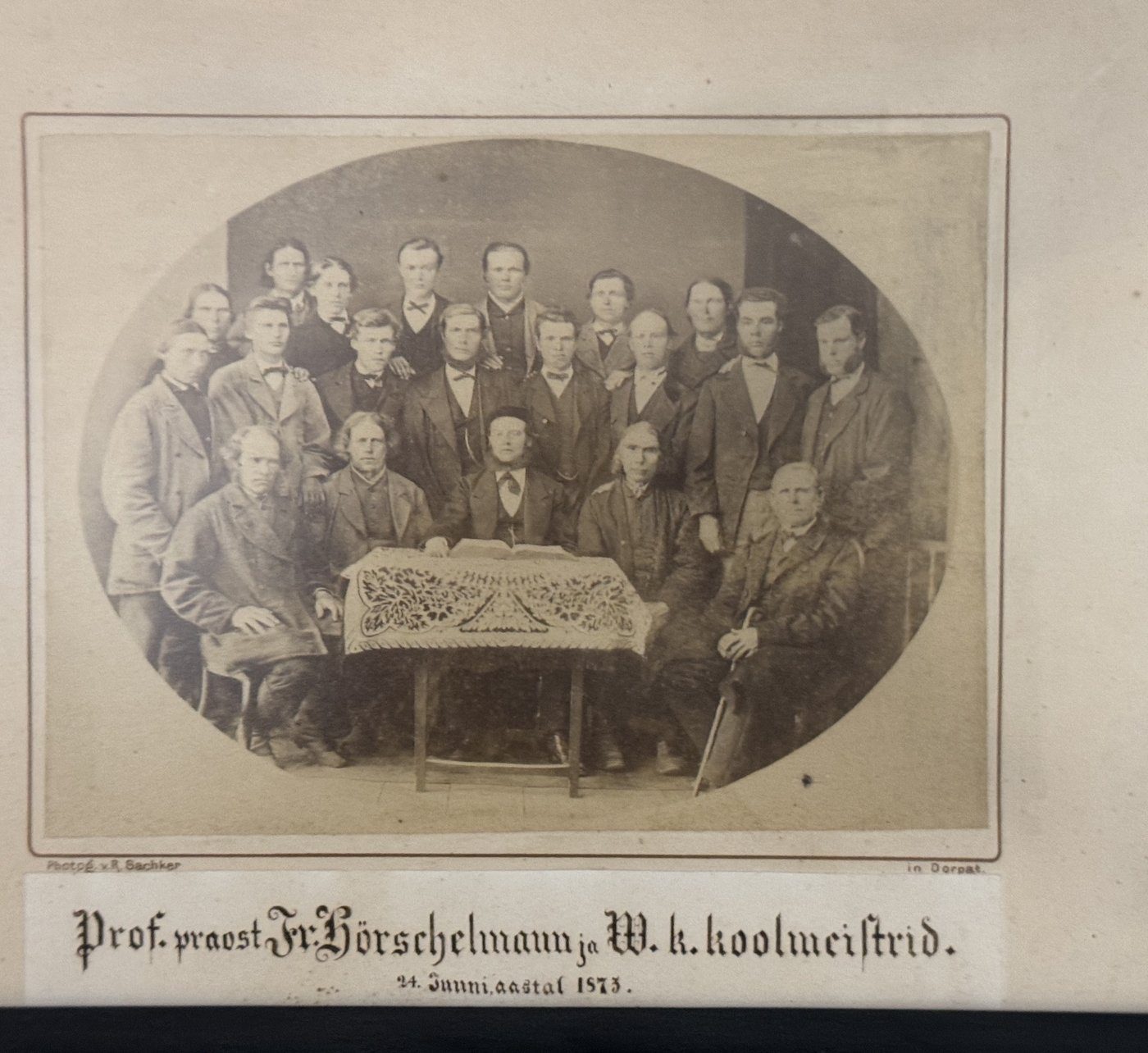
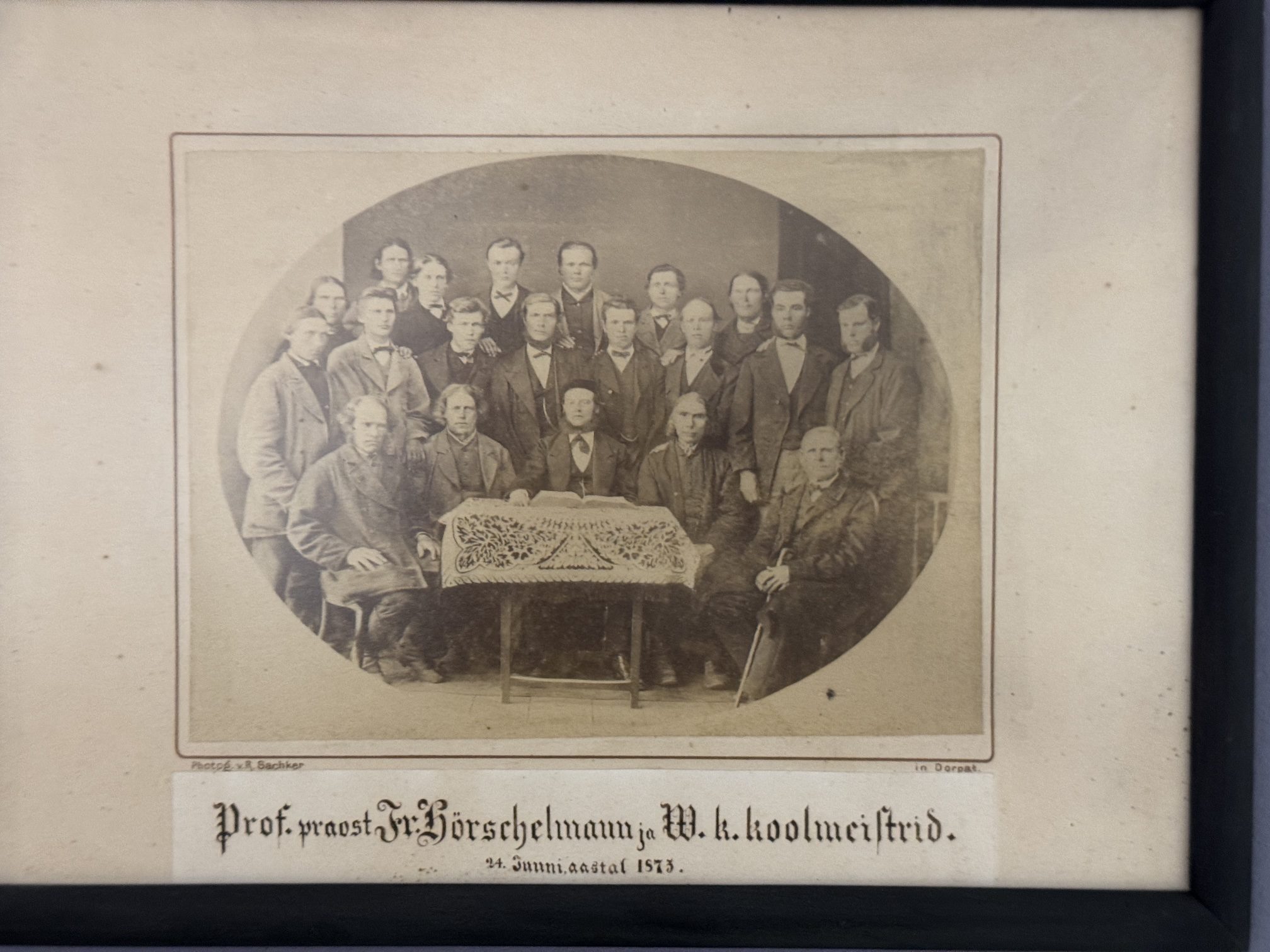
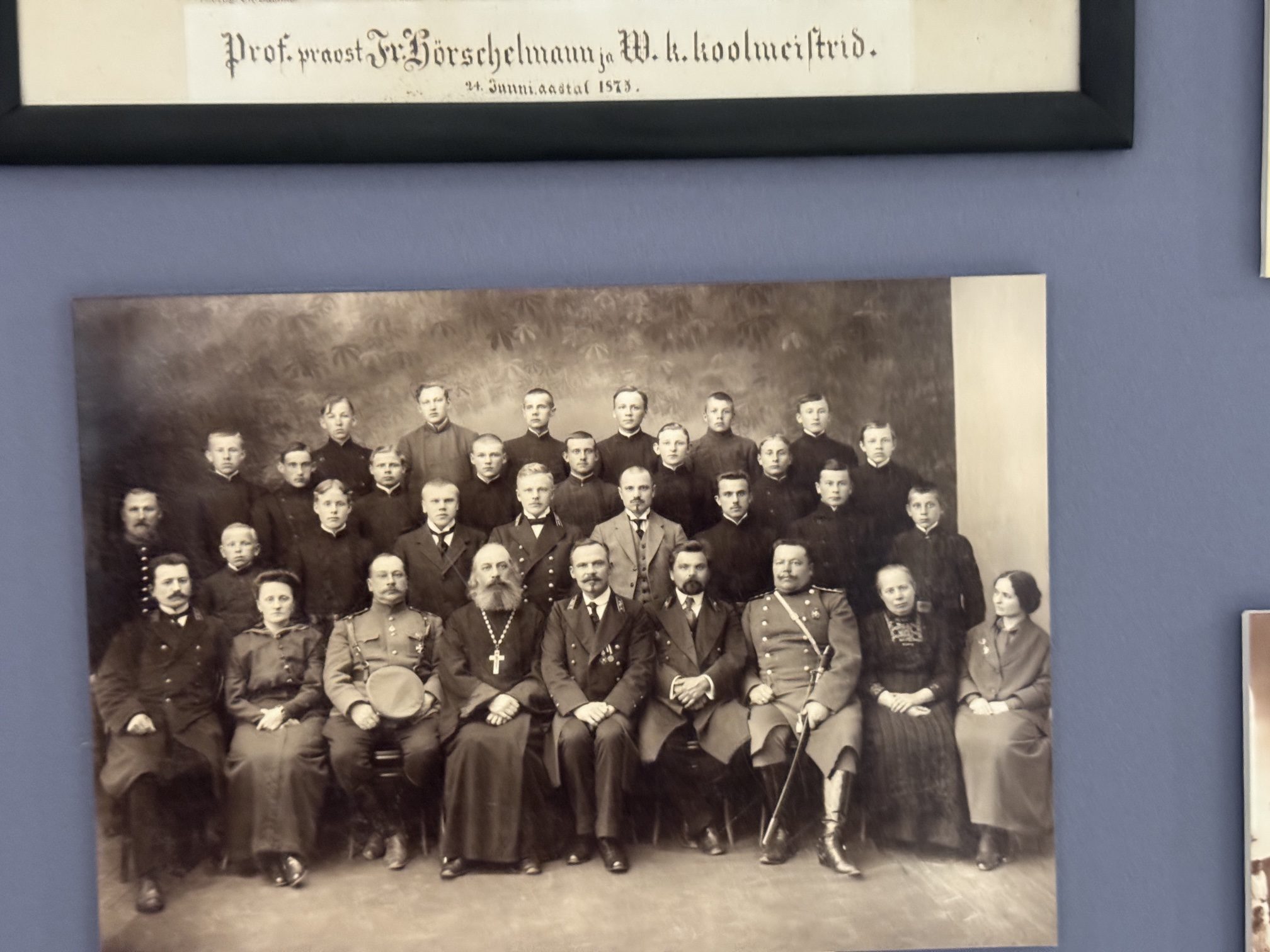
Provost Ferdinand Hörschelmann with the schoolmasters of Viljandi district, Tartu, 24 June 1873. Hans, then 20, had qualified as a schoolmaster the previous year and may be among the group; the schoolmasters are not individually named.Viljandi Museum.In The Leokes of Viljandi →
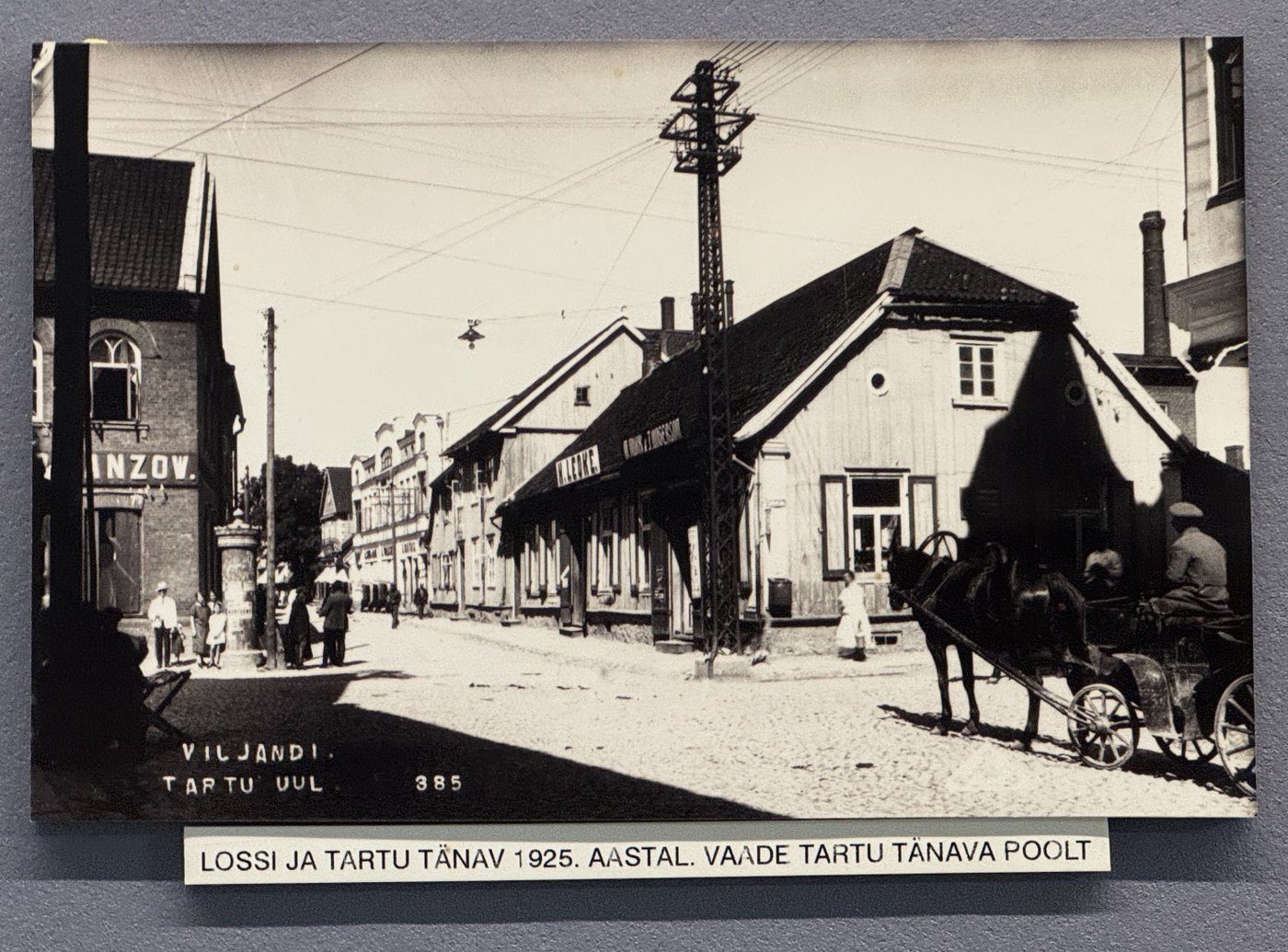
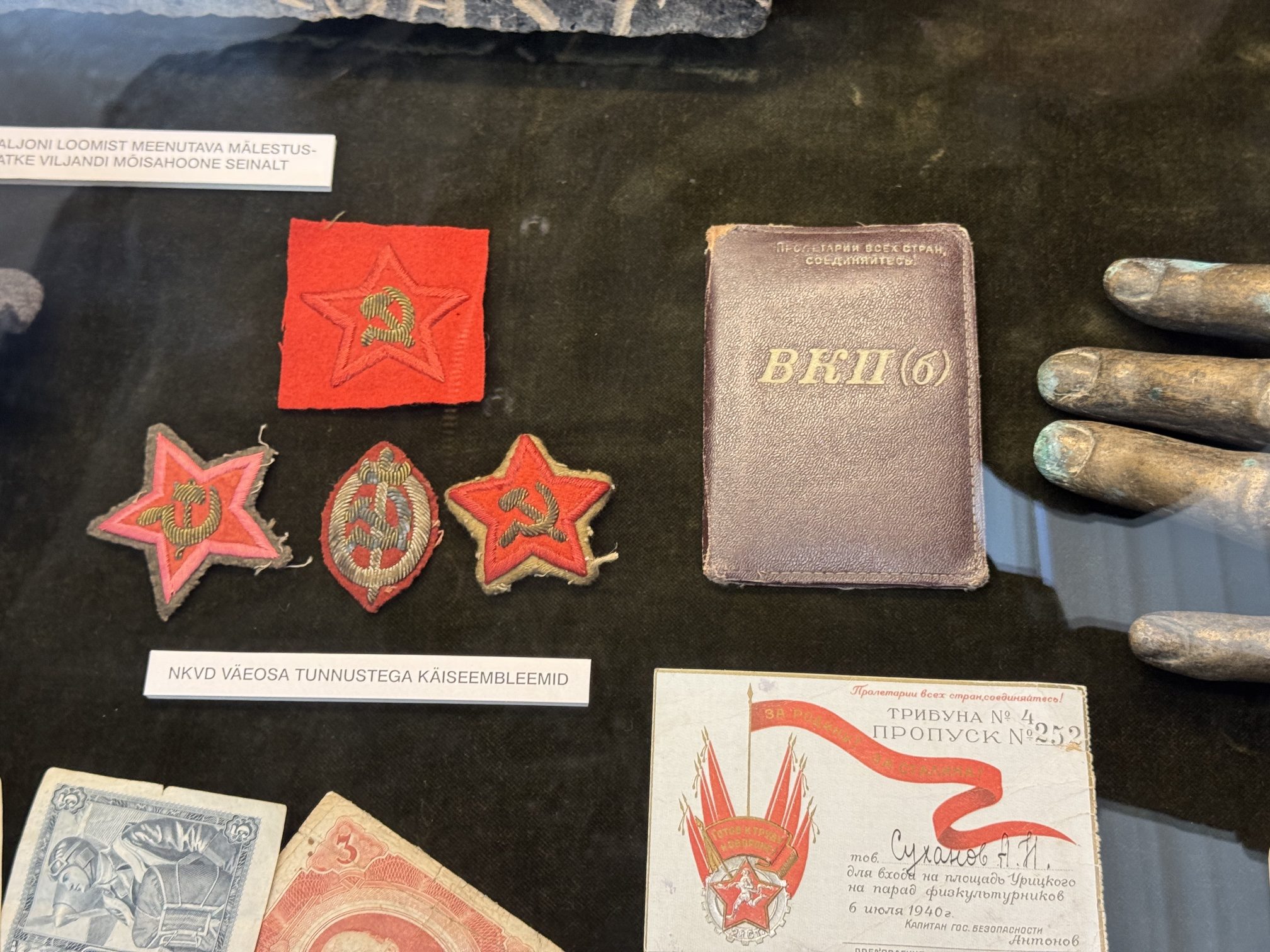
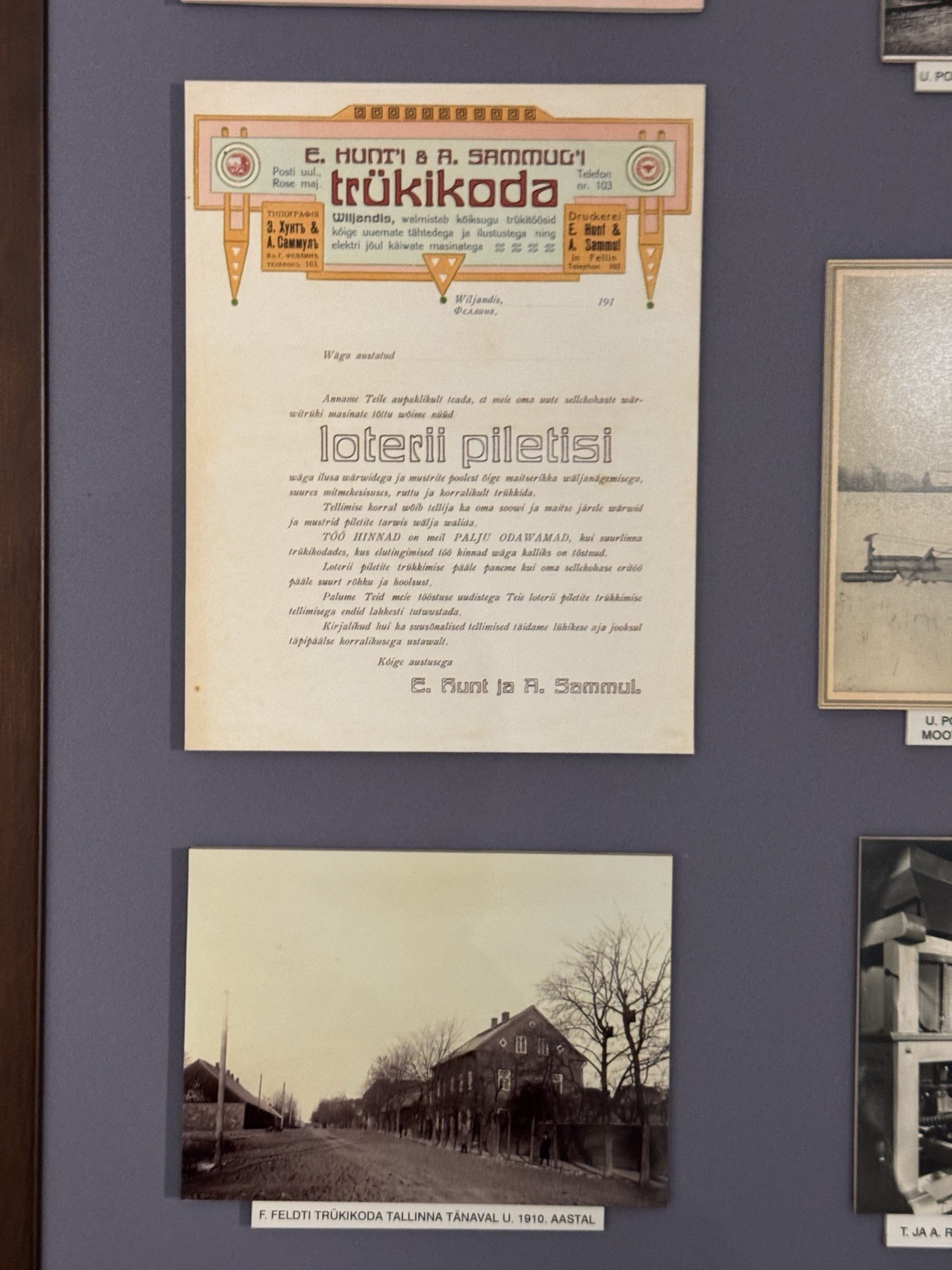
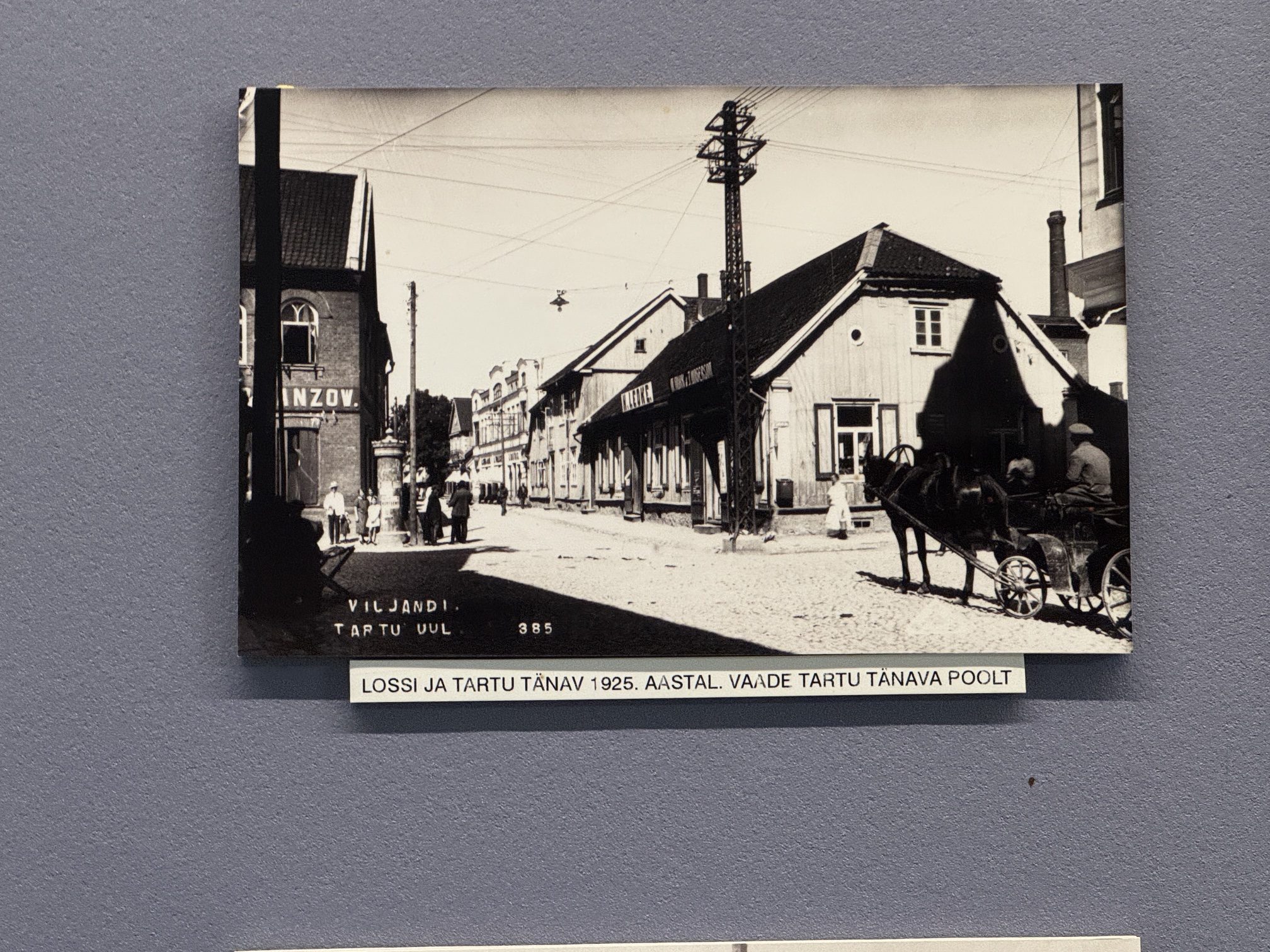
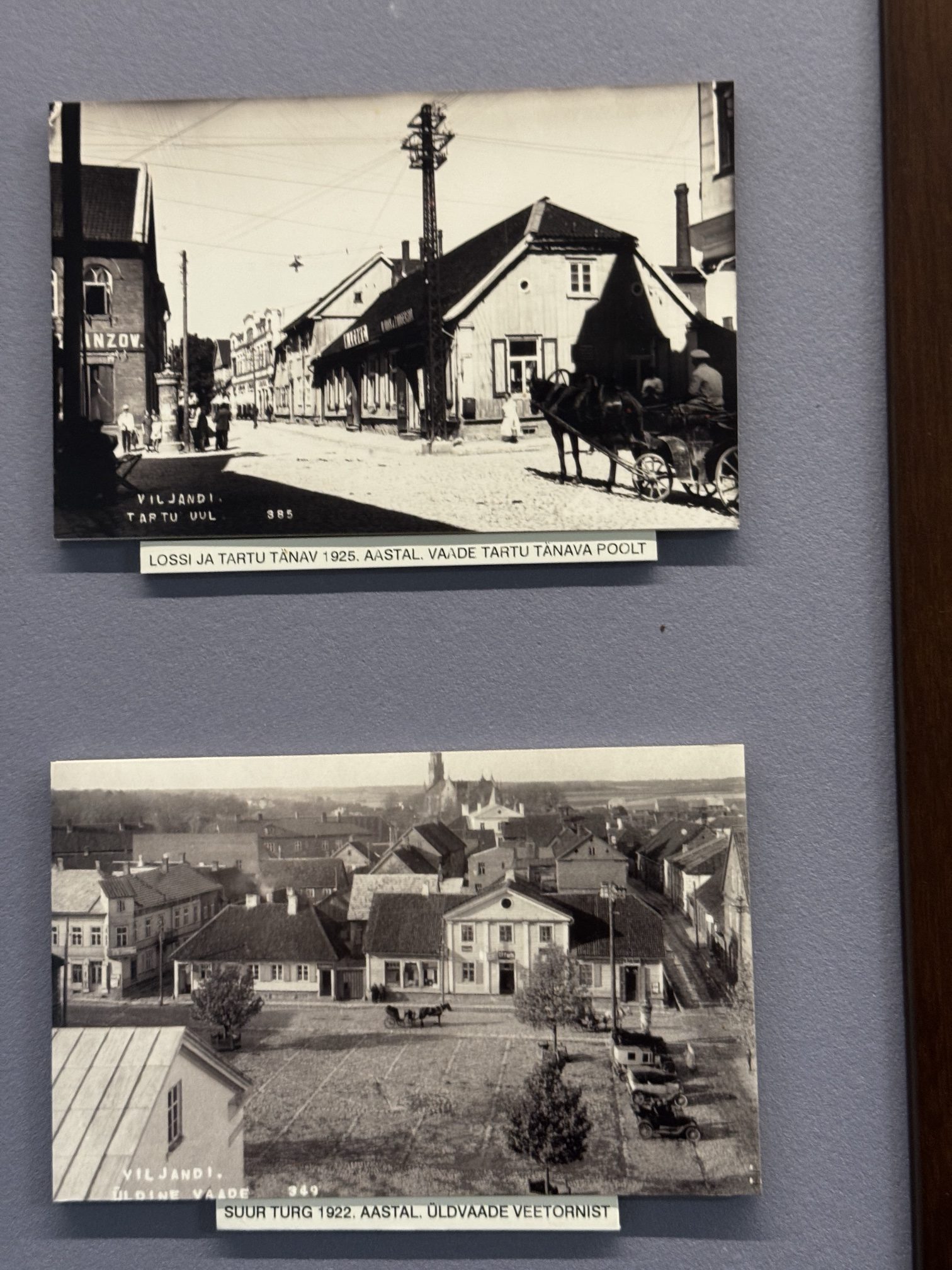
Tartu street in 1925, looking from the Lossi corner. The long wooden building beyond the round-windowed corner house carries the sign “H. LEOKE.”: the family shop and home at Tartu 11, six years after Hans died. The household book also records this address for Elmar Oswald, Hilda and their daughters, without dating the address entry.Viljandi Museum.In The Leokes of Viljandi →
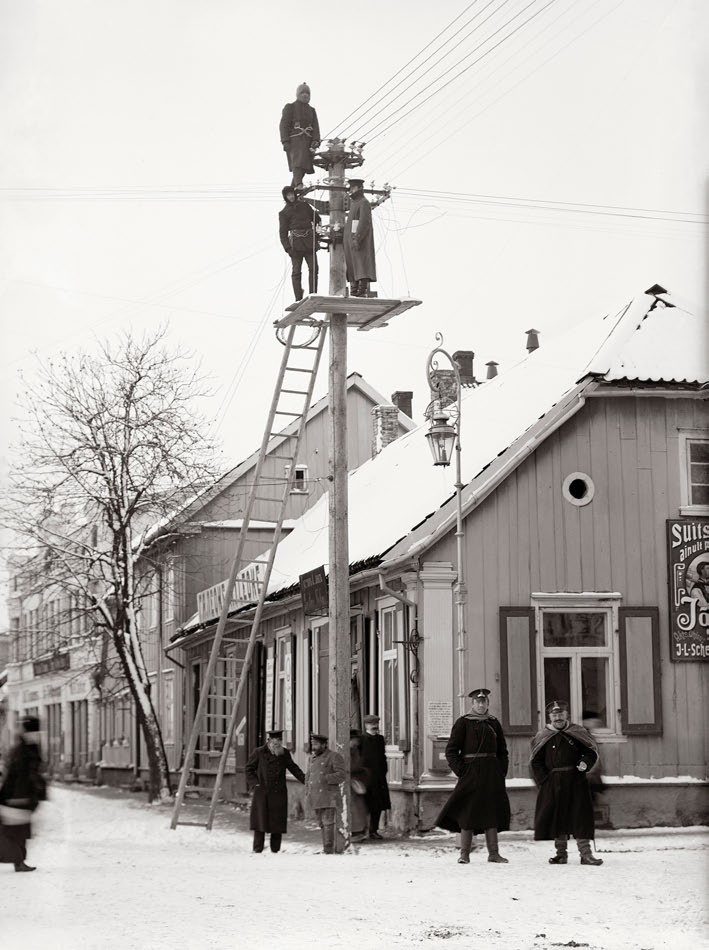
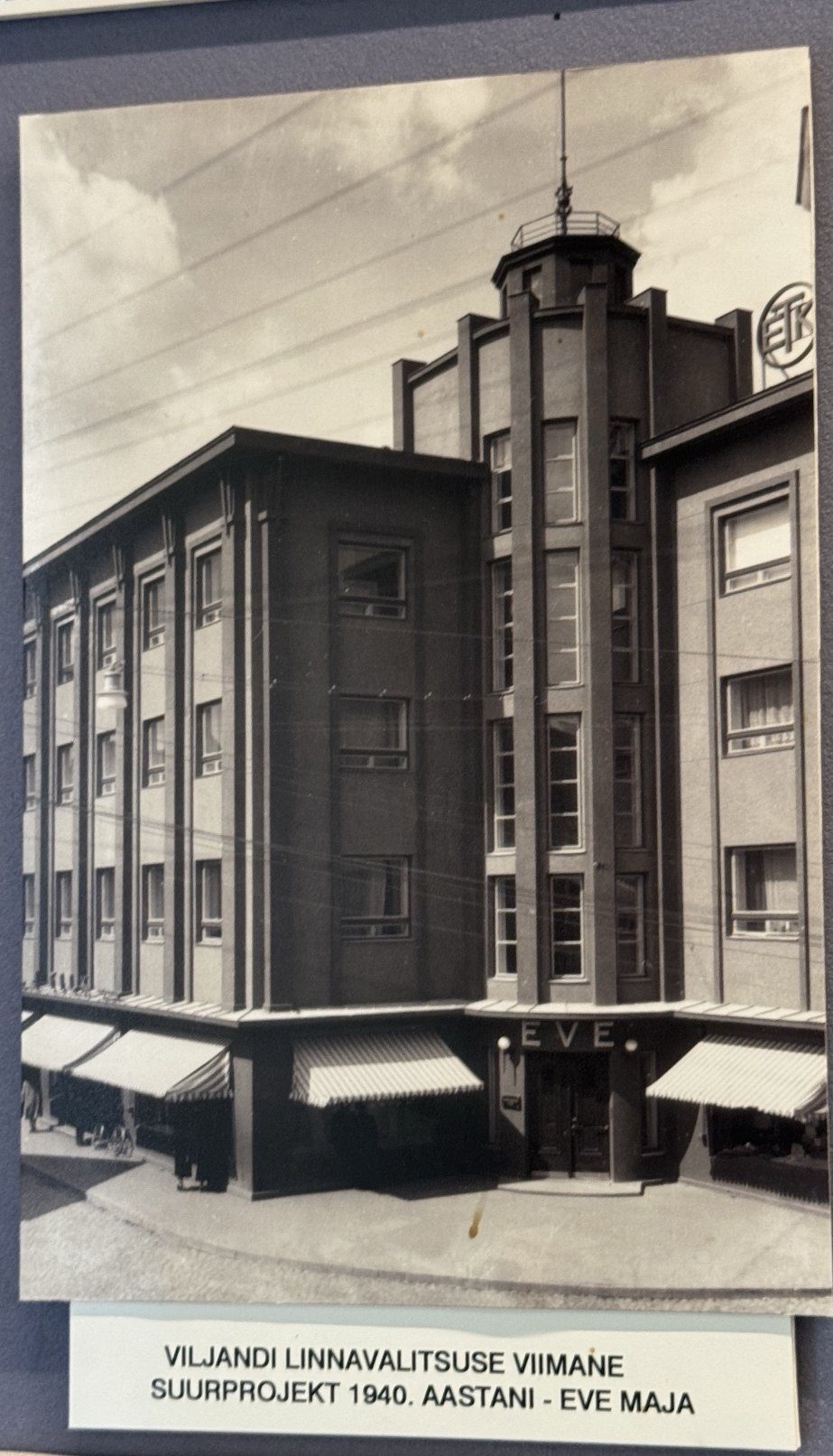
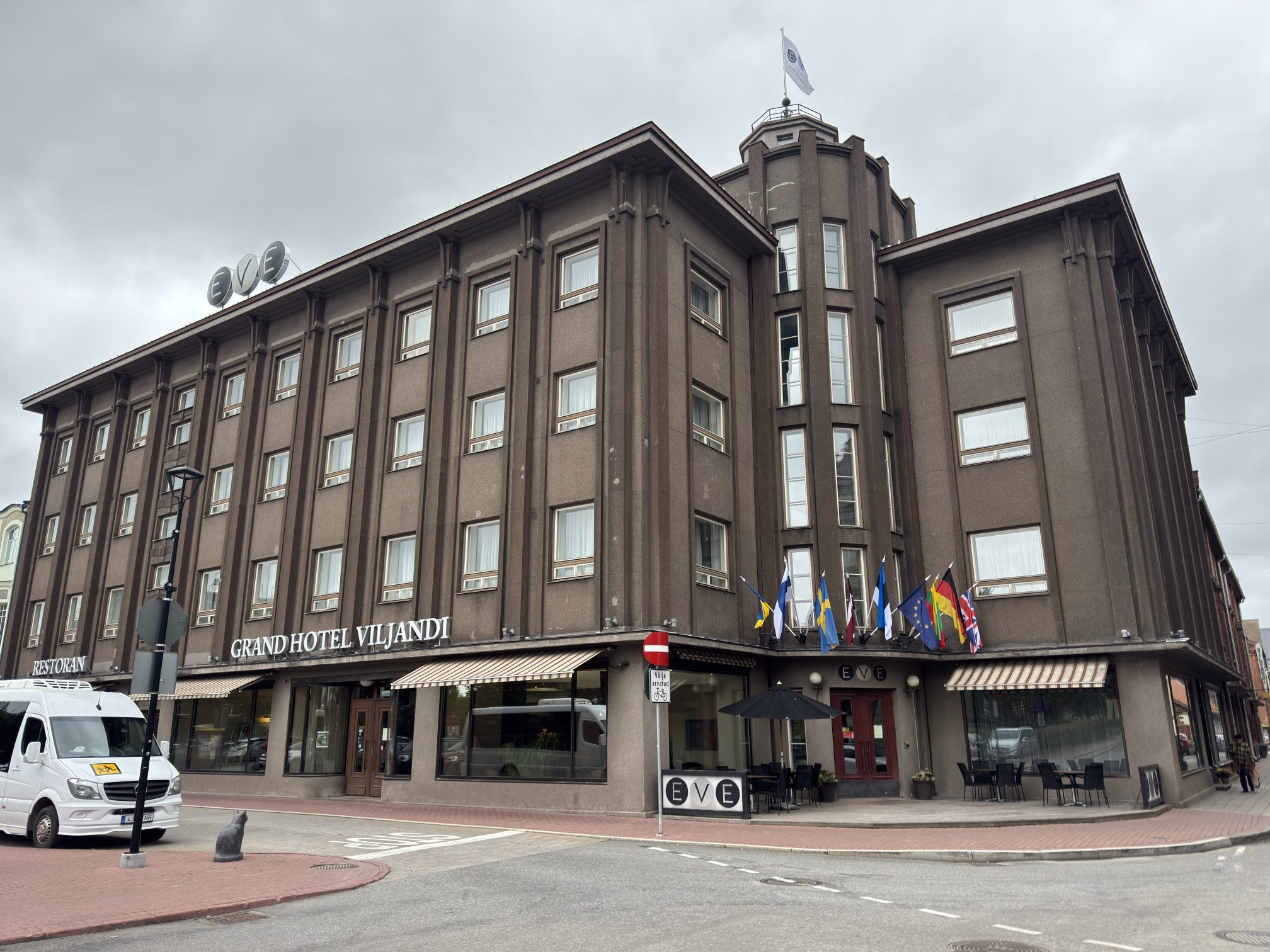
Hans Leoke, in a dark coat and with a beard, in front of his shop at Tartu 11 in 1912, while electric lines are being strung. The EVE building, now the Grand Hotel Viljandi, was later built on this site.Photo J. Riet, Viljandi Museum VMF 424:415.In The Leokes of Viljandi →
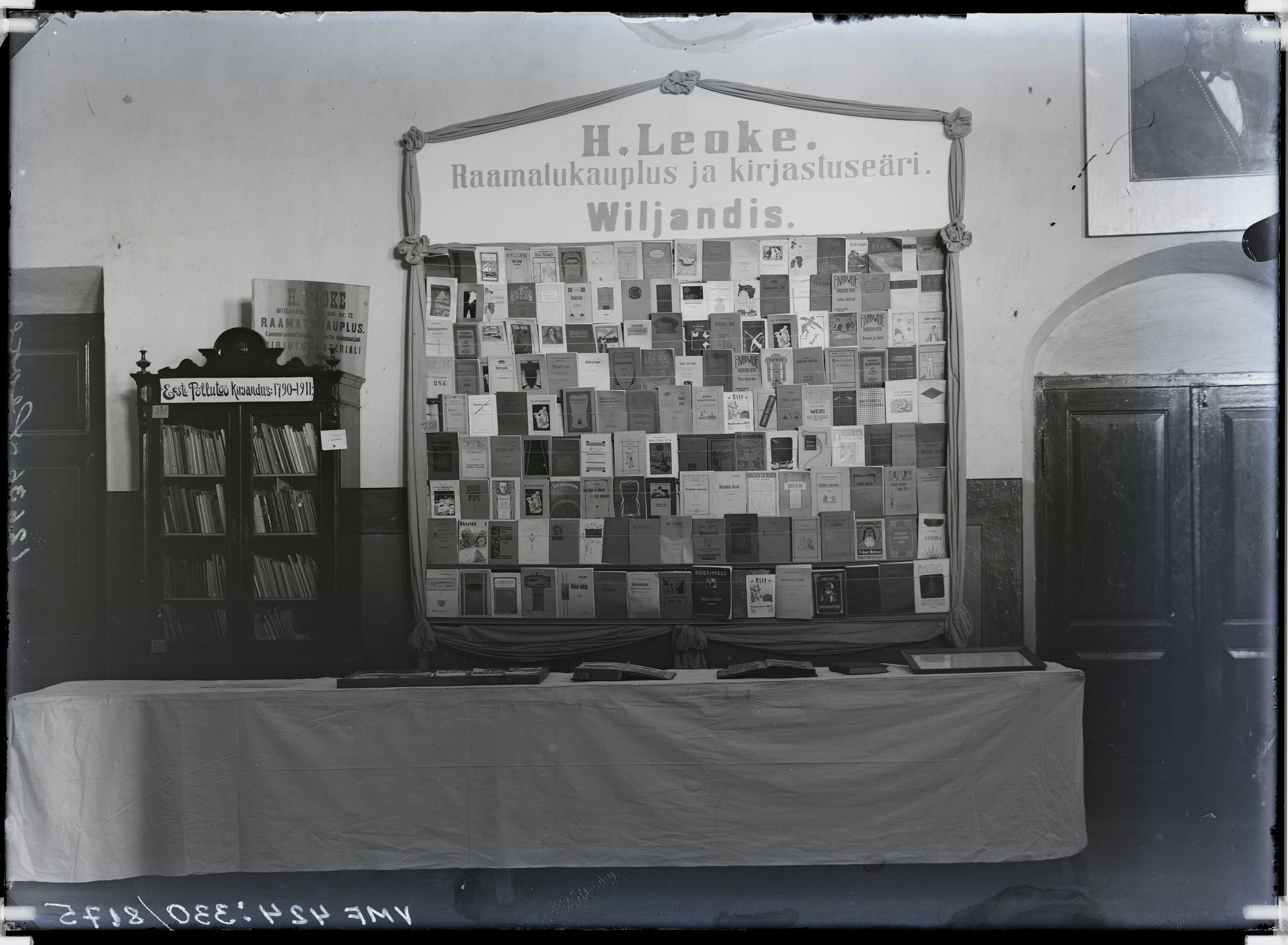
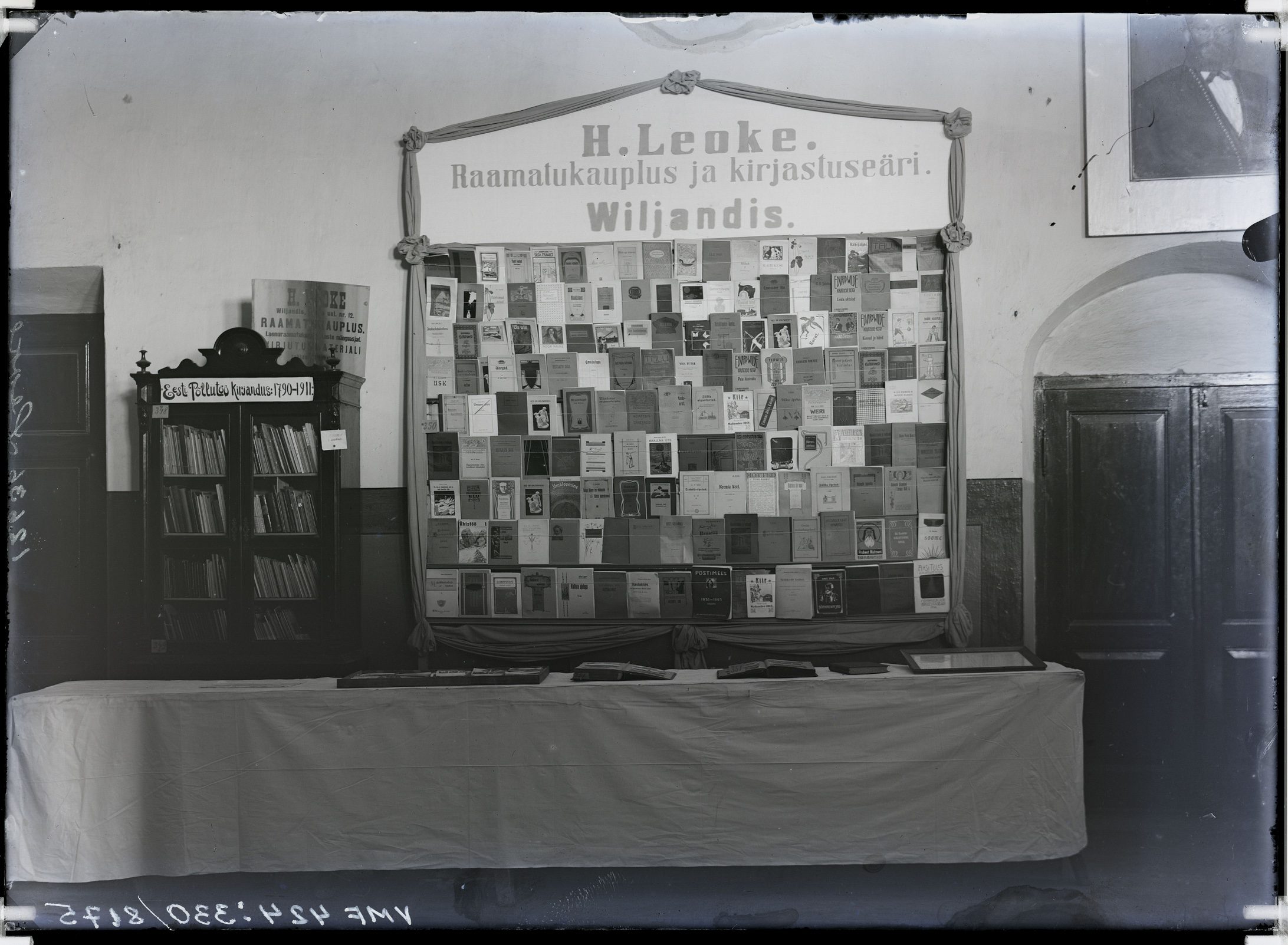
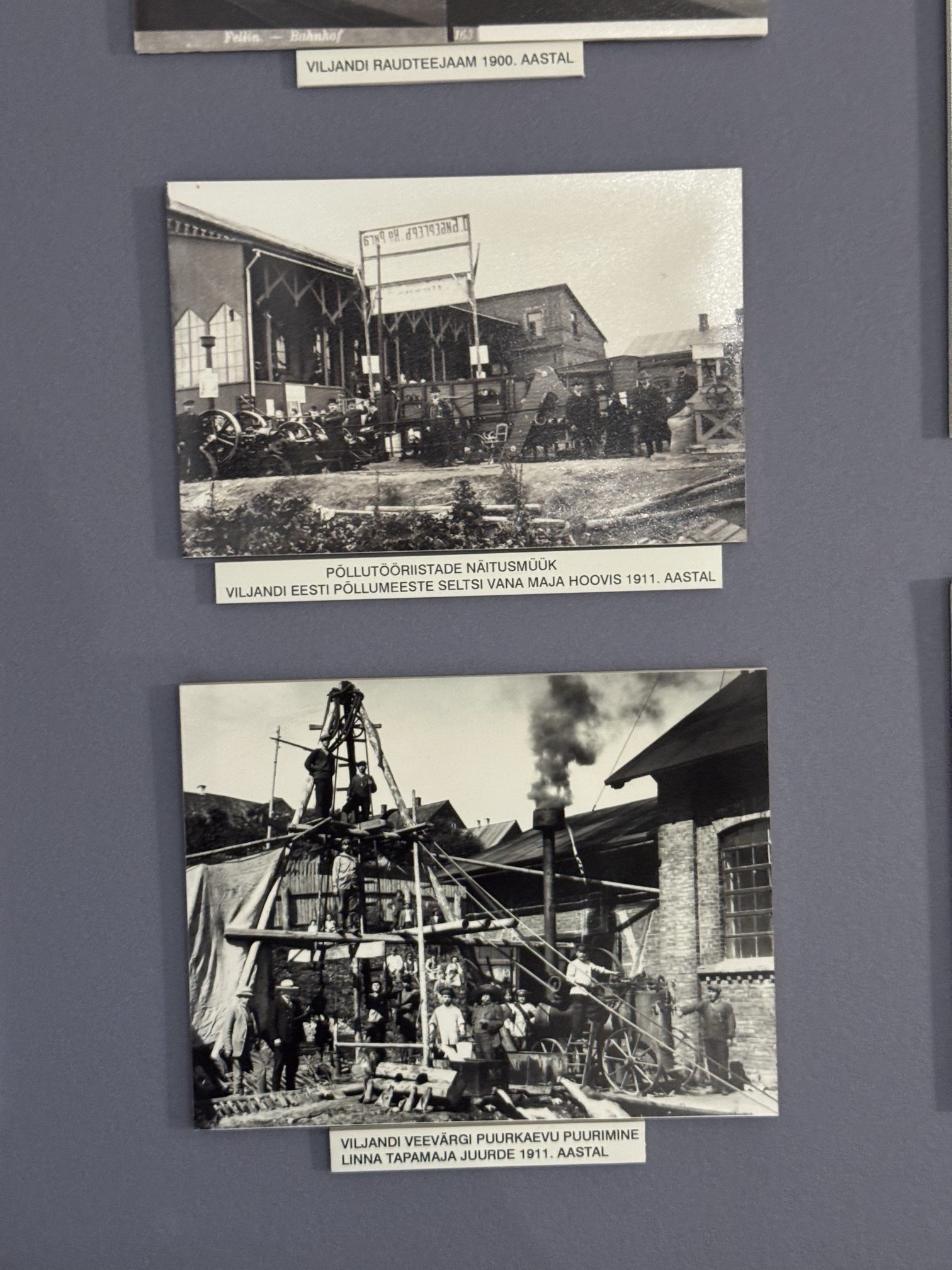
“H. Leoke. Bookshop and publishing business. Viljandi.” Hans’s stand at the 1911 agricultural show in the VEPS courtyard: his own publications on the board, and a case of Estonian farming literature from 1790–1911 drawn from his archive library.Photo J. Riet, Viljandi Museum VMF 424:330.In The Leokes of Viljandi →
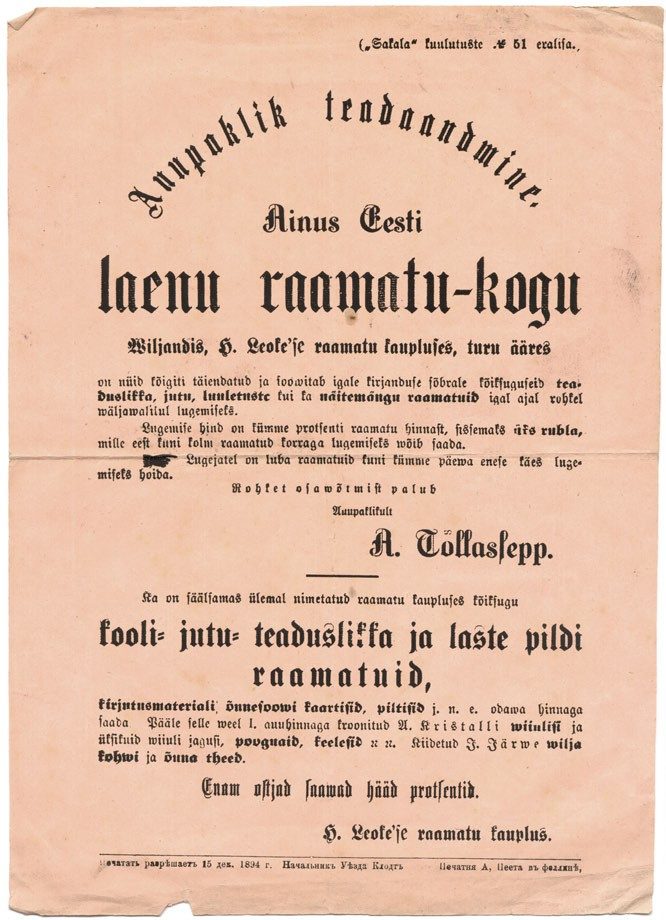
A poster for “the first Estonian lending library” at H. Leoke’s bookshop.Viljandi Museum archive.In The Leokes of Viljandi →
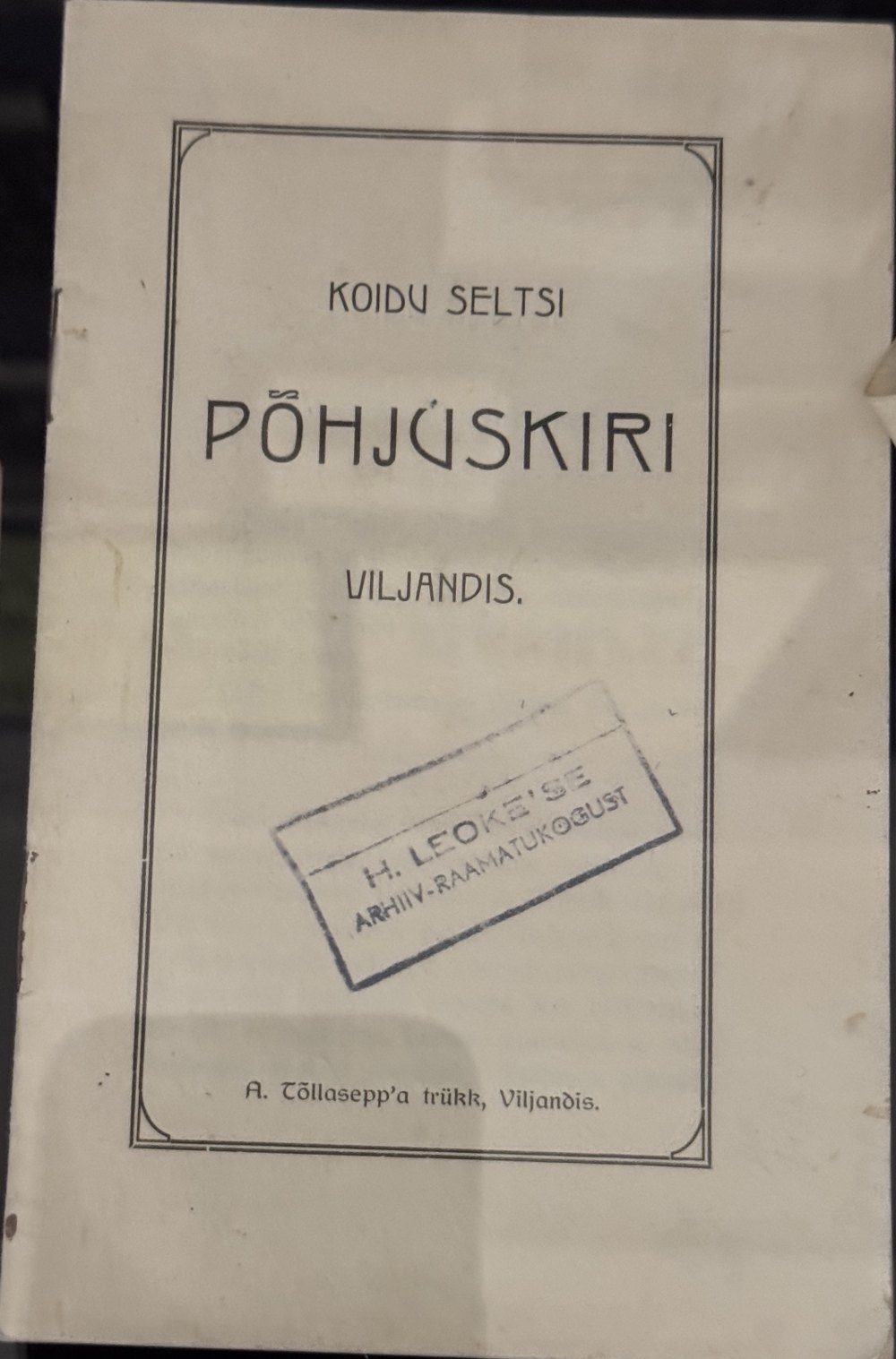
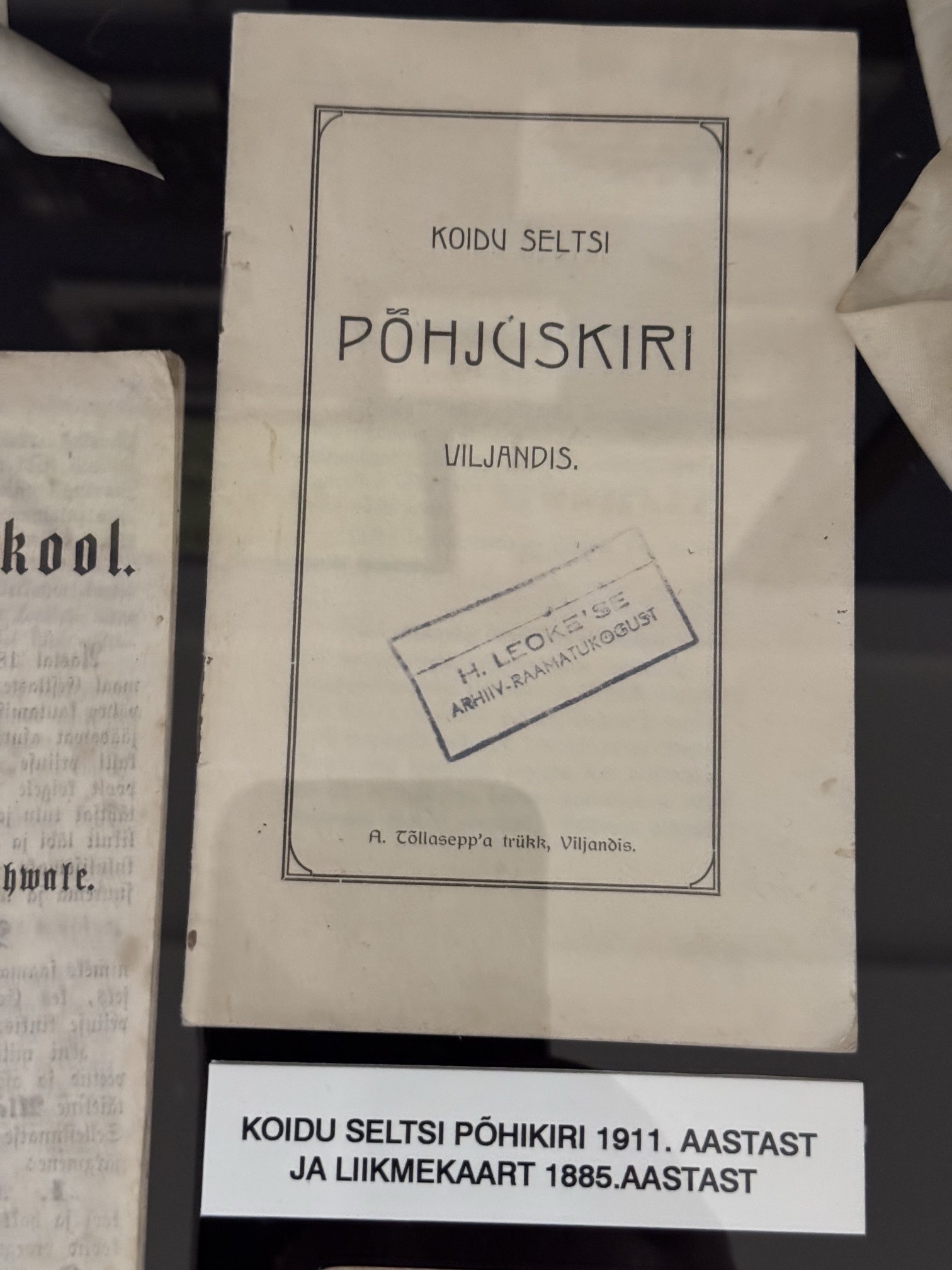
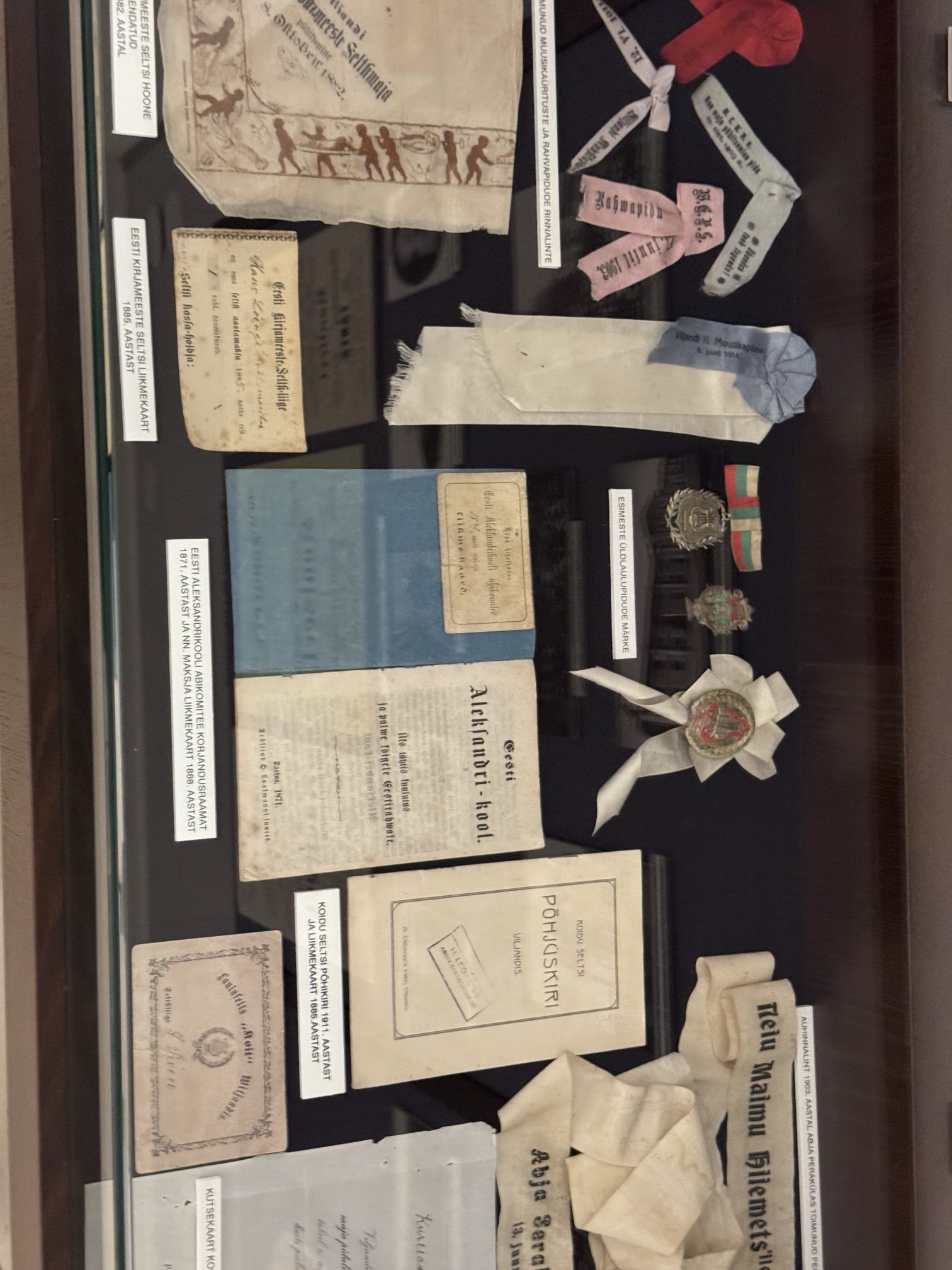
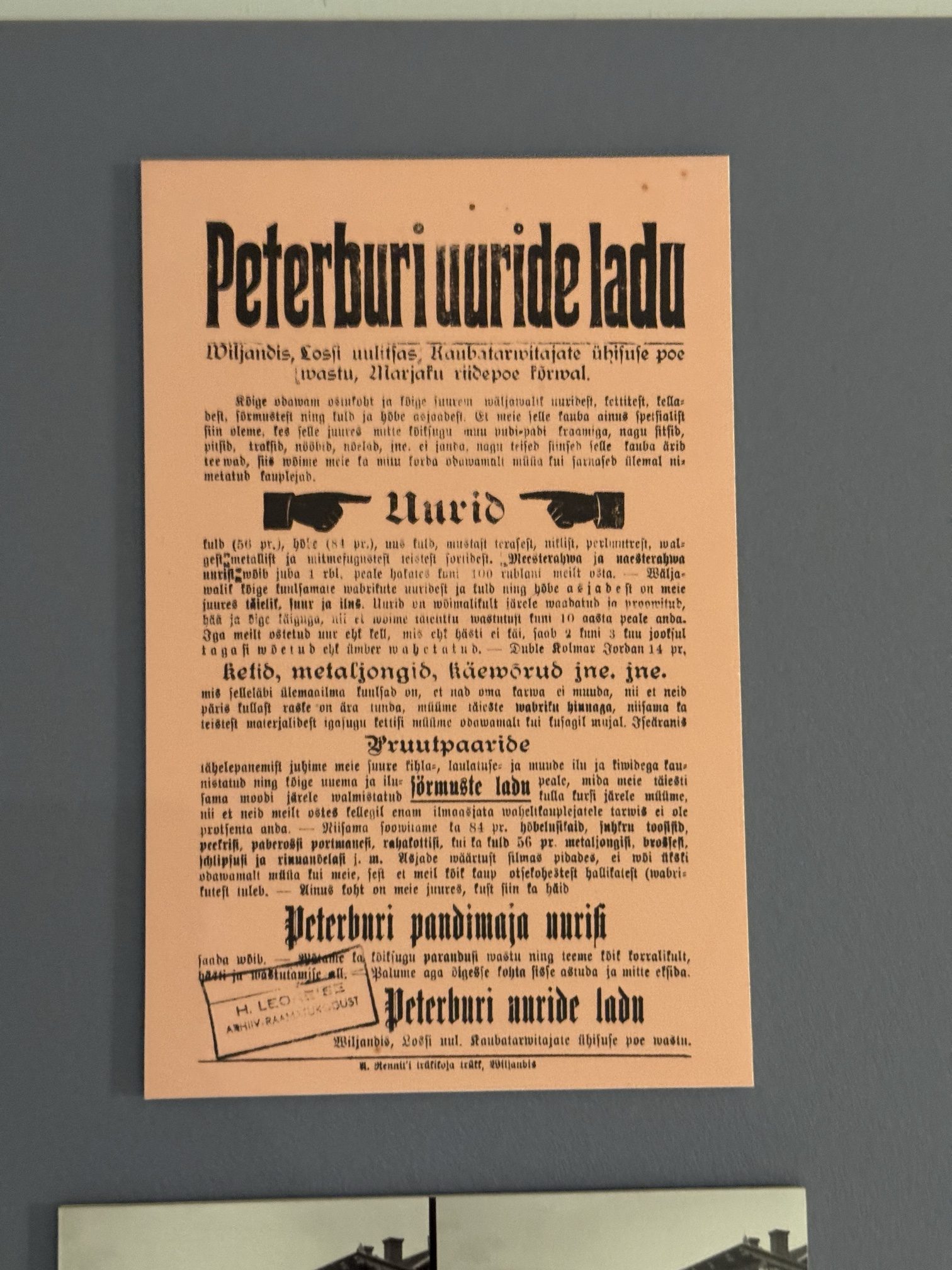
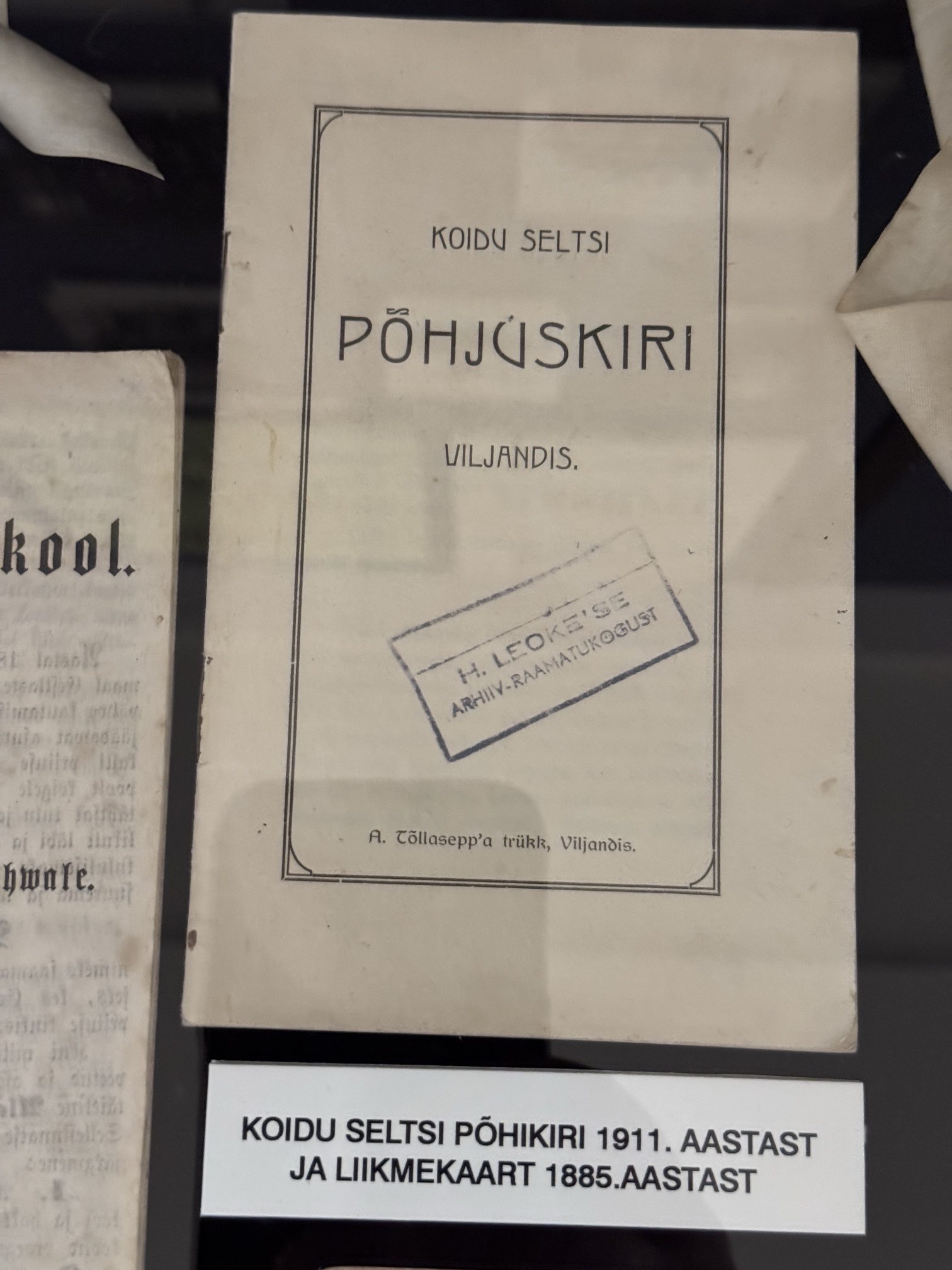
Statutes of Viljandi’s Koidu Society, 1911, printed by Hans’s brother-in-law Ado Tõllasepp and stamped “H. Leoke’se arhiiv-raamatukogust”.Viljandi Museum.In The Leokes of Viljandi →
The Leoke family, about 1903. Front row, from left: Elmar Oswald (about 7, Pilvi’s father), Hans, Mari and Peeter. Back row: Hans the younger and Jaan. The only photograph we have found of all four surviving sons as boys.Viljandi Museum, VMF 75 F 716.In The Leokes of Viljandi →
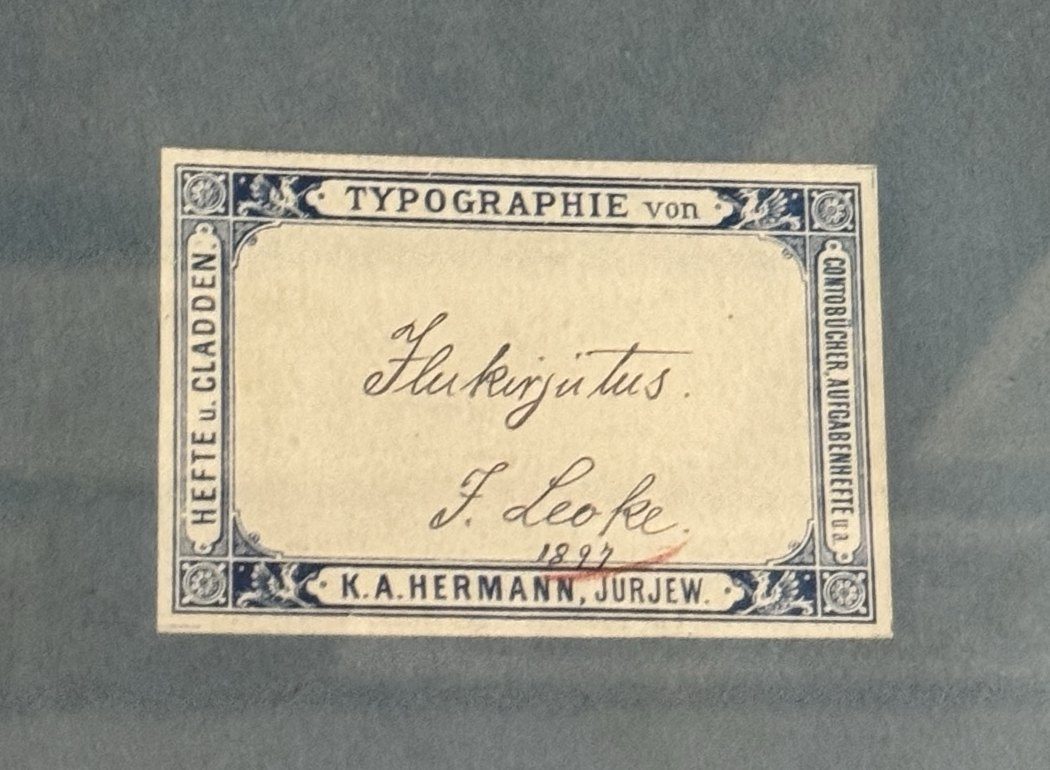
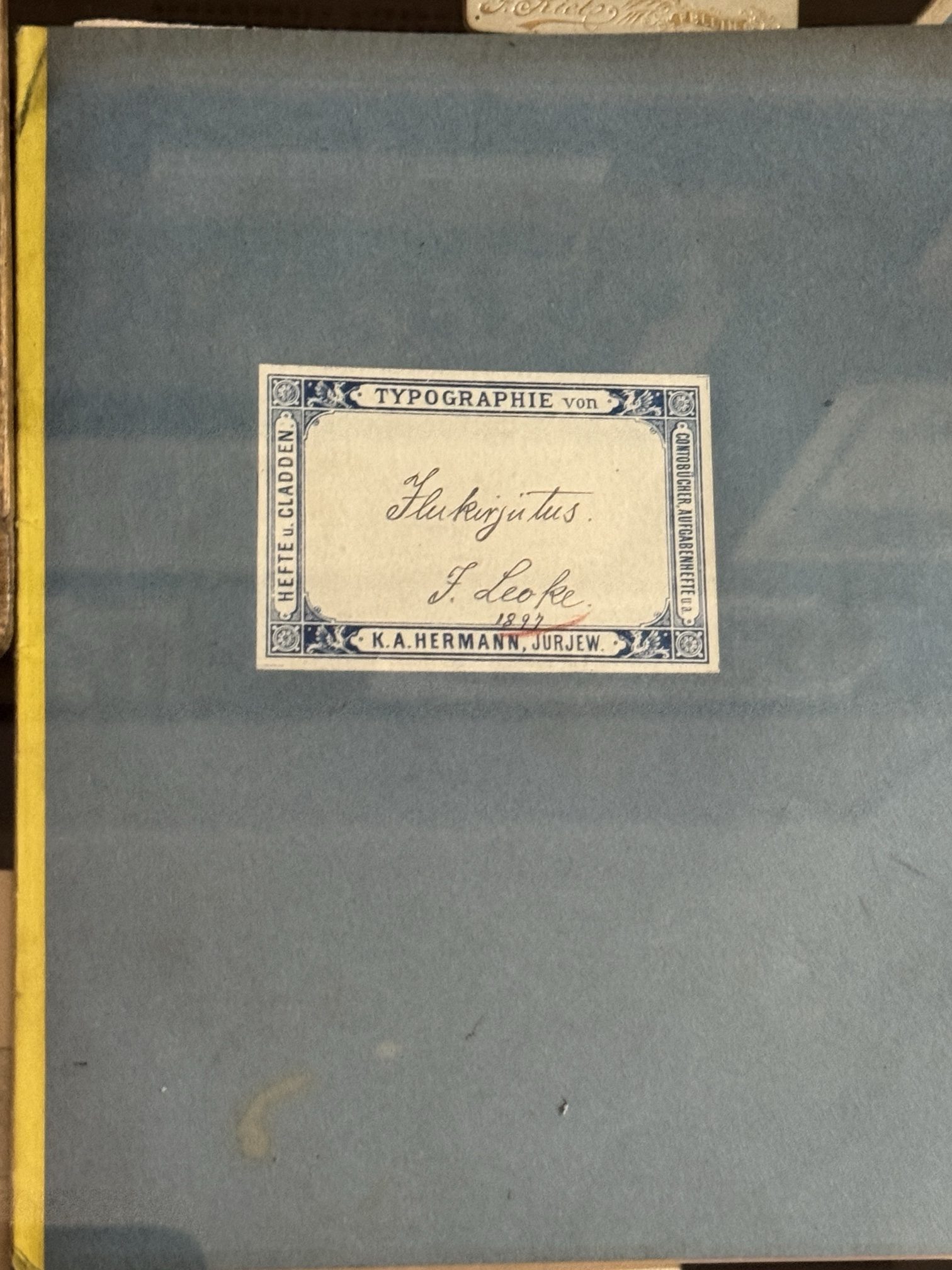
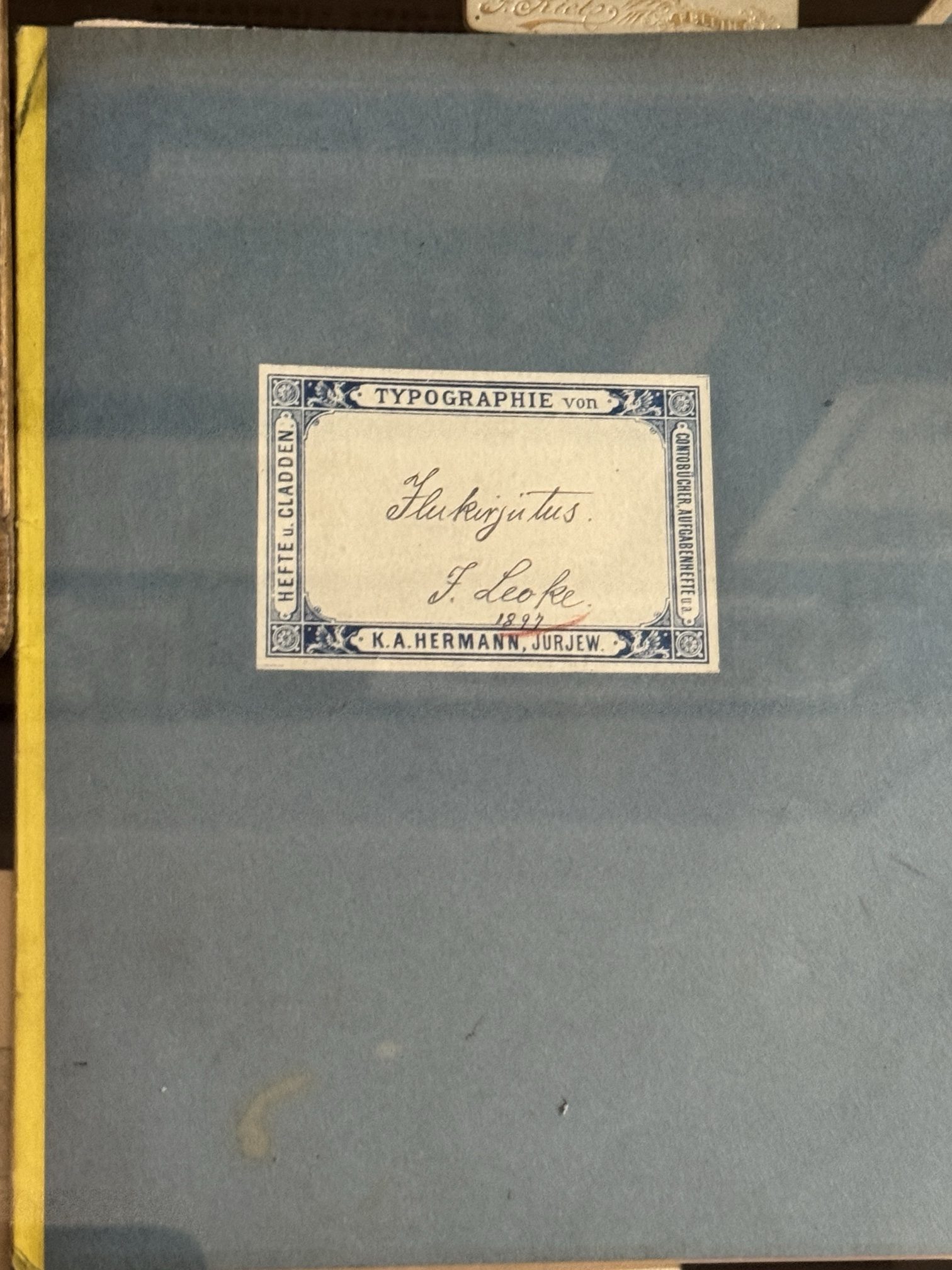
“Ilukirjutus. J. Leoke 1897”: almost certainly Jaan’s penmanship copybook from when he was ten, made by K. A. Hermann of Jurjew (Tartu).Viljandi Museum.In The Leokes of Viljandi →
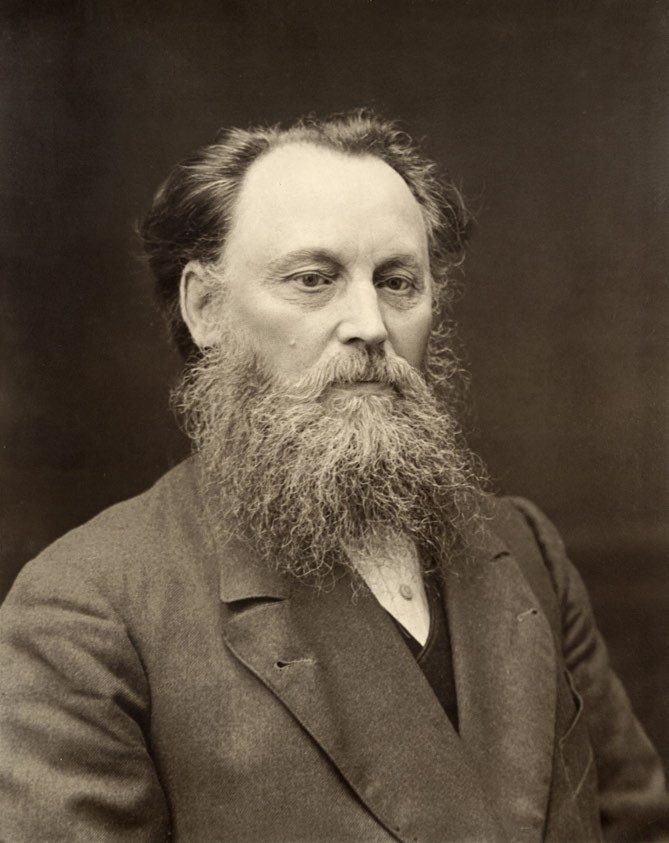
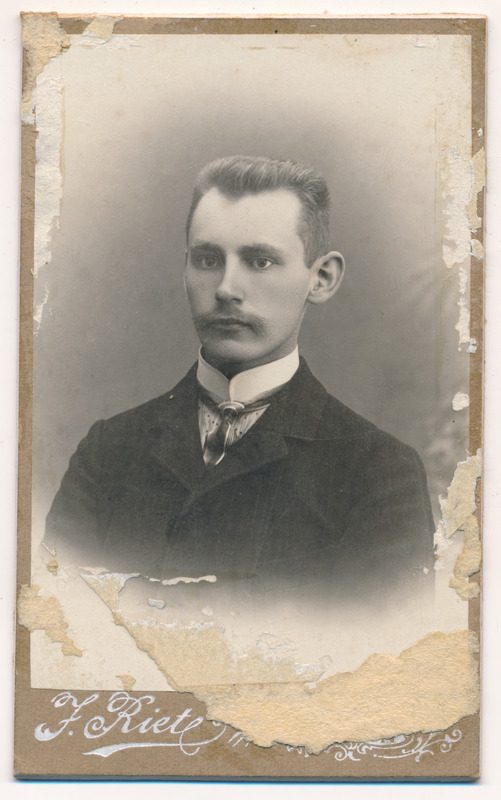
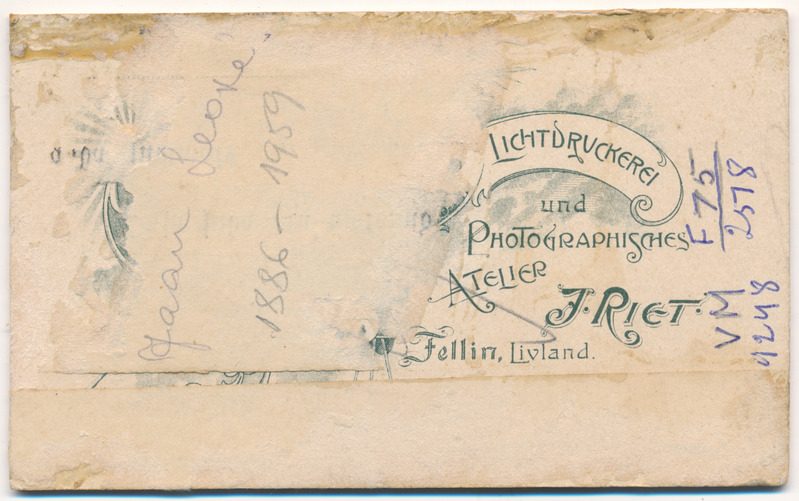
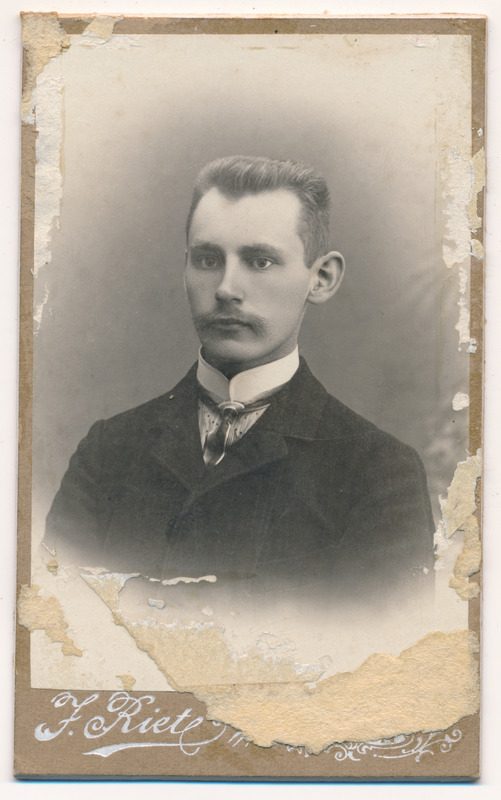
Jaan Leoke, publisher and bookseller, about 1910; on the back, in pencil, “Jaan Leoke 1886–1959”.Photo J. Riet, Viljandi Museum VM 9248 F 75:2518.In The Leokes of Viljandi →
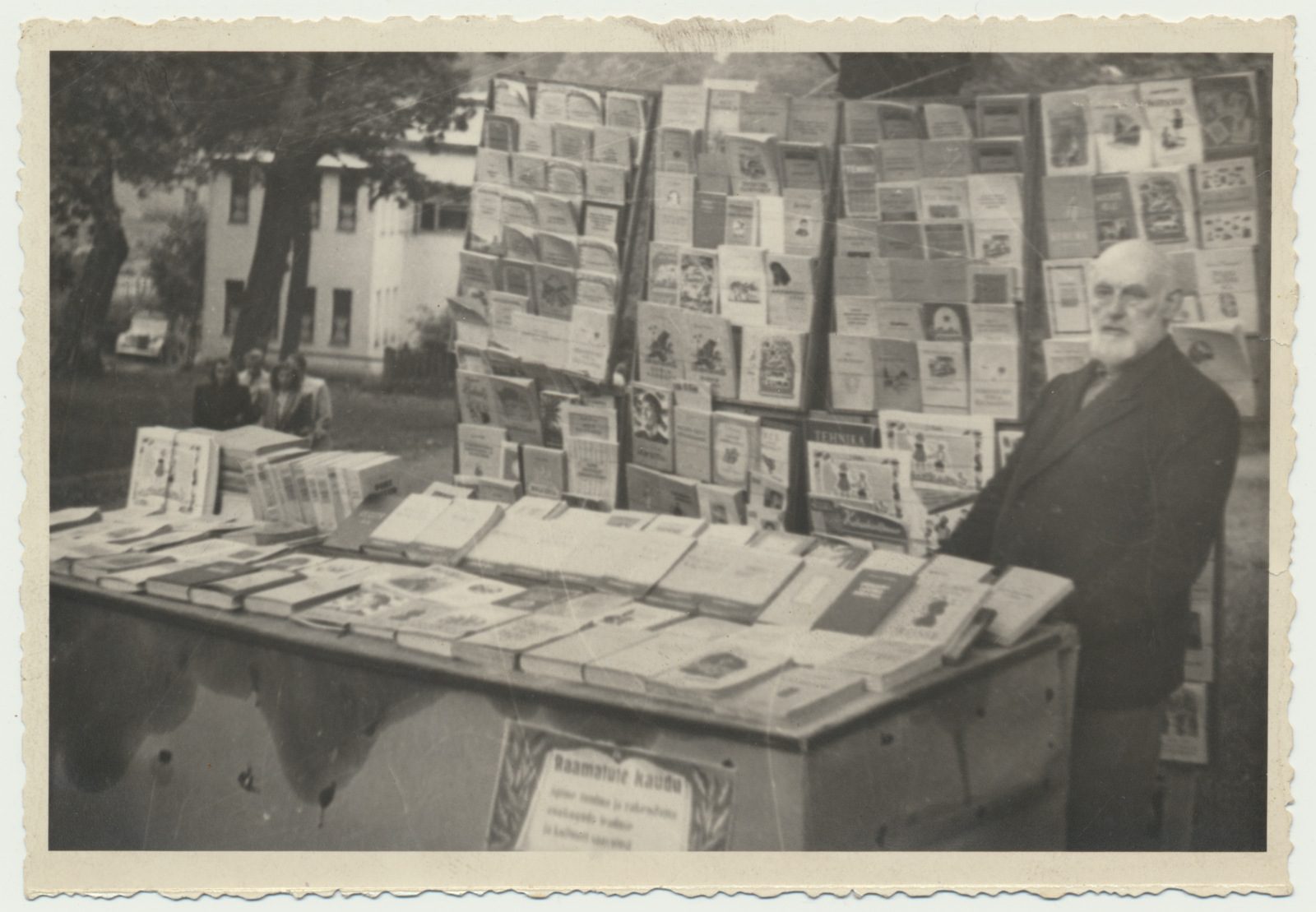
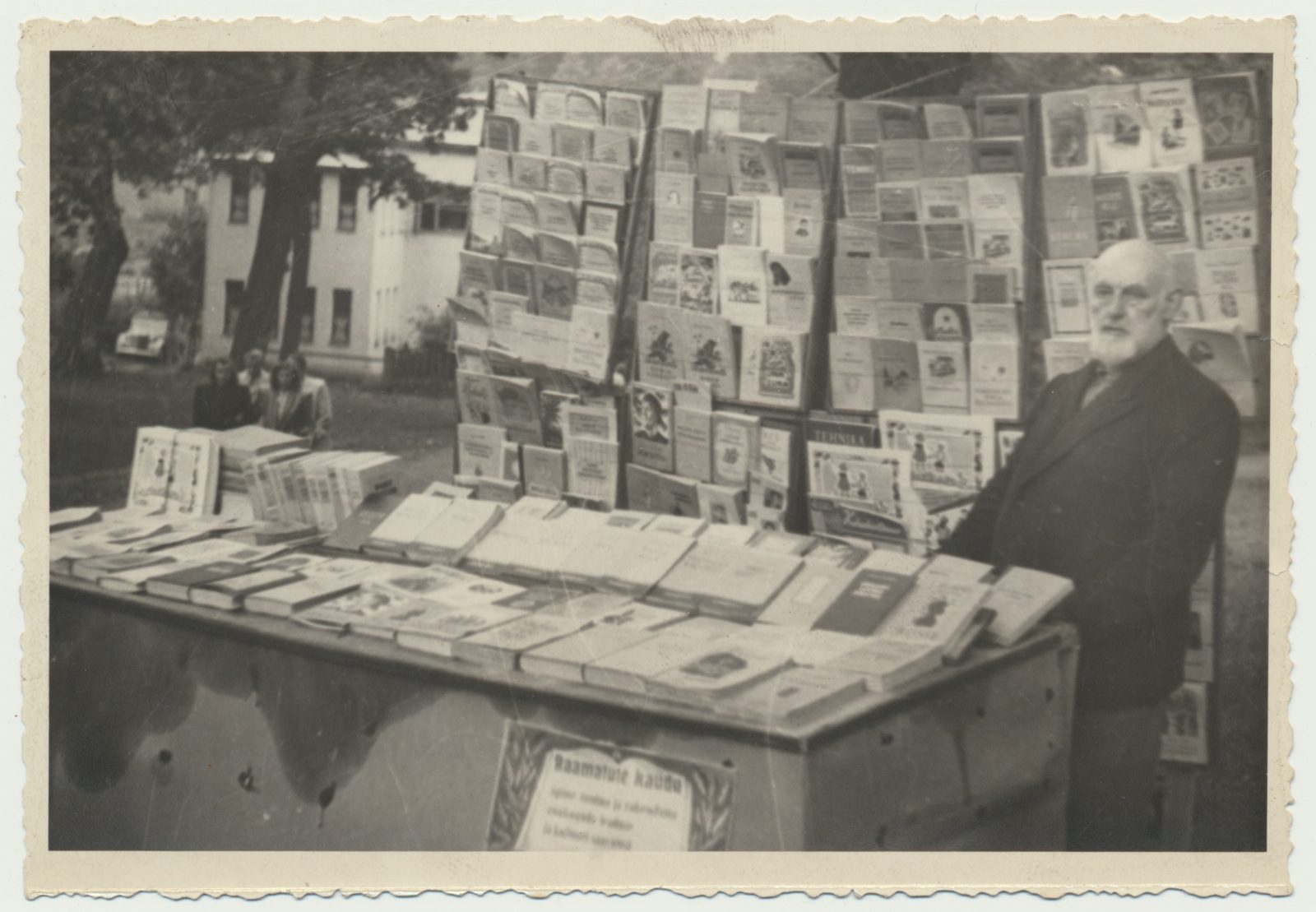
Jaan Leoke selling books in Viljandi around 1950, during the Soviet period.Viljandi Museum, VMF 75 F 725.In The Leokes of Viljandi →
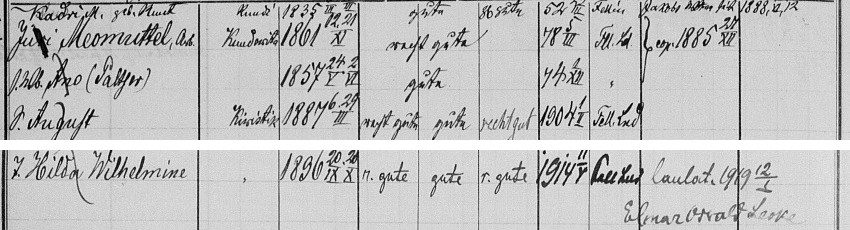
Jüri Meomüttel, his wife Ann née Paltser and son August (top), and Hilda Wilhelmine with the note of her marriage to Elmar Oswald Leoke (bottom).EAA.1290.1.557, pp. 591–592.In Elmar Oswald, Hilda and their daughters →
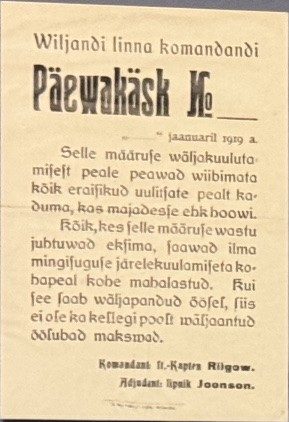
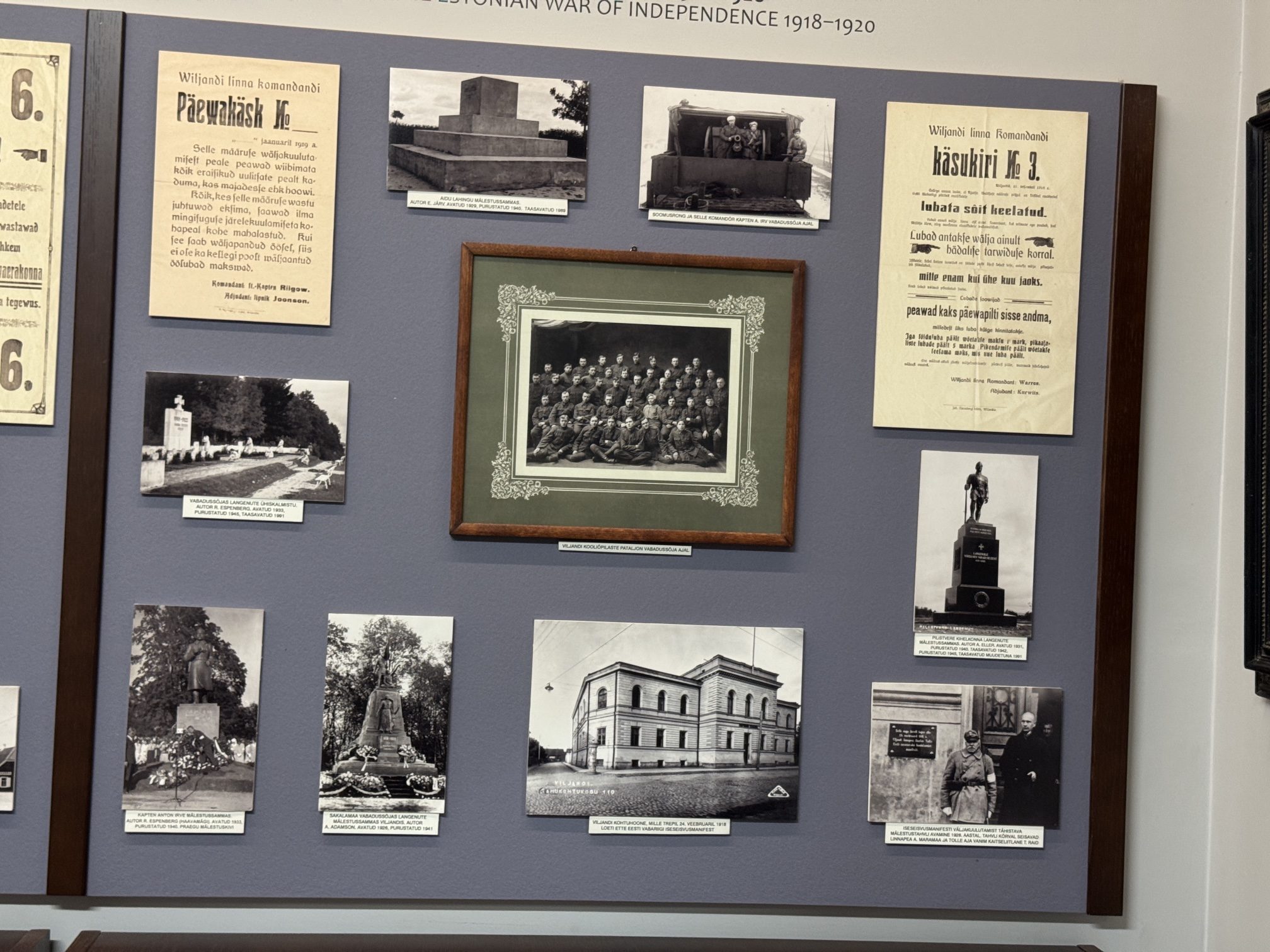
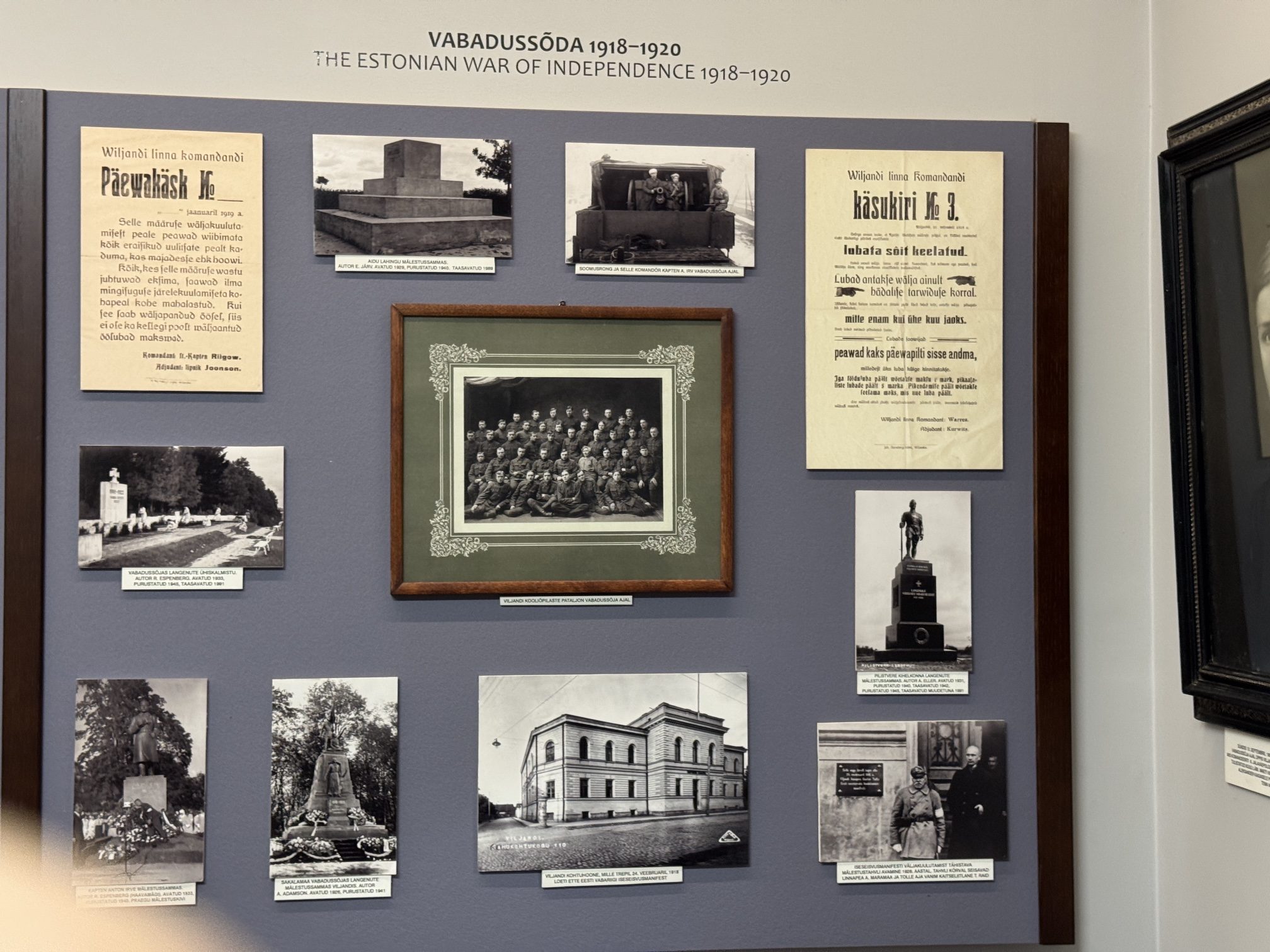
A curfew order printed in January 1919 with the date left blank, to be posted if the town was attacked: anyone found in the streets “will be shot on the spot”.Viljandi Museum.In Elmar Oswald, Hilda and their daughters →
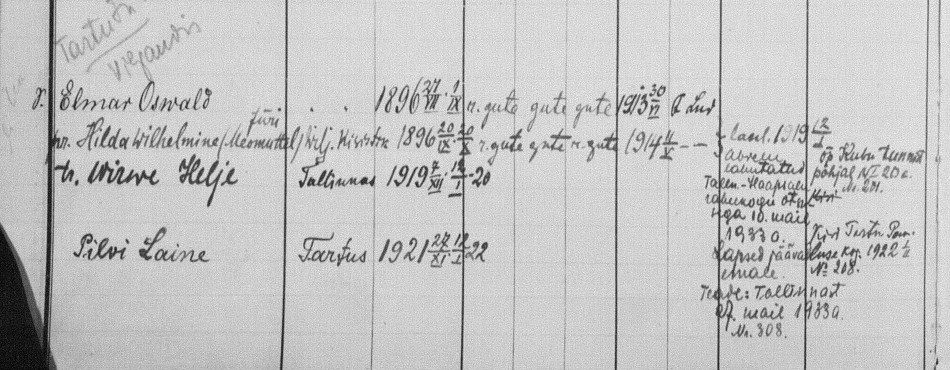
Elmar Oswald, Hilda “(Meomüttel), daughter of Jüri”, Virve Helje and Pilvi Laine in the Viljandi household book. The pencil note at top left reads “Tartu tn. 11, Viljandis”; the marriage, divorce and baptism notes are on the right.EELK Viljandi Pauluse congregation, household book for Vana-Võidu, pp. 229–230.In Elmar Oswald, Hilda and their daughters →
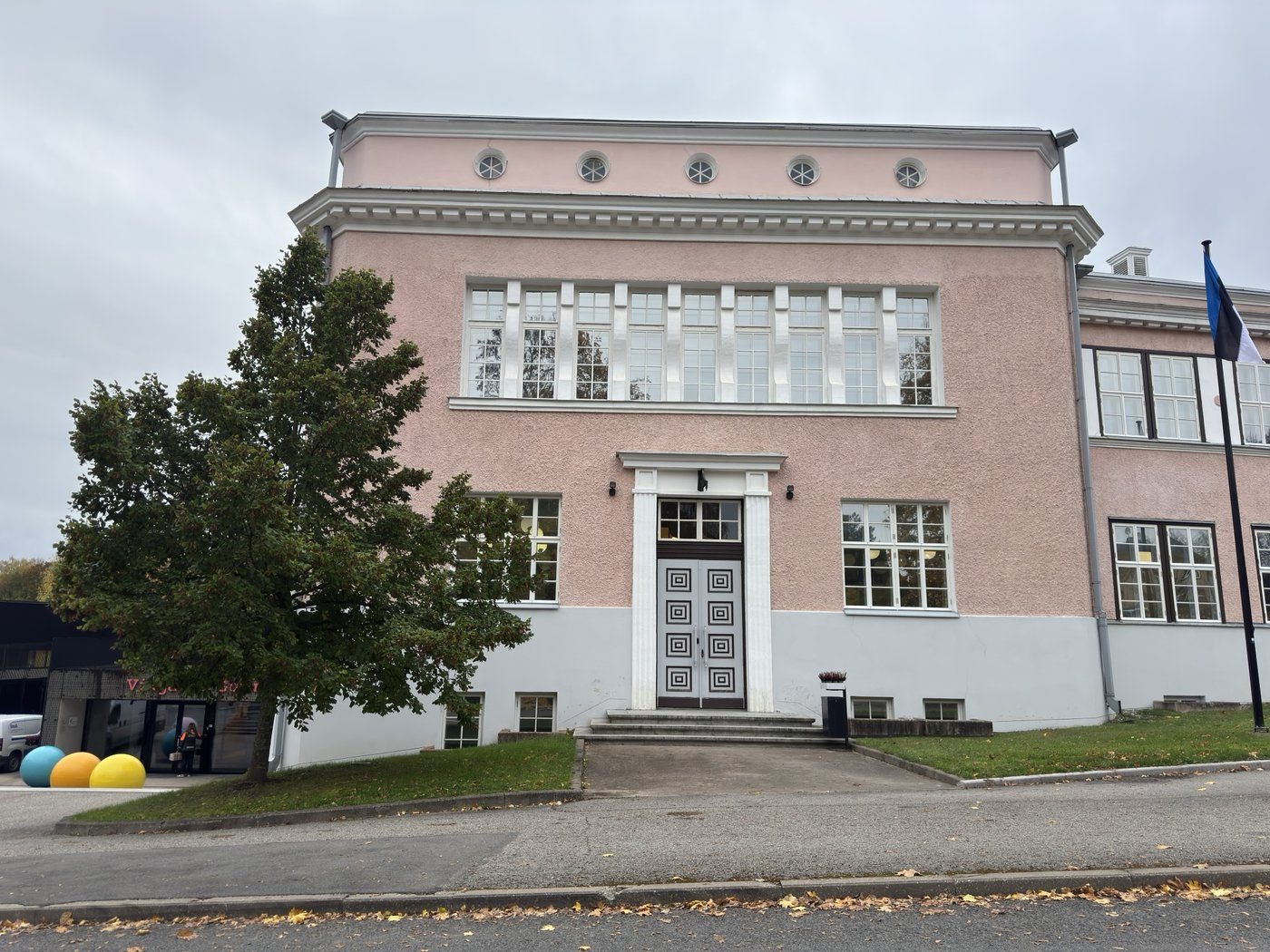
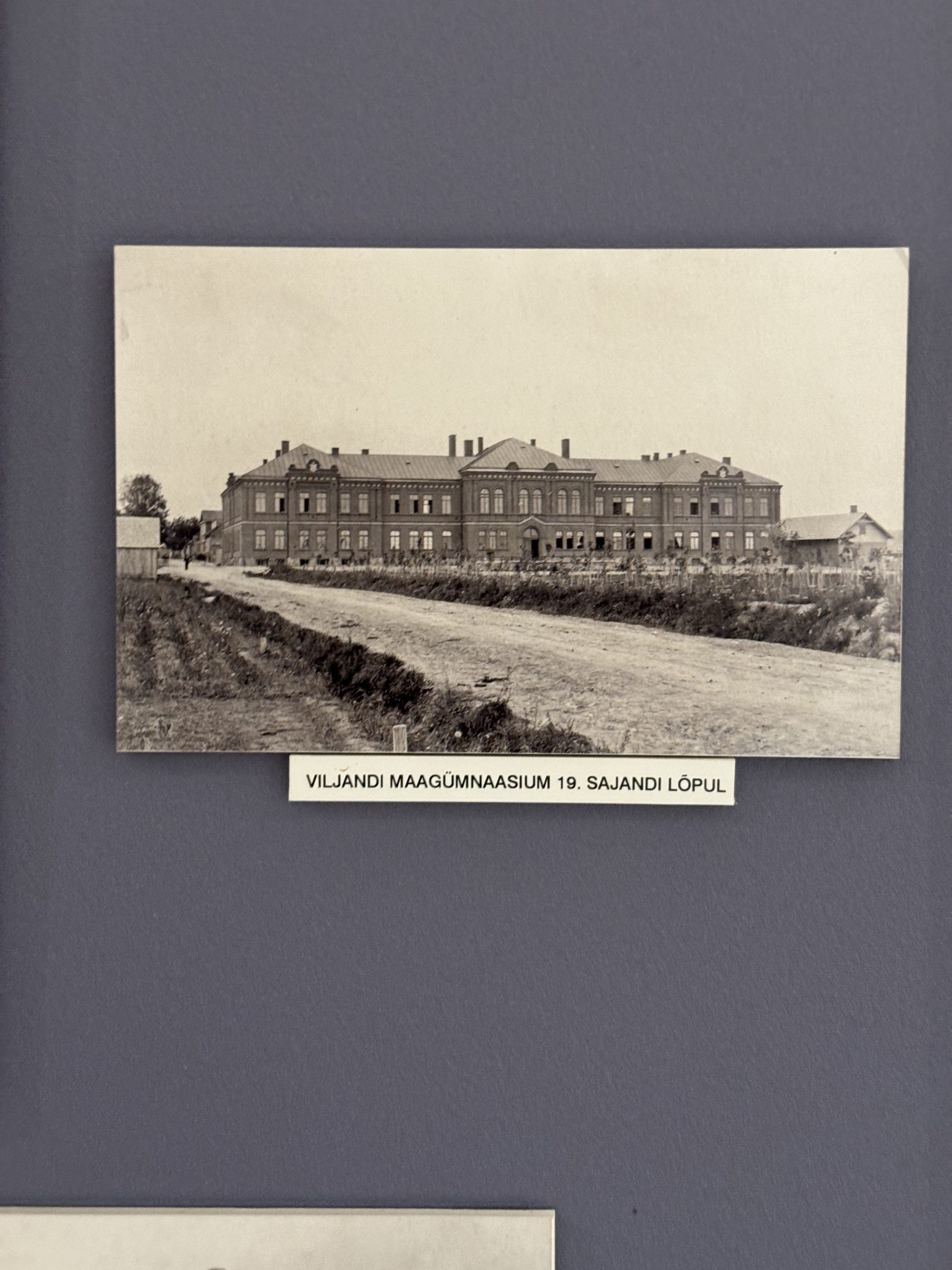
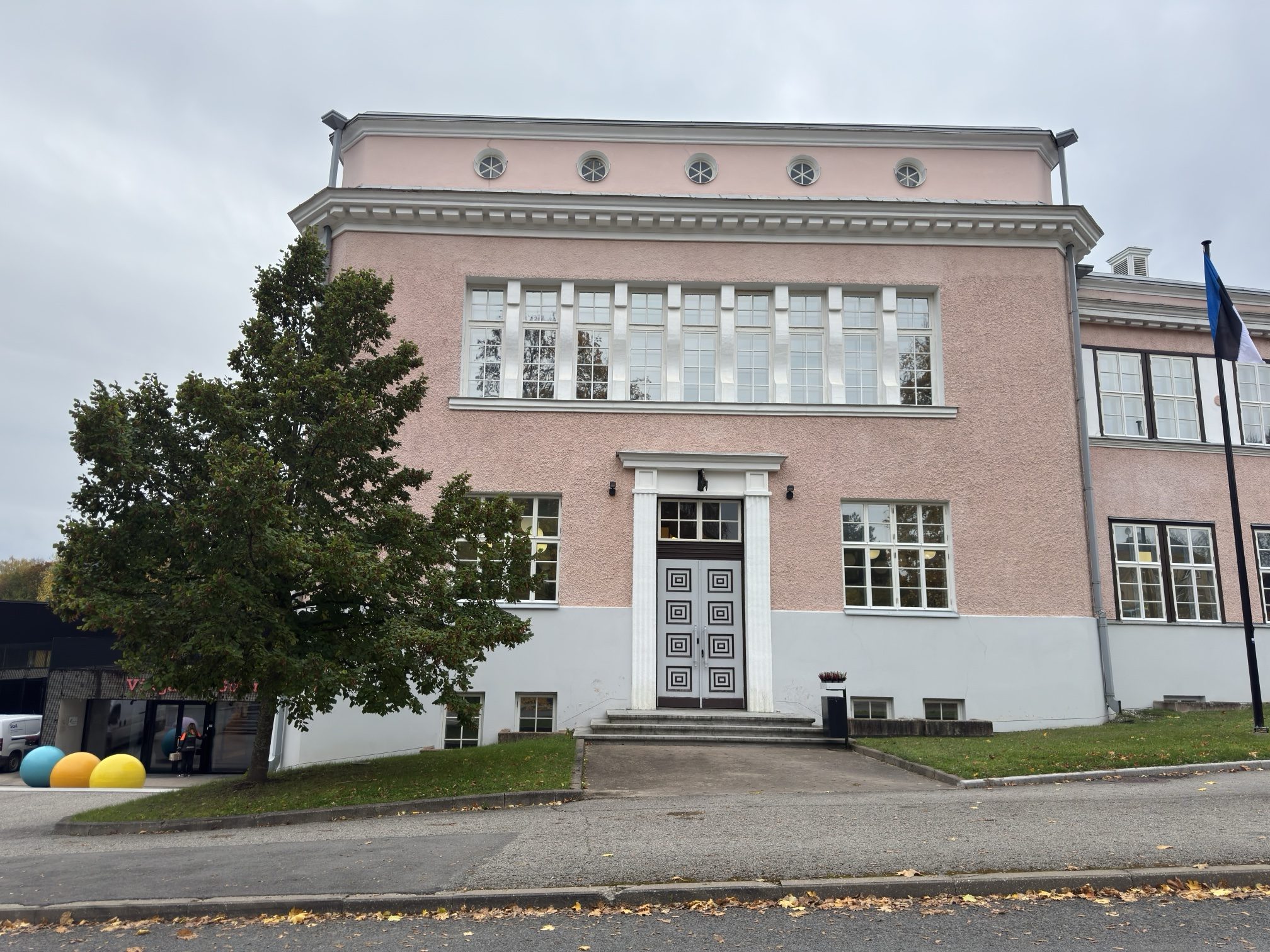
The school building at Hariduse 2, now Viljandi Gümnaasium, in October 2026. Pilvi recalled attending school here; the years are not yet known. In Elmar Oswald, Hilda and their daughters →
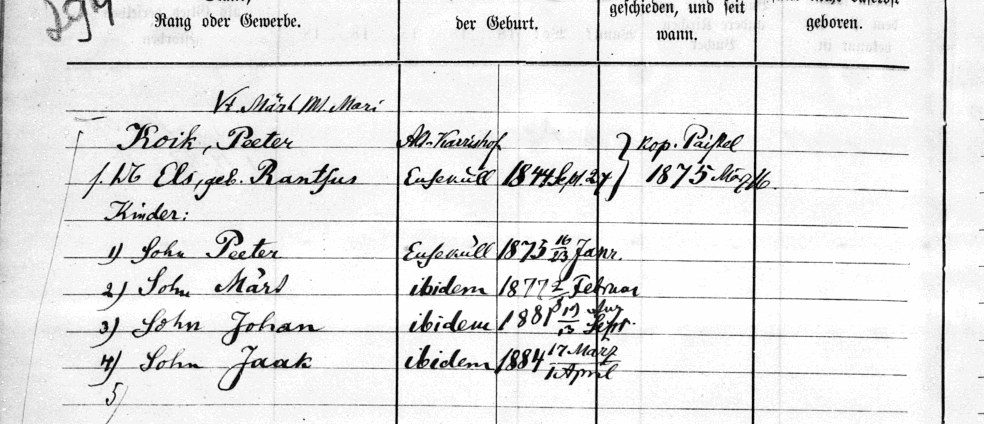
Paistu household book: Peeter Koik, born at Alt-Karrishof (Vana-Kariste), parents Märt and Mari; his wife Els, entered as née “Ranthus” and born at Euseküll (Õisu) on 27 September 1844 (the baptism register gives Rantsus and 24 September); married in Paistu in 1875; and their sons, including “Sohn Johan”, born 19 August 1881 (Old Style).EAA, Paistu congregation.In The Koiks of Karksi →
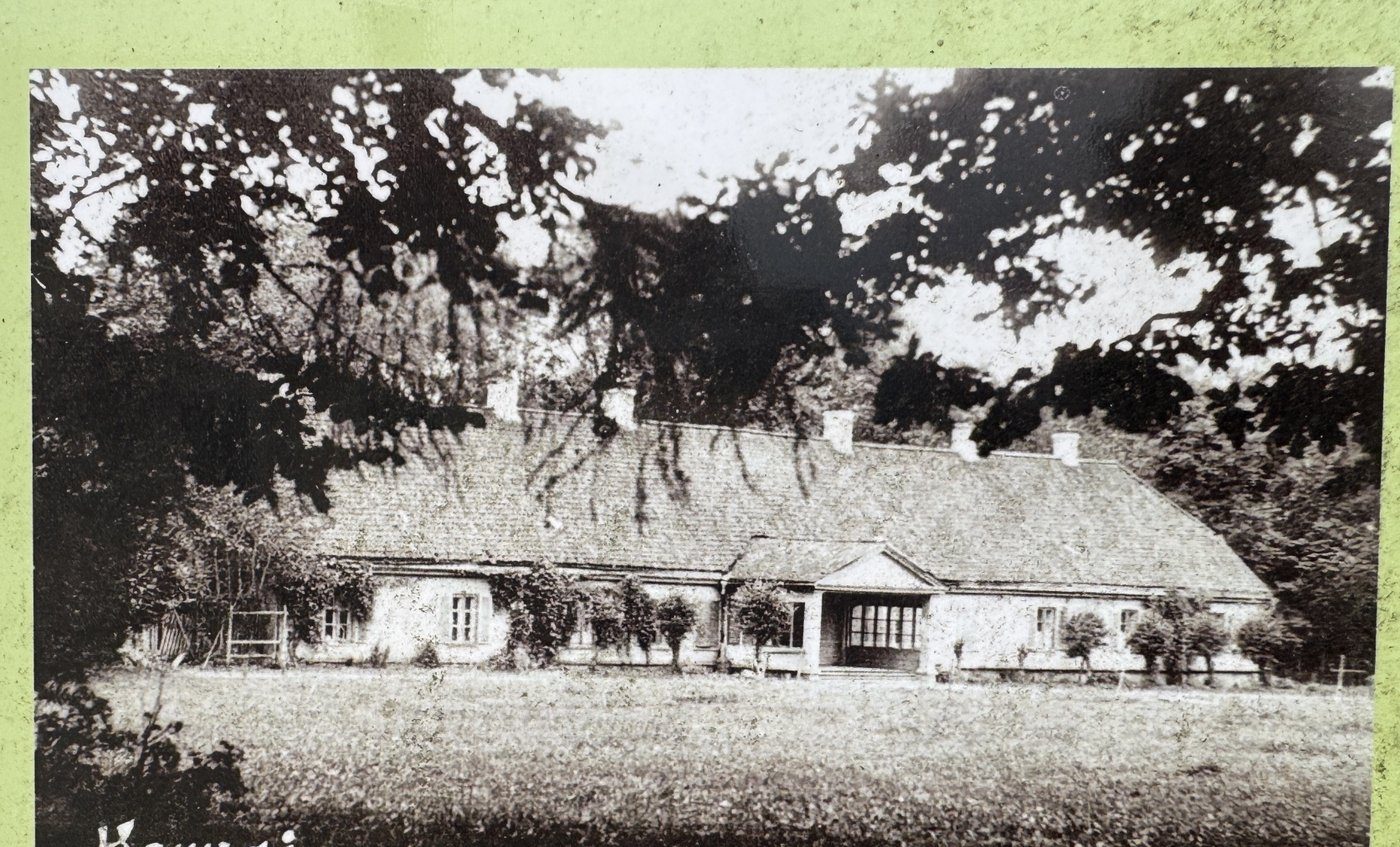
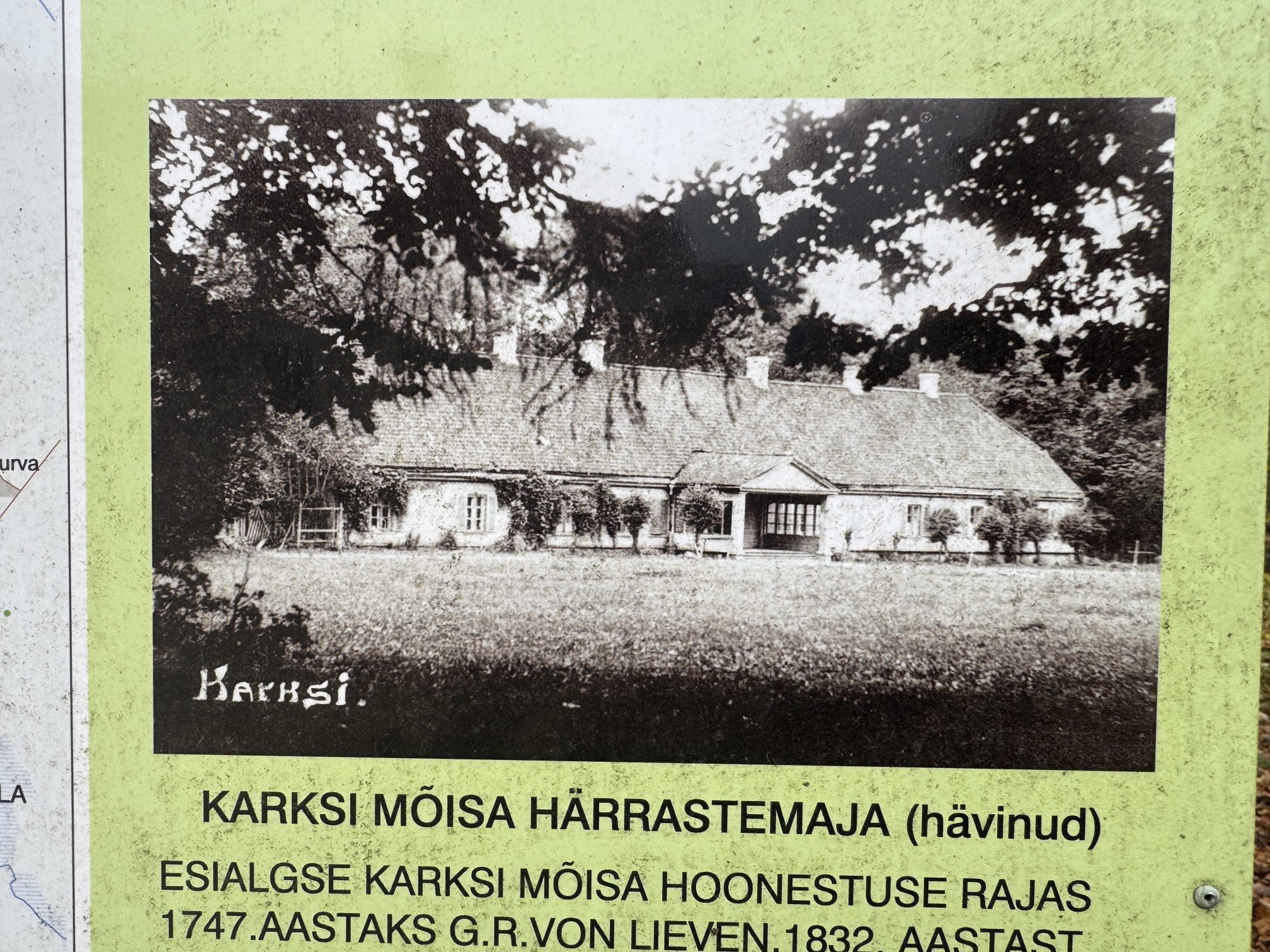
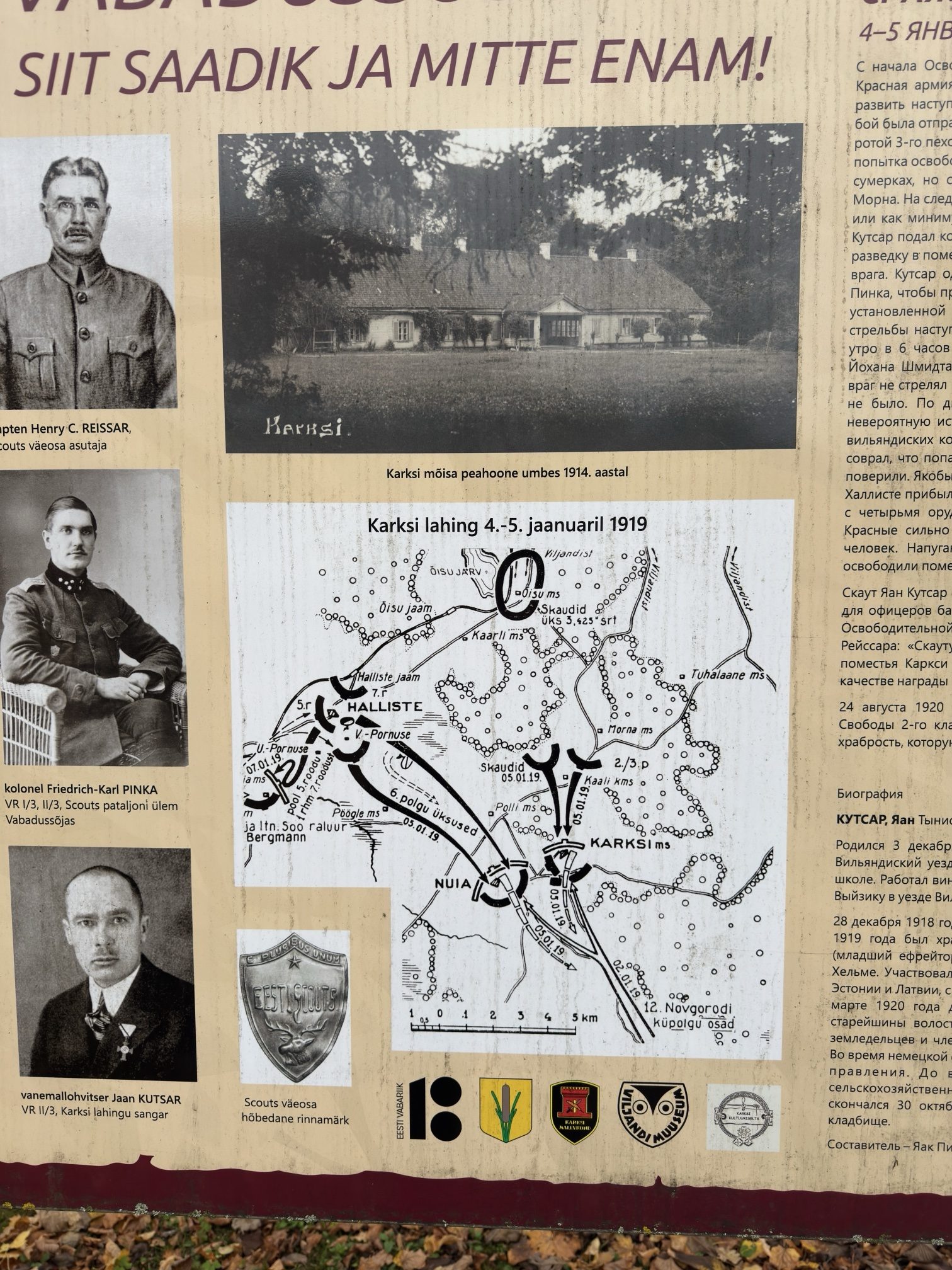
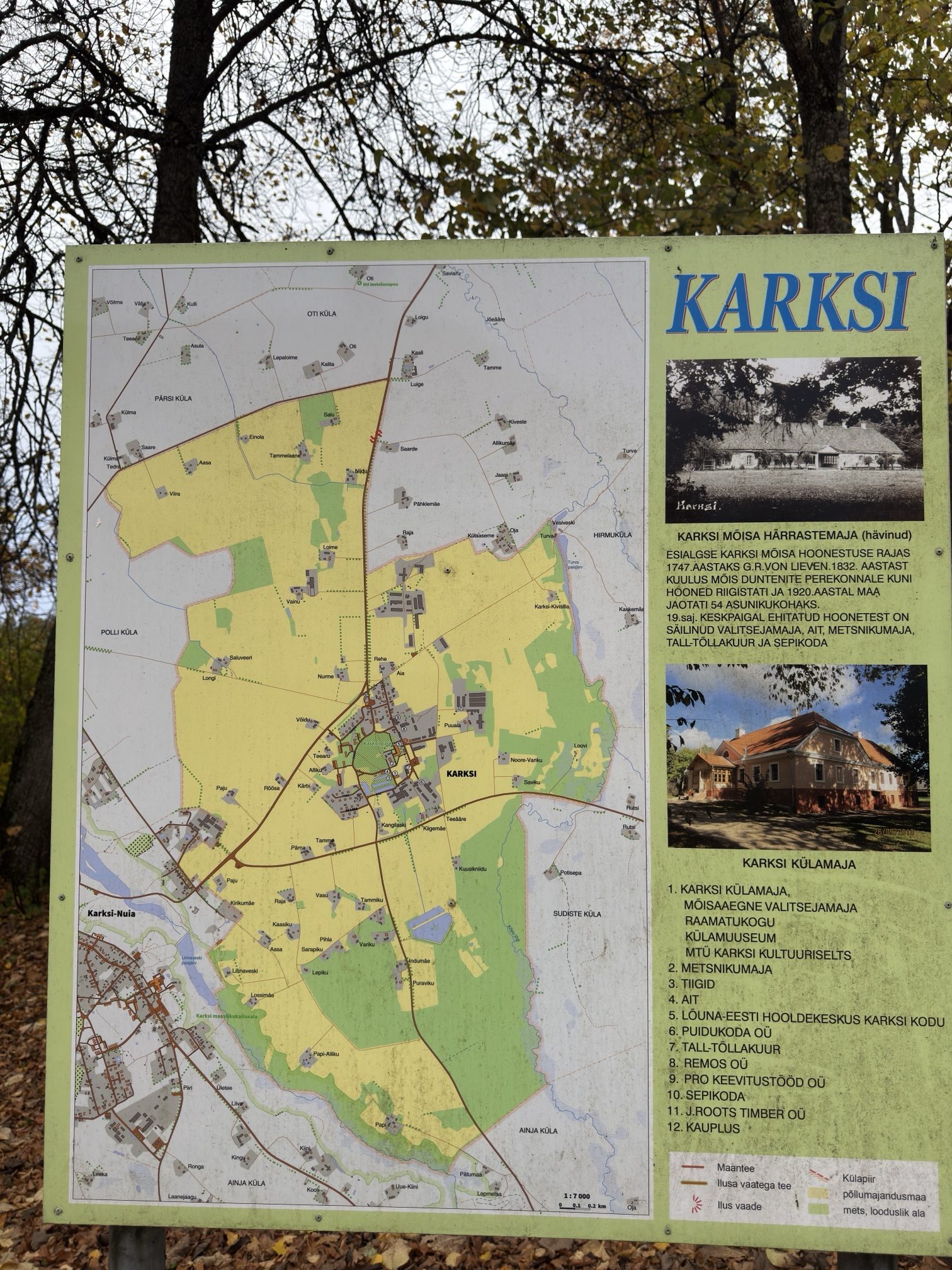
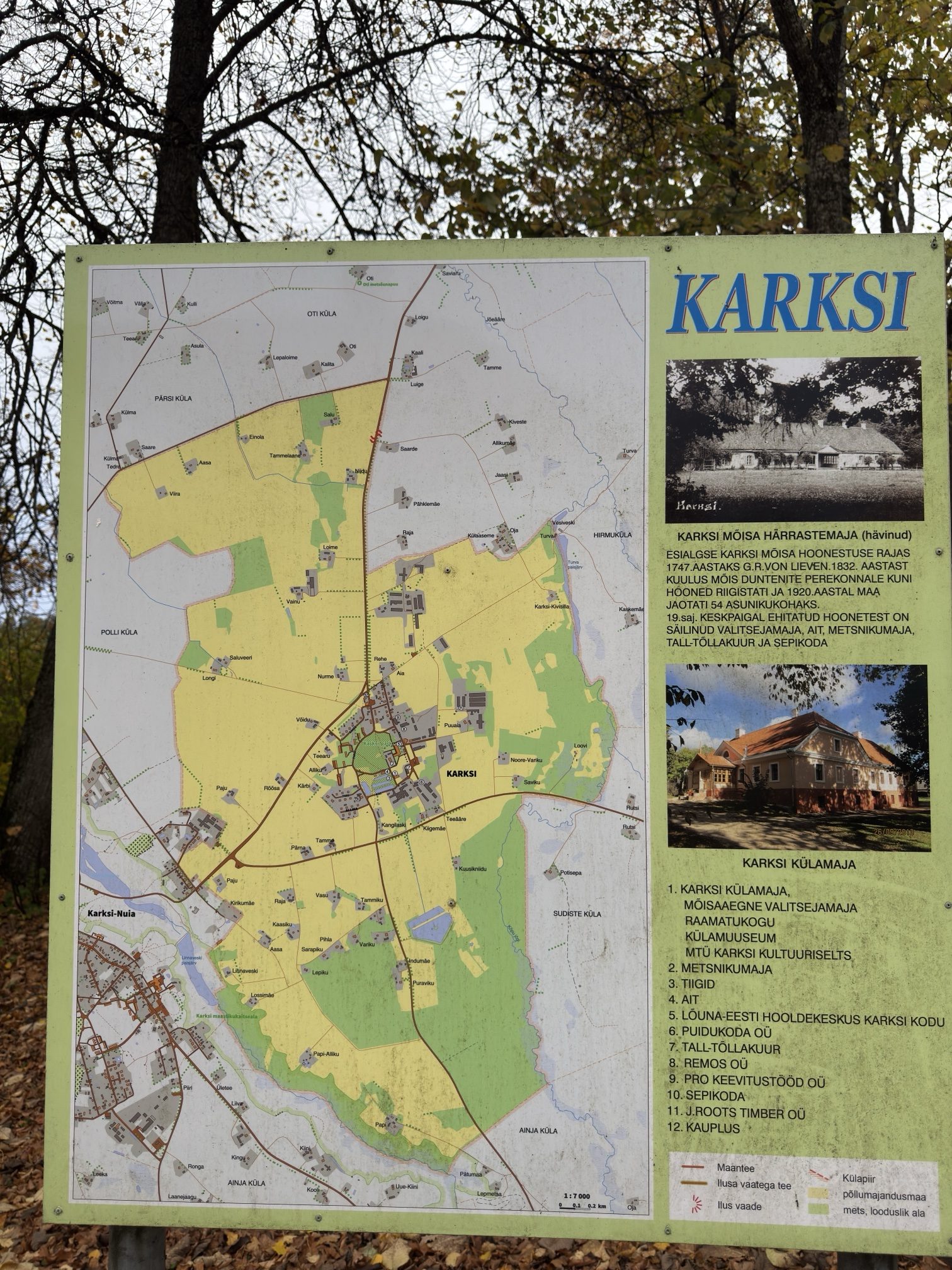
Karksi manor house about 1914: the long, low house with its pillared porch. The building no longer survives.Information board, Karksi.In The Koiks of Karksi →
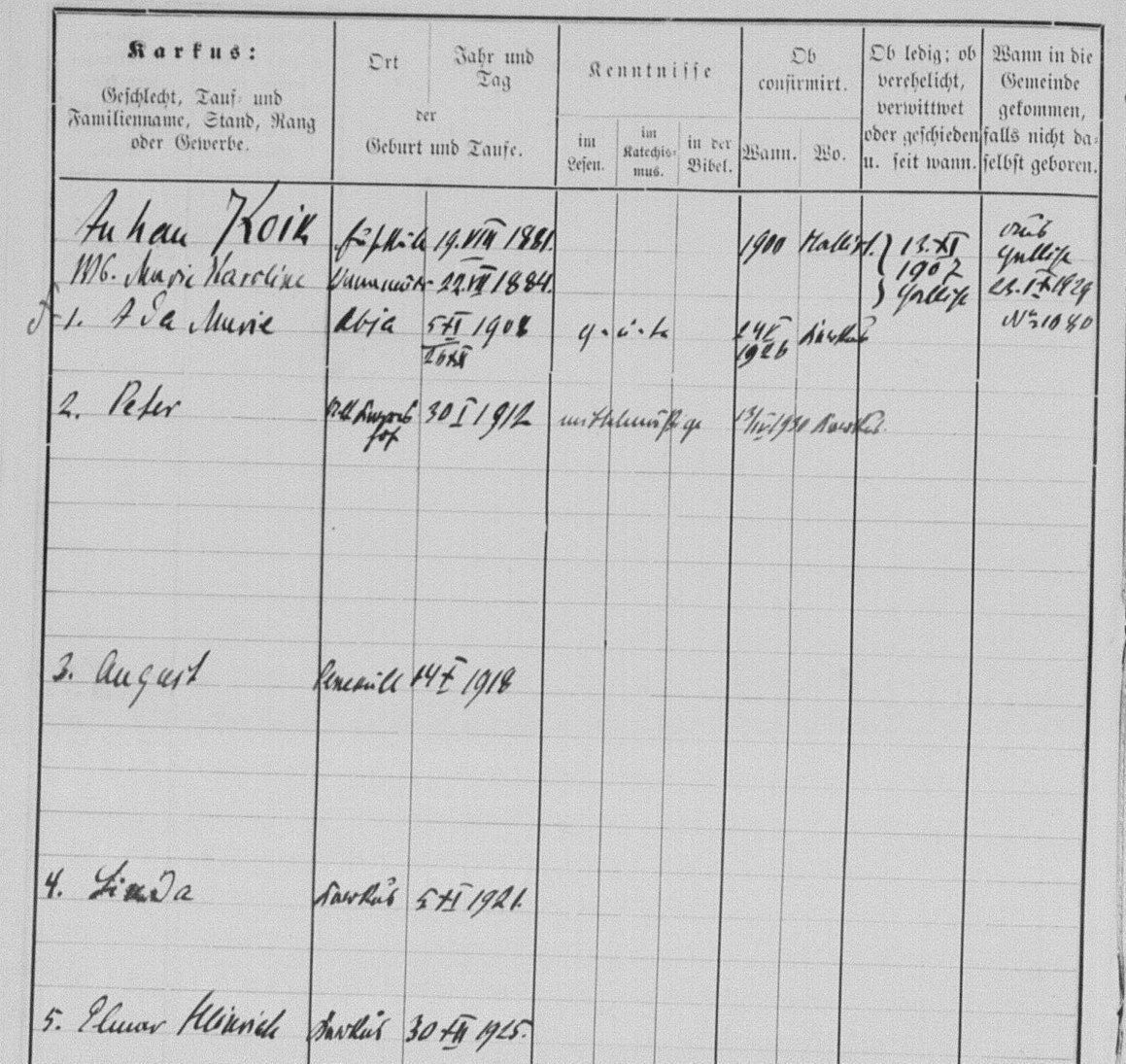
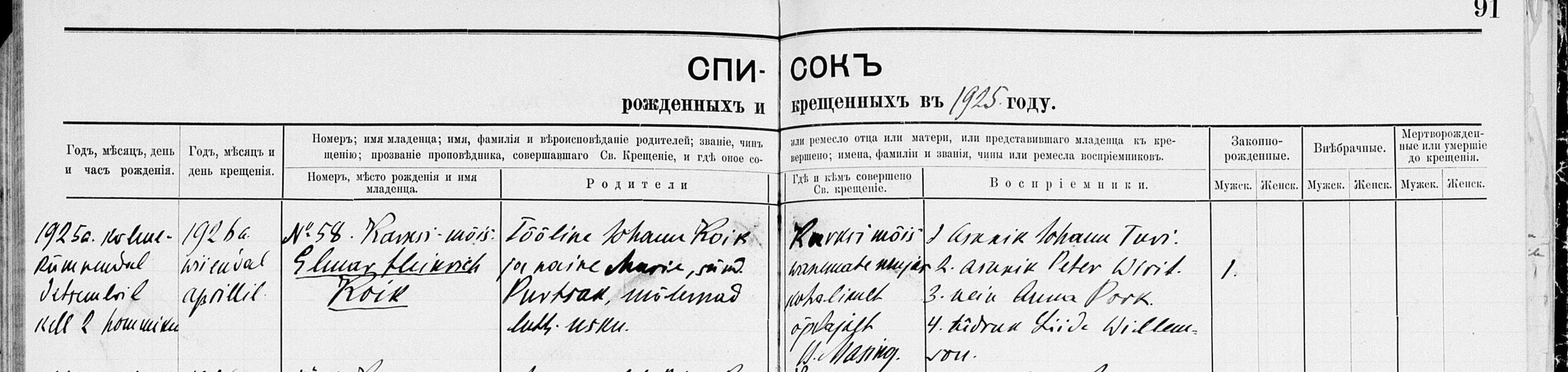
Karksi congregation, birth register for 1925, page 91. Elmar’s entry, first on the page, records his birth in December 1925 and baptism in April 1926.Estonian National Archives, EAA.1276.1.335.In The Koiks of Karksi →
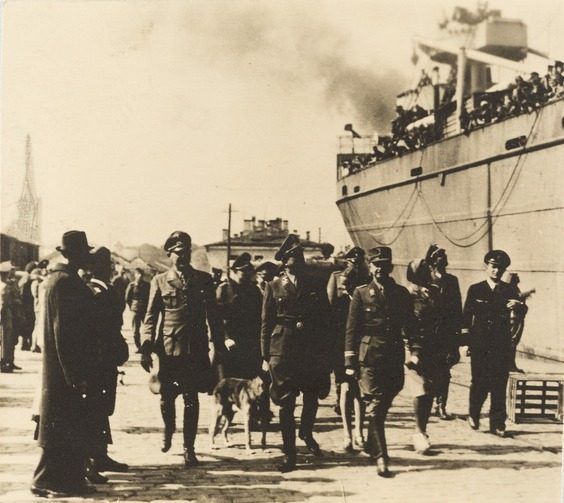
General Commissioner Litzmann and his staff going to the ship in Tallinn harbor, September 1944, probably the Wartheland on 20 September. The photograph illustrates the evacuation; it does not establish that the Leokes traveled on this ship. Refugees crowd the rails above. St Olaf’s spire is on the left, so this is the main harbor north of the Old Town. From the photo archive of the Stockholm exile newspaper Eesti Päevaleht.Estonian National Museum, ERM Fk 3051:5377.In Leaving Estonia, 1944 →
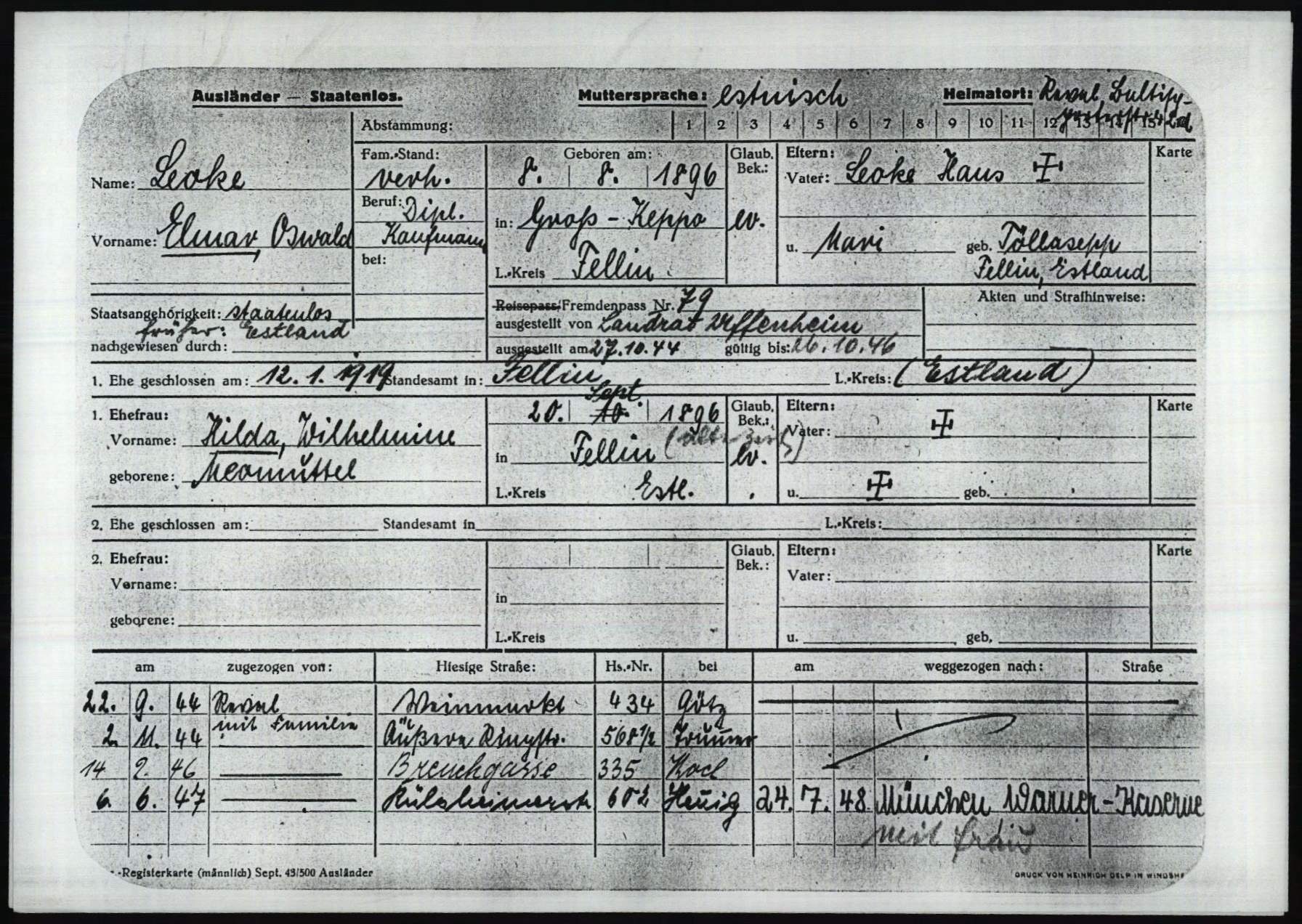
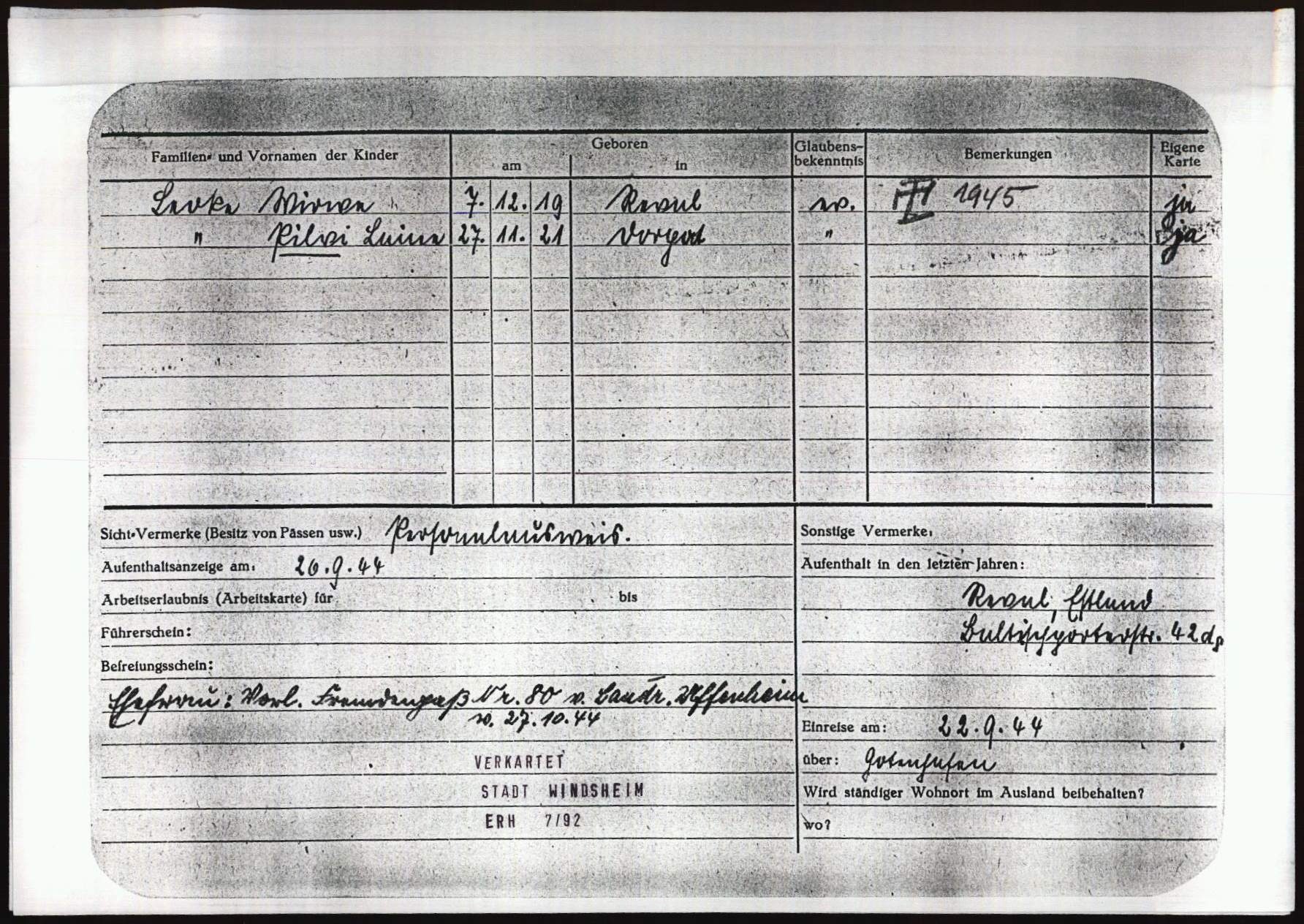
Elmar Oswald Leoke’s Windsheim registration card: born 8 August 1896 at Groß-Keppo (Suure-Kõpu), parents Hans and Mari née Tõllasepp, married Hilda Wilhelmine on 12 January 1919 in Viljandi.Arolsen Archives.In Germany, 1944–1948 →
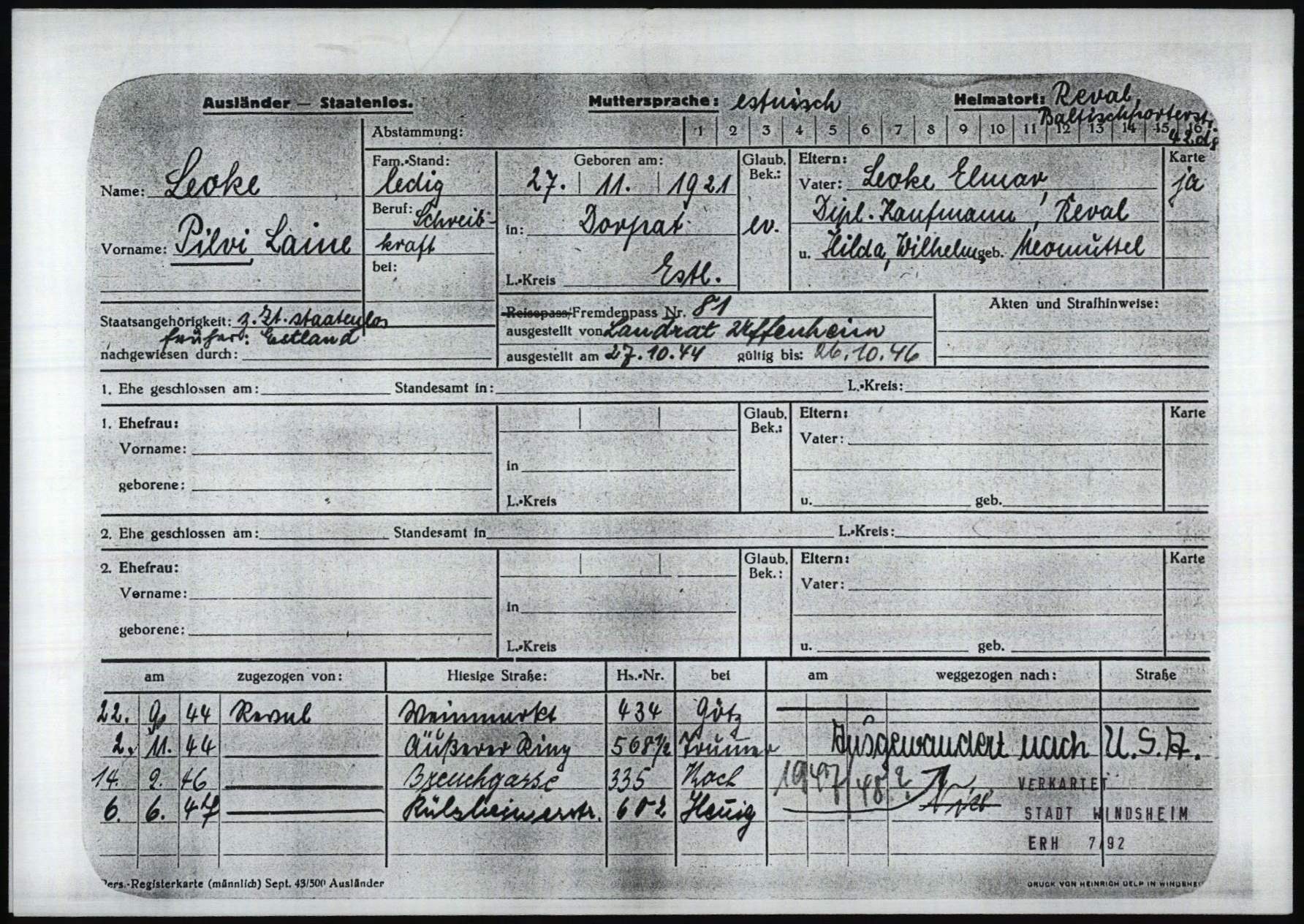
Pilvi Laine Leoke’s card: born 27 November 1921 in Dorpat (Tartu), single, typist. The note on the right reads “emigrated to U.S.A.”Arolsen Archives.In Germany, 1944–1948 →
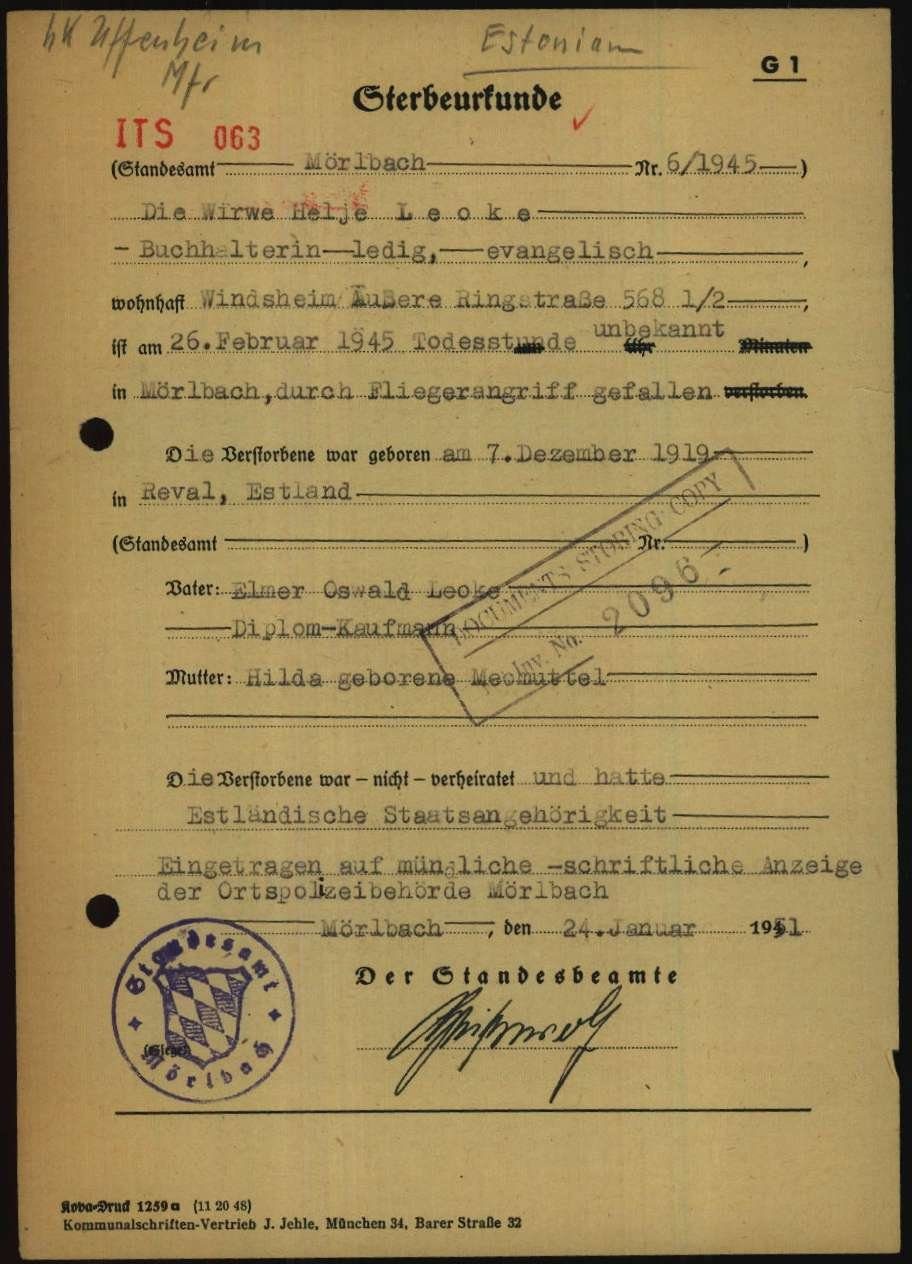
Virve’s death certificate, Mörlbach registry no. 6/1945, issued 24 January 1951.Arolsen Archives.In Germany, 1944–1948 →
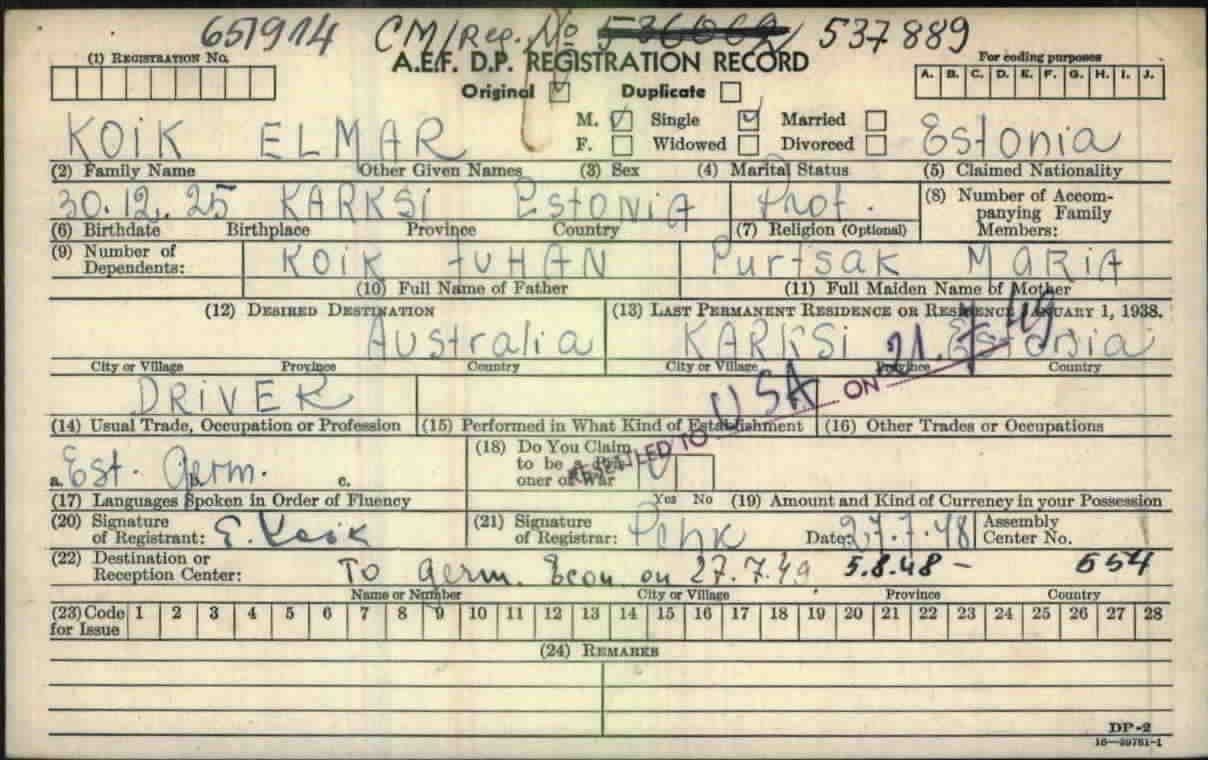
Elmar Koik’s DP registration record, 27 July 1948: a driver, speaking Estonian and German, last resident in Karksi. In Germany, 1944–1948 →
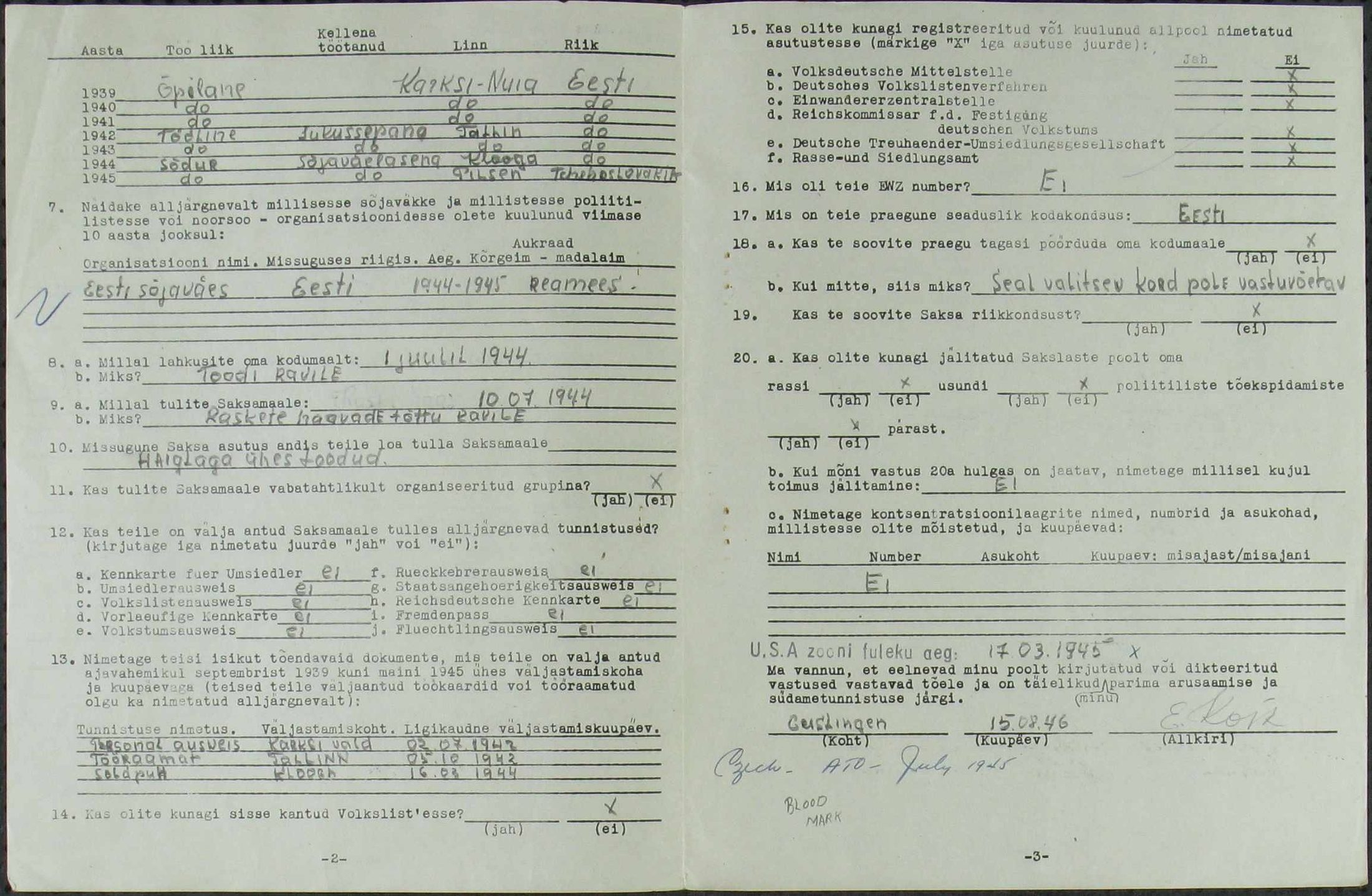
Elmar’s 1946 questionnaire, recording his wounding at Vaivara and his hospitals.Arolsen Archives.In Germany, 1944–1948 →
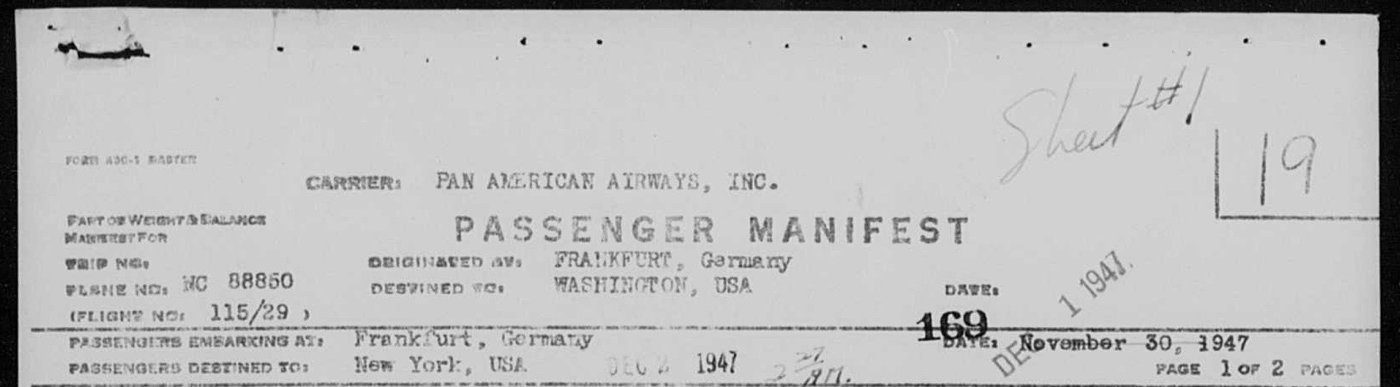
The header of the Pan American Airways passenger manifest for Pilvi’s flight, Frankfurt, 30 November 1947.US National Archives.In To America, 1947–1952 →
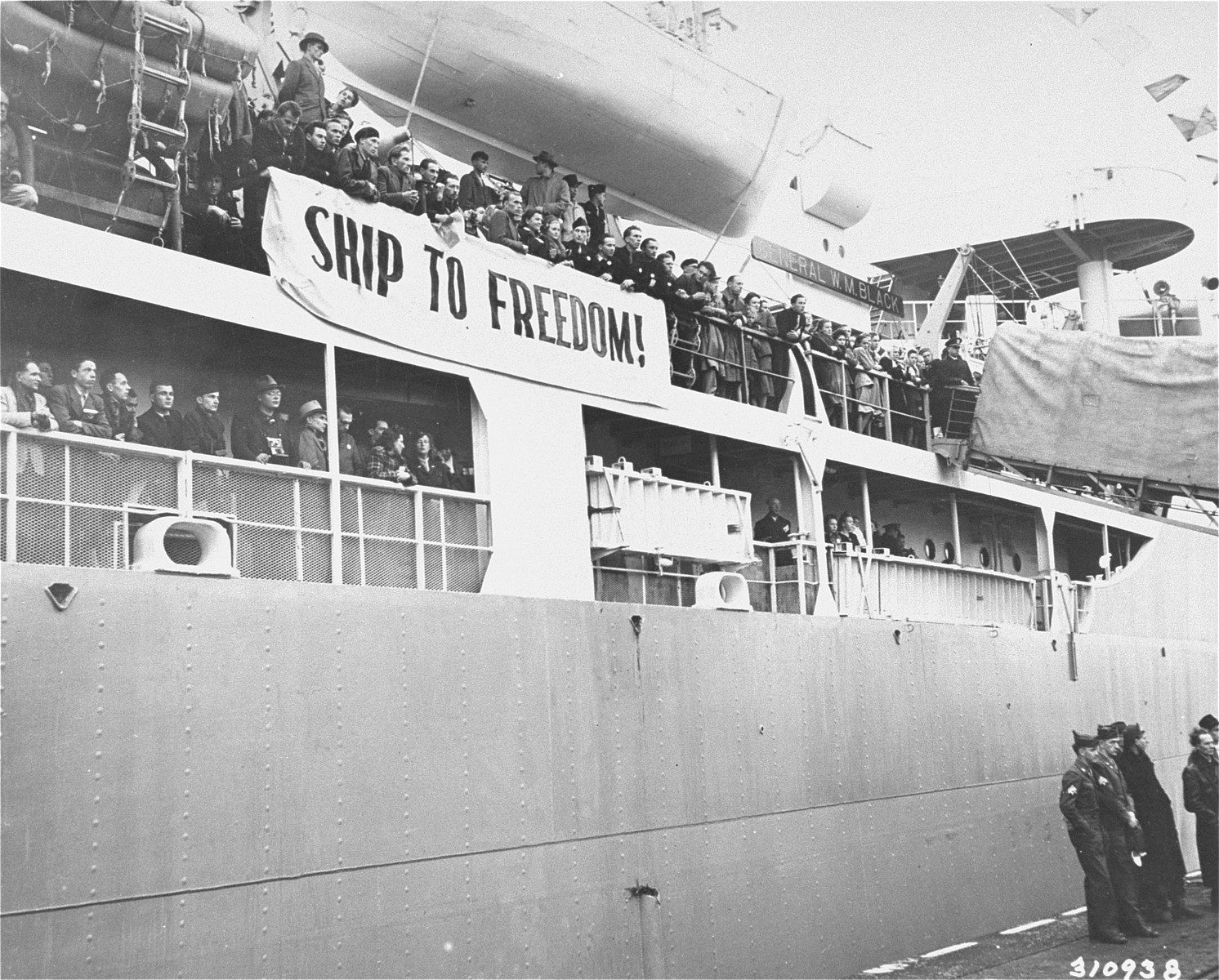
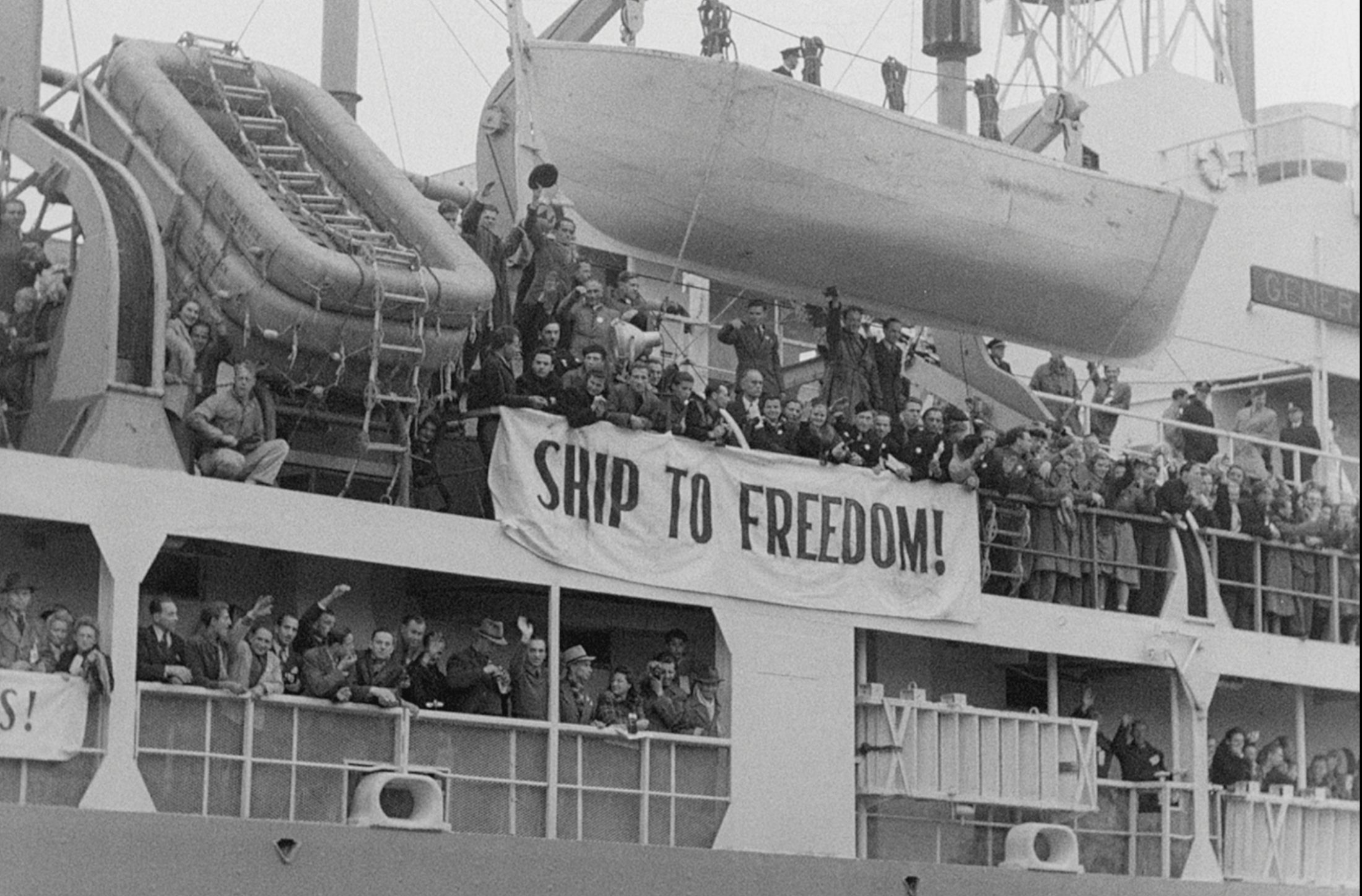
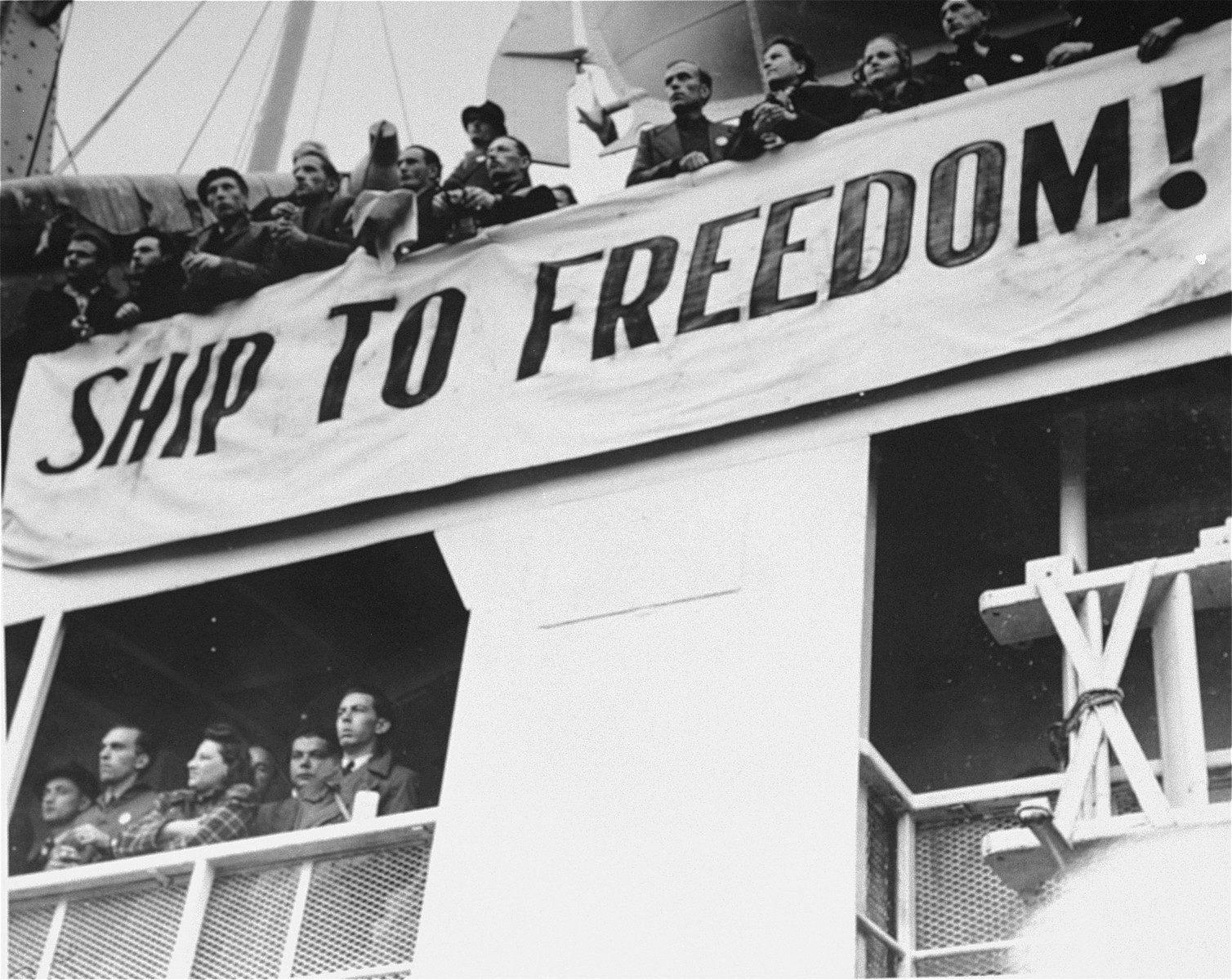
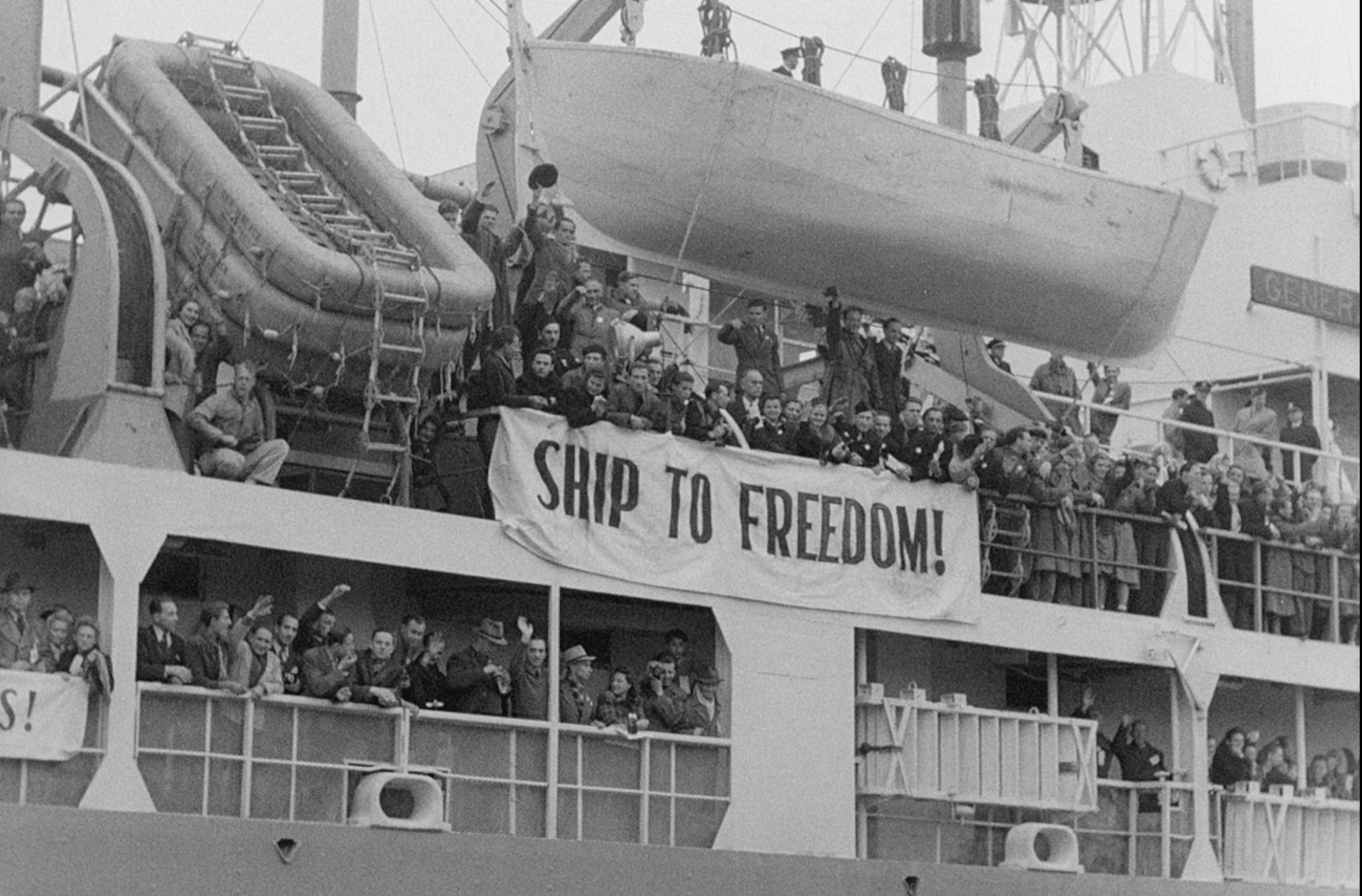
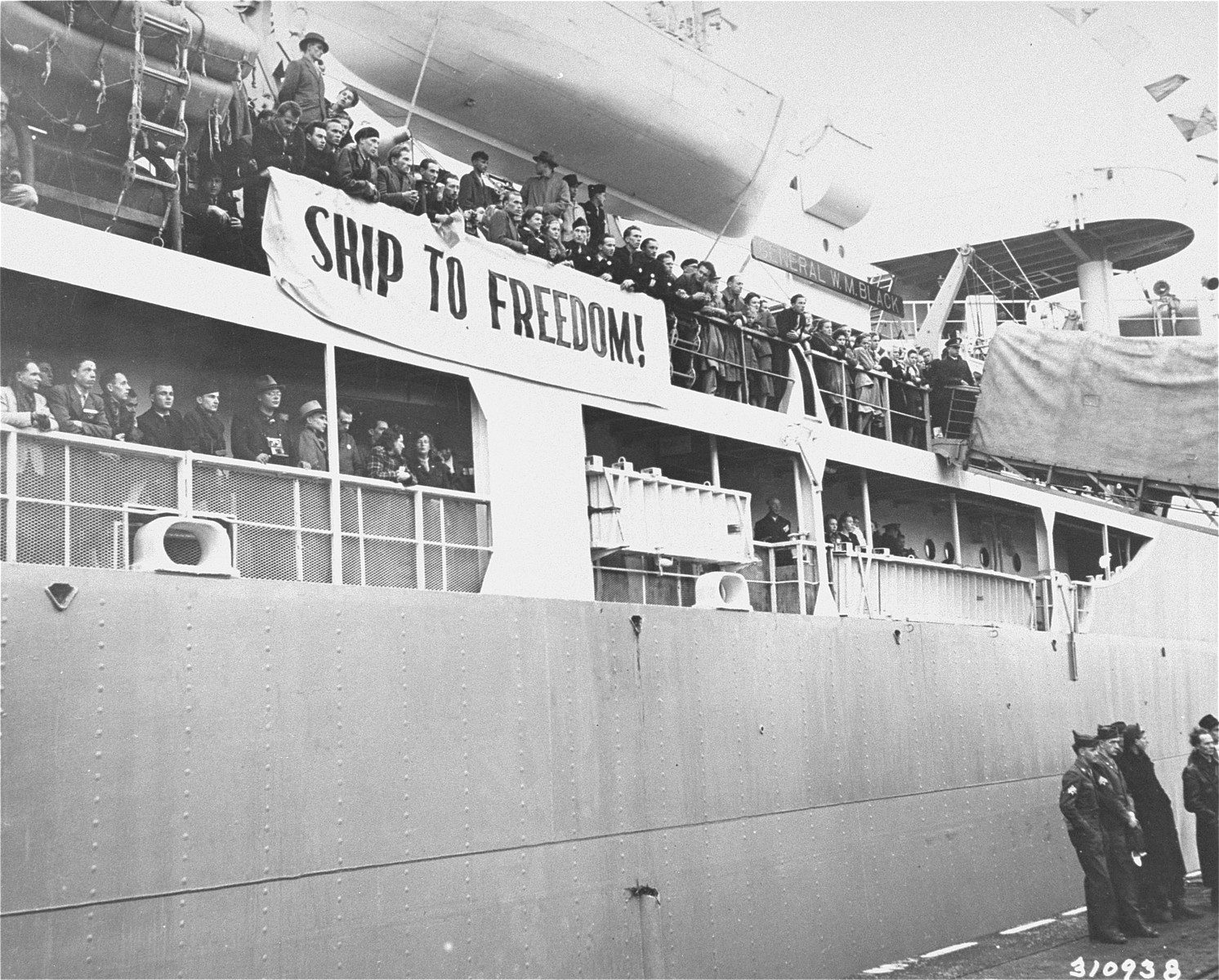
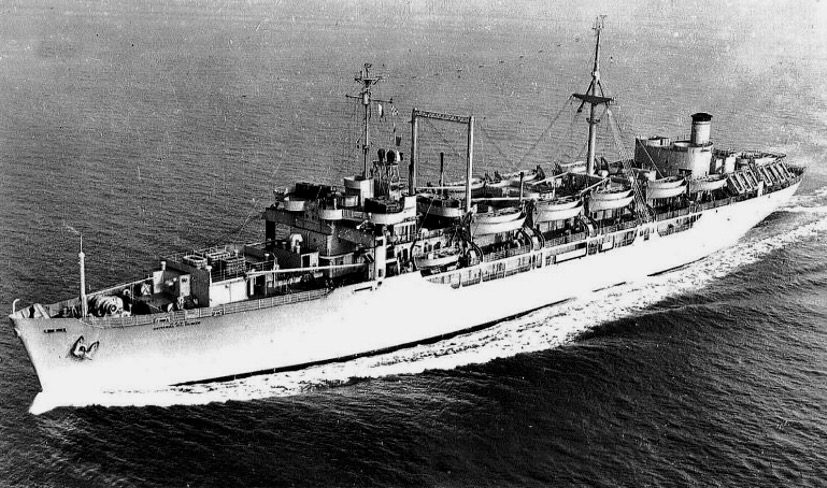
“Ship to Freedom!” The General W. M. Black leaving Bremerhaven in October 1948 on the first DP sailing to America, with its nameboard above the banner. Elmar Oswald and Hilda were aboard.US Army Signal Corps photograph 111-SC-310938; US Holocaust Memorial Museum, courtesy of NARA.In To America, 1947–1952 →
Emigration list naming Elmar Oswald Leoke (economist) and Hilda Wilhelmine Leoke (housewife), both listed as 51, sponsored by Peter Leoke of Los Angeles. A later penciled note gives Hilda’s alien registration number; the place and date written with it may belong to the next passenger on the list.Arolsen Archives.In To America, 1947–1952 →
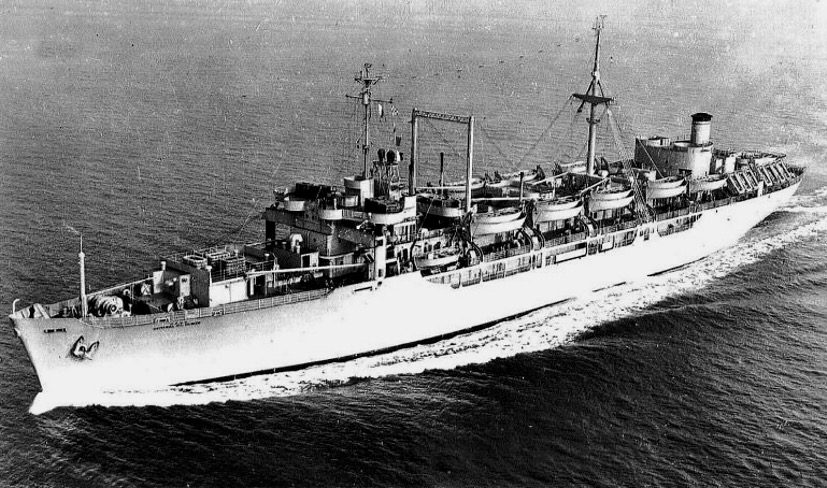
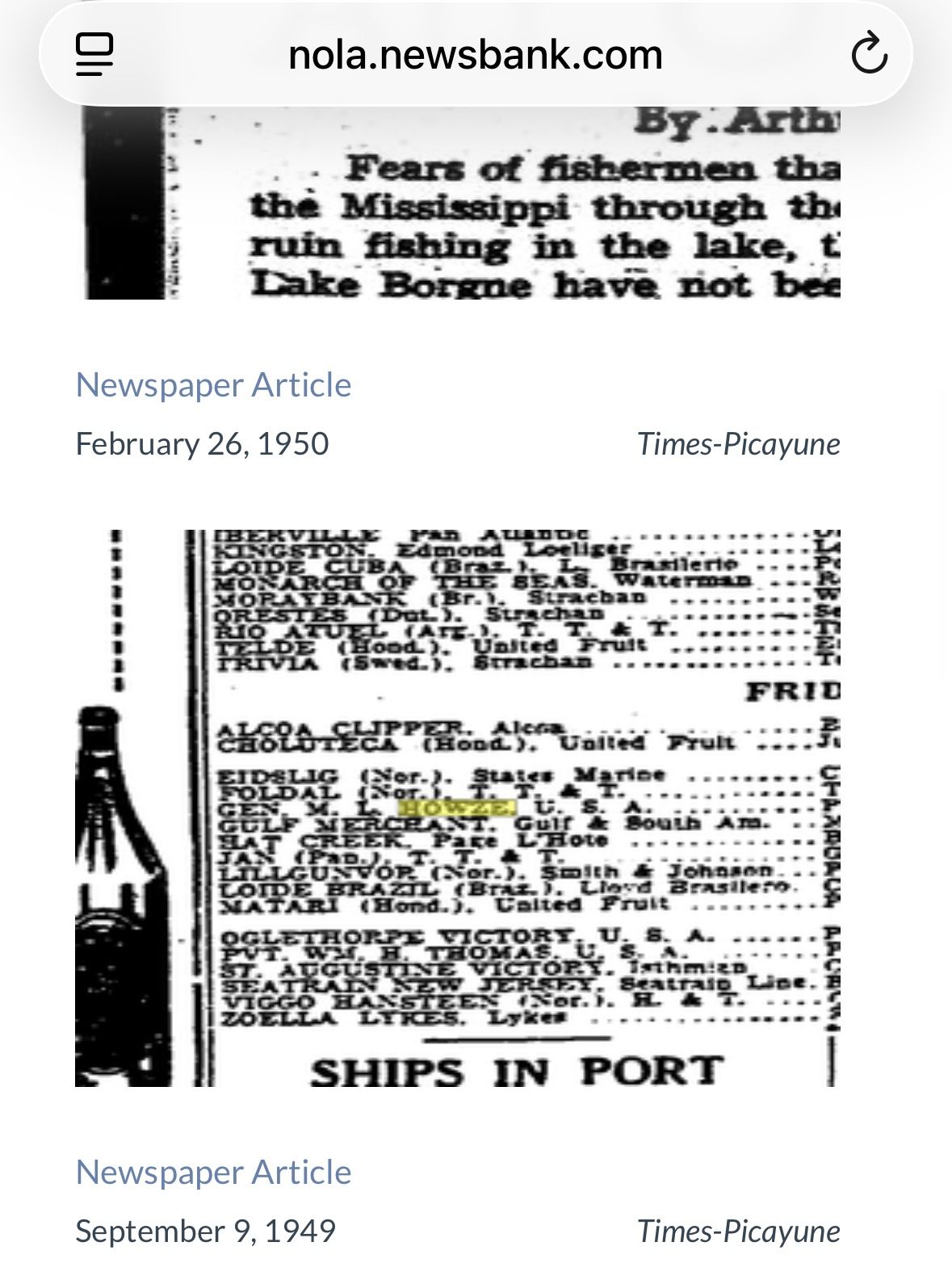
The transport General R. L. Howze, which carried Elmar from Bremerhaven to New Orleans in September 1949. The Times-Picayune listed it in the port’s shipping column on 9 September.US Navy photograph, early 1950s.In To America, 1947–1952 →
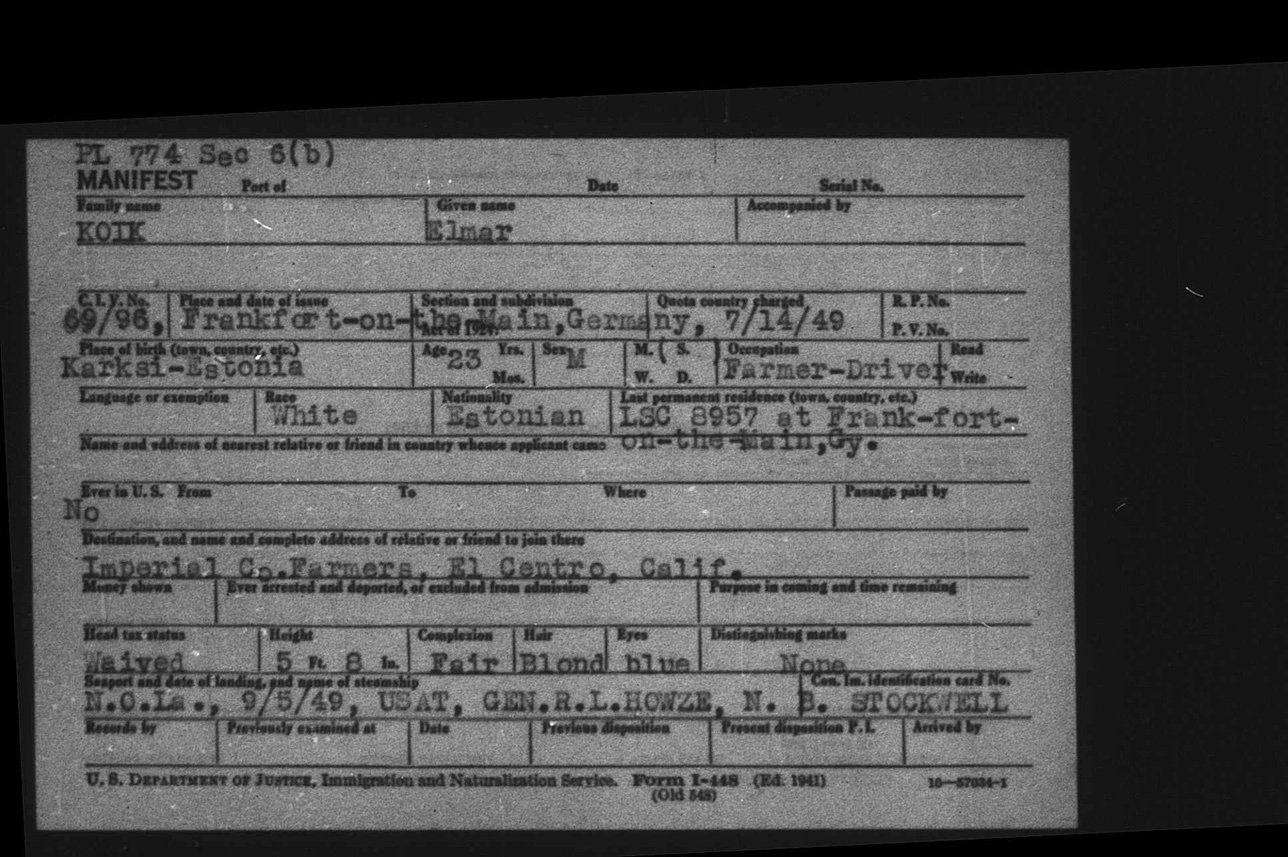
Elmar’s arrival card, filled in at the dock: born Karksi, farmer-driver, last residence a US Army labor company at Frankfurt, bound for Imperial County Farmers; landed “N.O.La., 9/5/49, USAT Gen. R. L. Howze”.US National Archives.In To America, 1947–1952 →
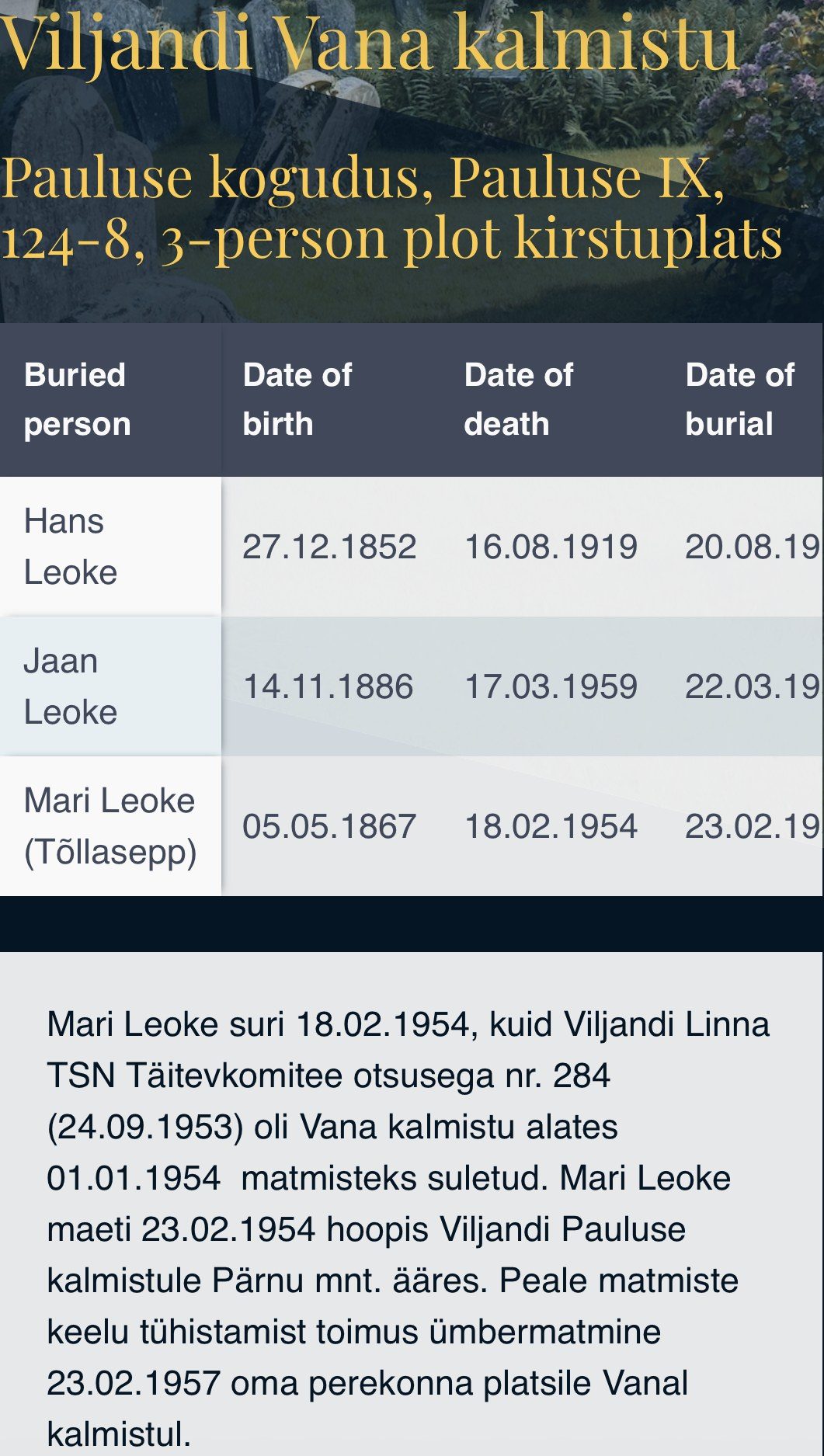
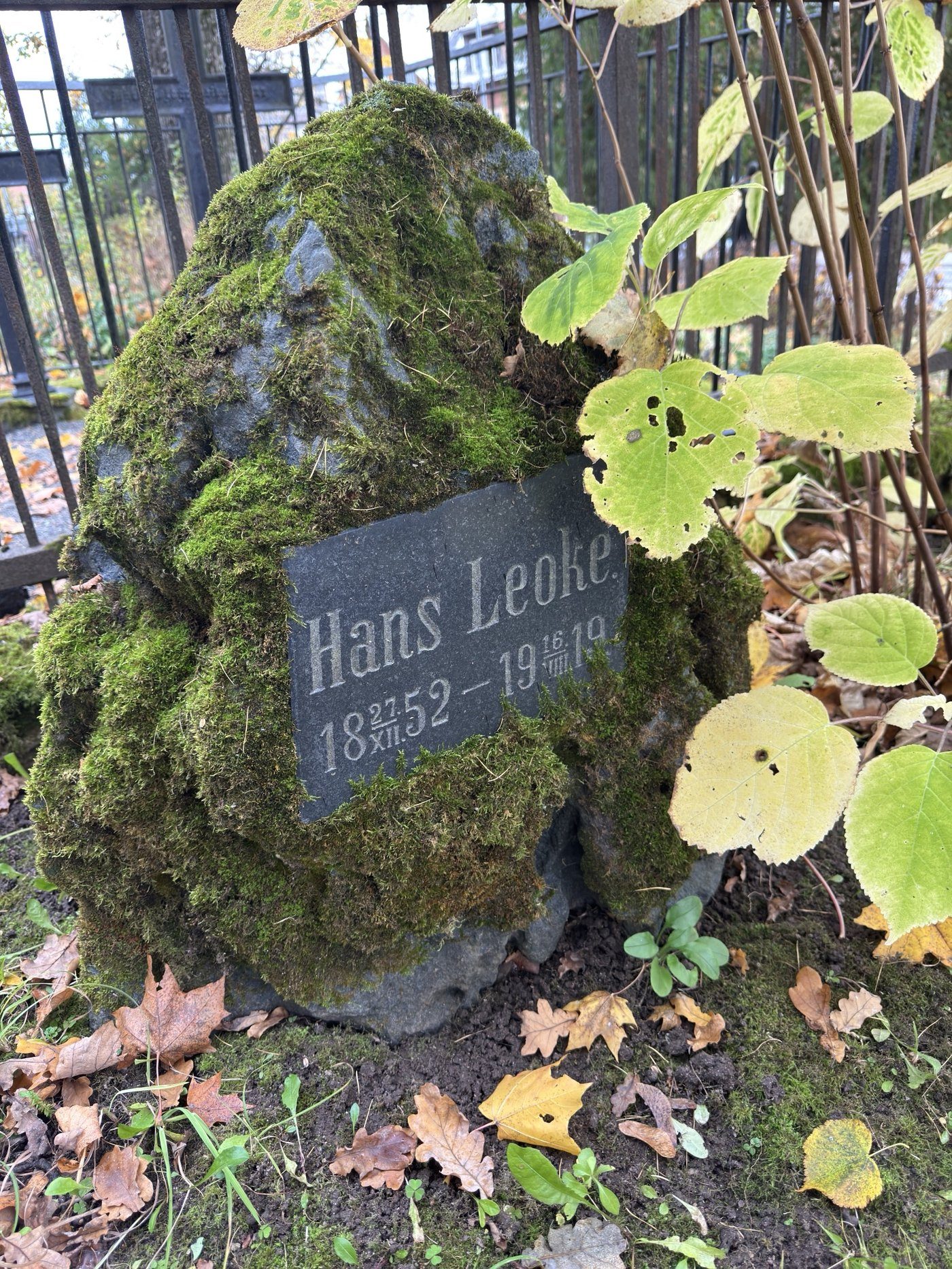
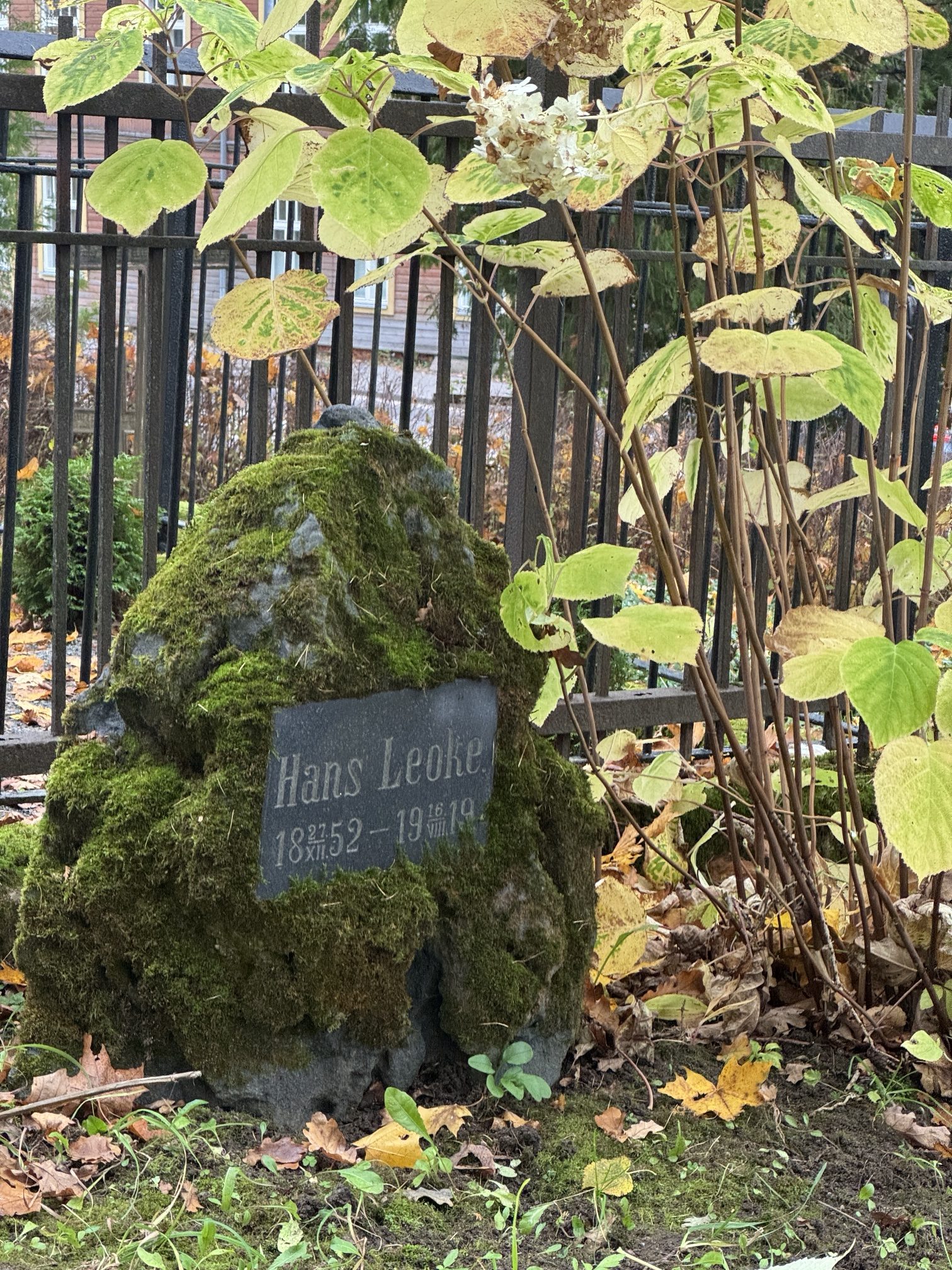
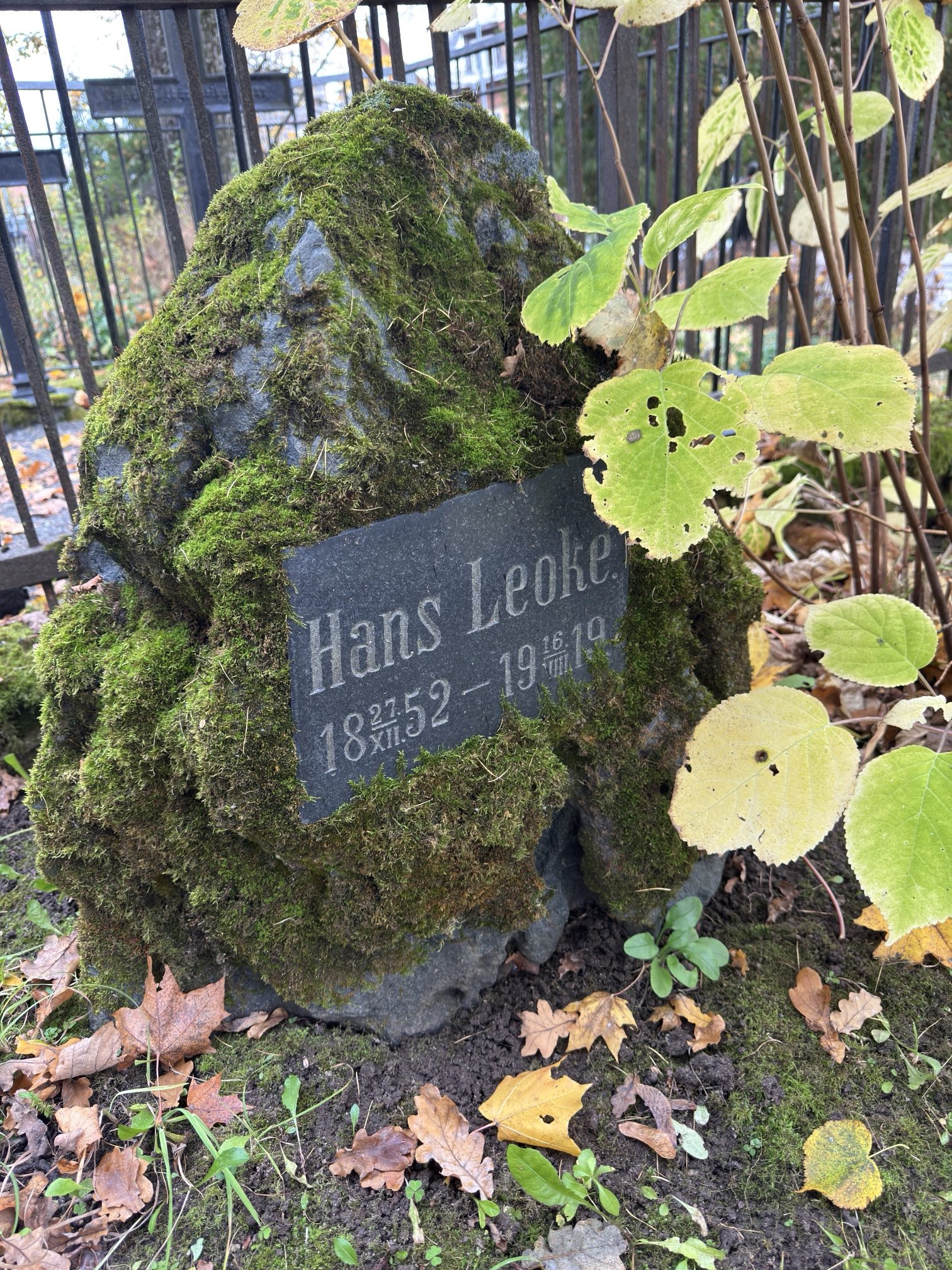
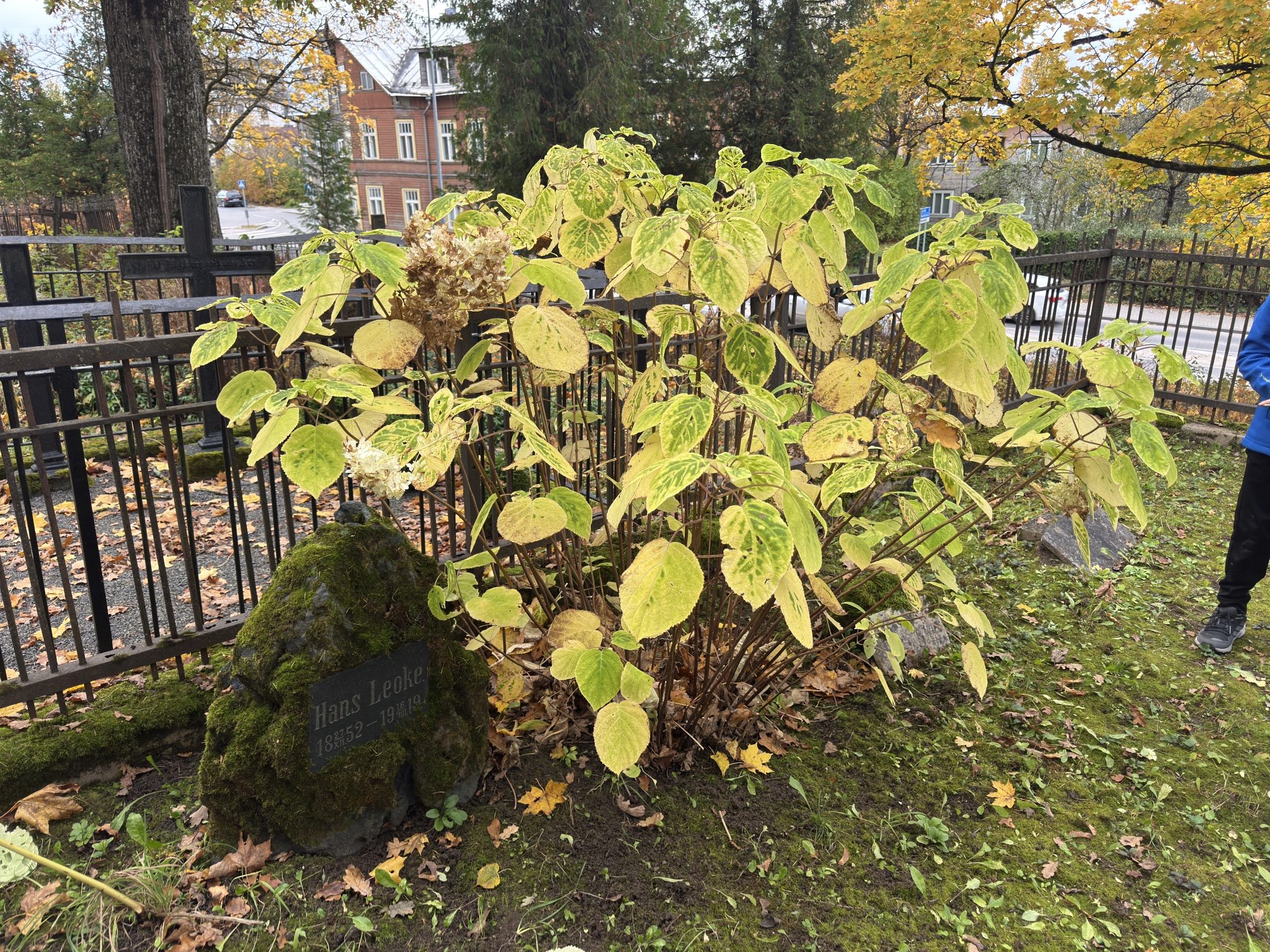
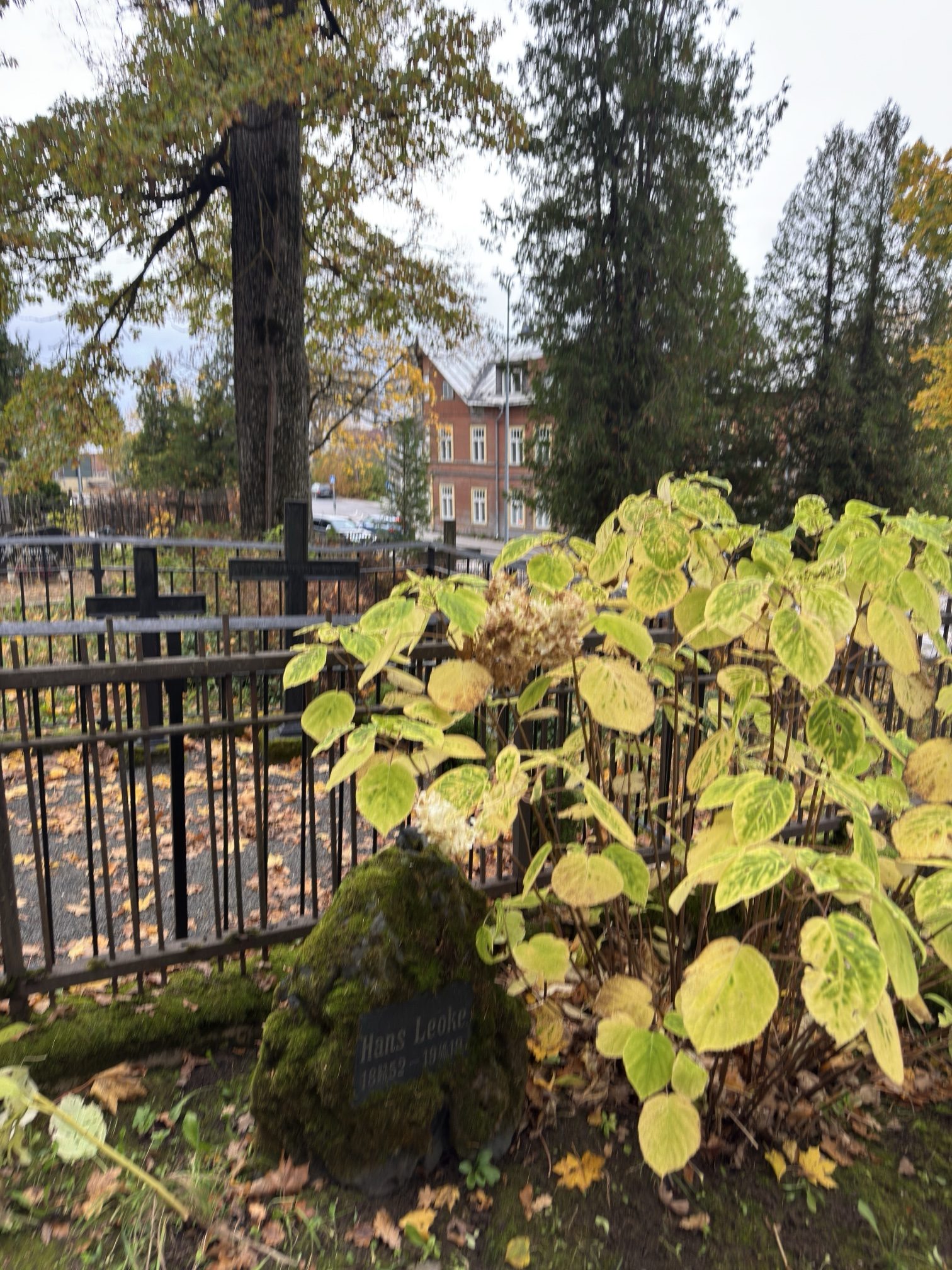
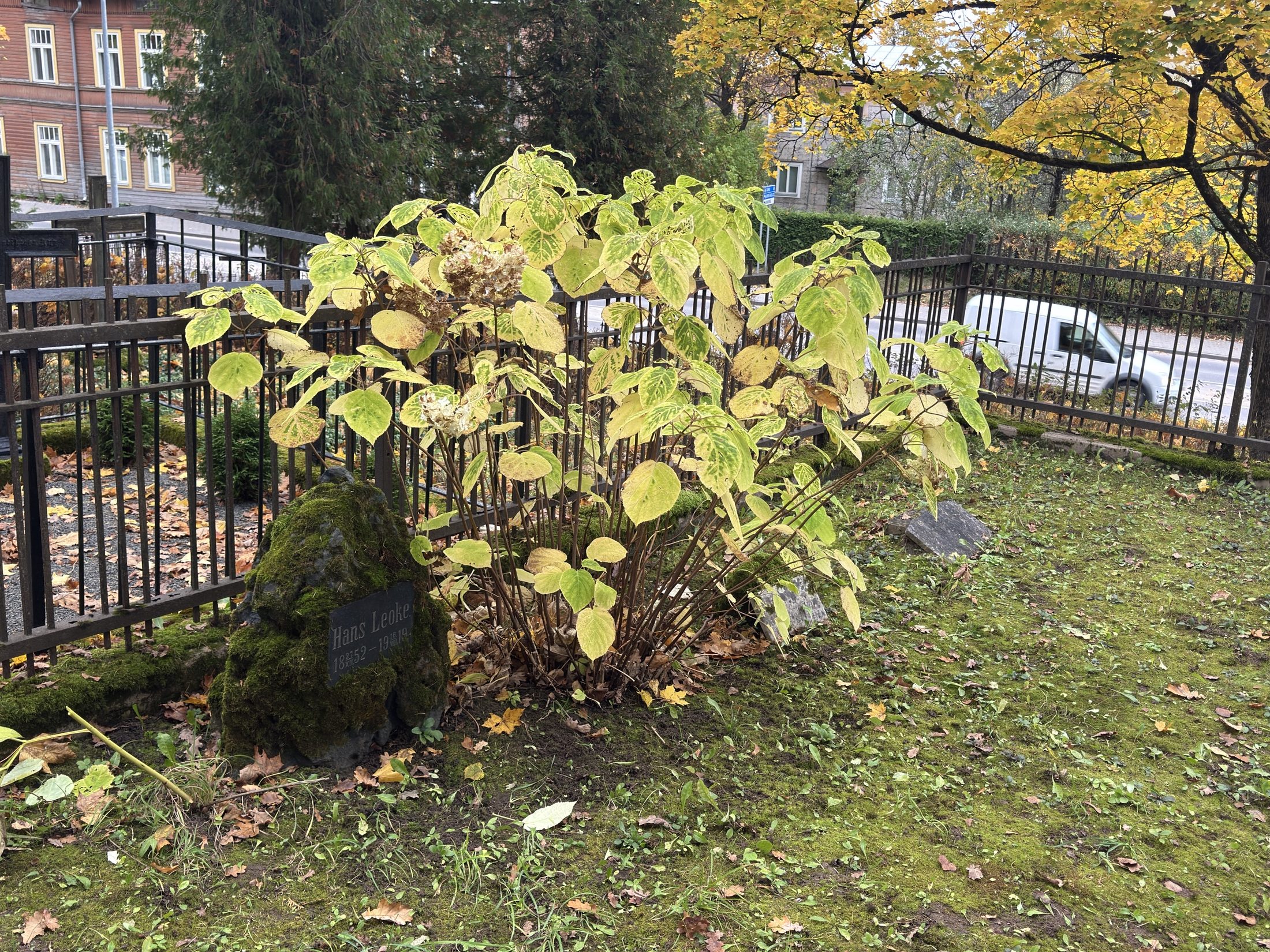
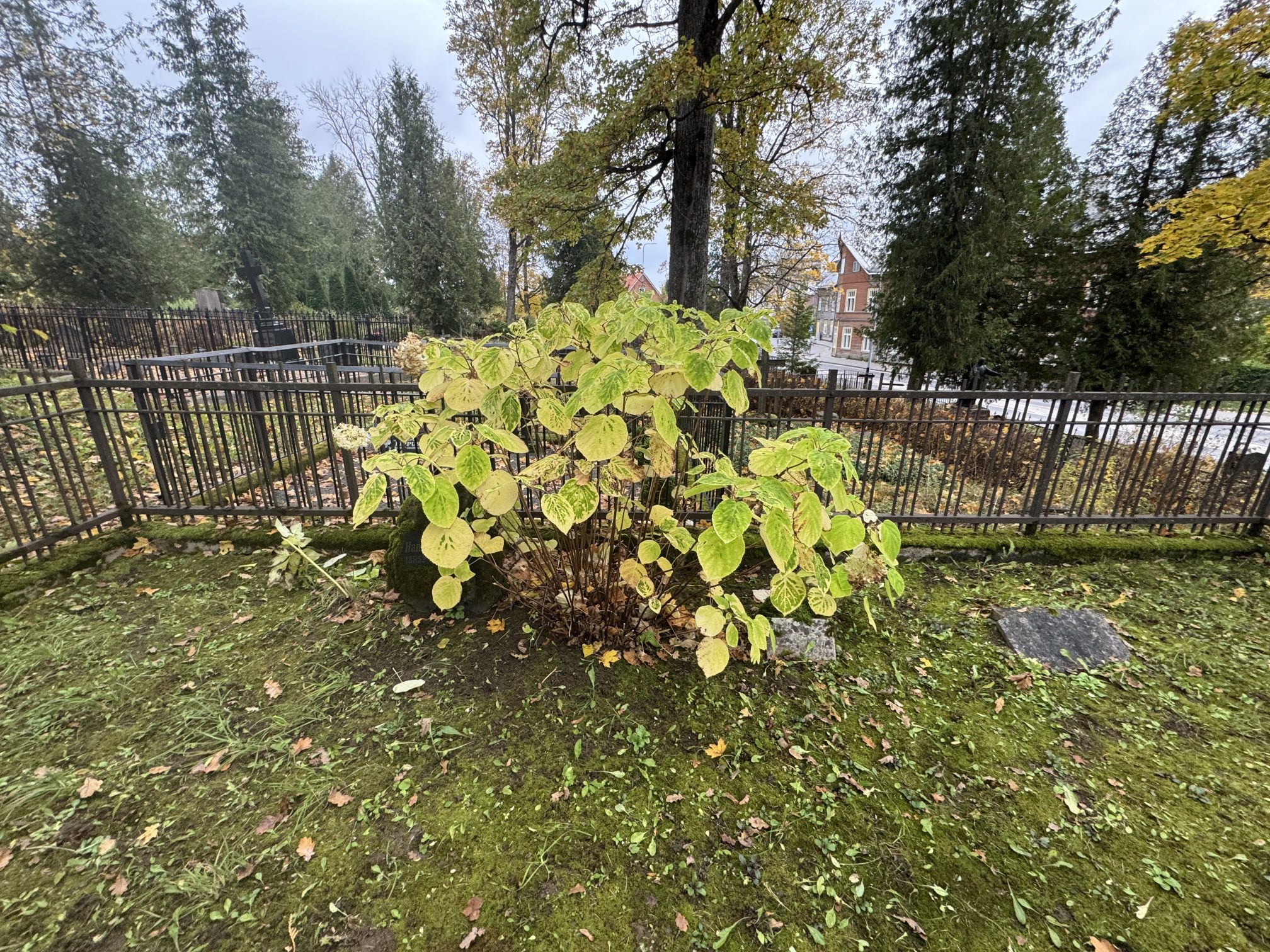
Hans’s marker, a fieldstone boulder with a plaque: “Hans Leoke 18 27/XII 52 – 19 16/VIII 19”, his birth date in the Old Style. Very likely the original 1919 stone. October 2026. In Places connected with the families →
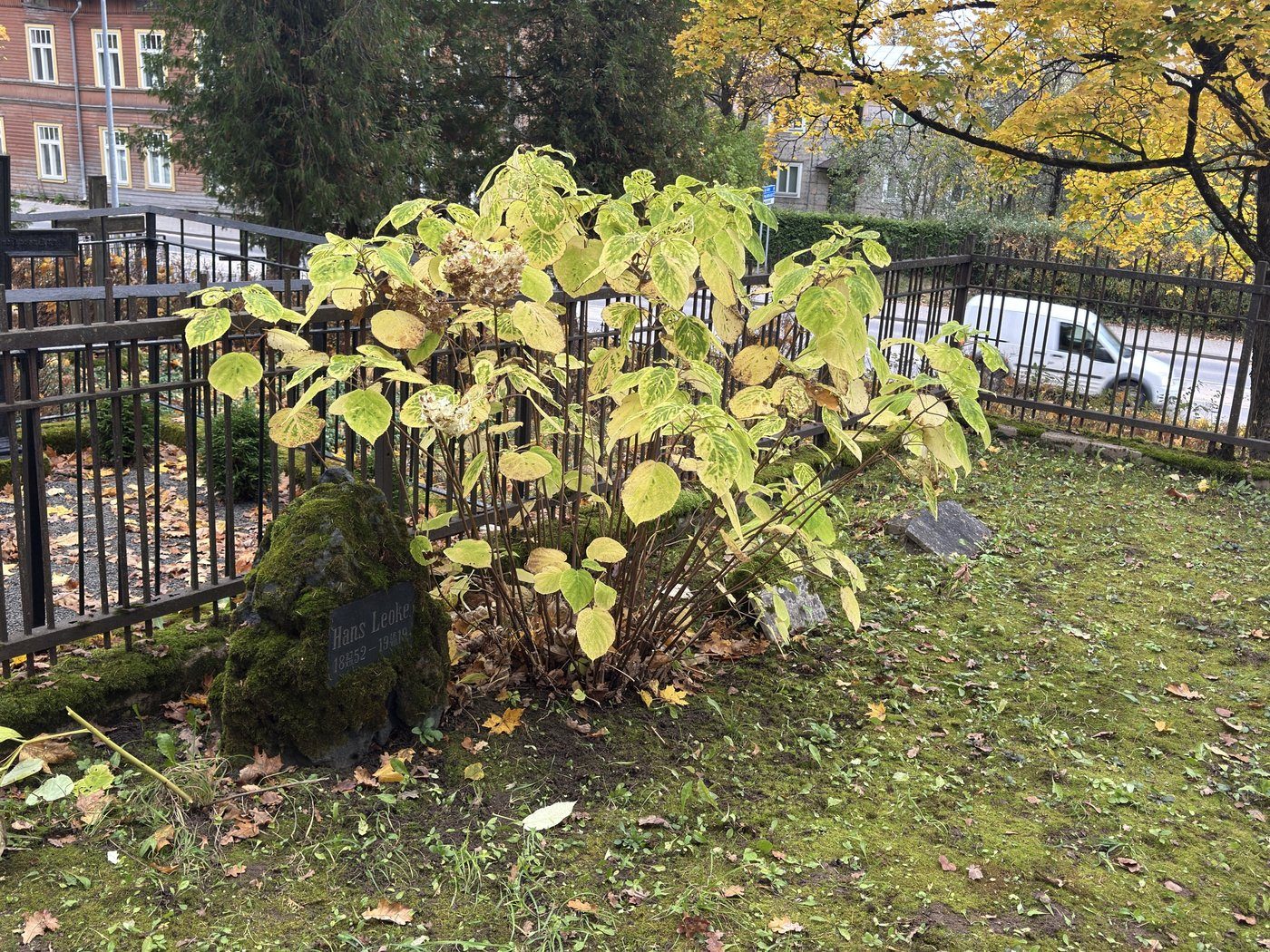
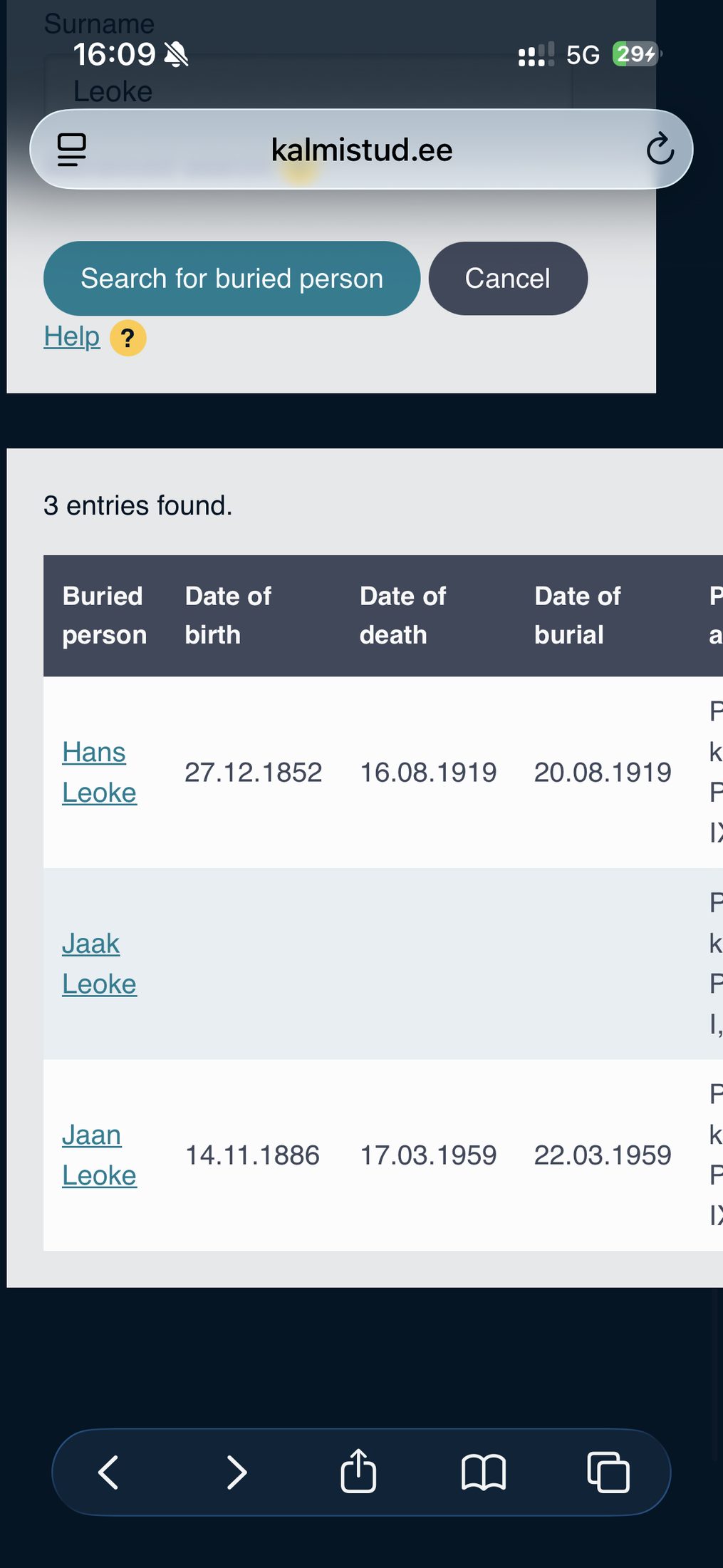
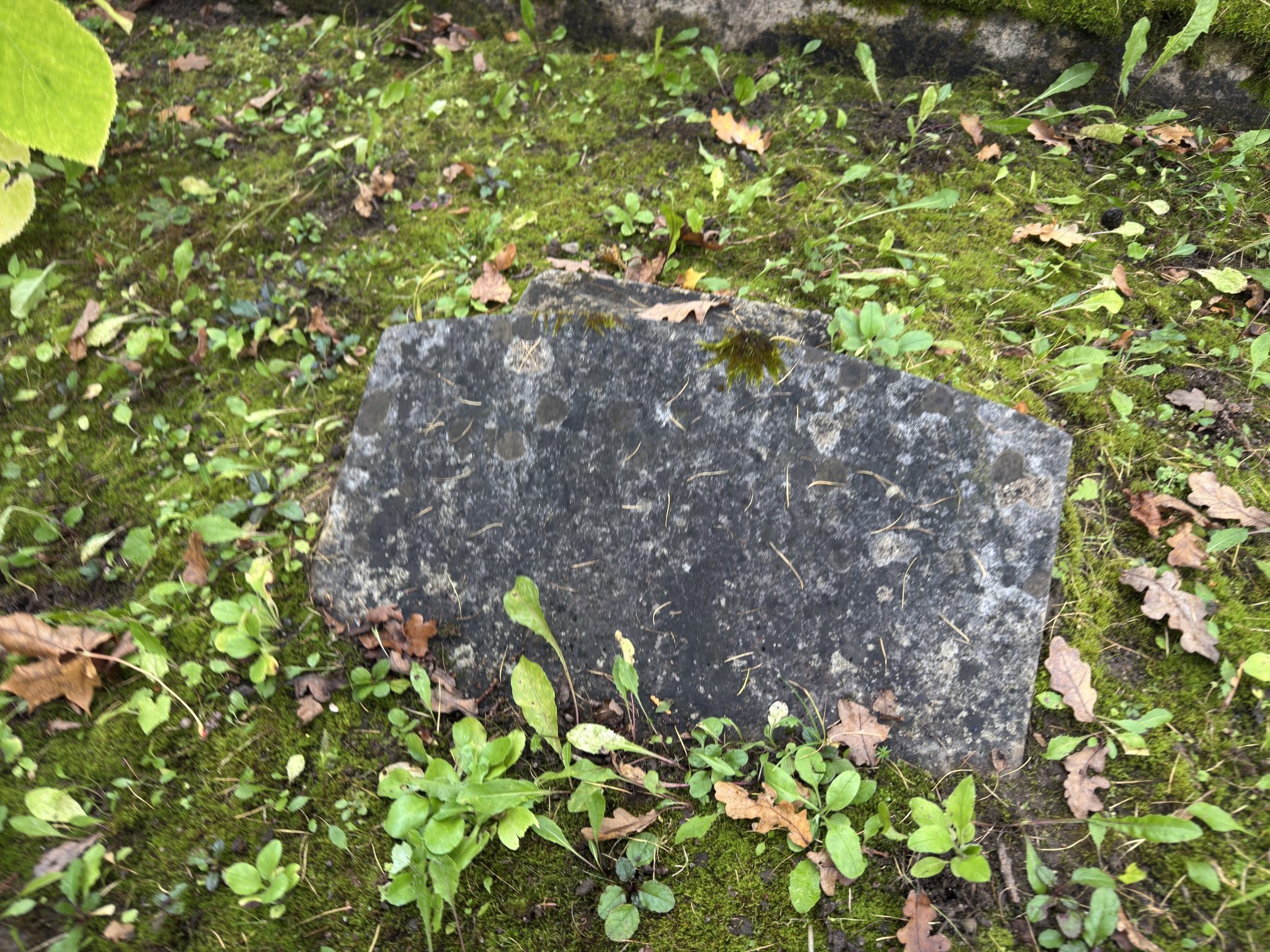
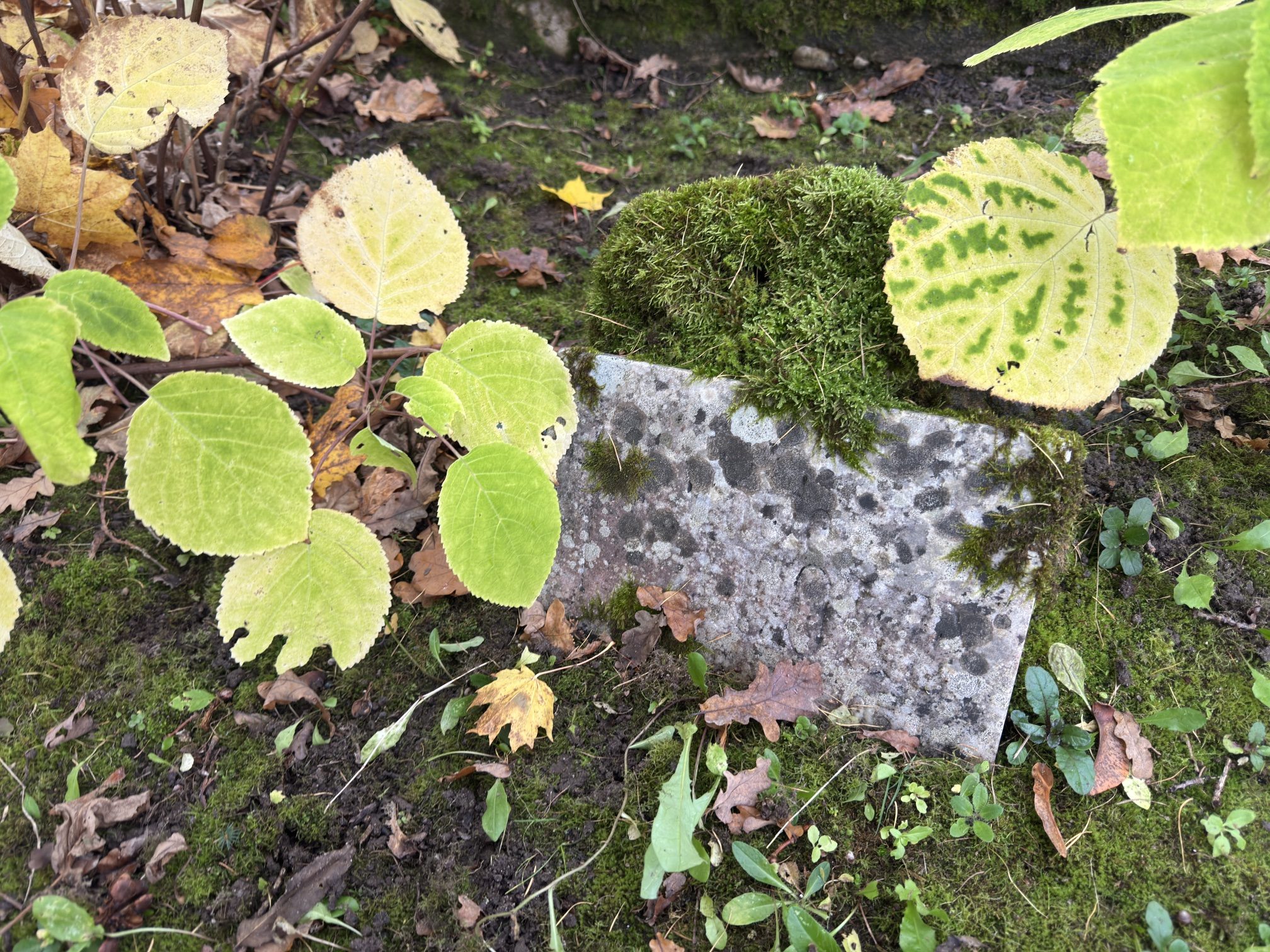
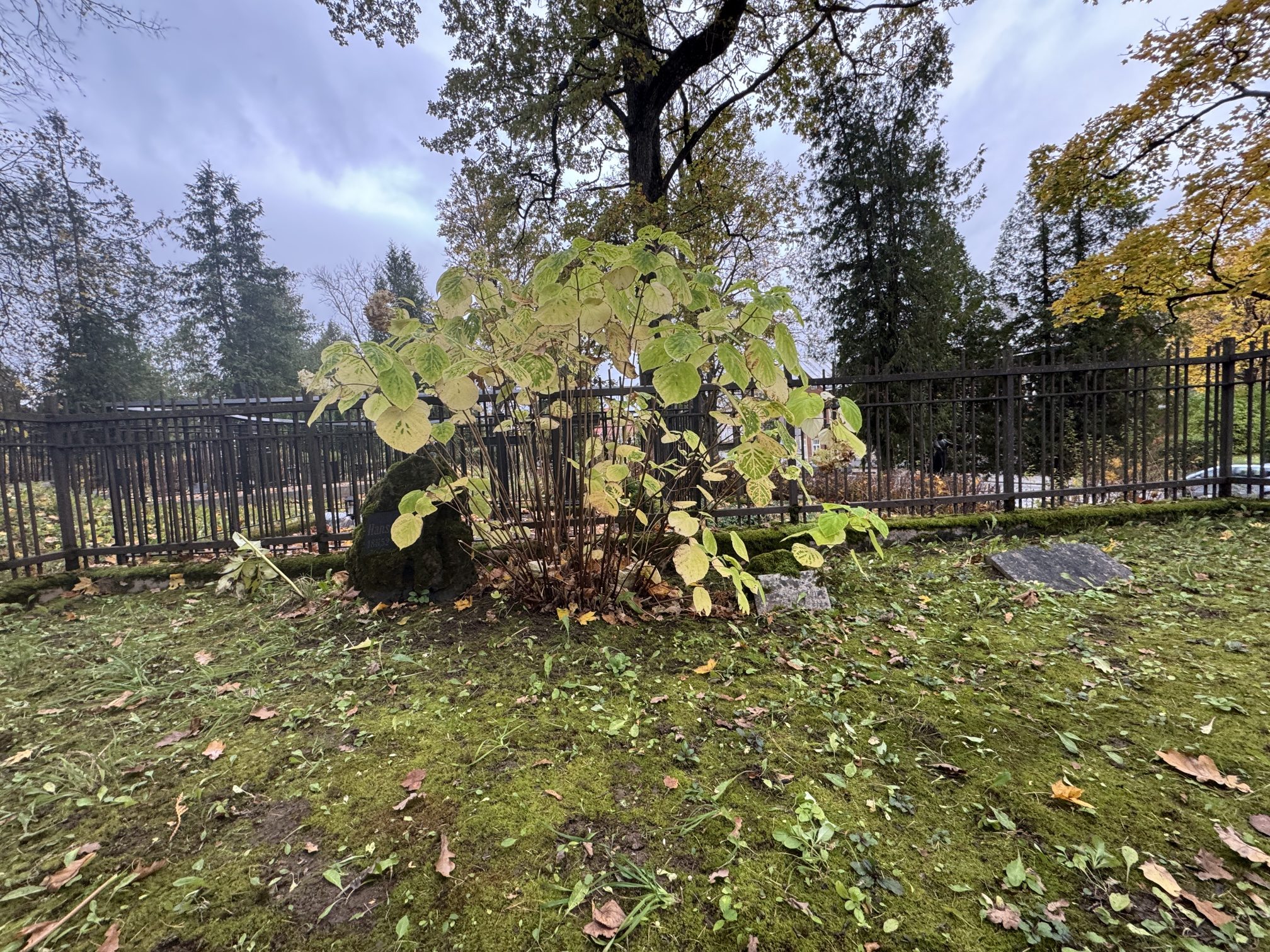
The family plot in October 2026: Hans’s boulder (left), Mari’s slab (center, its inscription worn away) and Jaan’s slab (right, confirmed by a rubbing). In Places connected with the families →
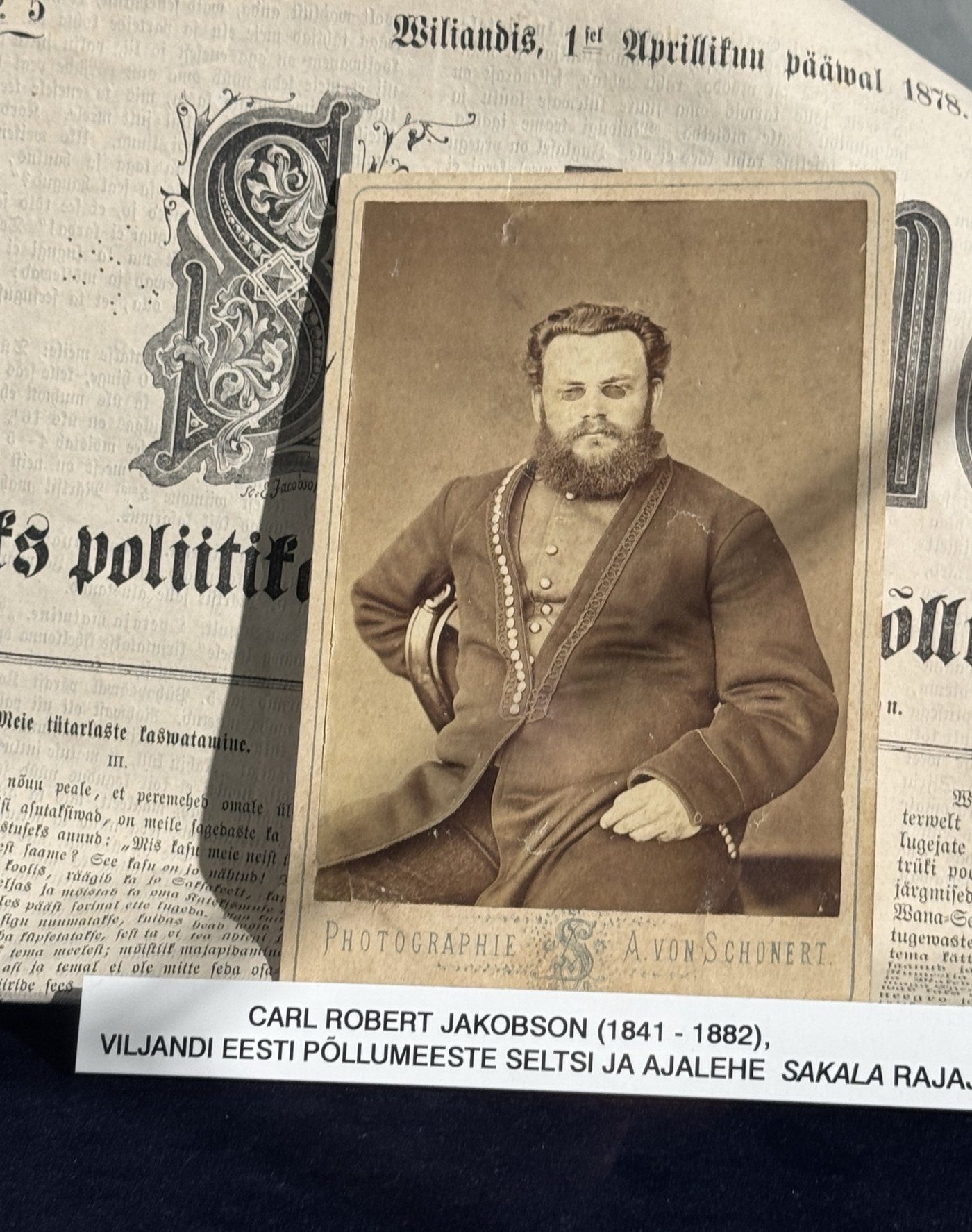
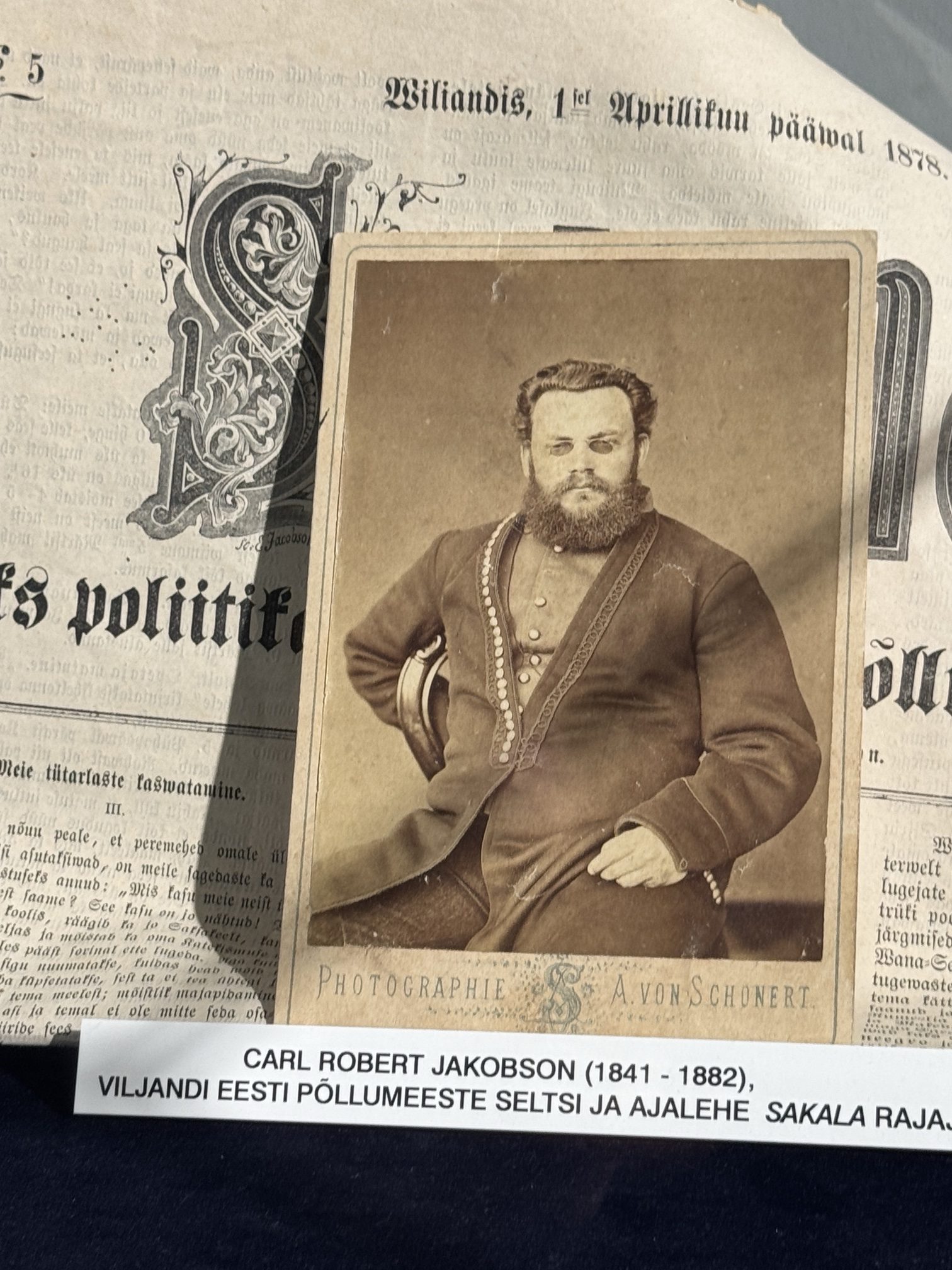
Carl Robert Jakobson, whose ideas Hans supported, with an 1878 issue of his newspaper Sakala, which Hans wrote for while schoolmaster at Arumetsa.Viljandi Museum.In Local history and photographs →
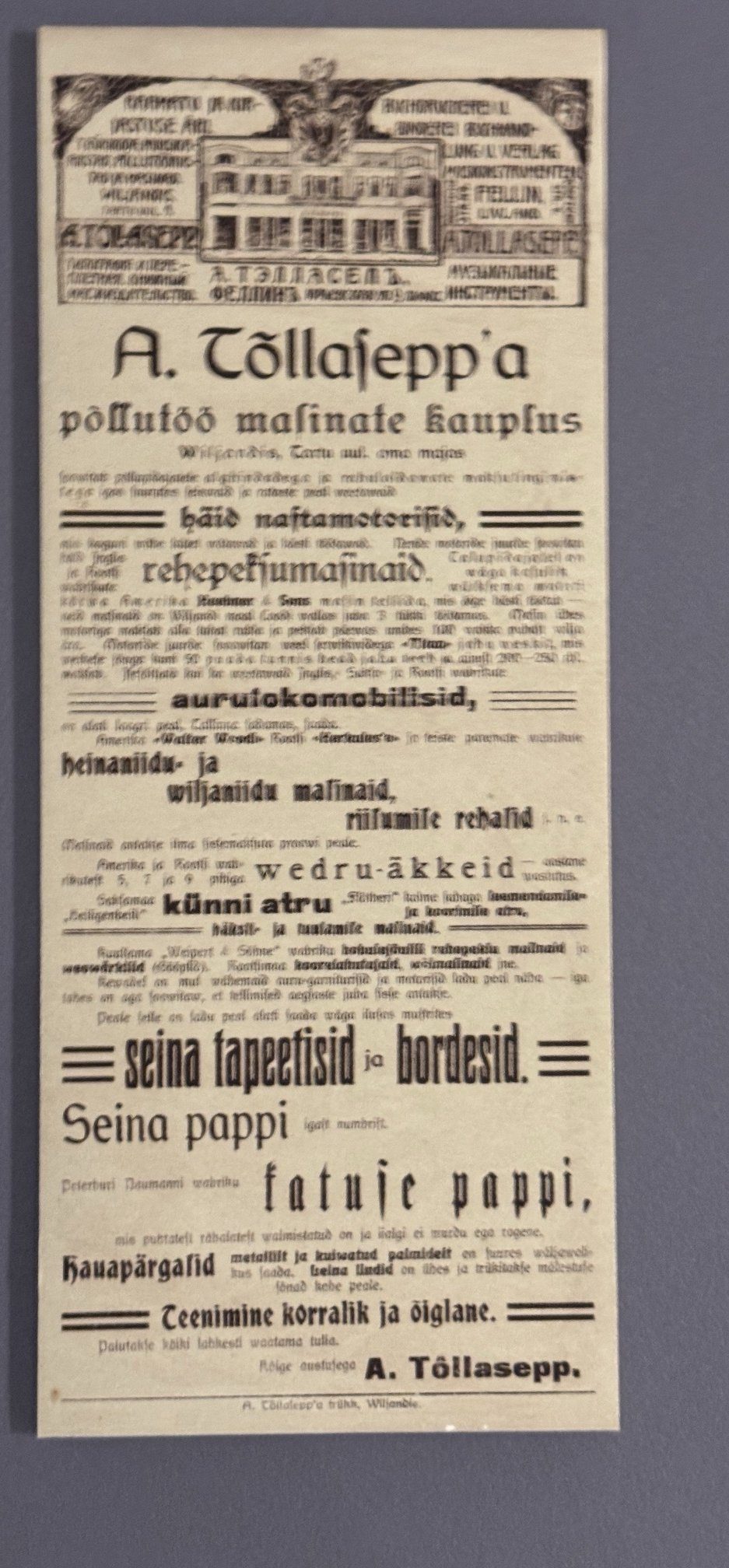
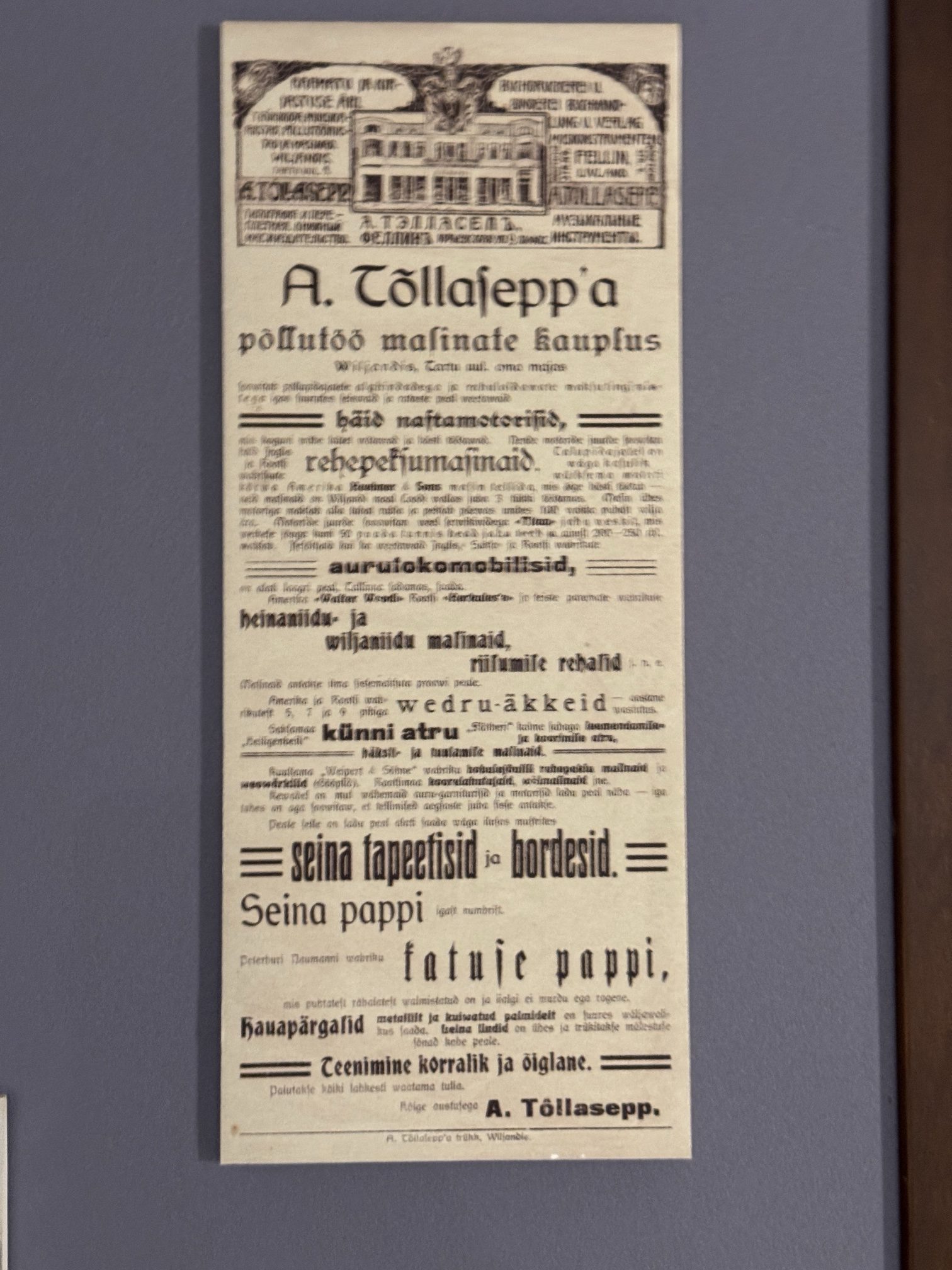
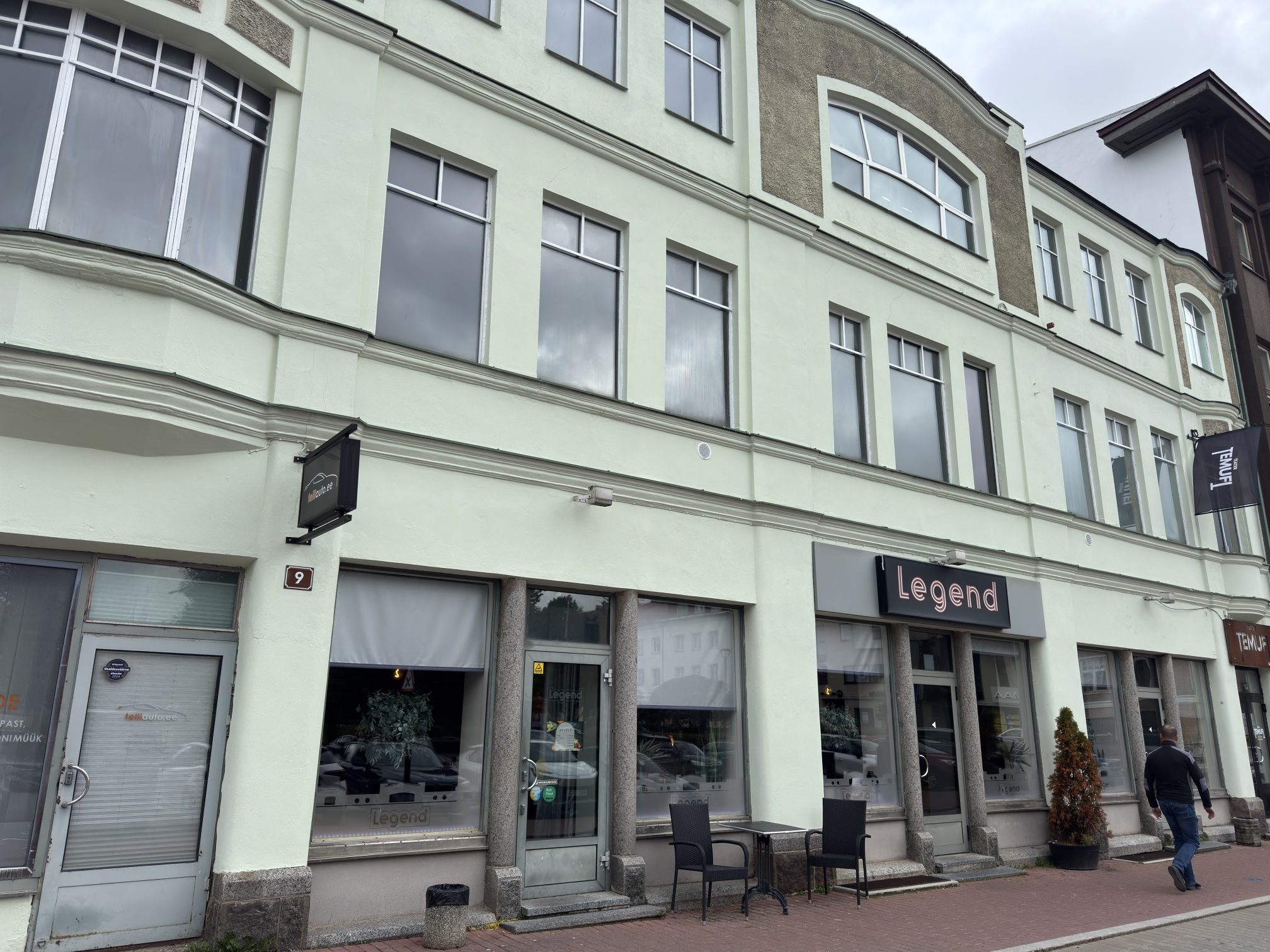
An advertisement for Ado Tõllasepp’s shop “in his own house” on Tartu street: Tartu 9, the building shown in its header. Mari’s brother printed much of what Hans published.Viljandi Museum.In Local history and photographs →
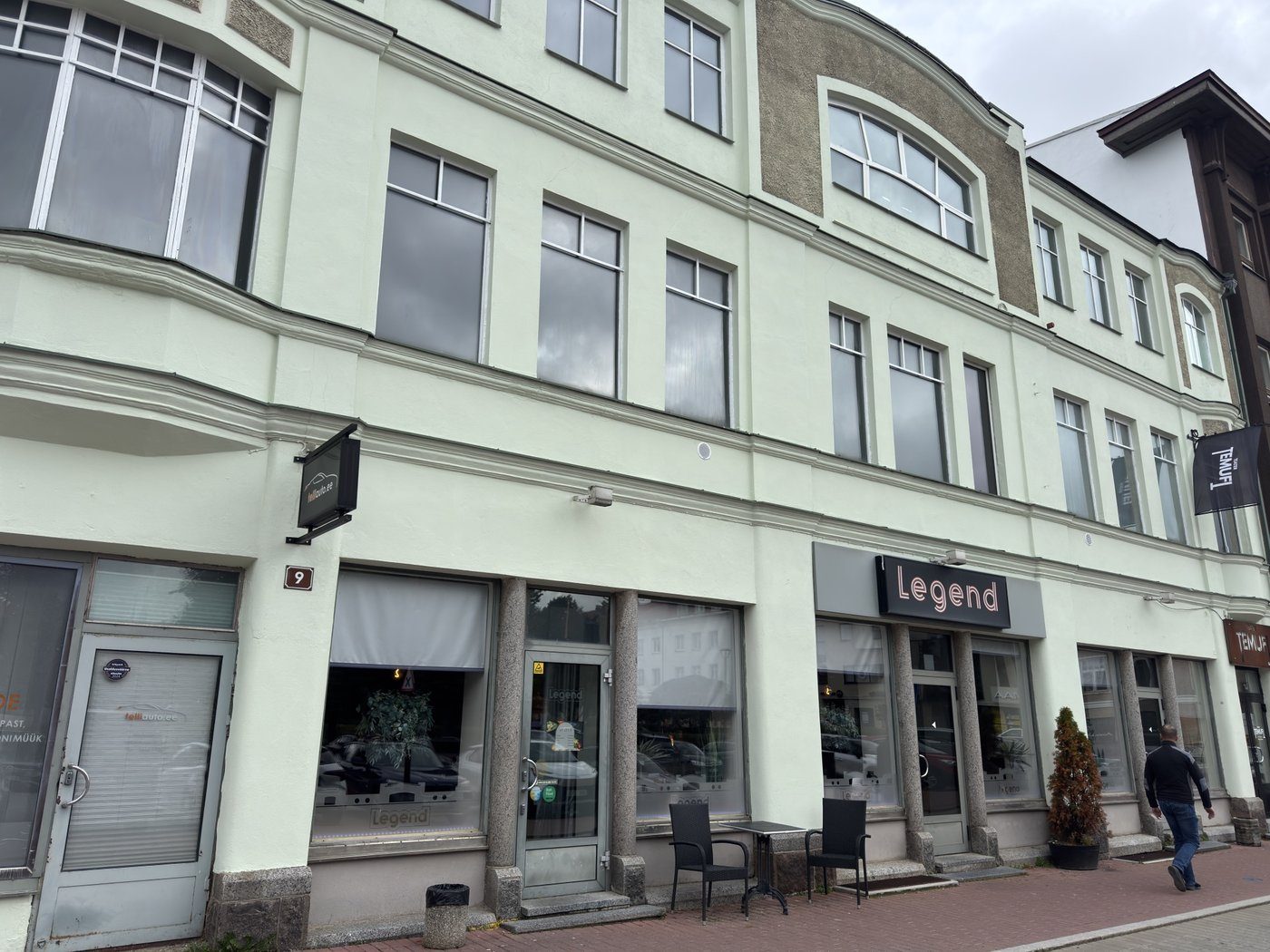
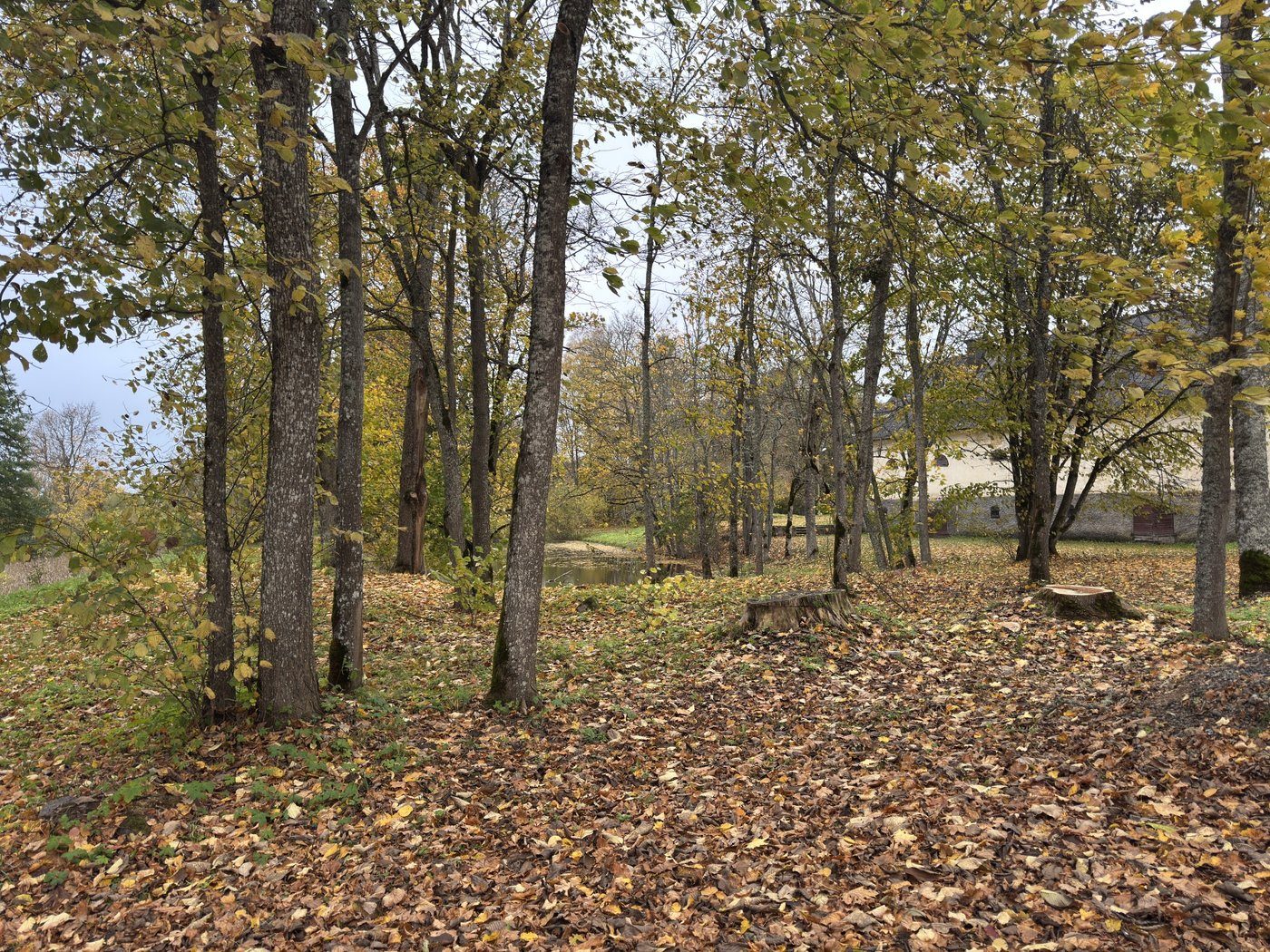
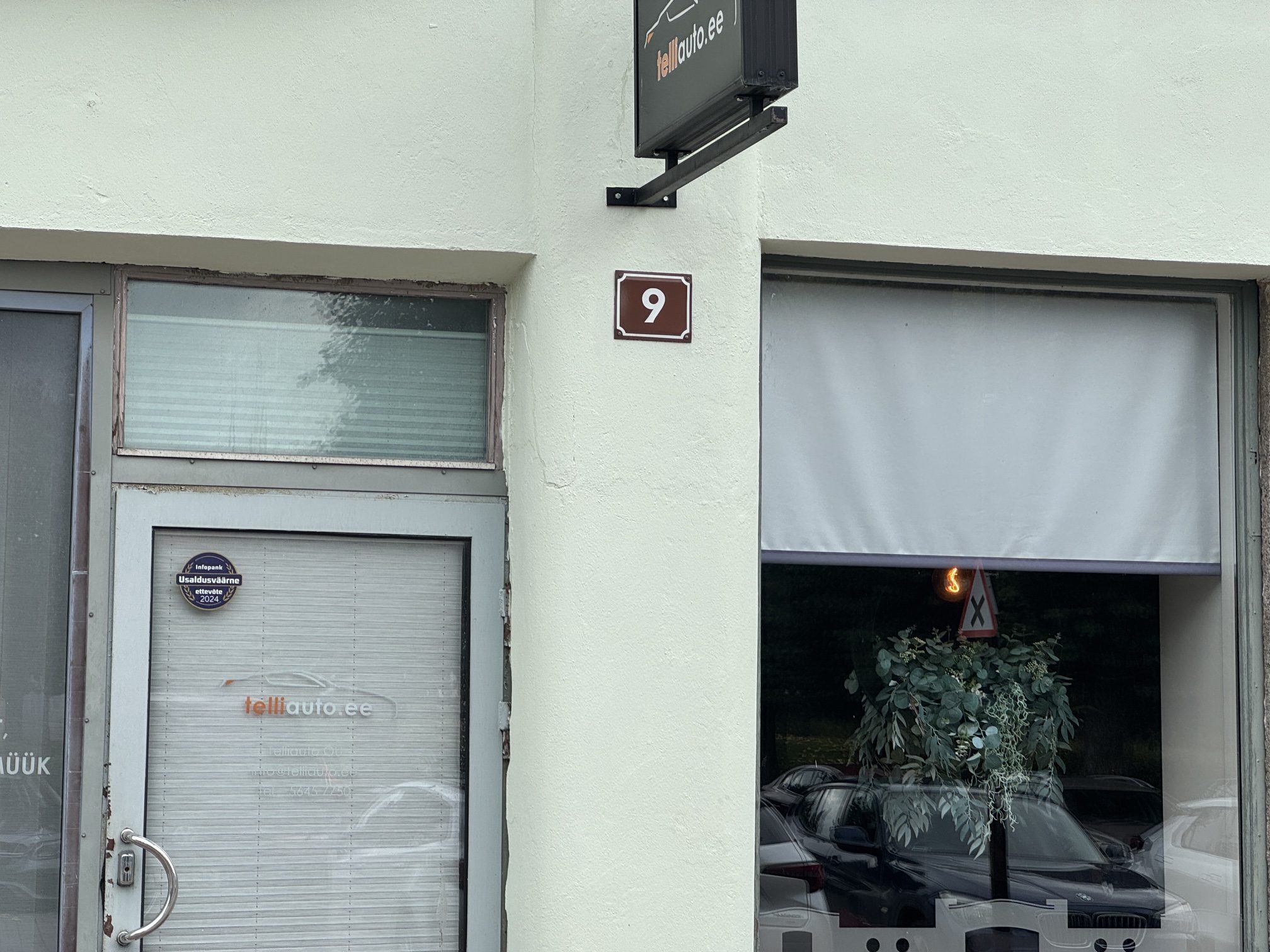
Tartu 9 in October 2026: the only one of the family’s shop buildings securely identified as still standing. Hans’s shop was here in about 1907–09. In Local history and photographs →
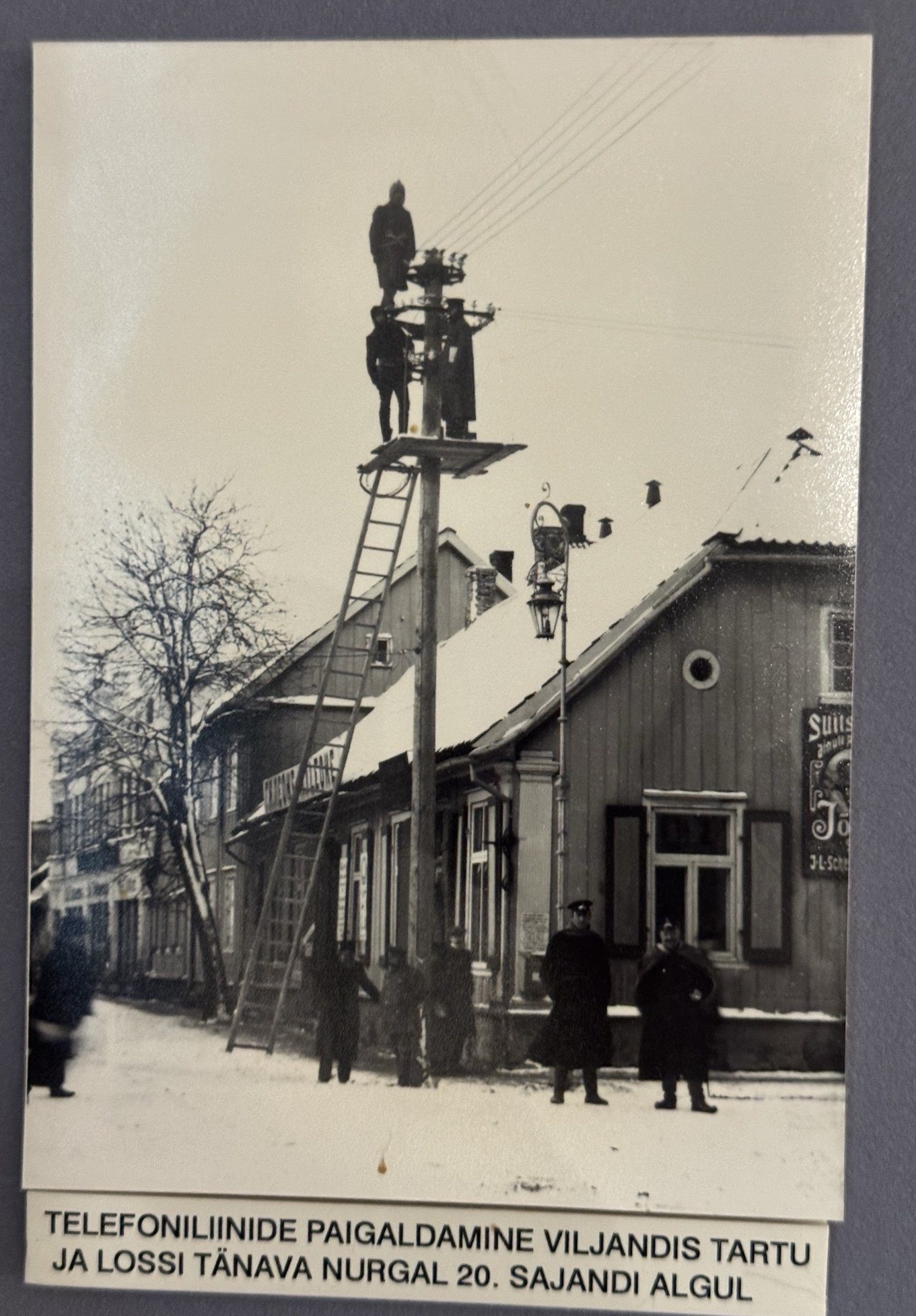
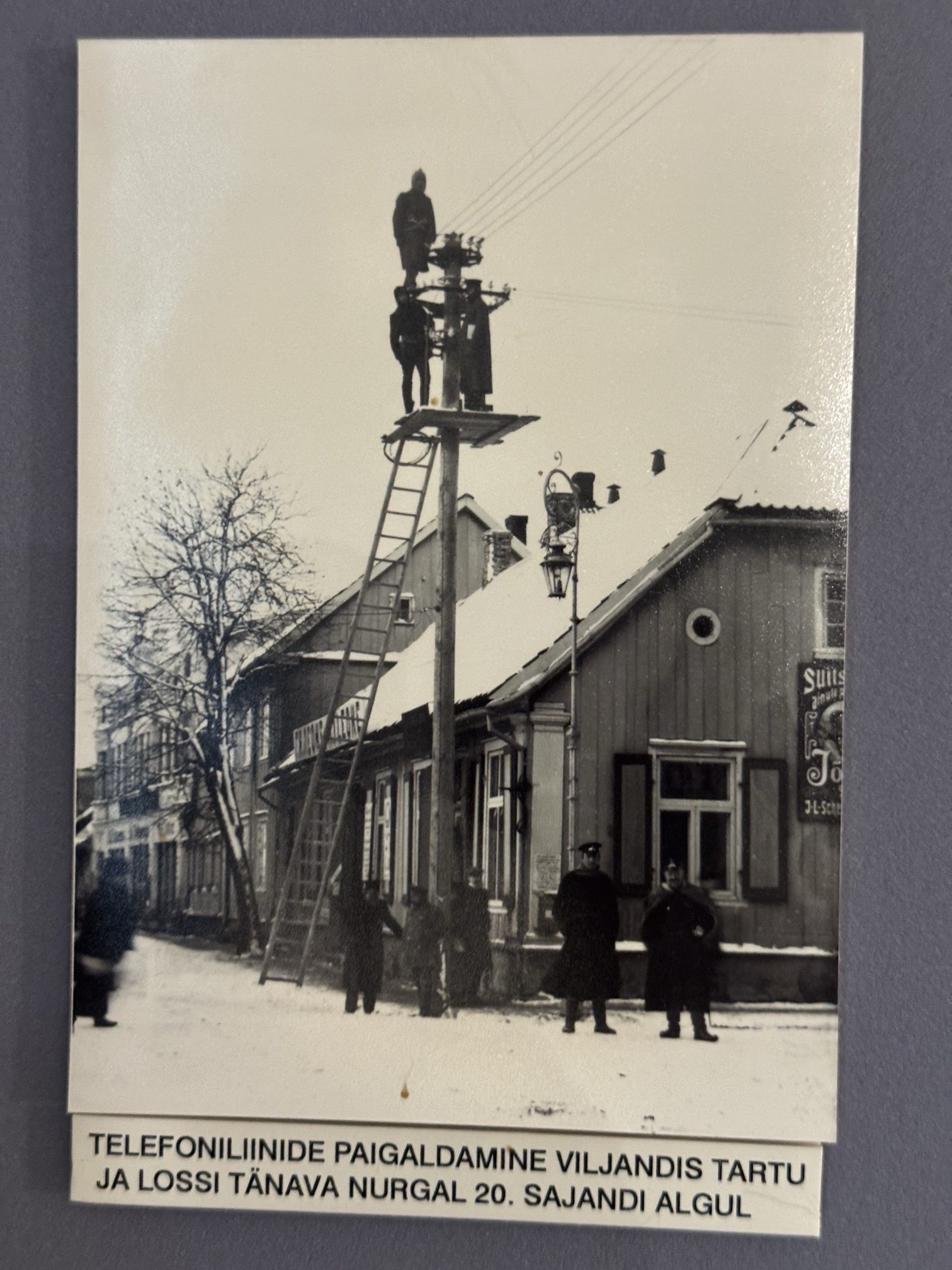
Telephone lines going up at the corner of Tartu and Lossi streets in the early 1900s. The long building behind the corner house is very likely the Leoke shop.Viljandi Museum.In Local history and photographs →
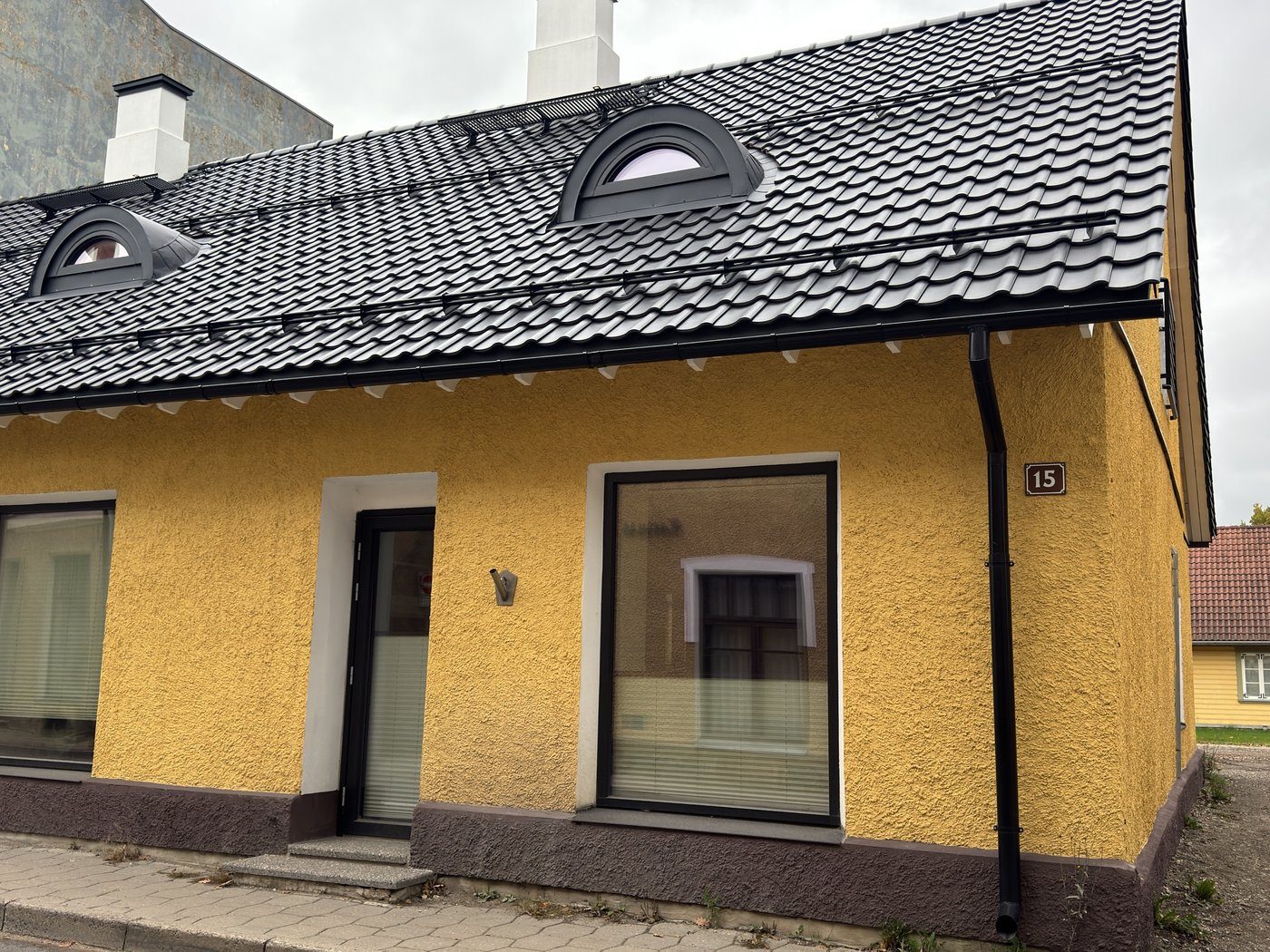
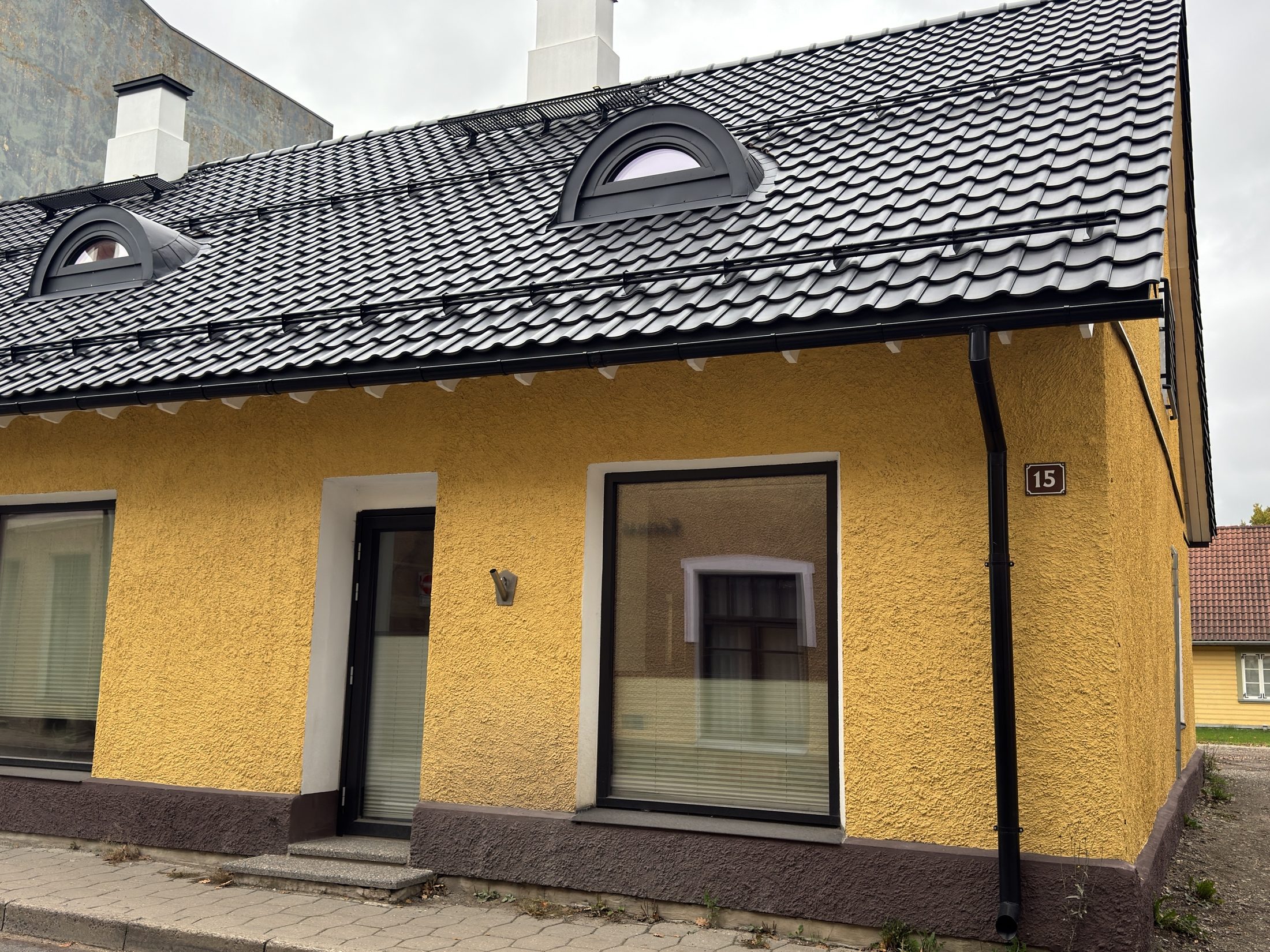
Today’s Tartu 15, where the shop stood in 1900–07 in the Graf house, a former tavern. Street numbers may have changed since then. In Local history and photographs →
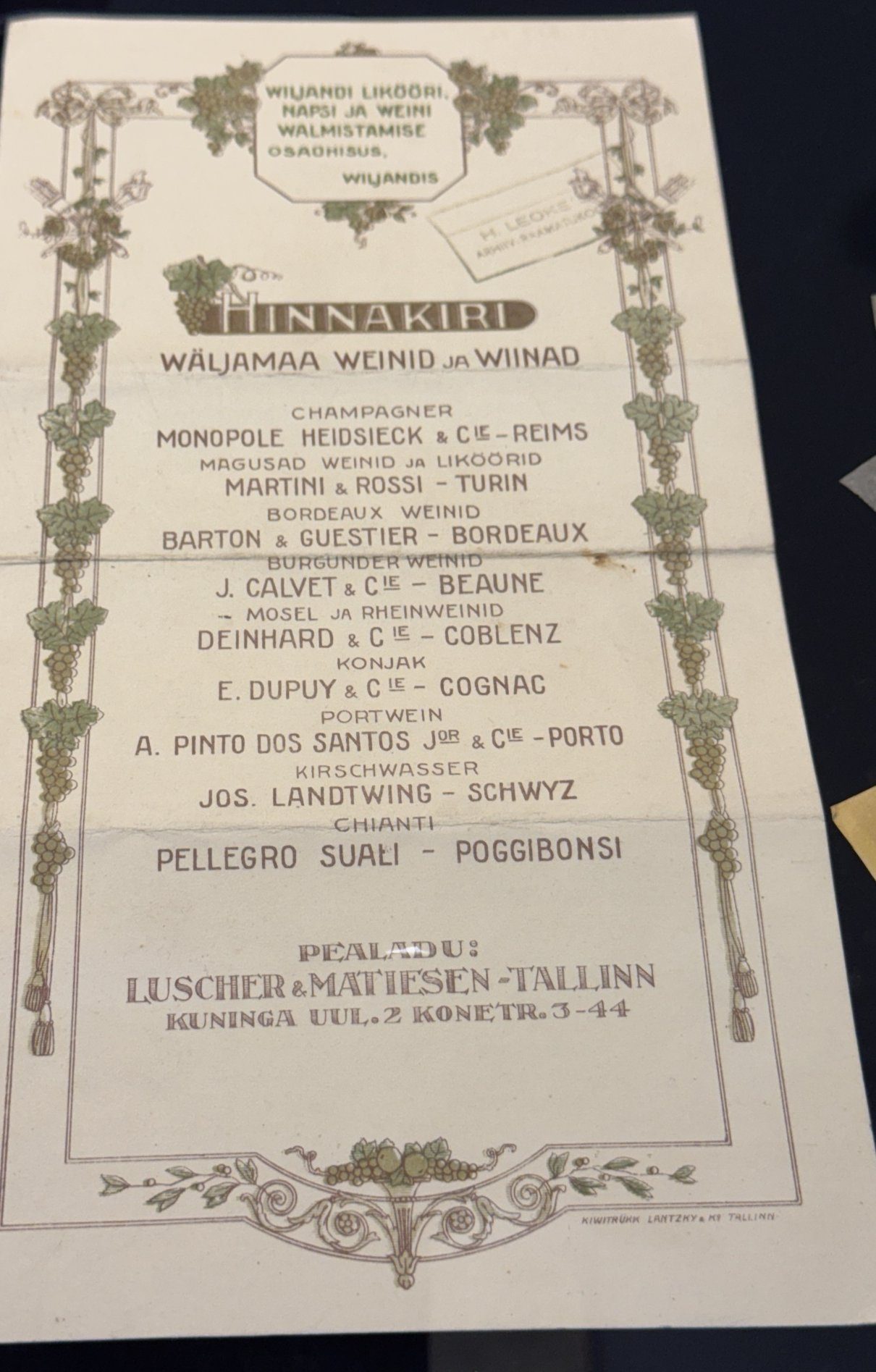
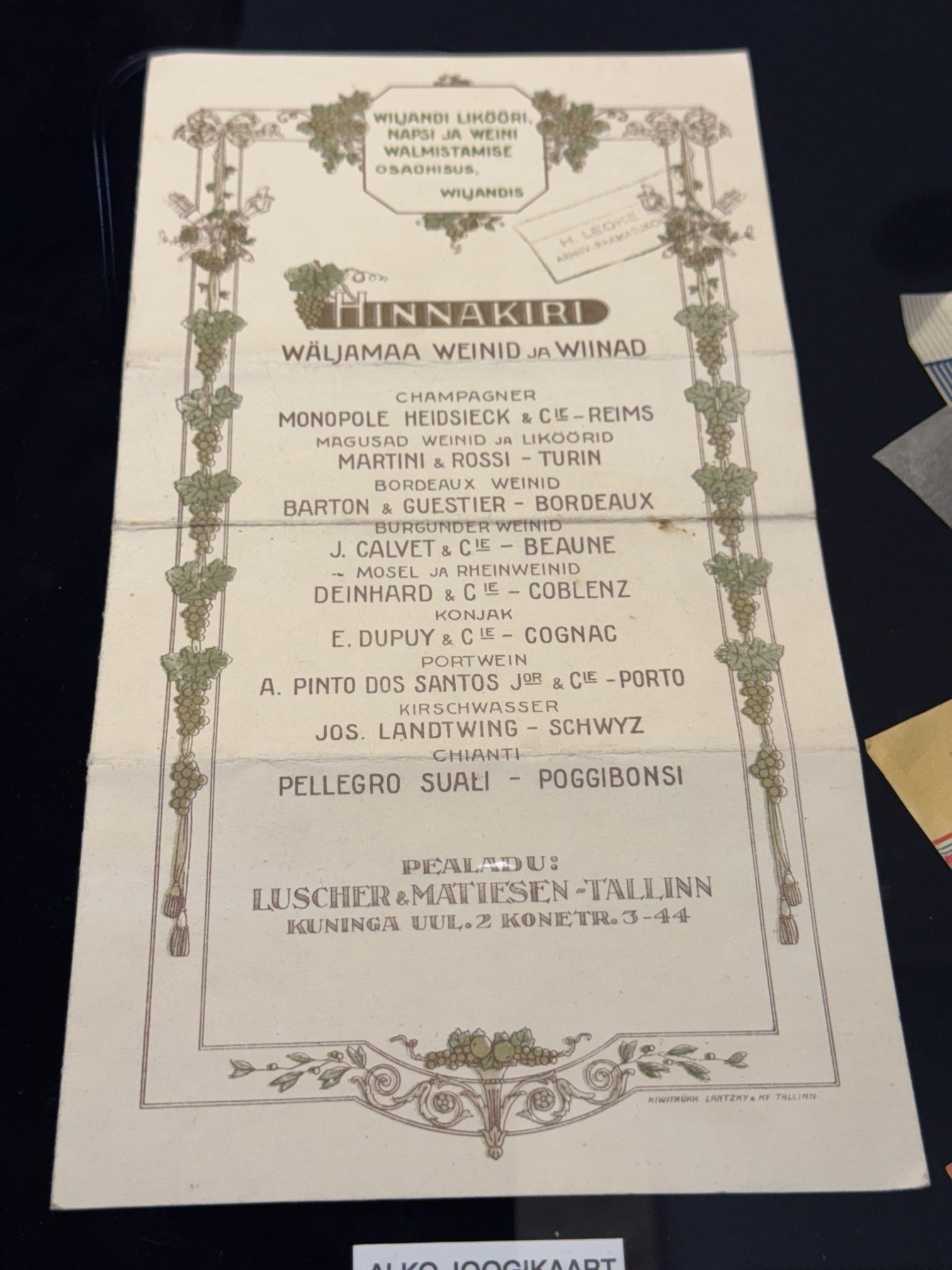
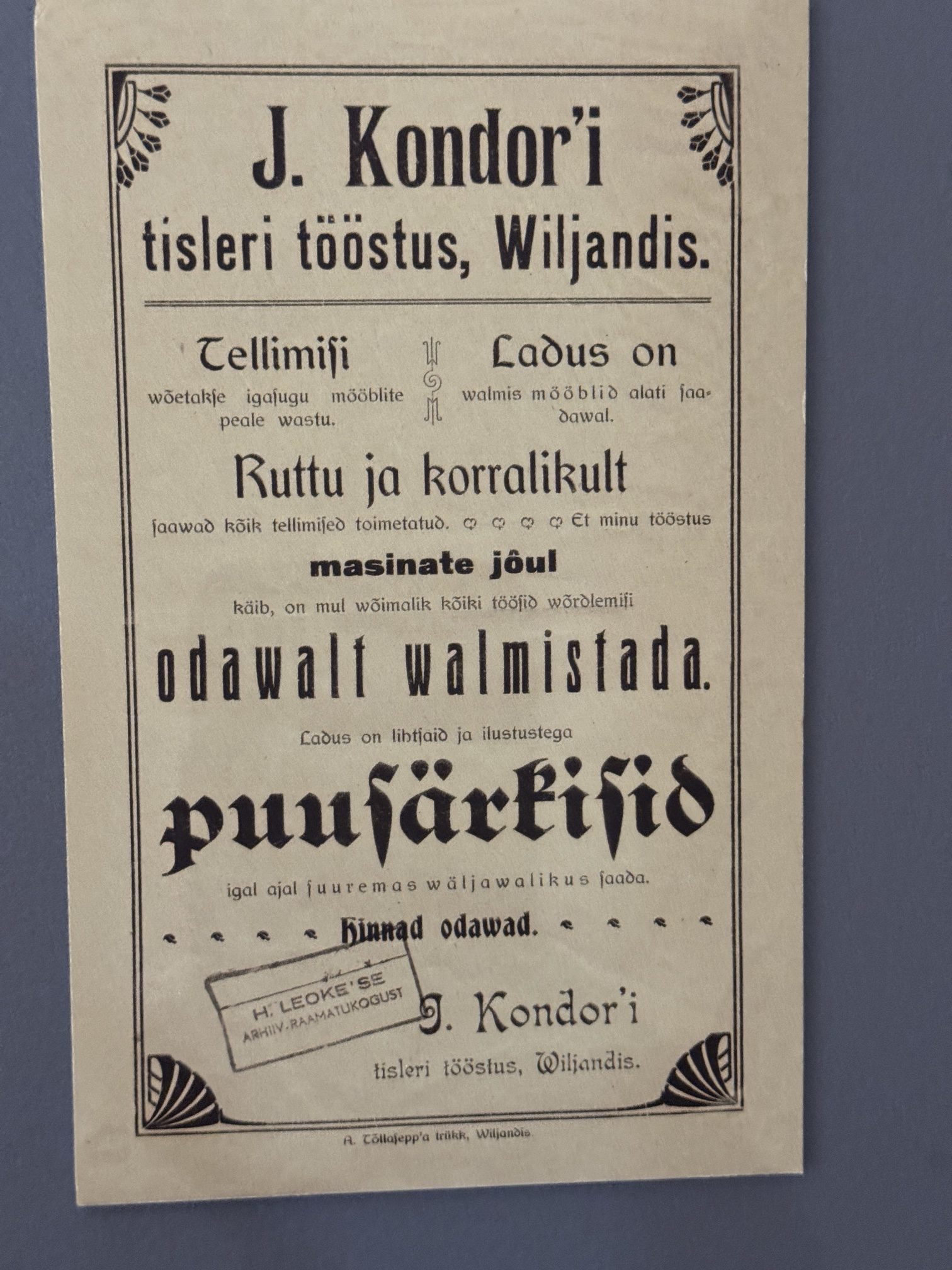
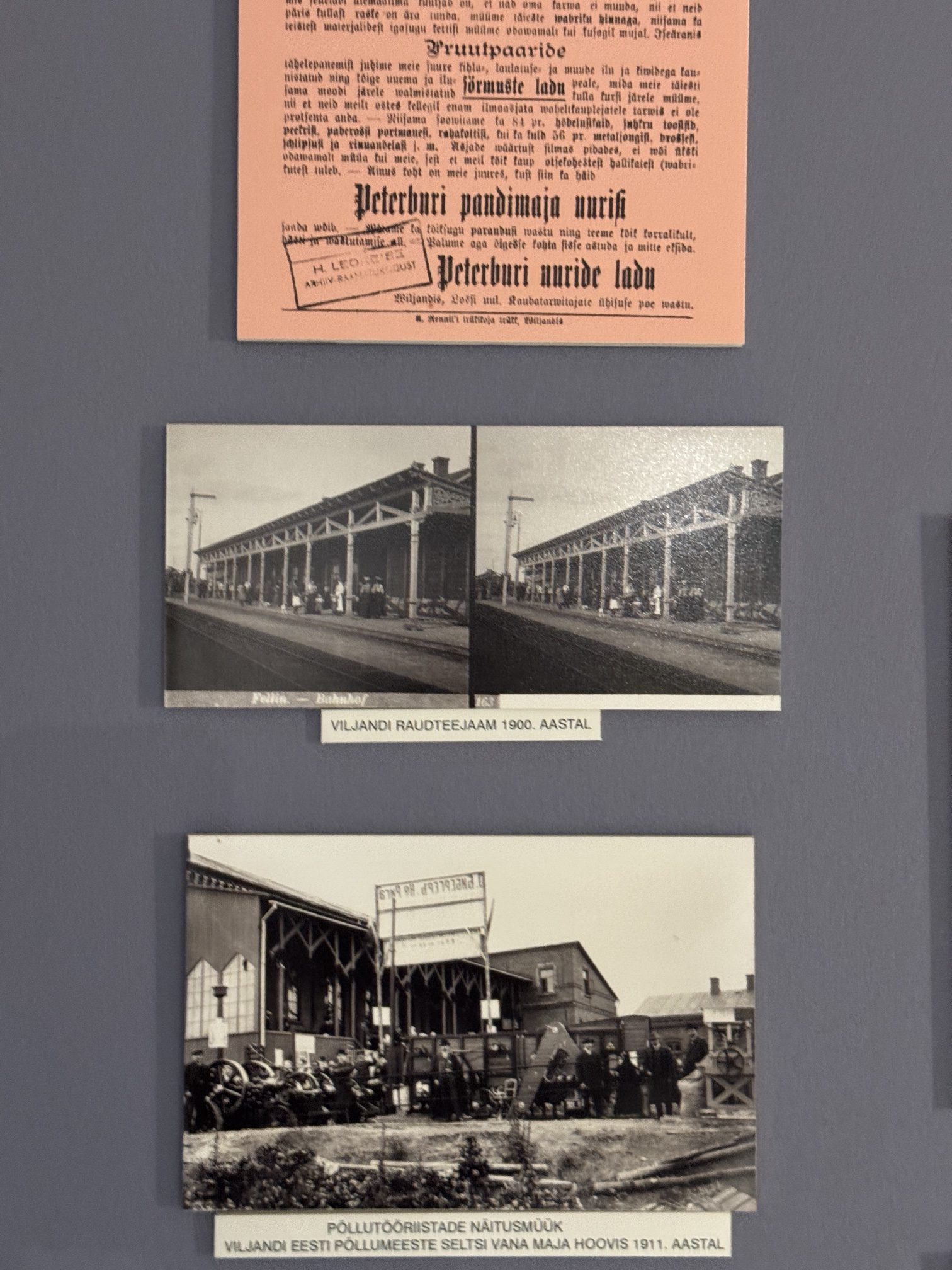
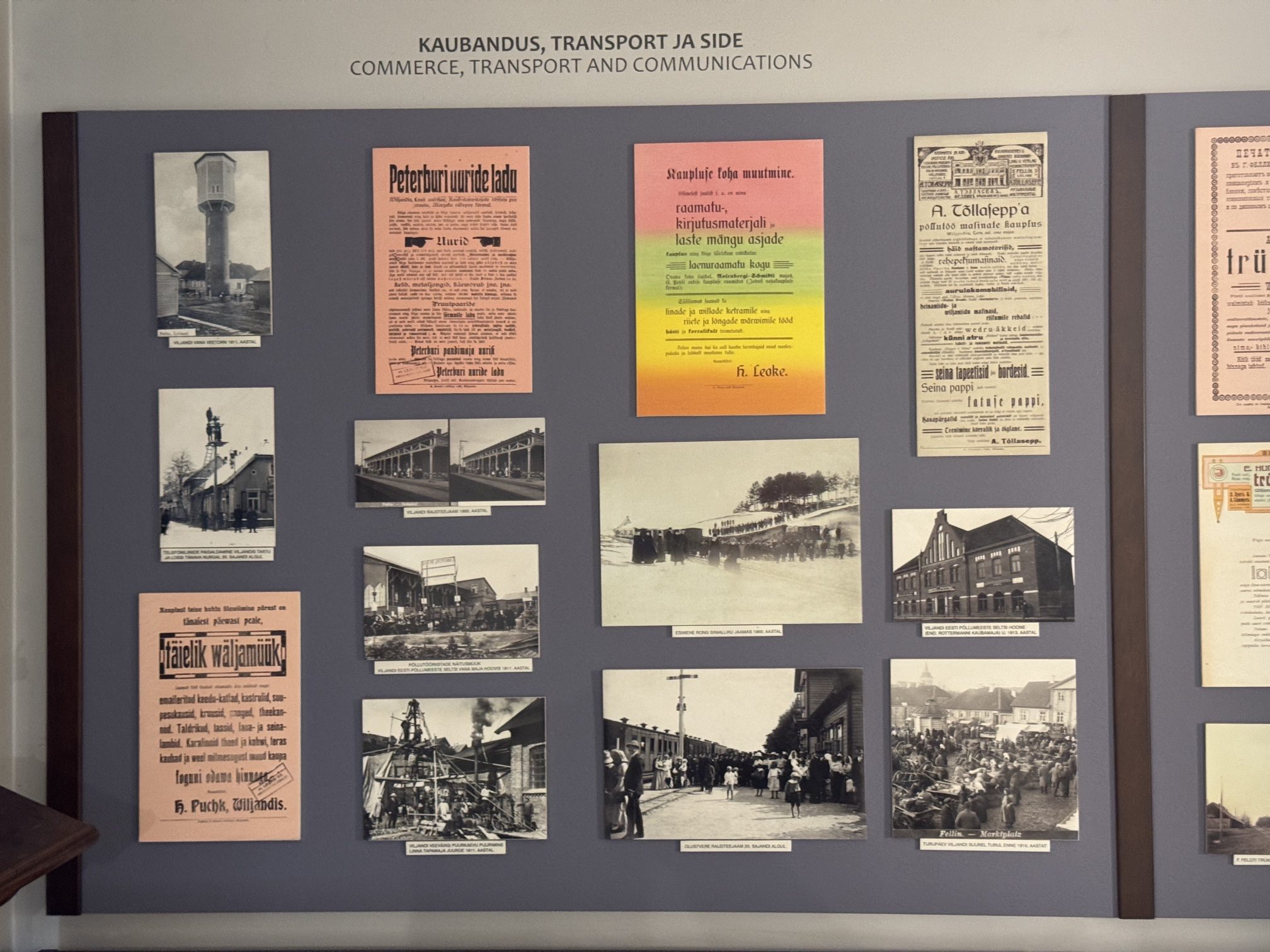
A 1920s price list of the Viljandi liqueur and wine company, with the Leoke archive stamp.Viljandi Museum.In Local history and photographs →
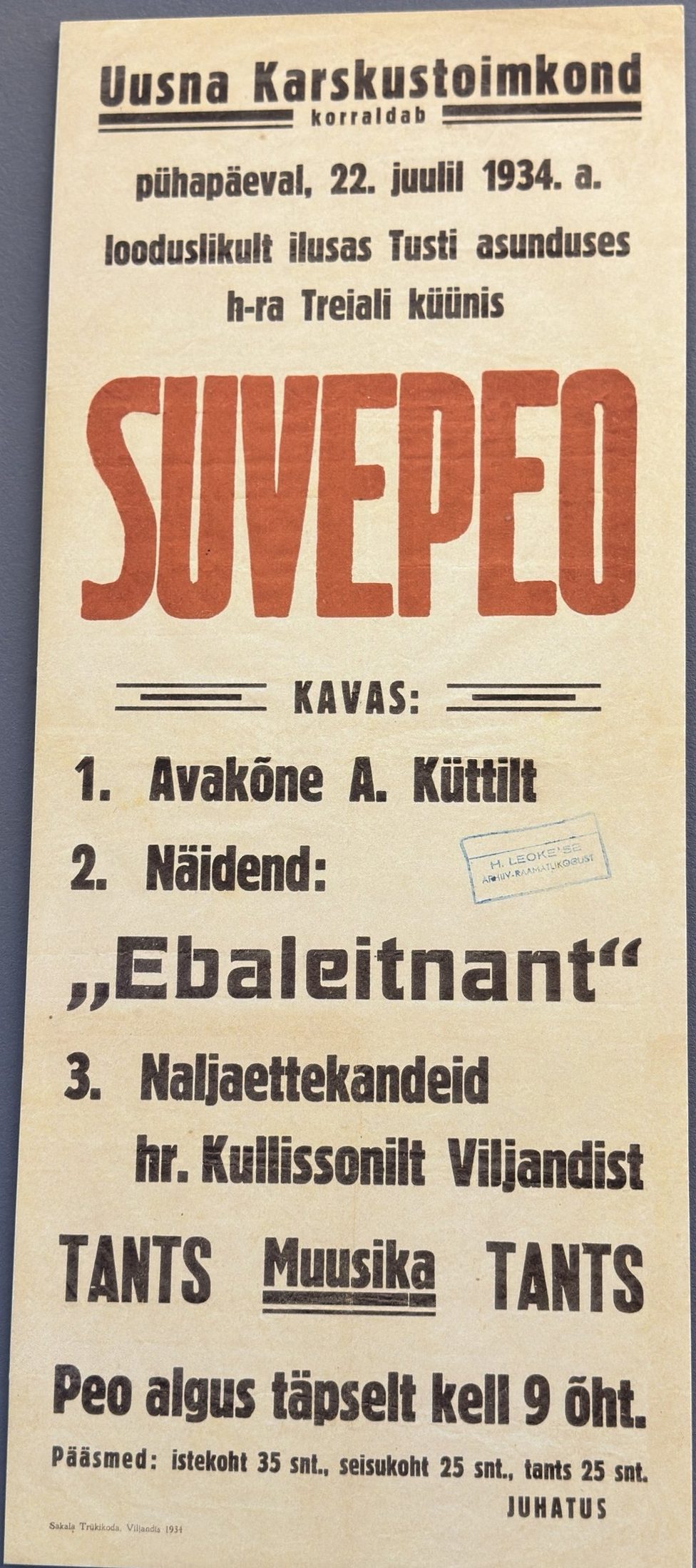
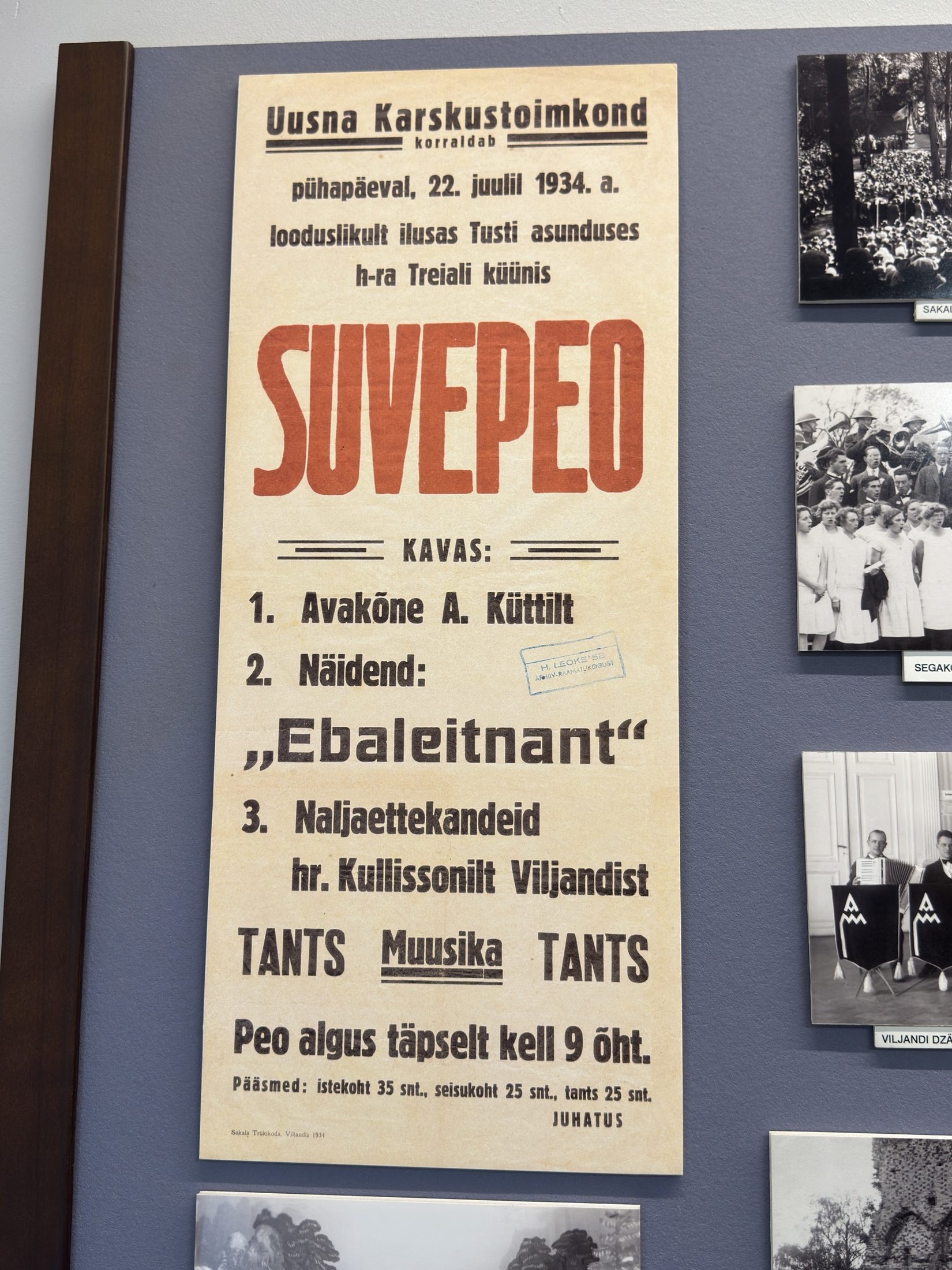
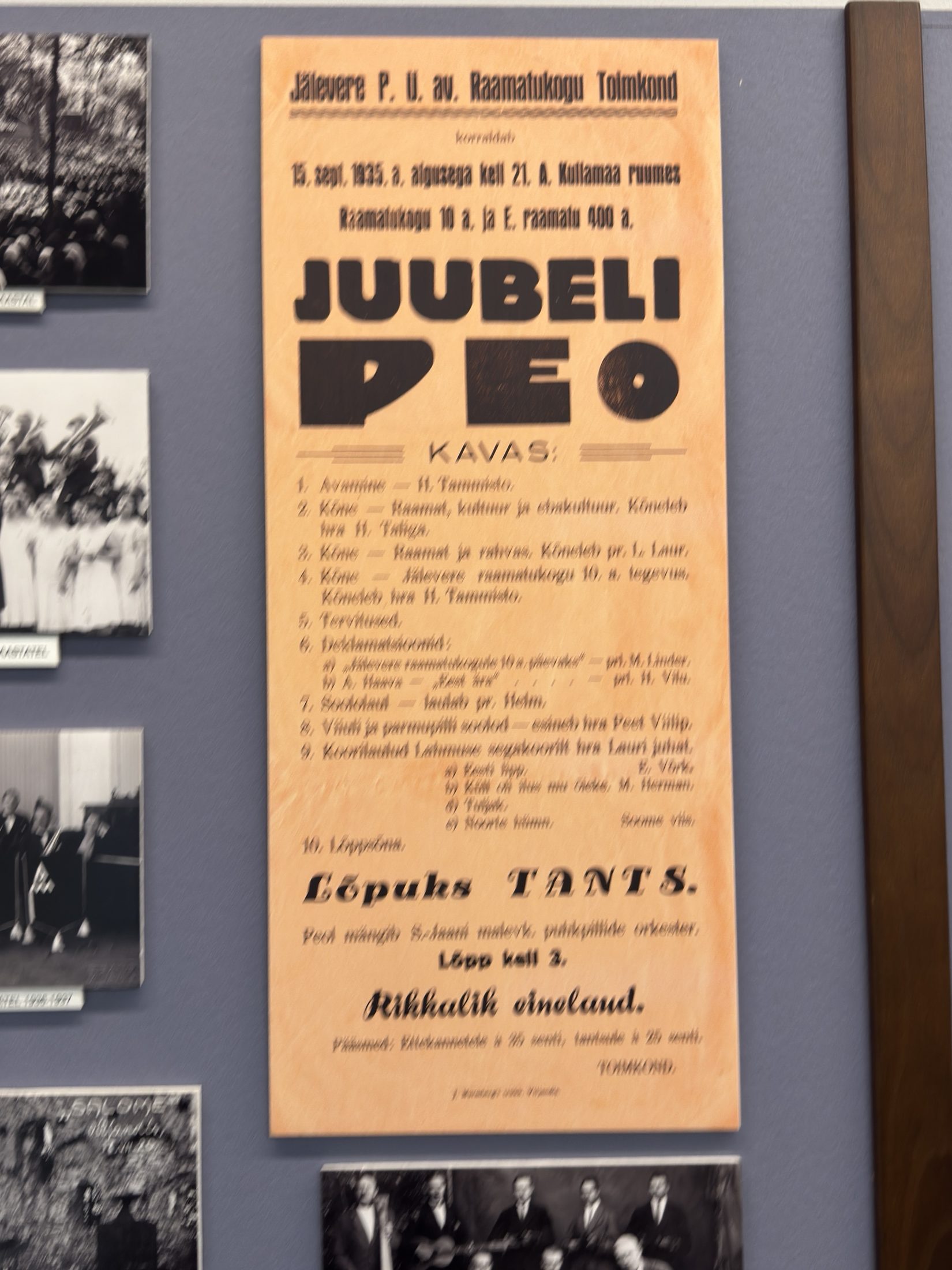
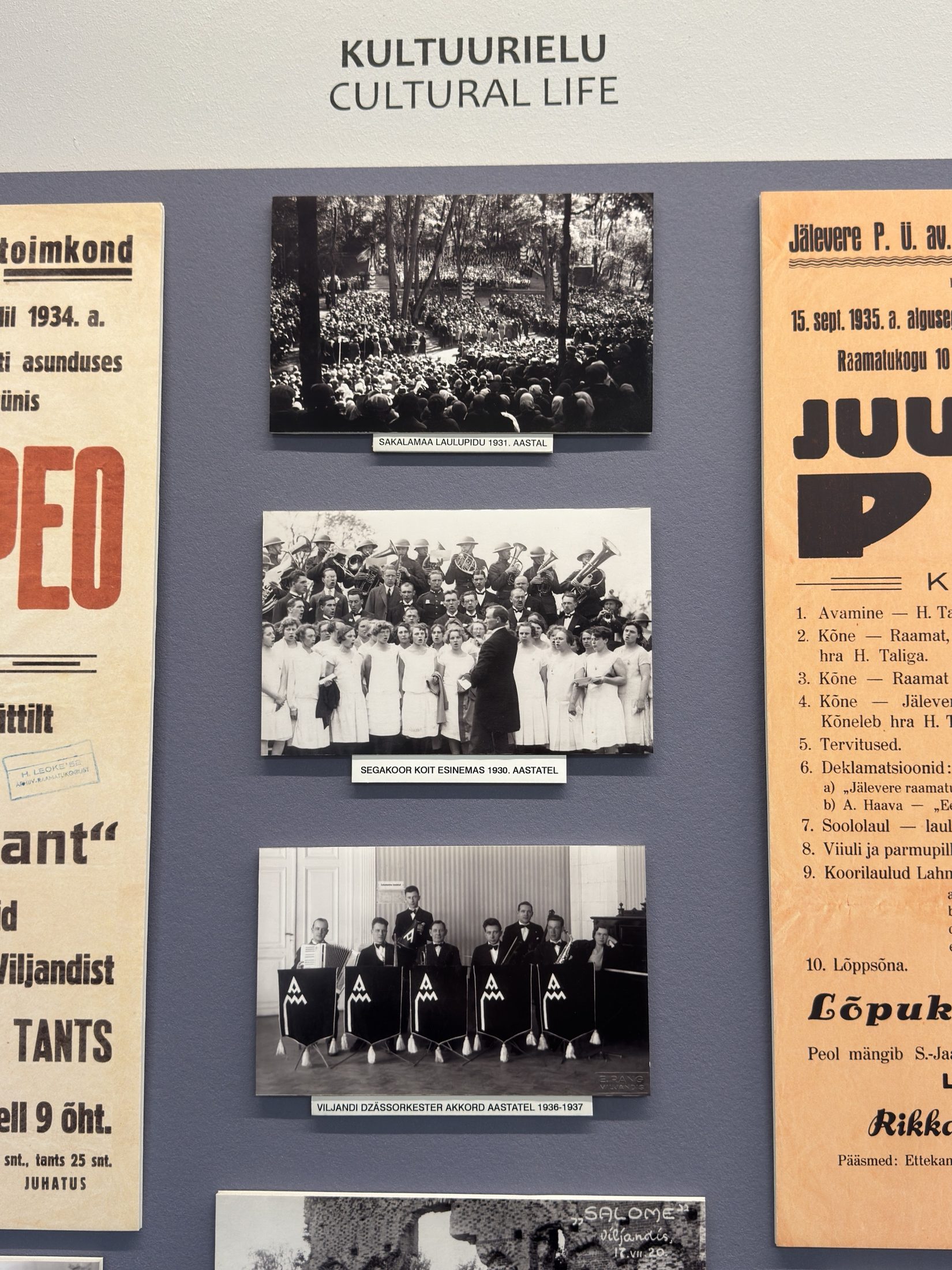
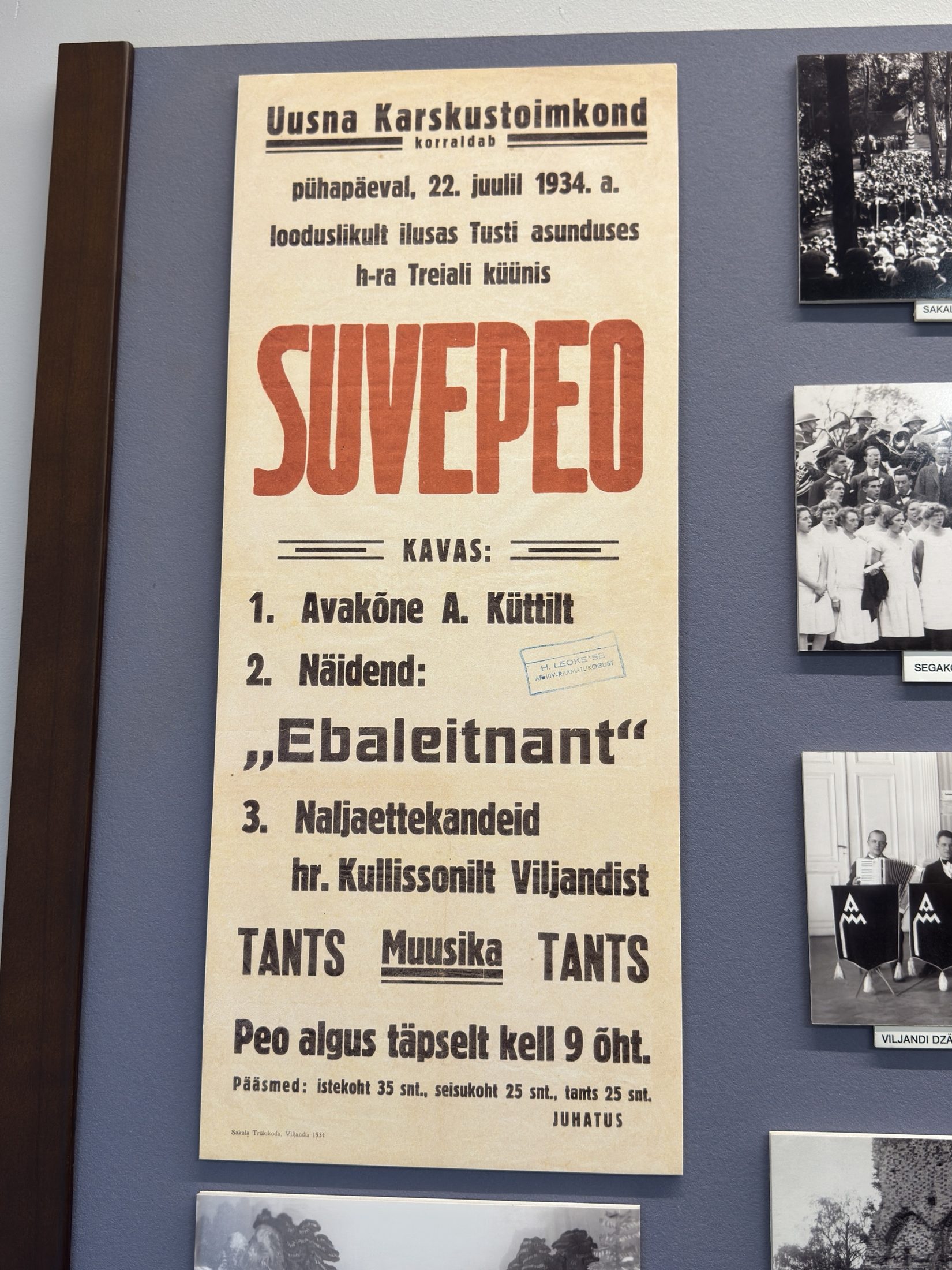
A 1934 poster for a temperance society’s summer party “in Mr Treial’s barn at the naturally beautiful Tusti settlement”, with a play and dancing. Stamped by the Leoke archive library.Viljandi Museum.In Local history and photographs →
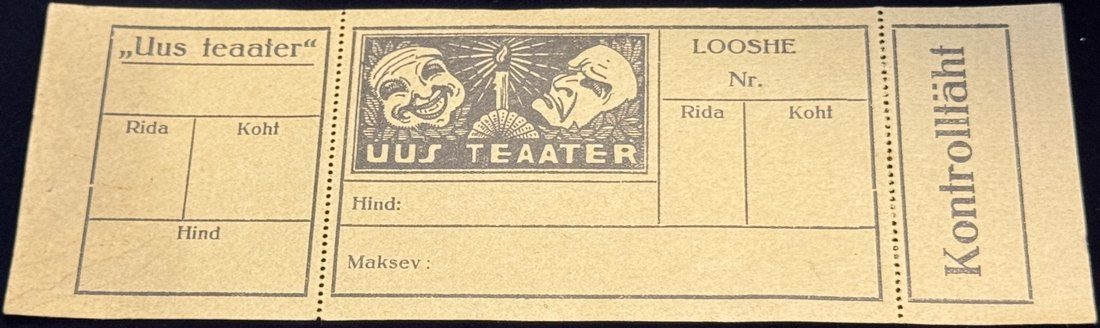
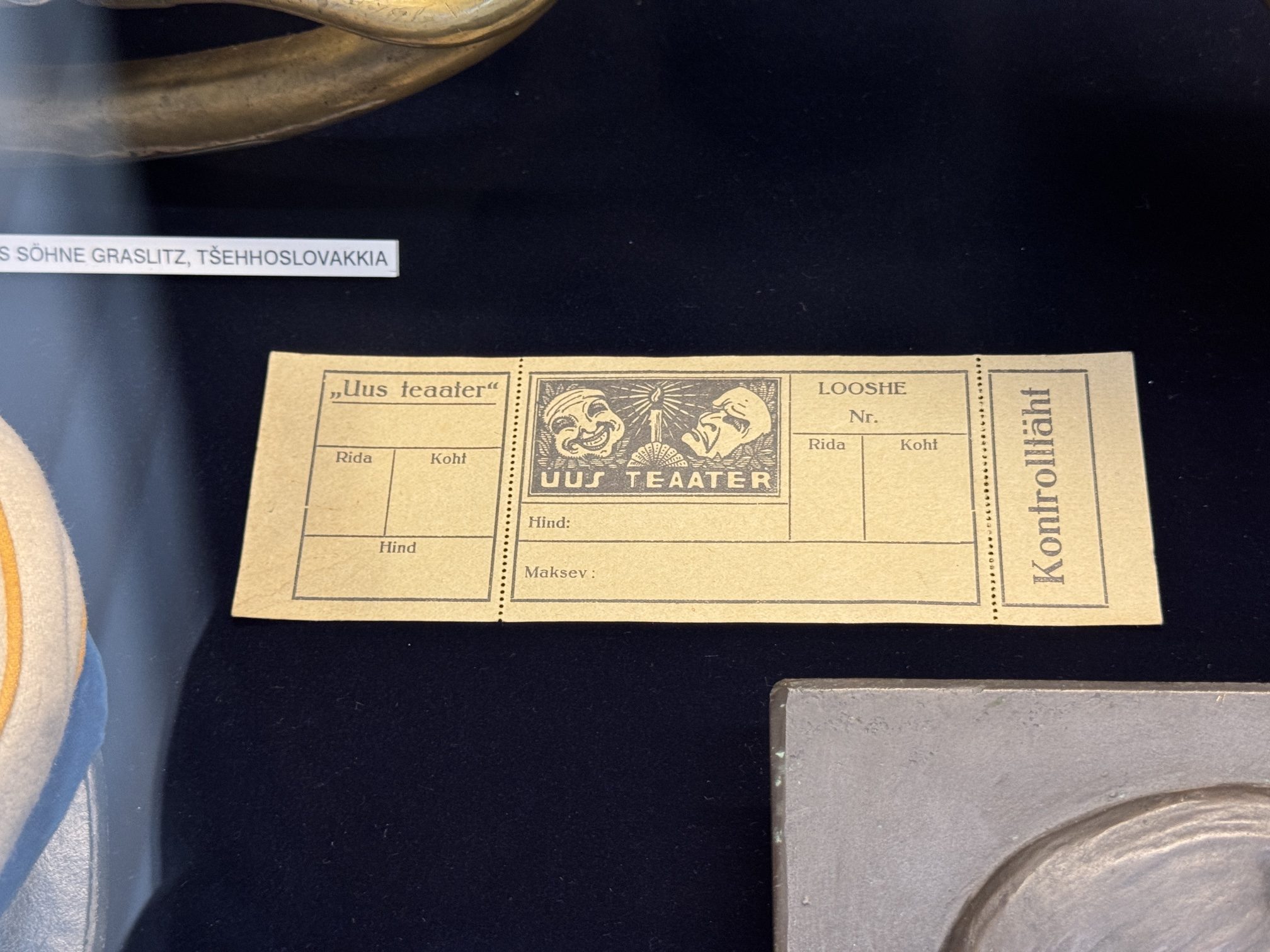
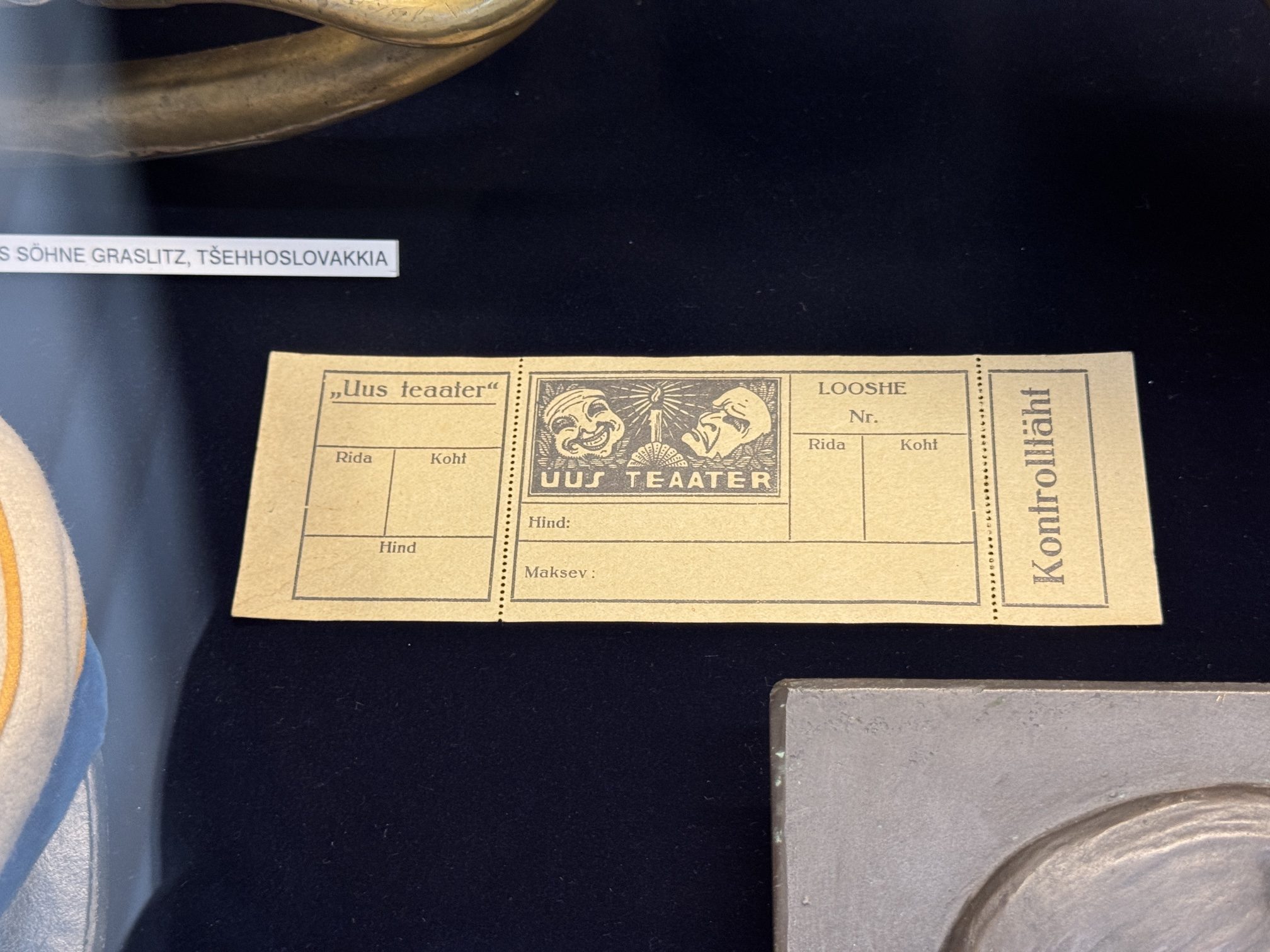
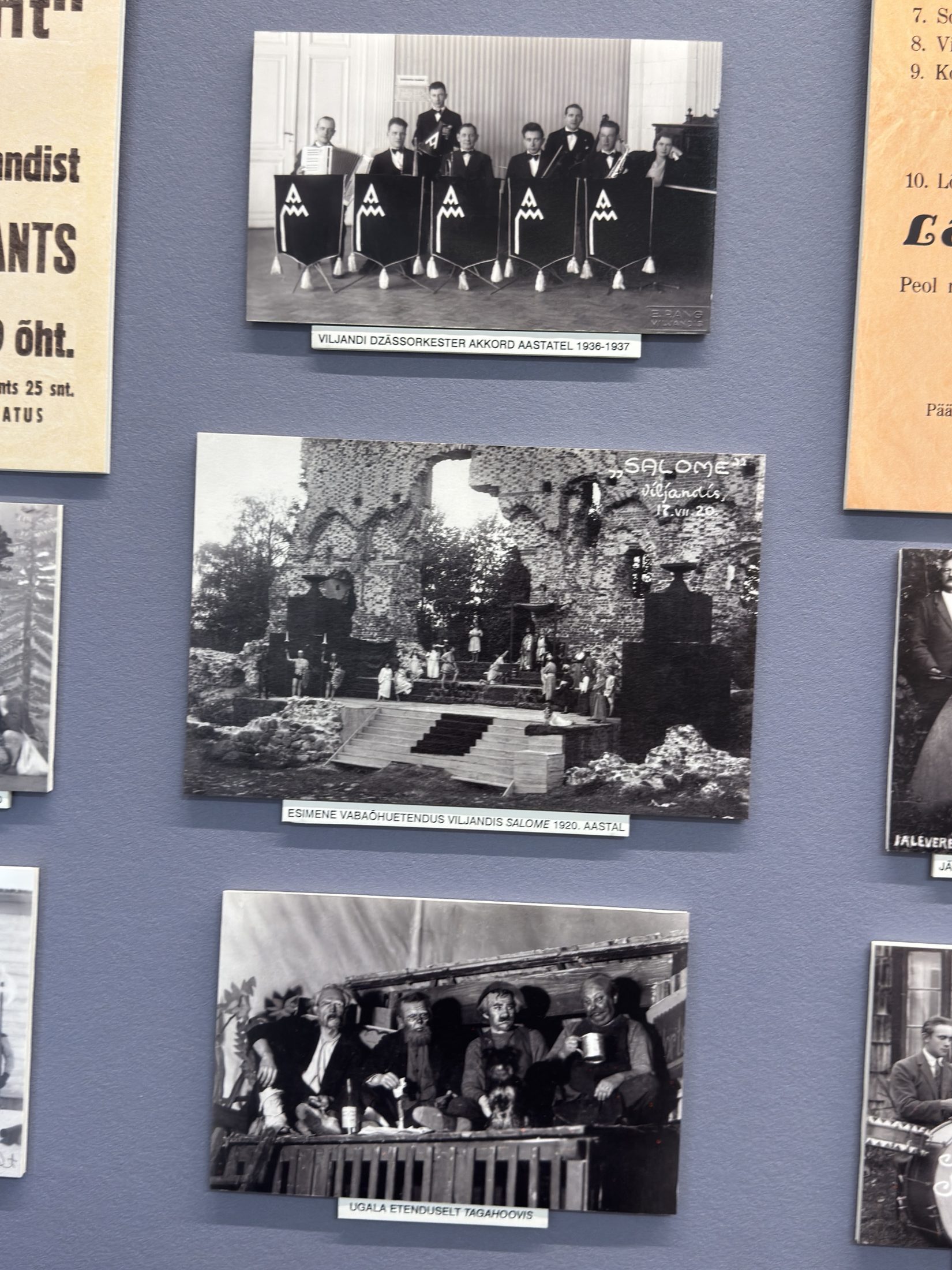
A ticket for Viljandi’s “Uus teater” (New Theater), with spaces for box, row, seat and price, from the museum’s display on the town’s cultural life. The Leoke shop sold theater tickets, though this one carries no shop stamp.Viljandi Museum.In Local history and photographs →
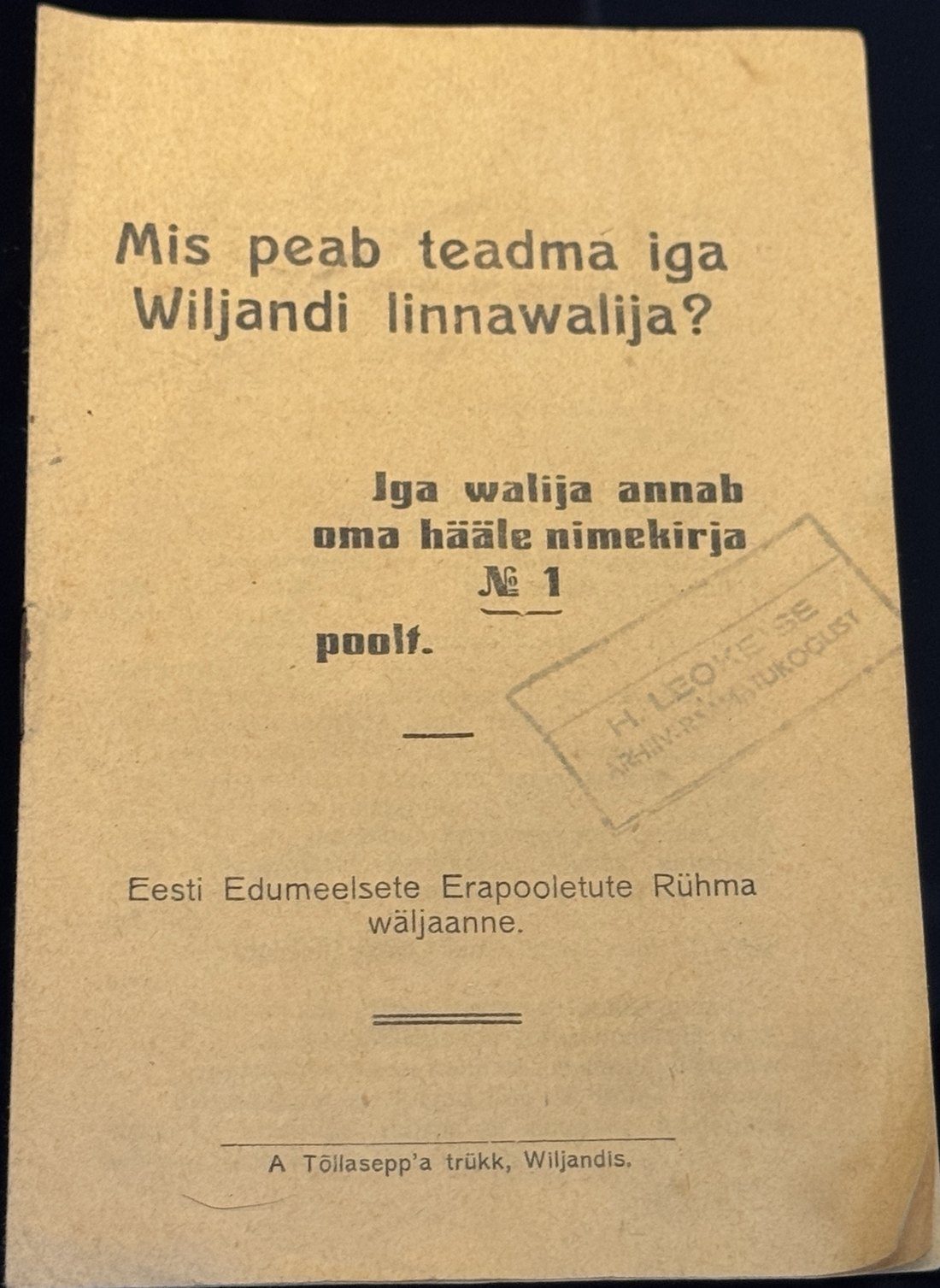
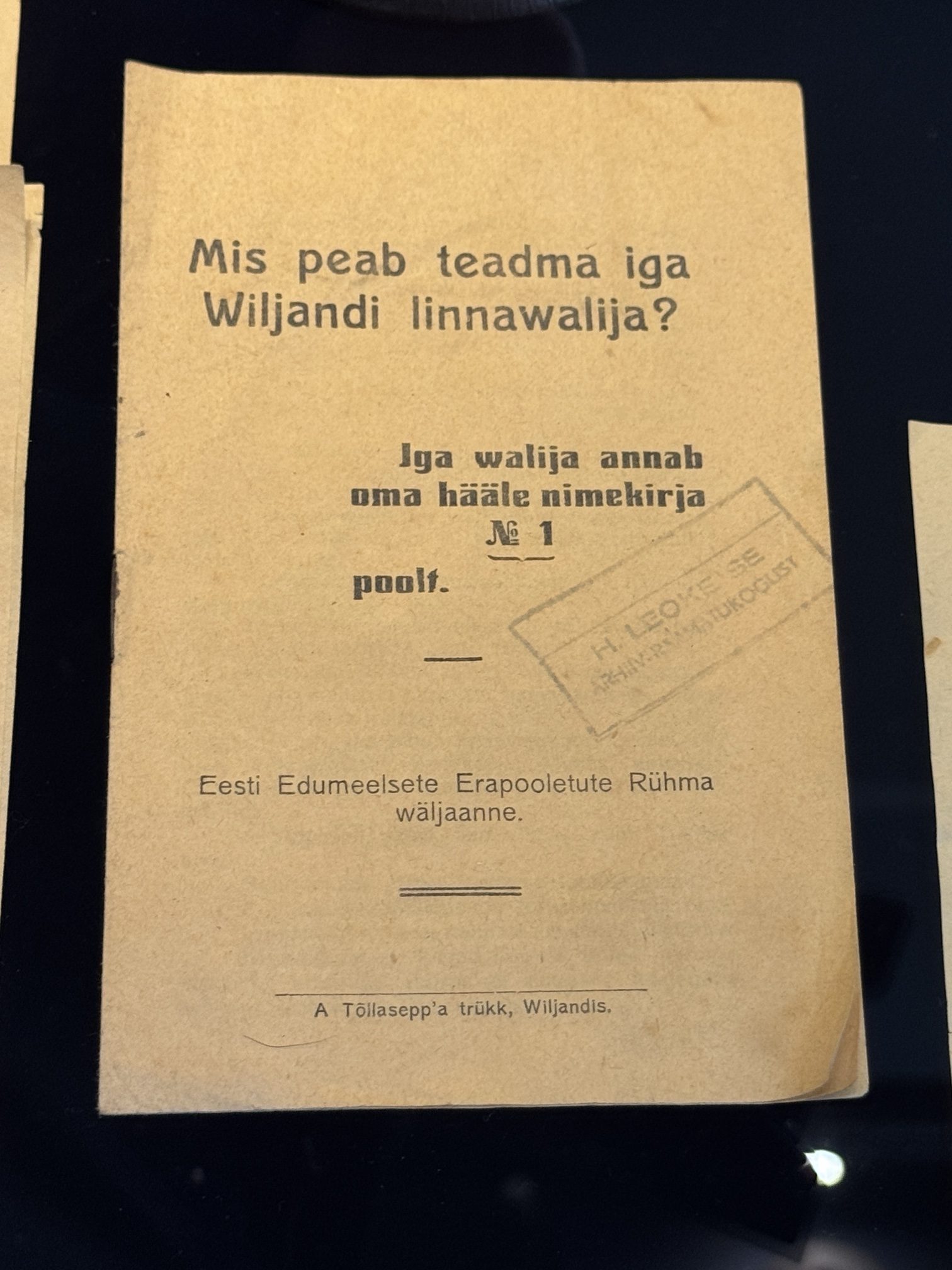
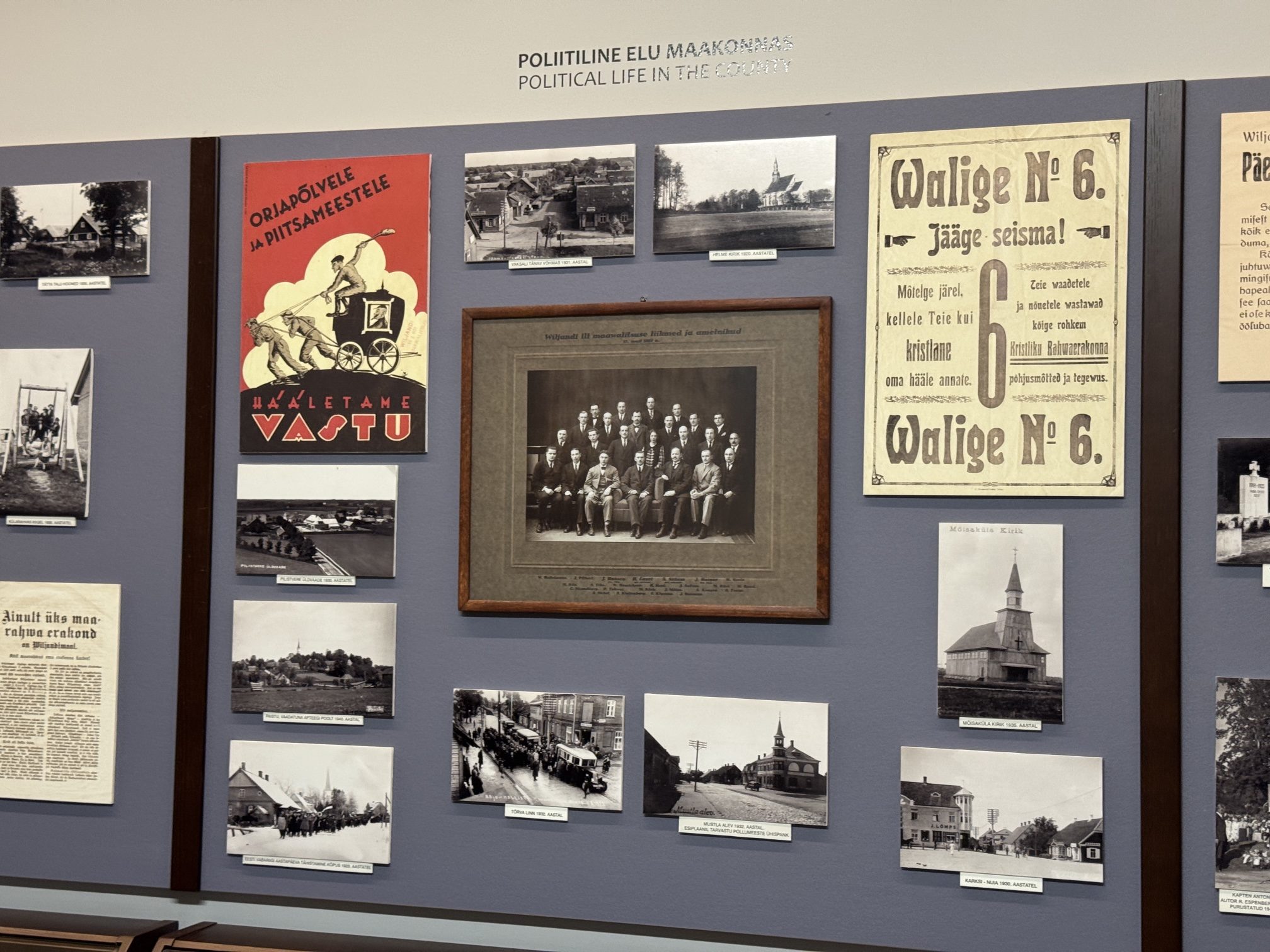
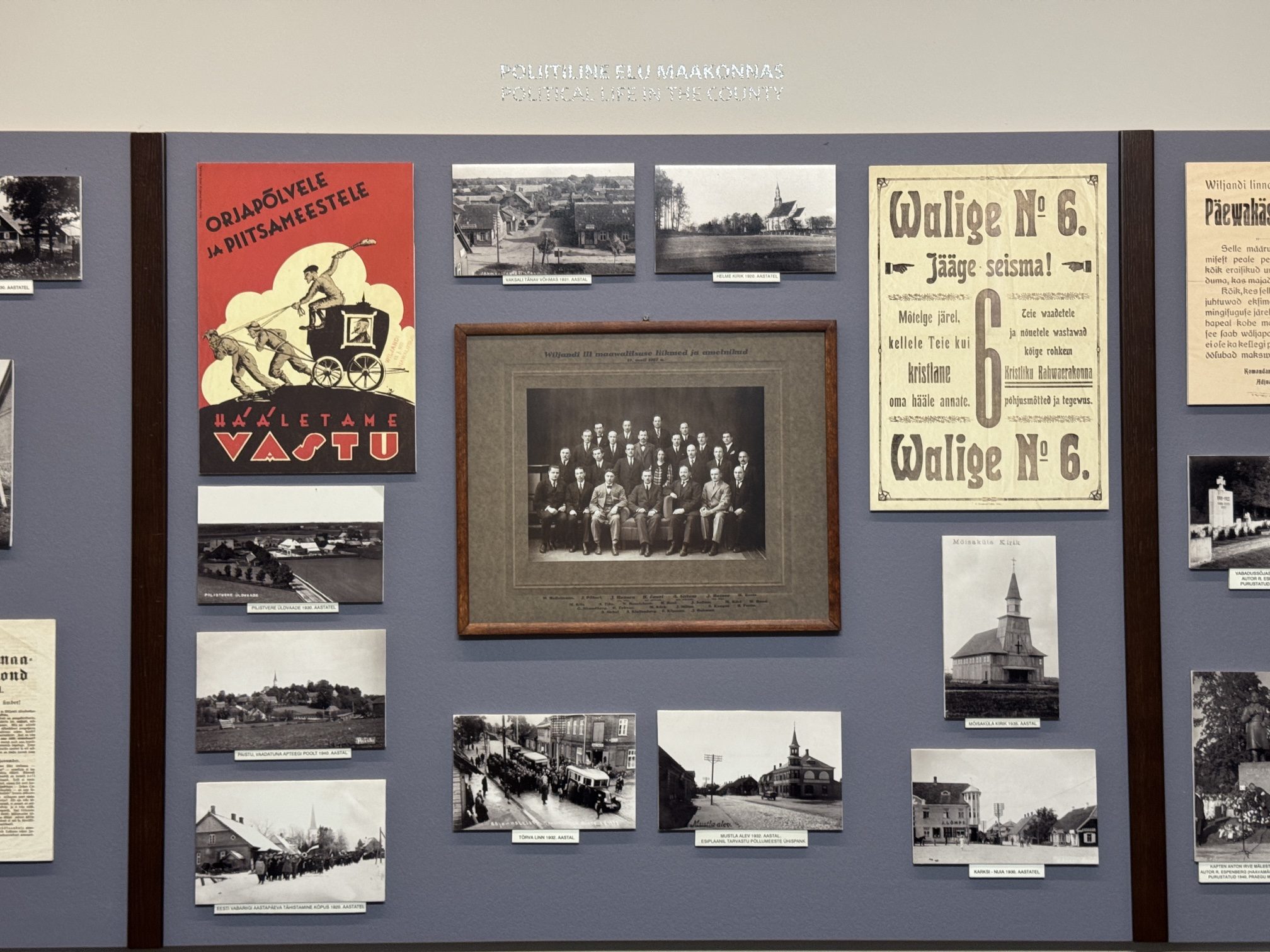
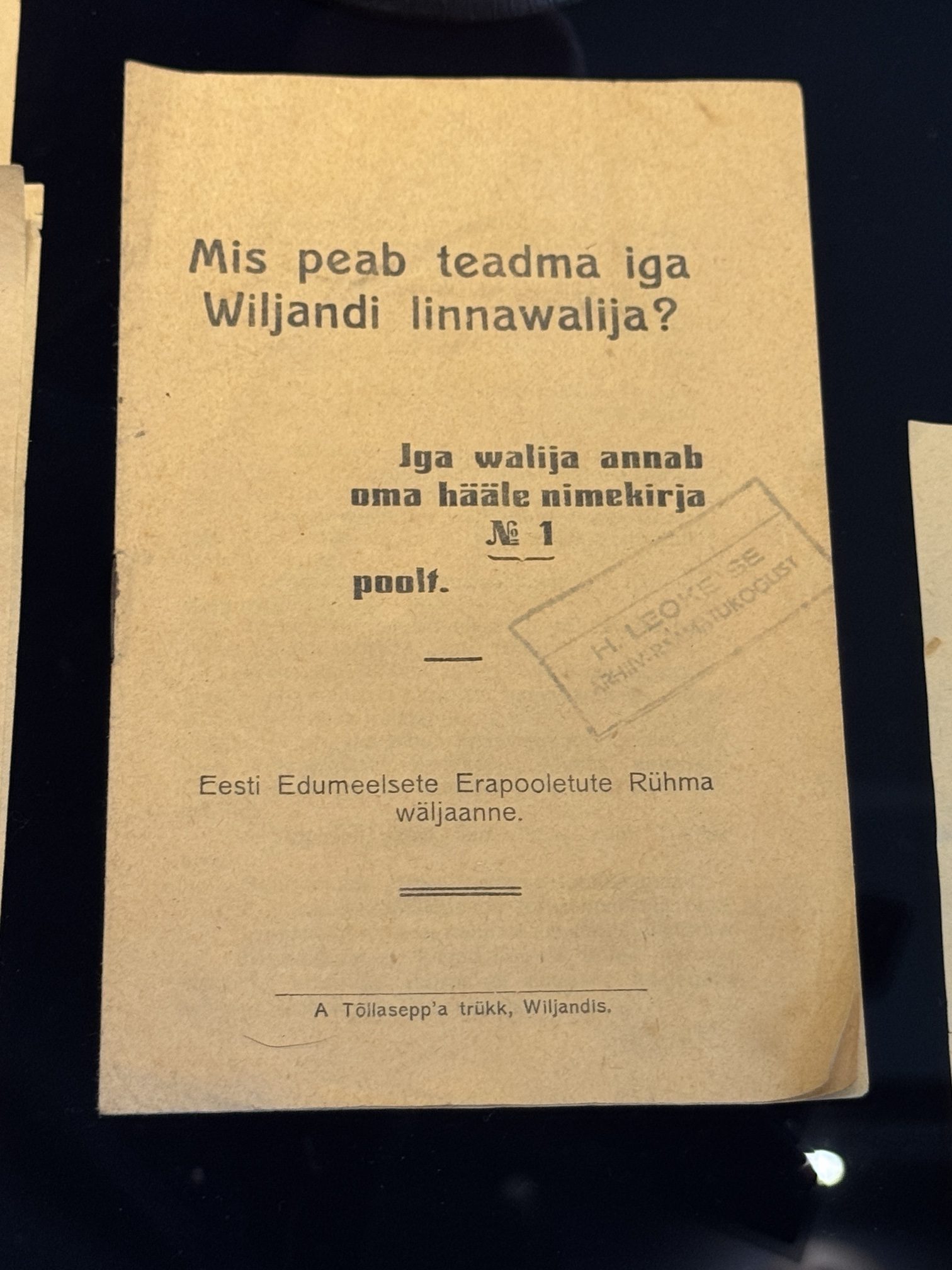
“What every Viljandi town voter must know”: an election leaflet urging votes for List No. 1, printed by Ado Tõllasepp and stamped by Hans’s archive library. From 1910 Hans could vote in these elections himself.Viljandi Museum.In Local history and photographs →
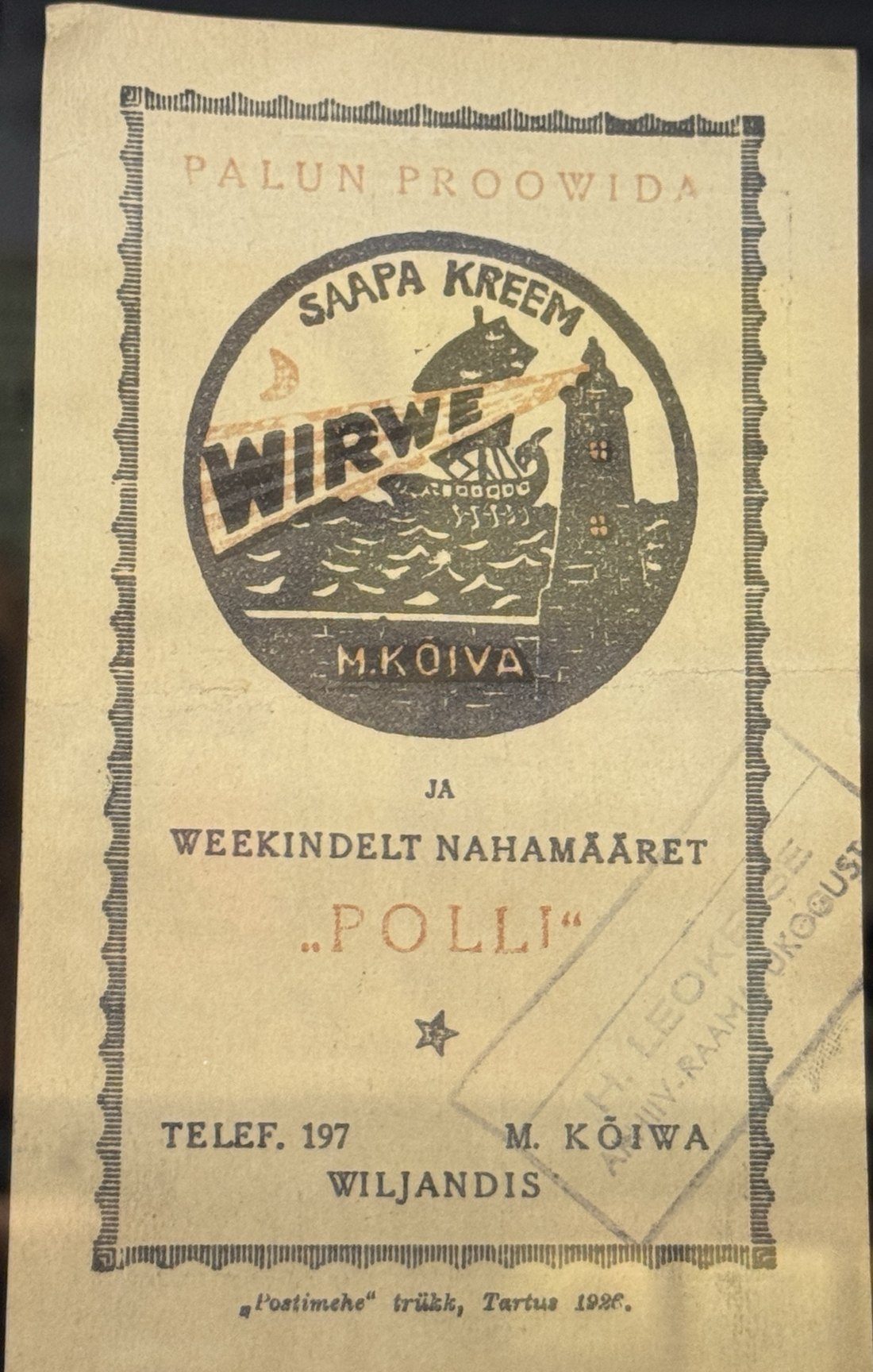
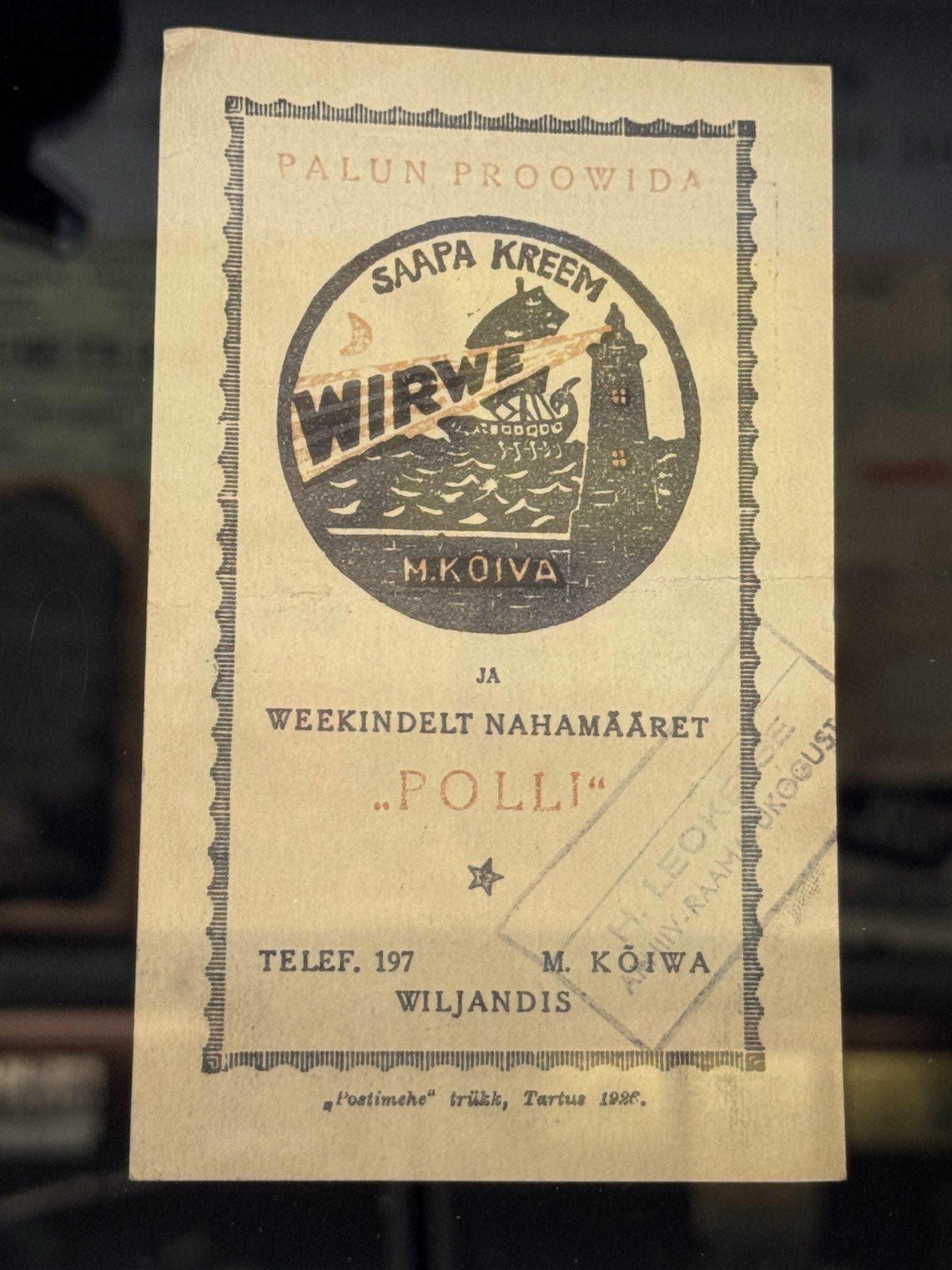
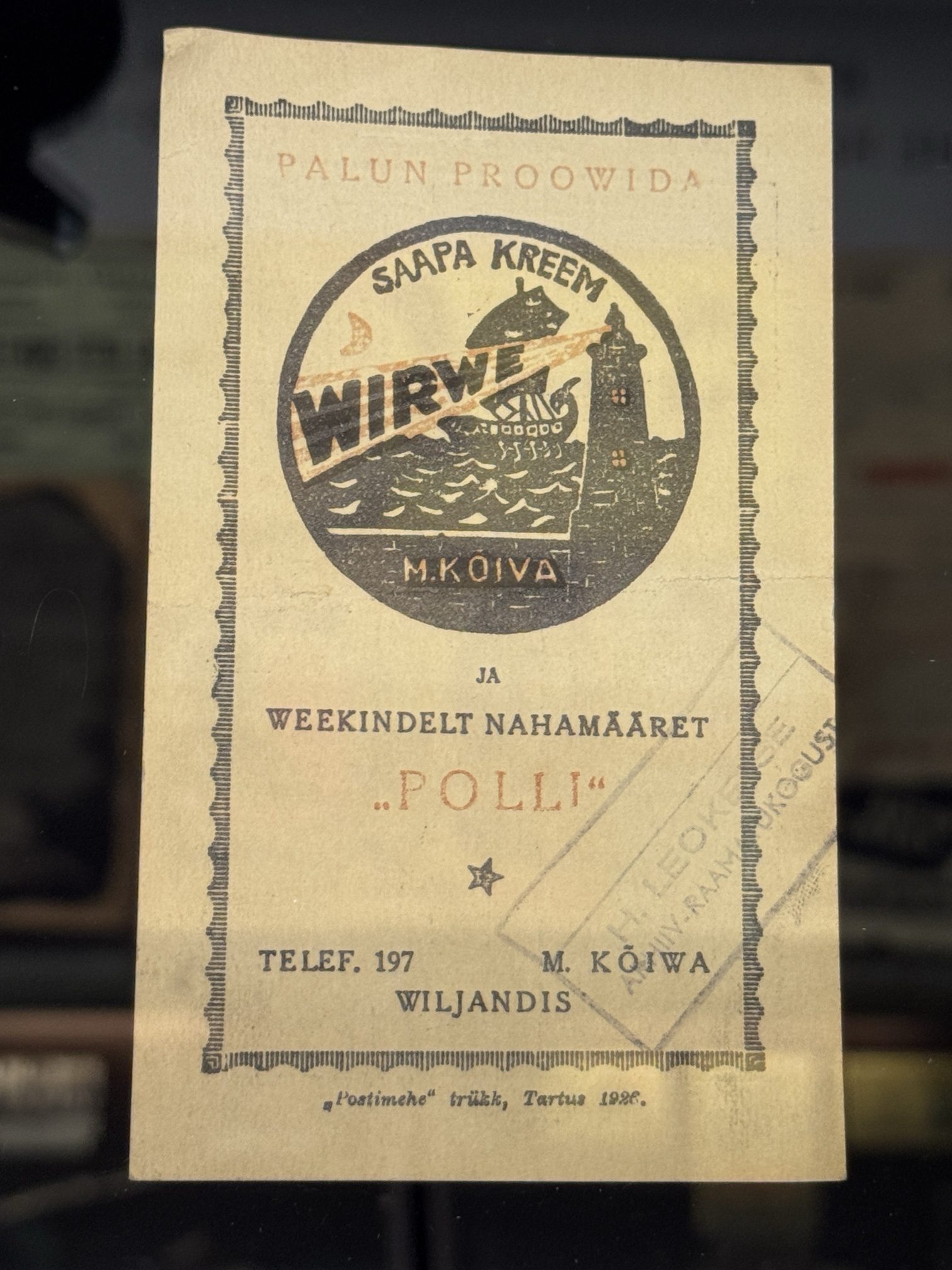
“Please try WIRWE boot cream and ‘Polli’ waterproof leather grease”: a 1926 advertisement for M. Kõiva of Viljandi, collected and stamped seven years after Hans died.Viljandi Museum.In Local history and photographs →
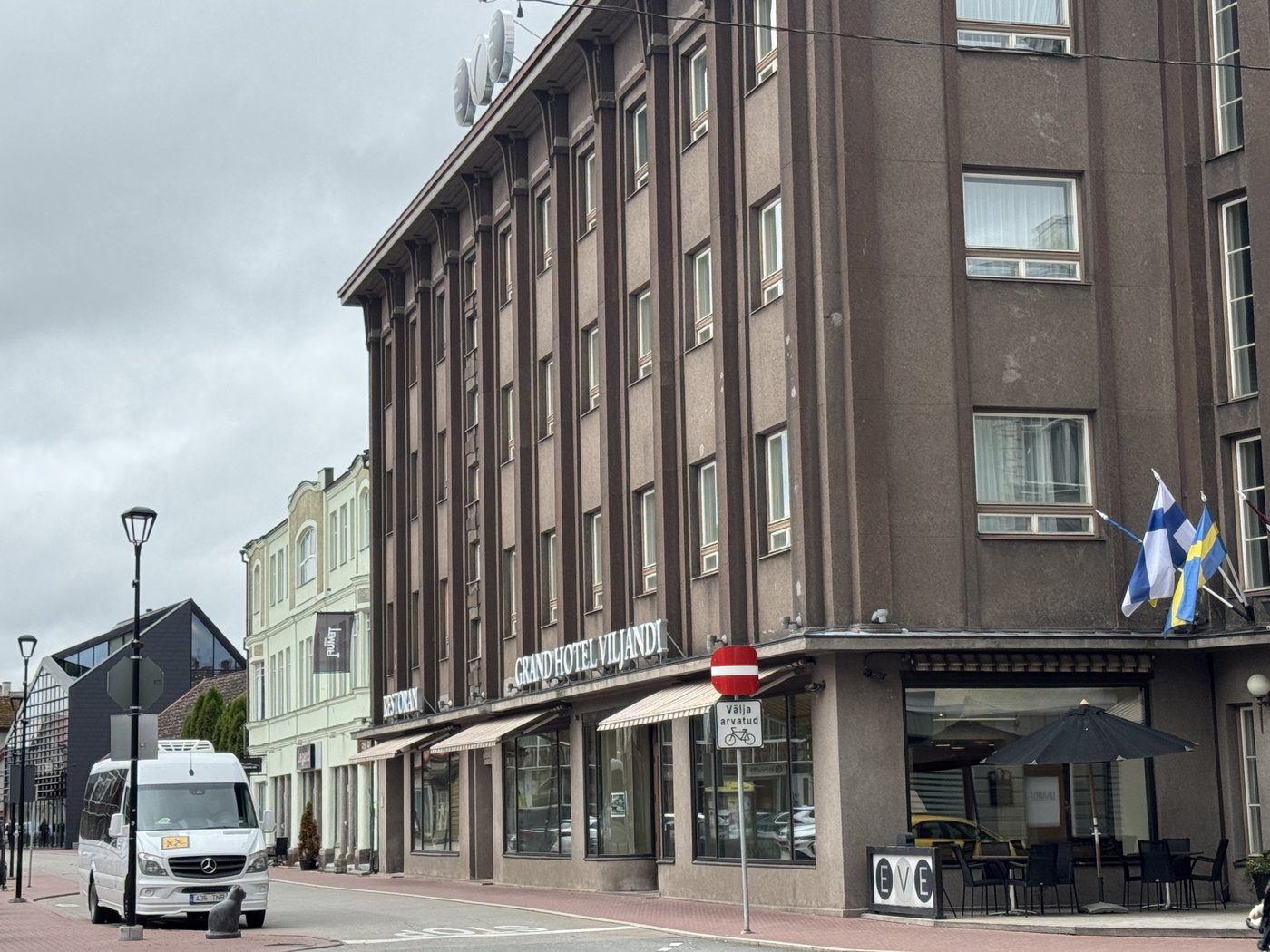
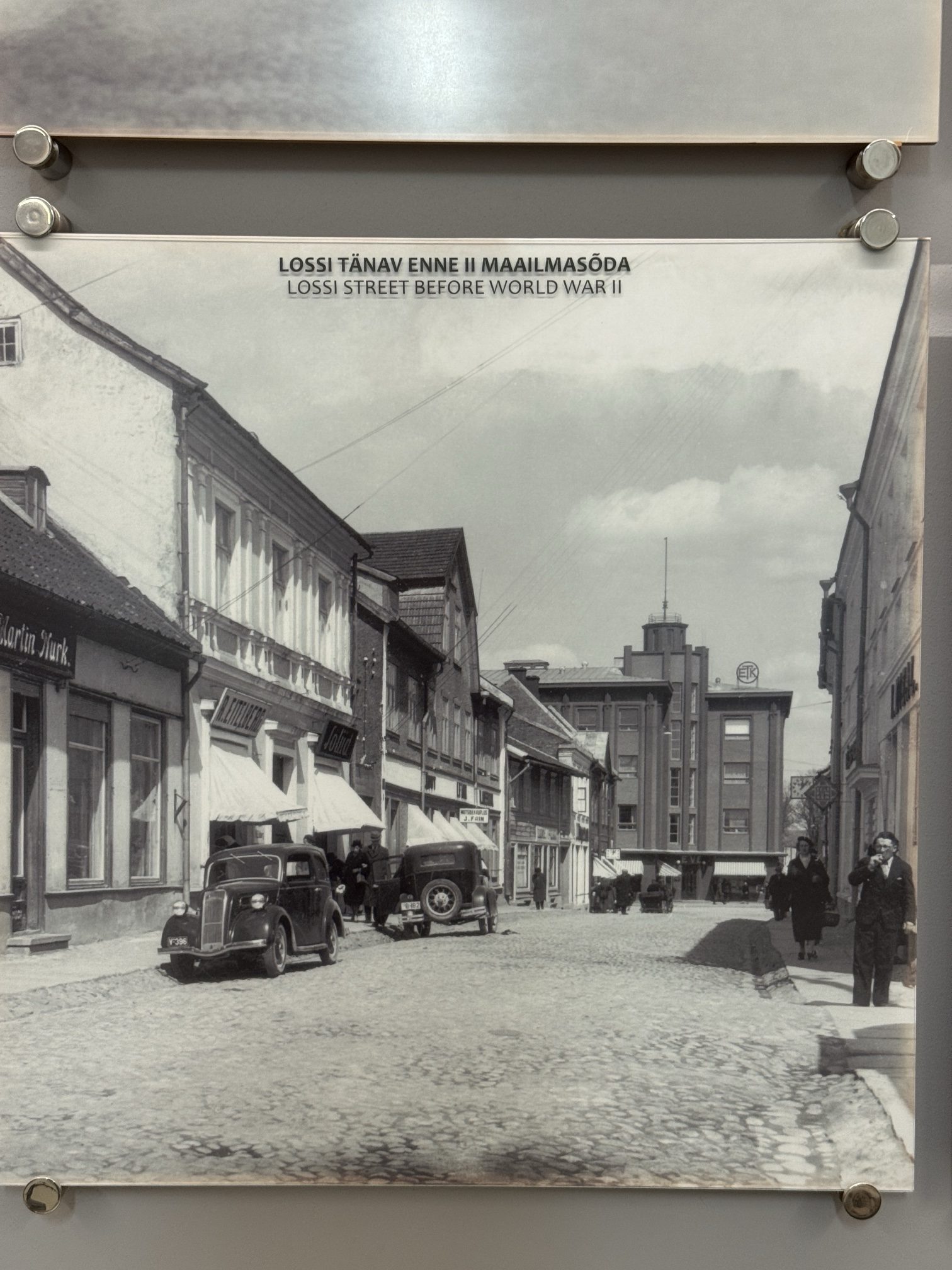
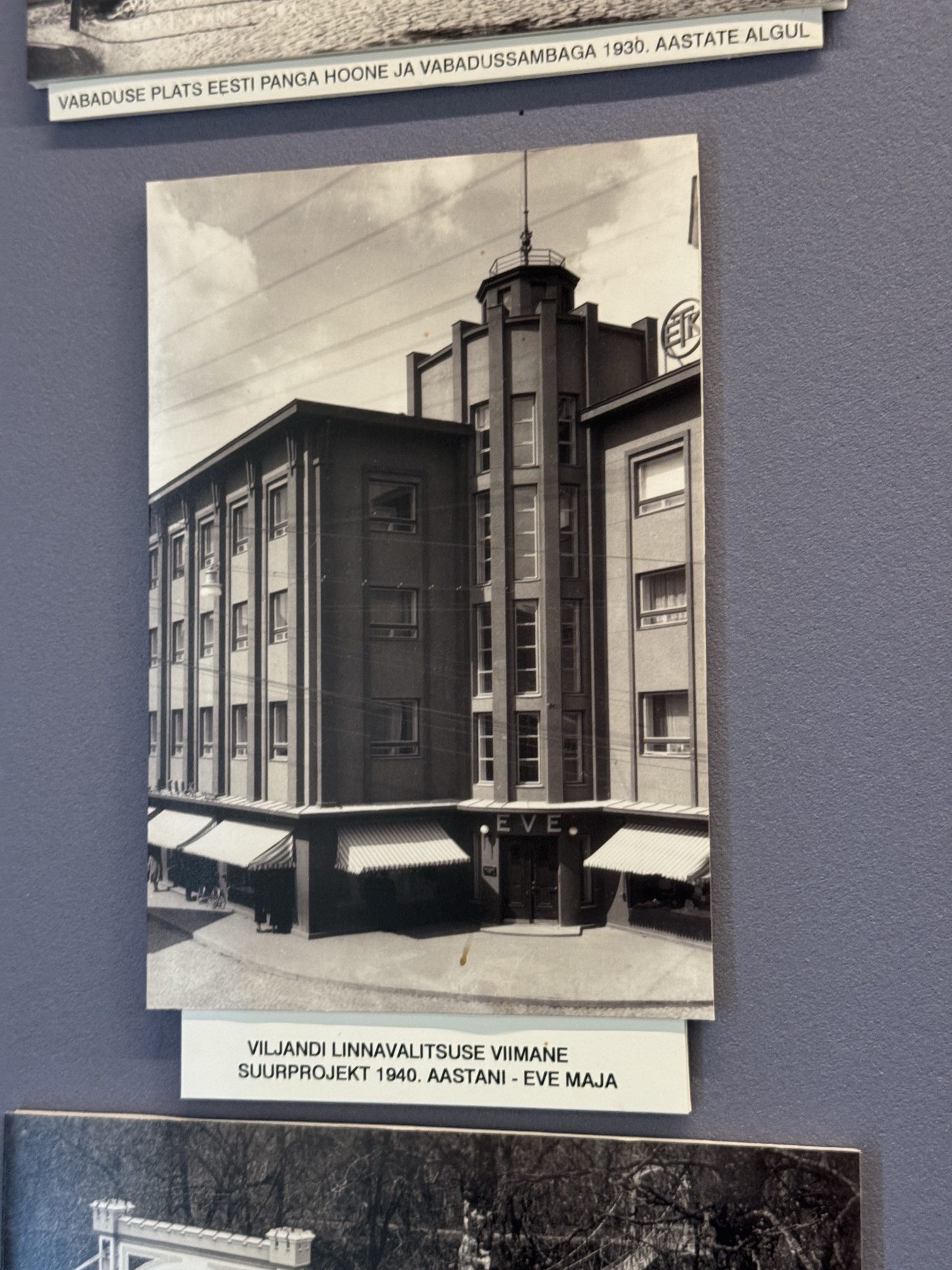
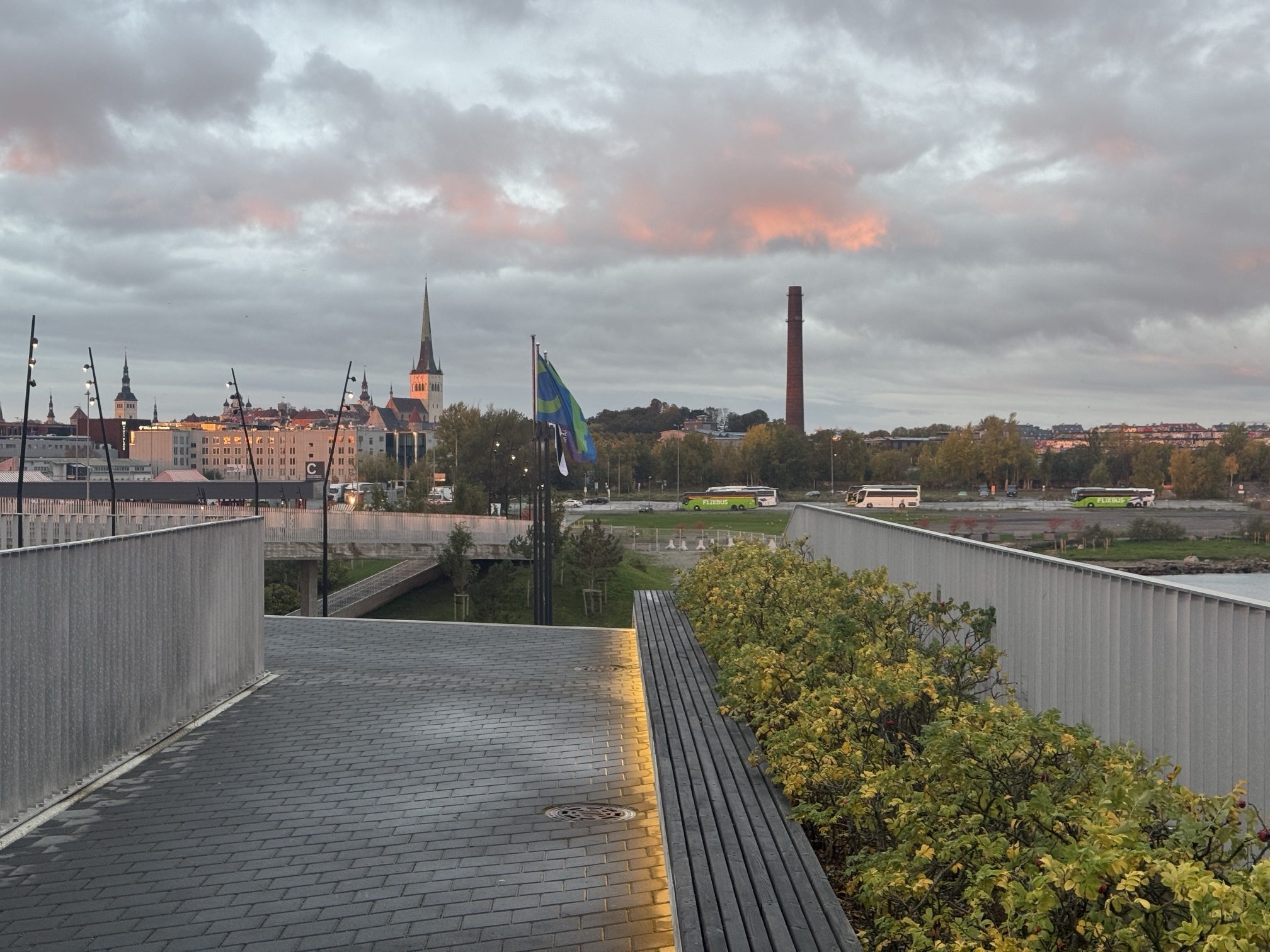
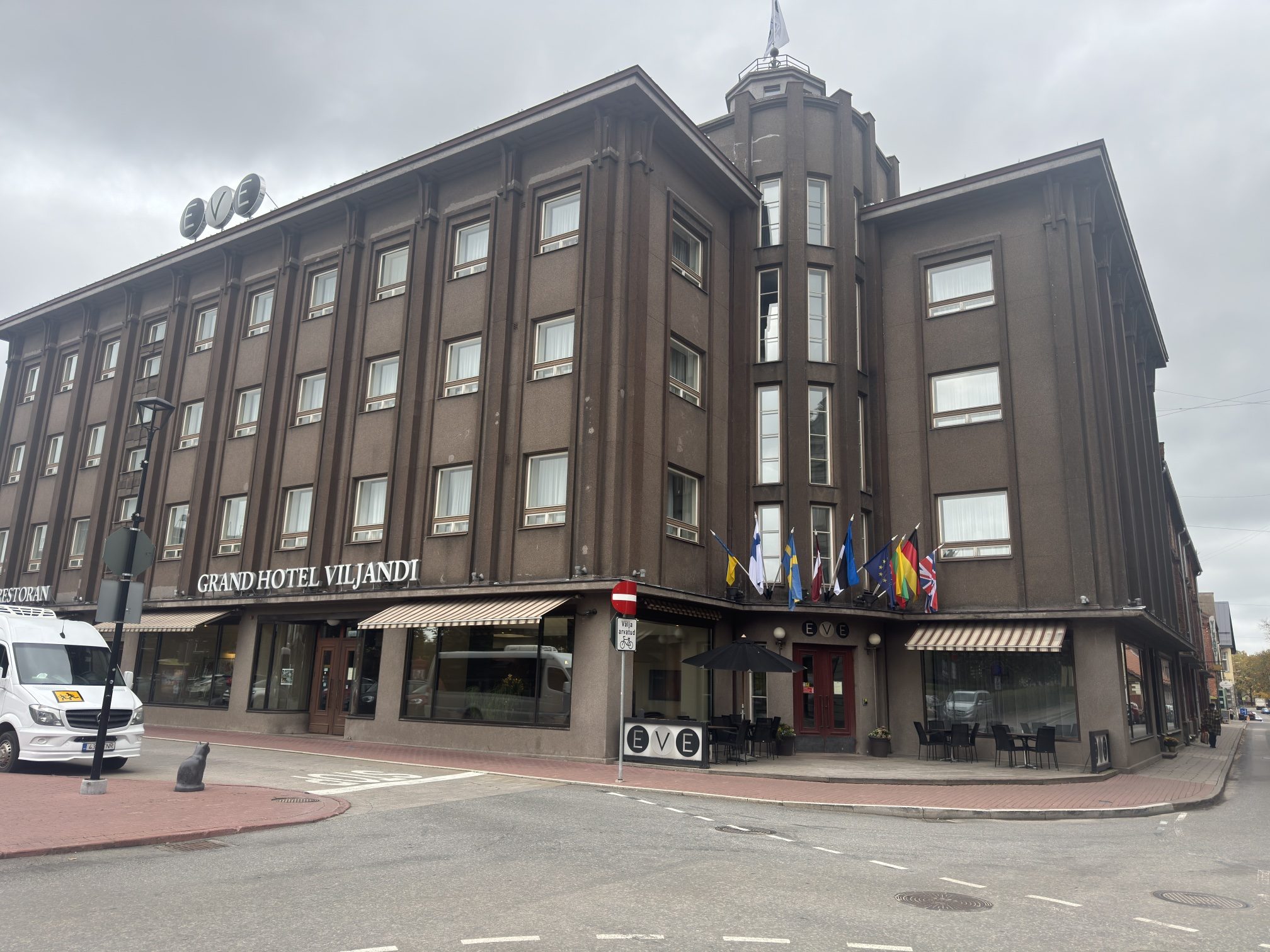
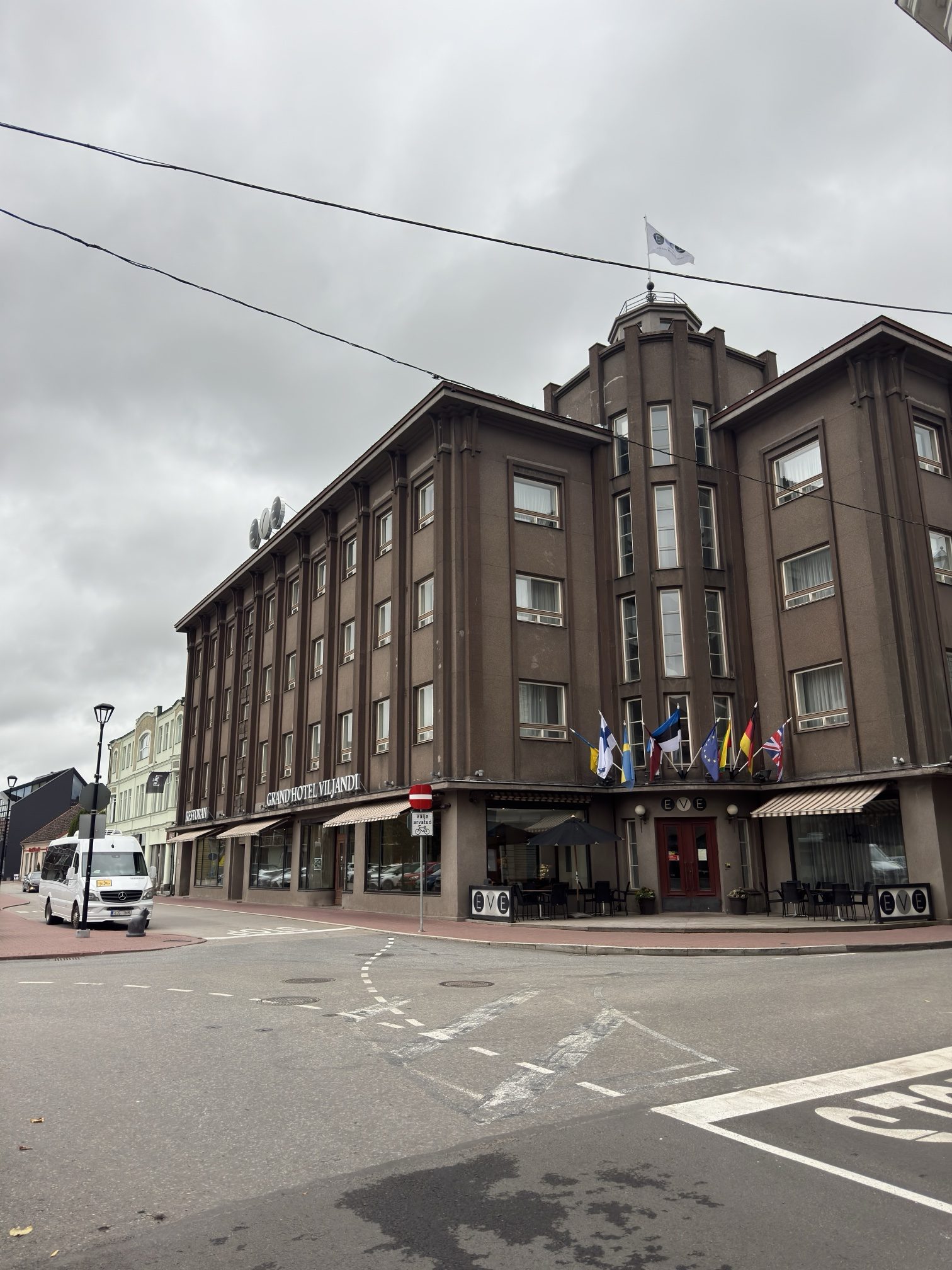
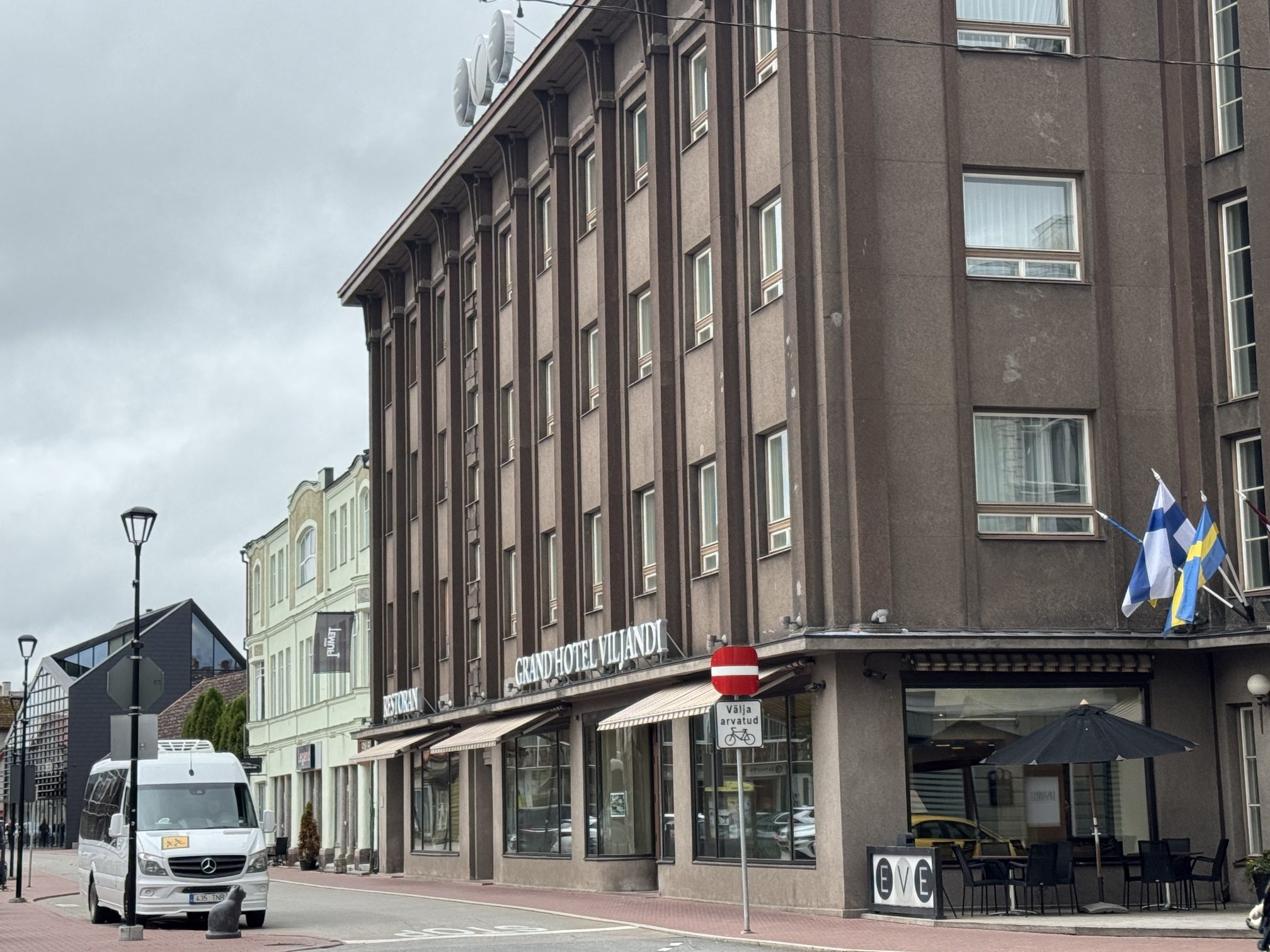
The corner of Tartu and Lossi streets in October 2026. The wooden buildings were cleared in the late 1930s for the EVE building, now the Grand Hotel Viljandi. Beyond it, the pale Art Nouveau house is Tartu 9, where the shop stood in 1907–09. In Local history and photographs →
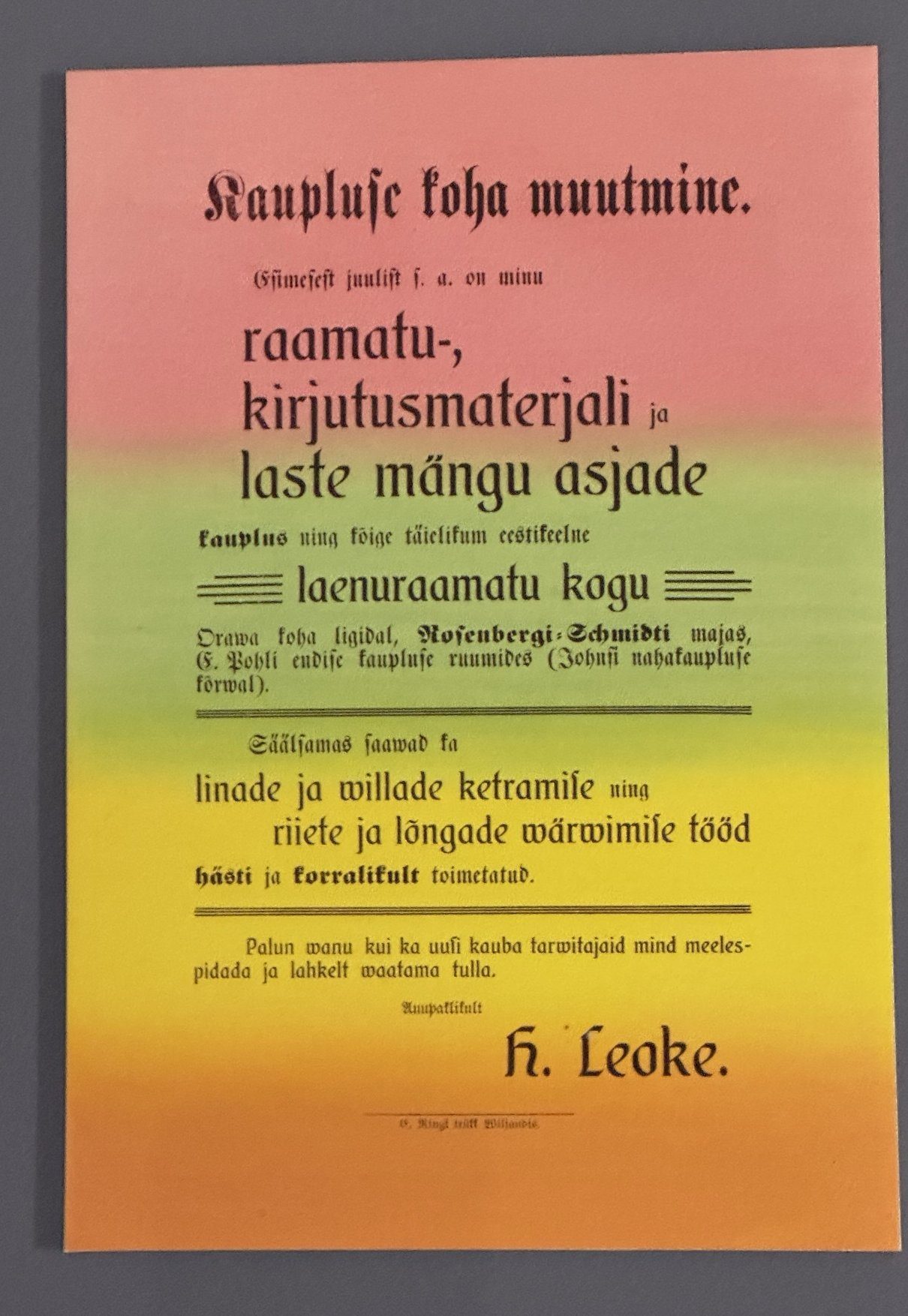
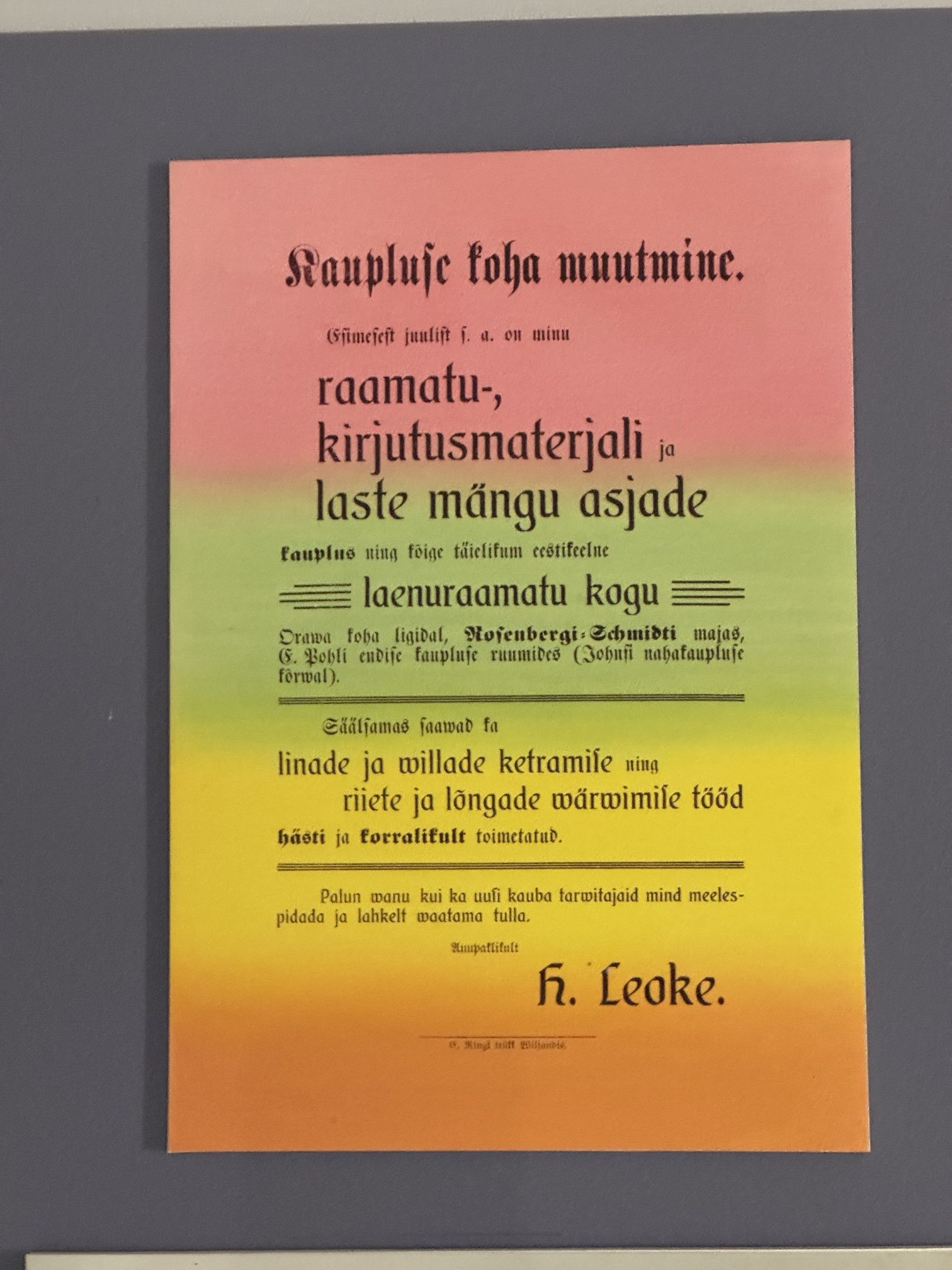
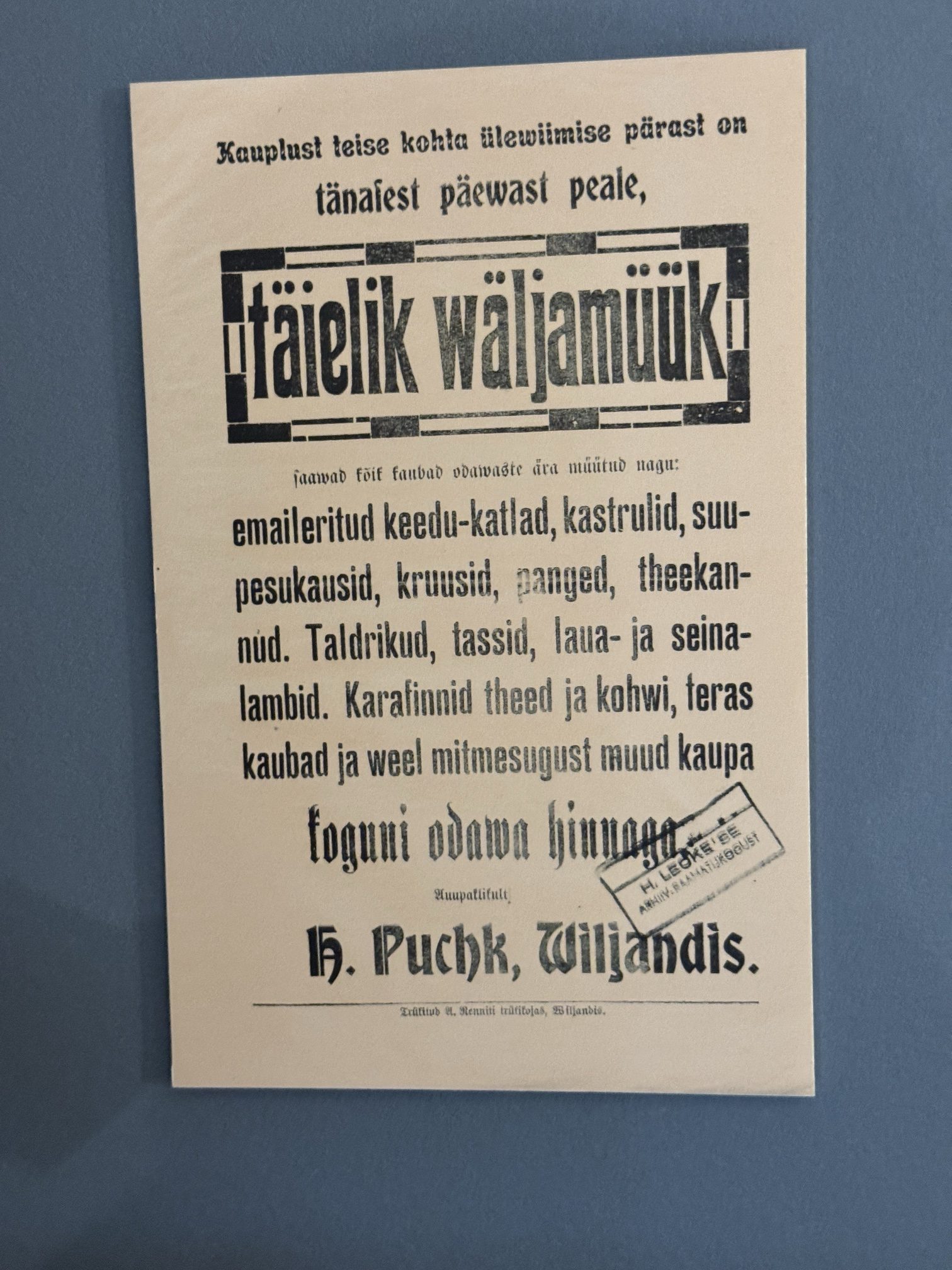
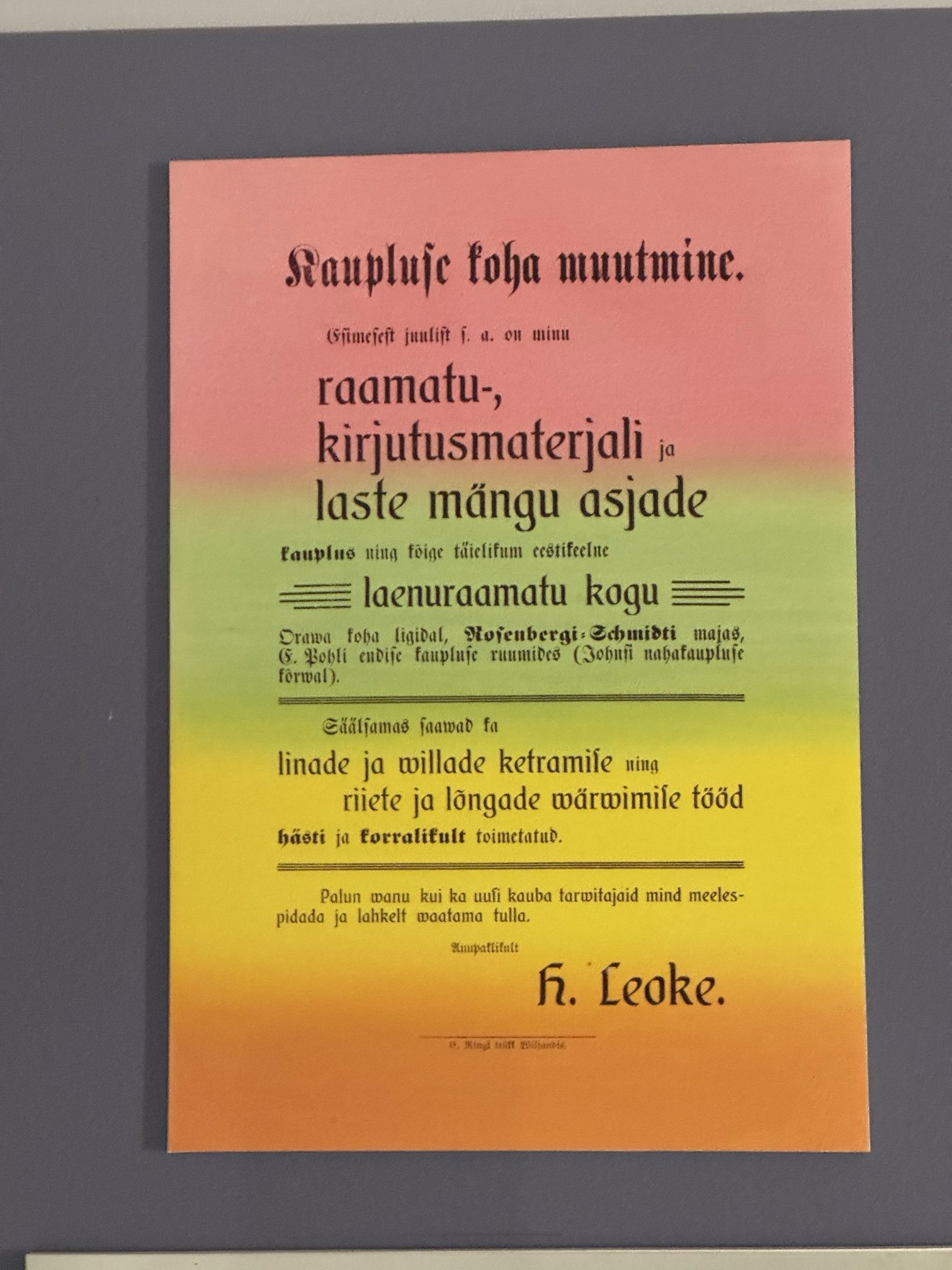
Hans’s own poster announcing a move: “From the first of July this year my book, stationery and children’s toy shop and the most complete Estonian-language lending library will be in the Rosenberg-Schmidt house… Flax and wool spinning and the dyeing of cloth and yarn will also be done well and properly. Respectfully, H. Leoke.” Which move it records is not yet known.Viljandi Museum.In Local history and photographs →
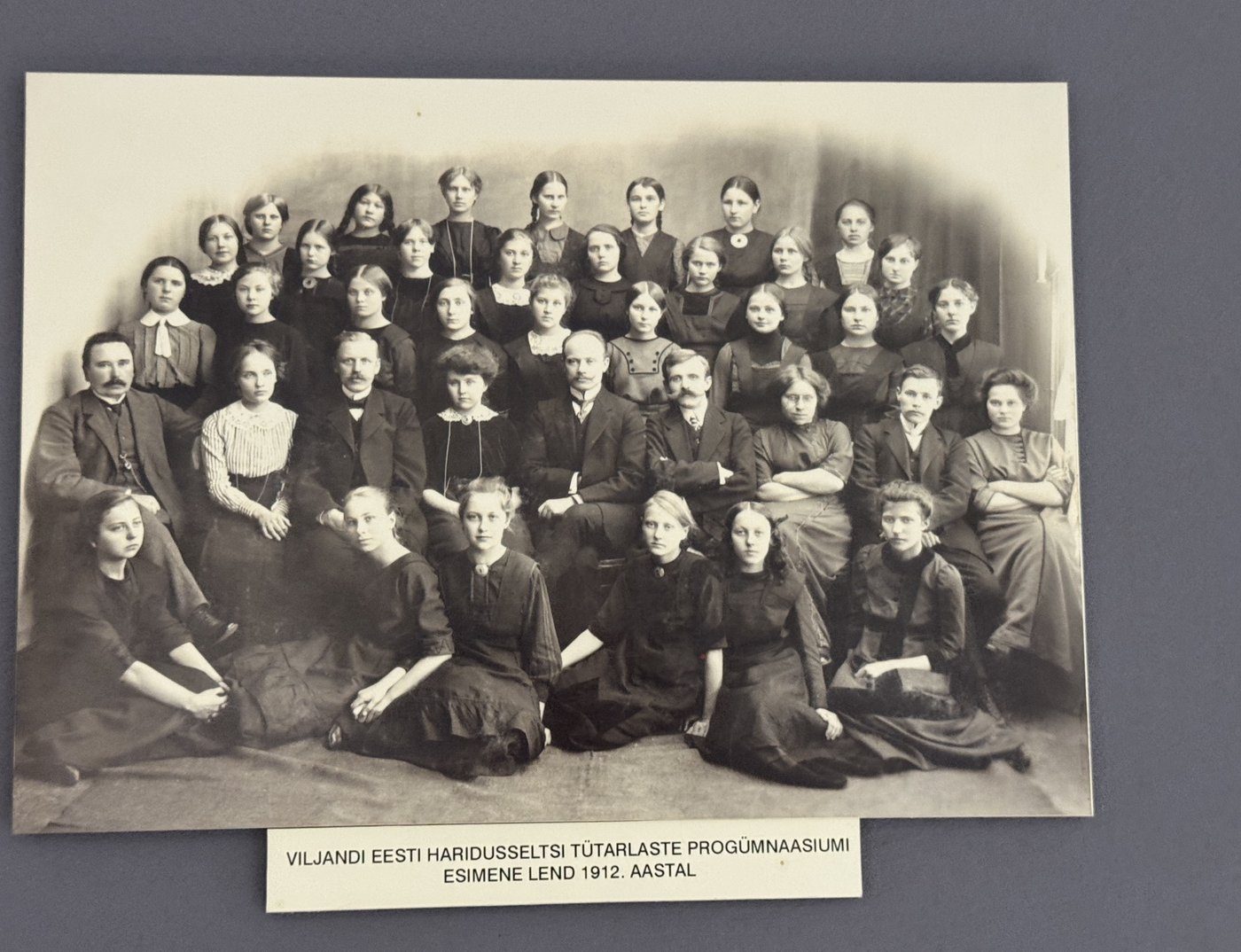
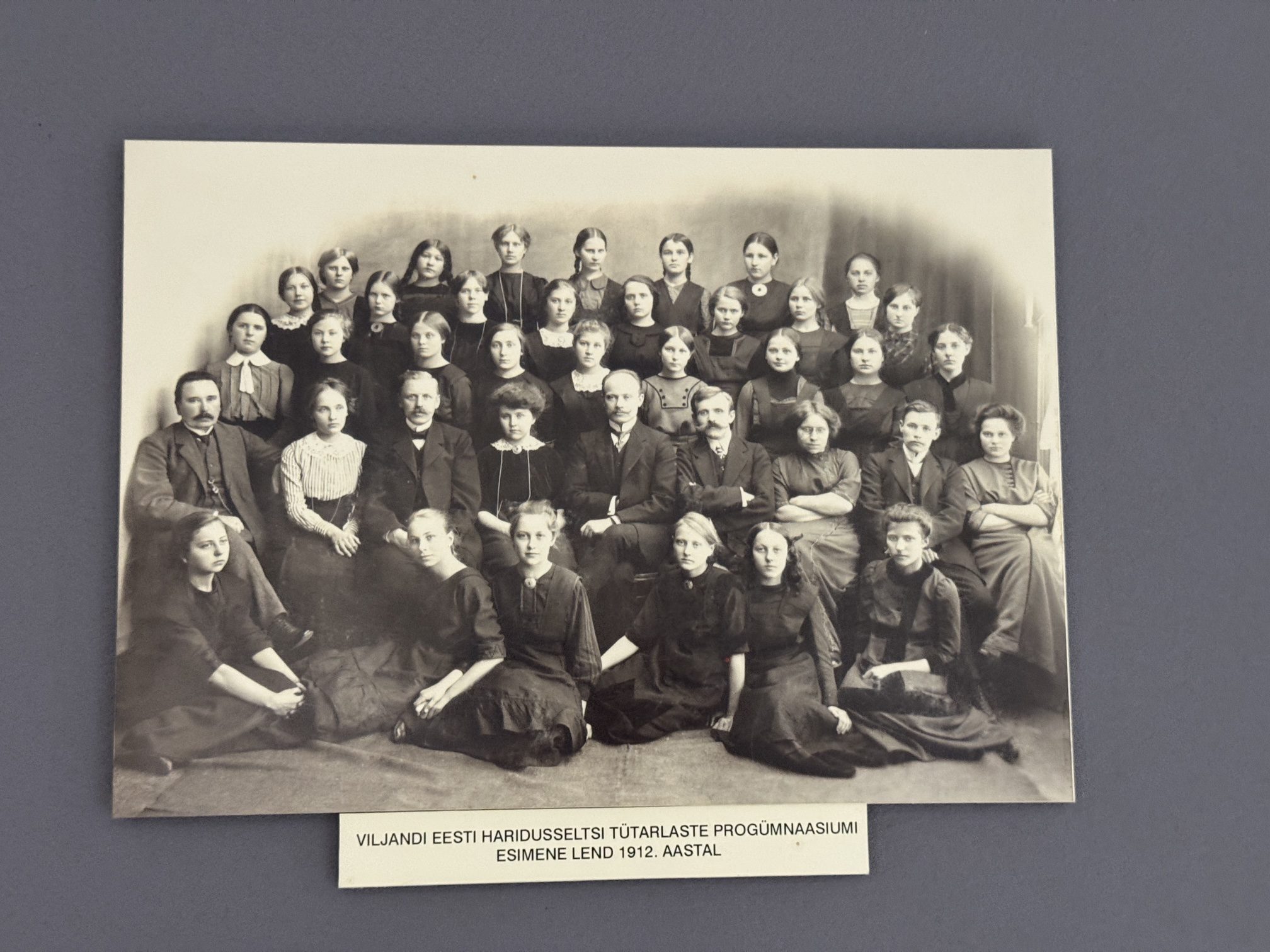
The first class of the Viljandi Estonian Education Society’s girls’ progymnasium, 1912. Photographed before Pilvi’s birth; this is not her class.Viljandi Museum.In Local history and photographs →
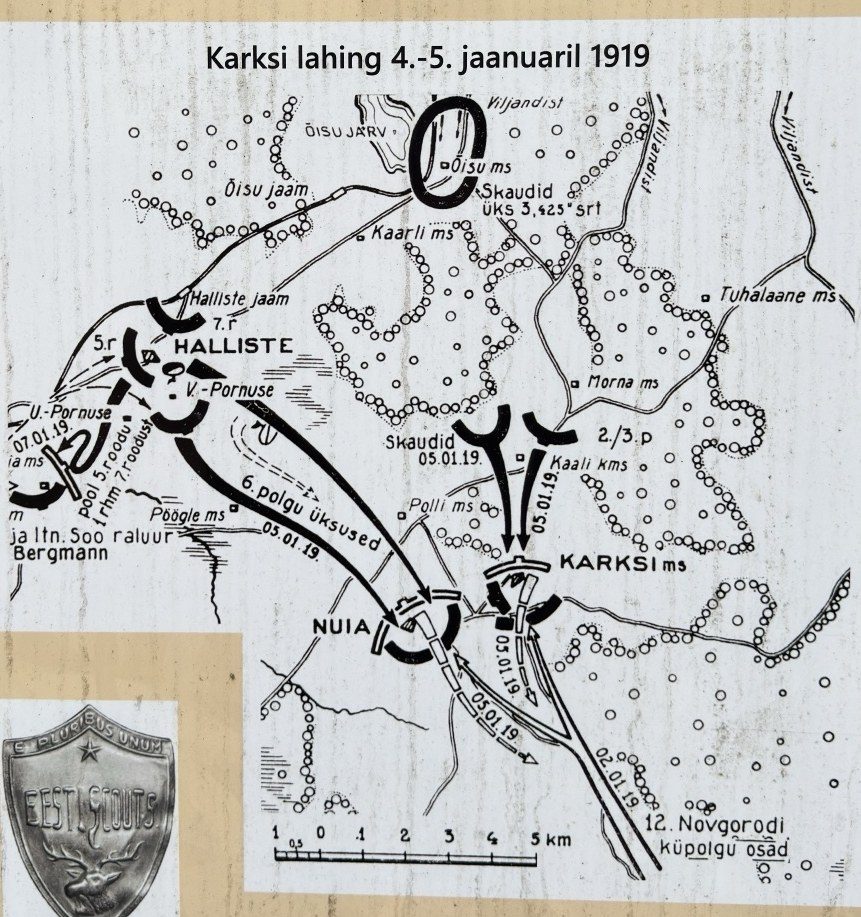
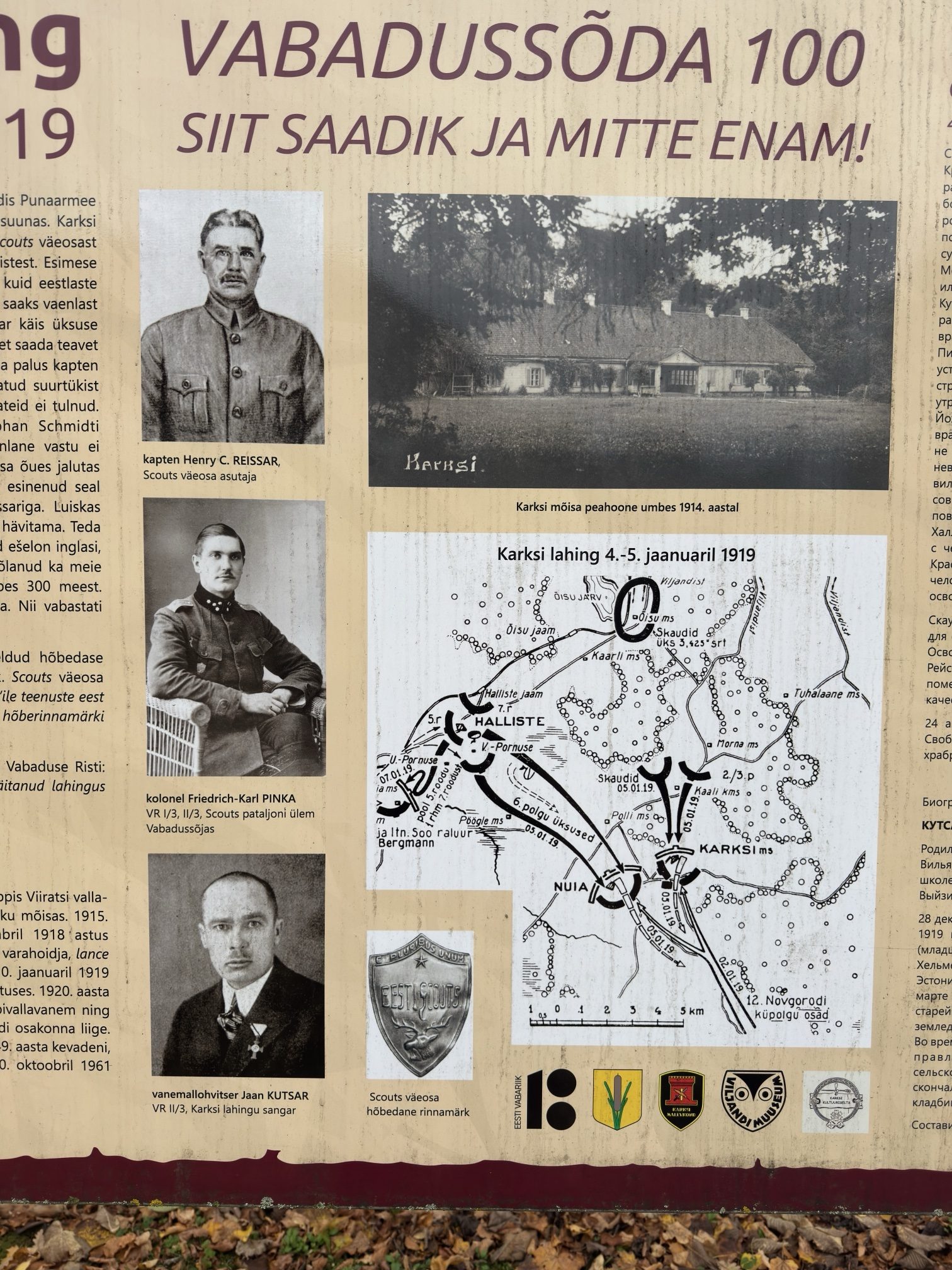
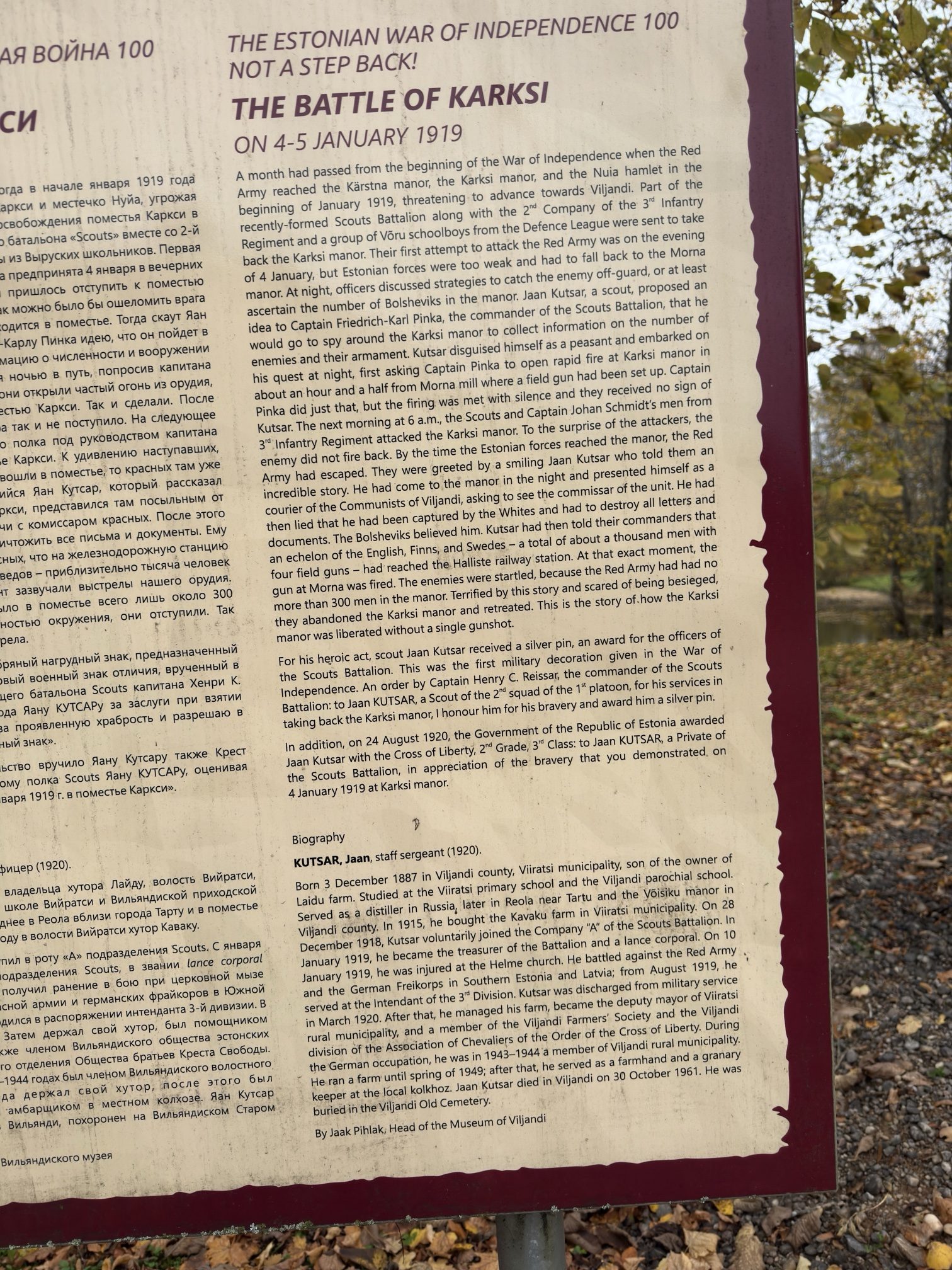
The battle of Karksi, 4–5 January 1919, on a map that covers the Koiks’ home district: Õisu, Halliste, Polli, Nuia and Karksi manor.Information board, Karksi.In Local history and photographs →
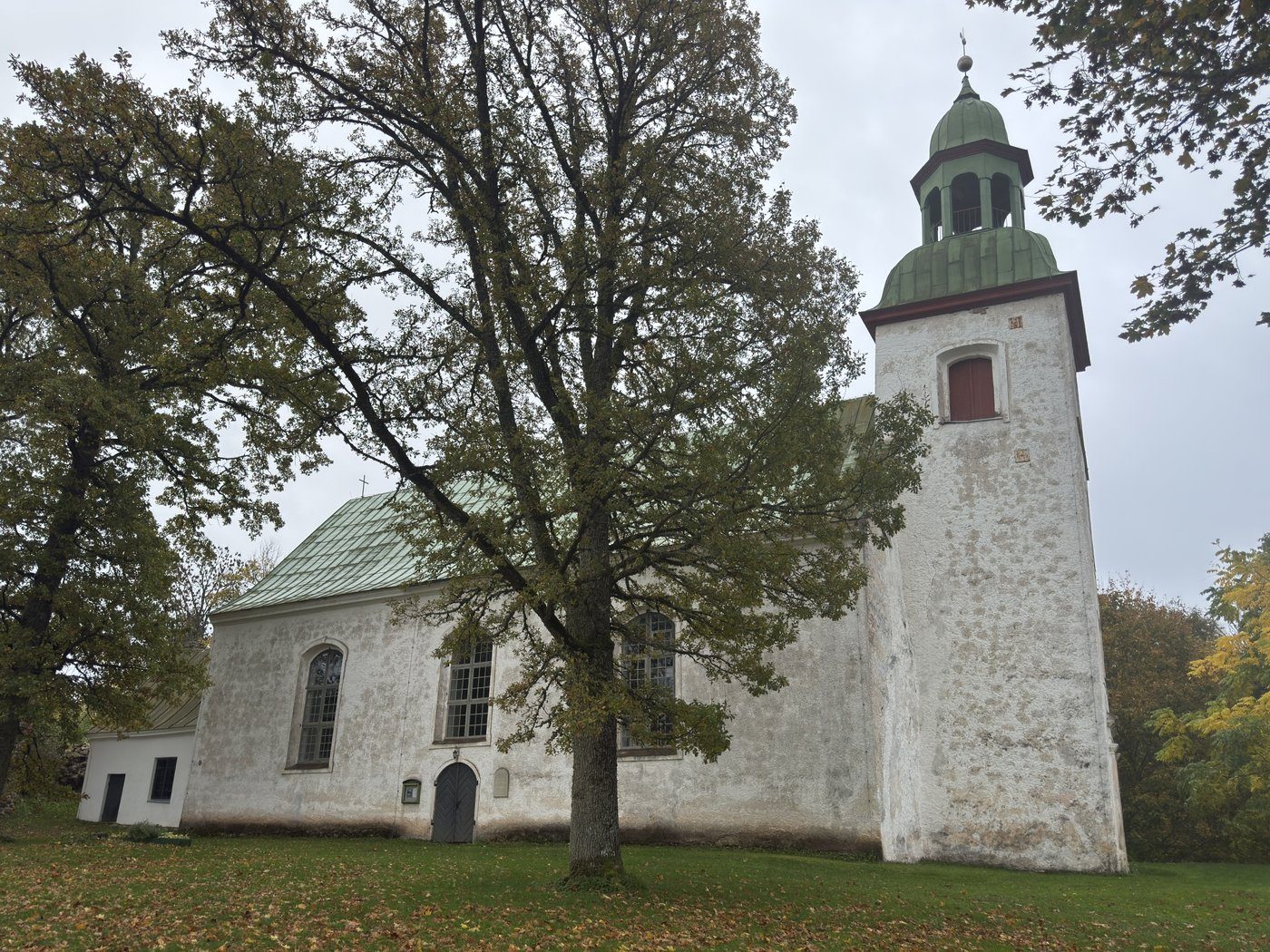
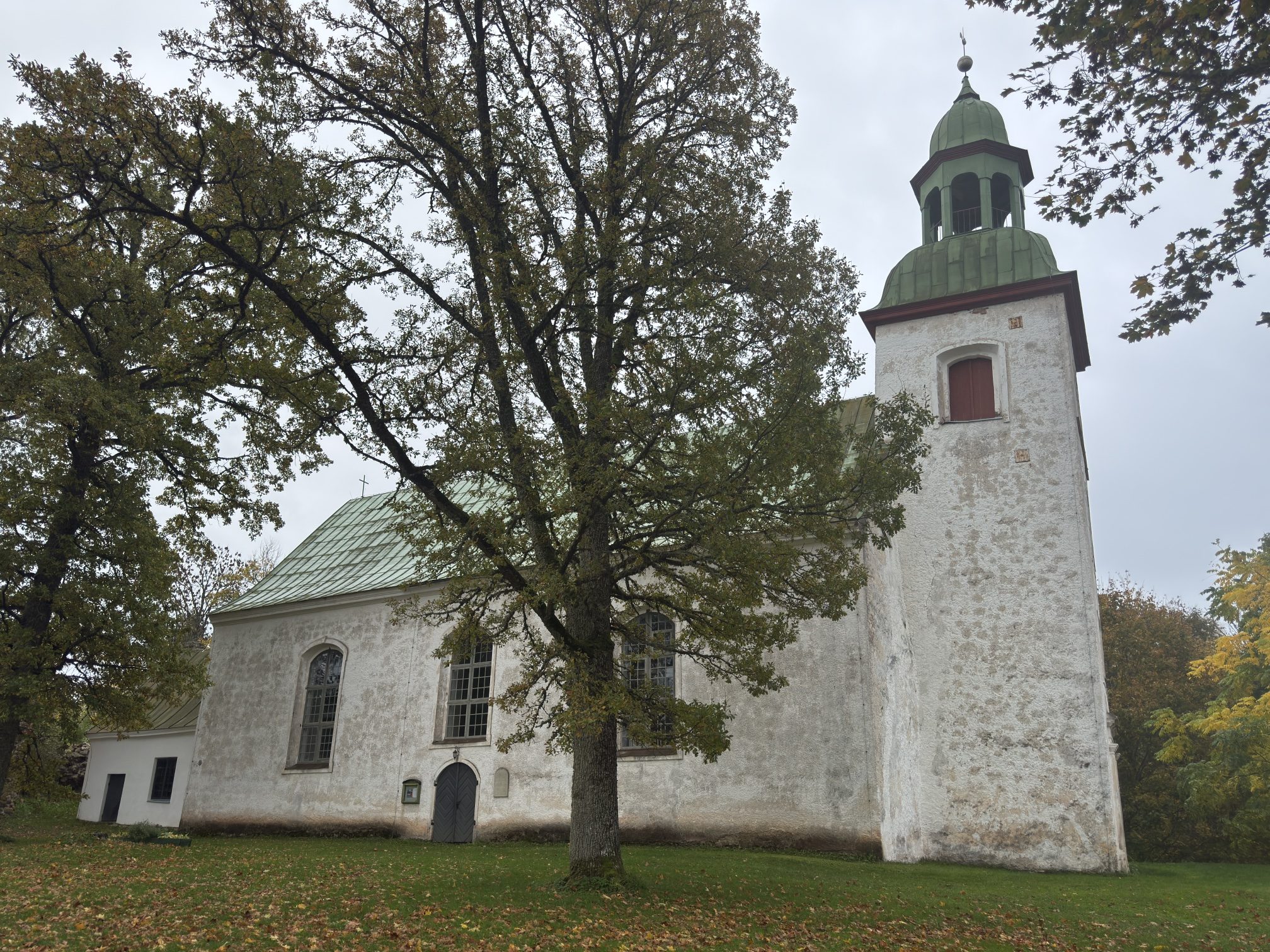
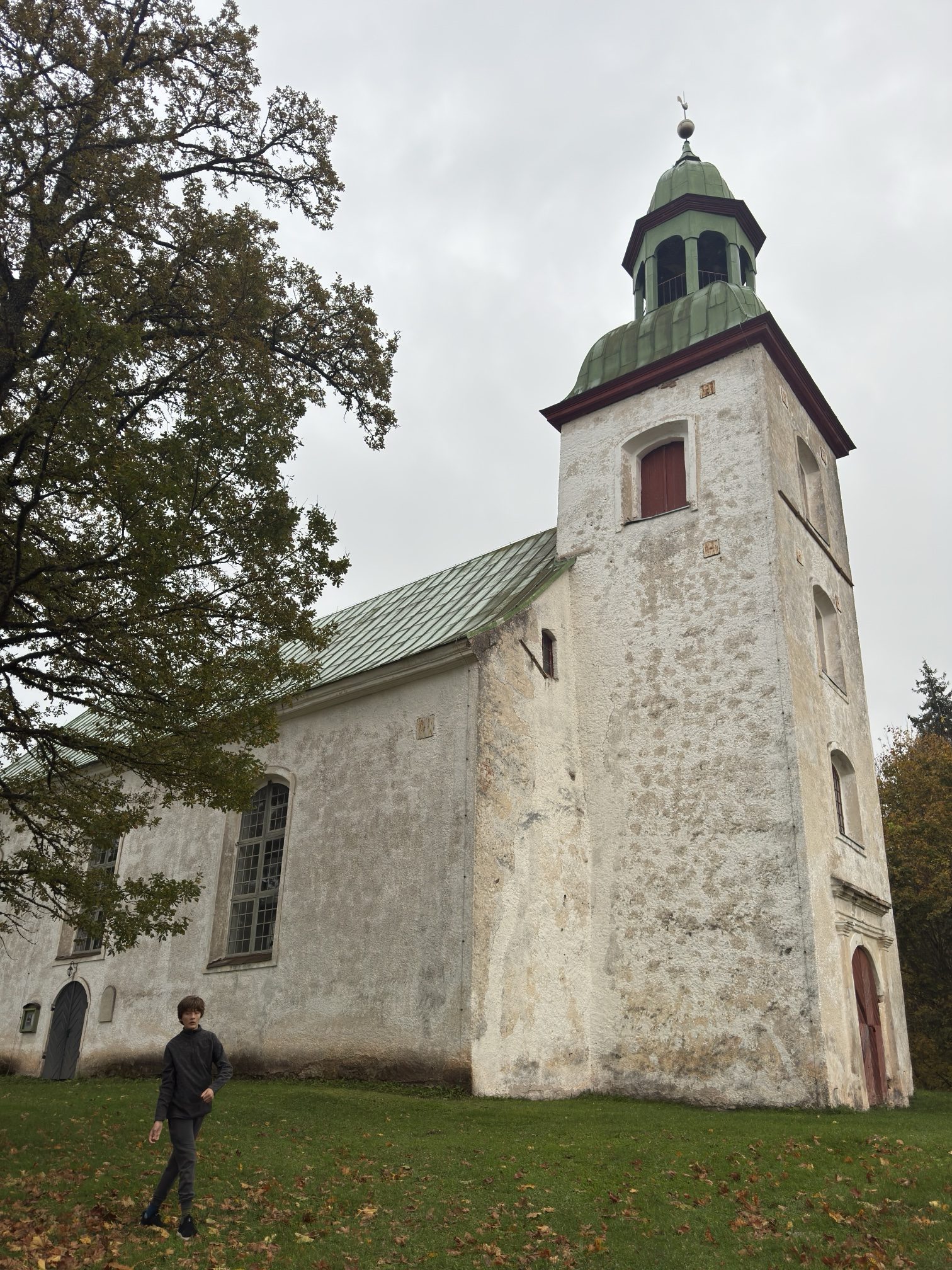
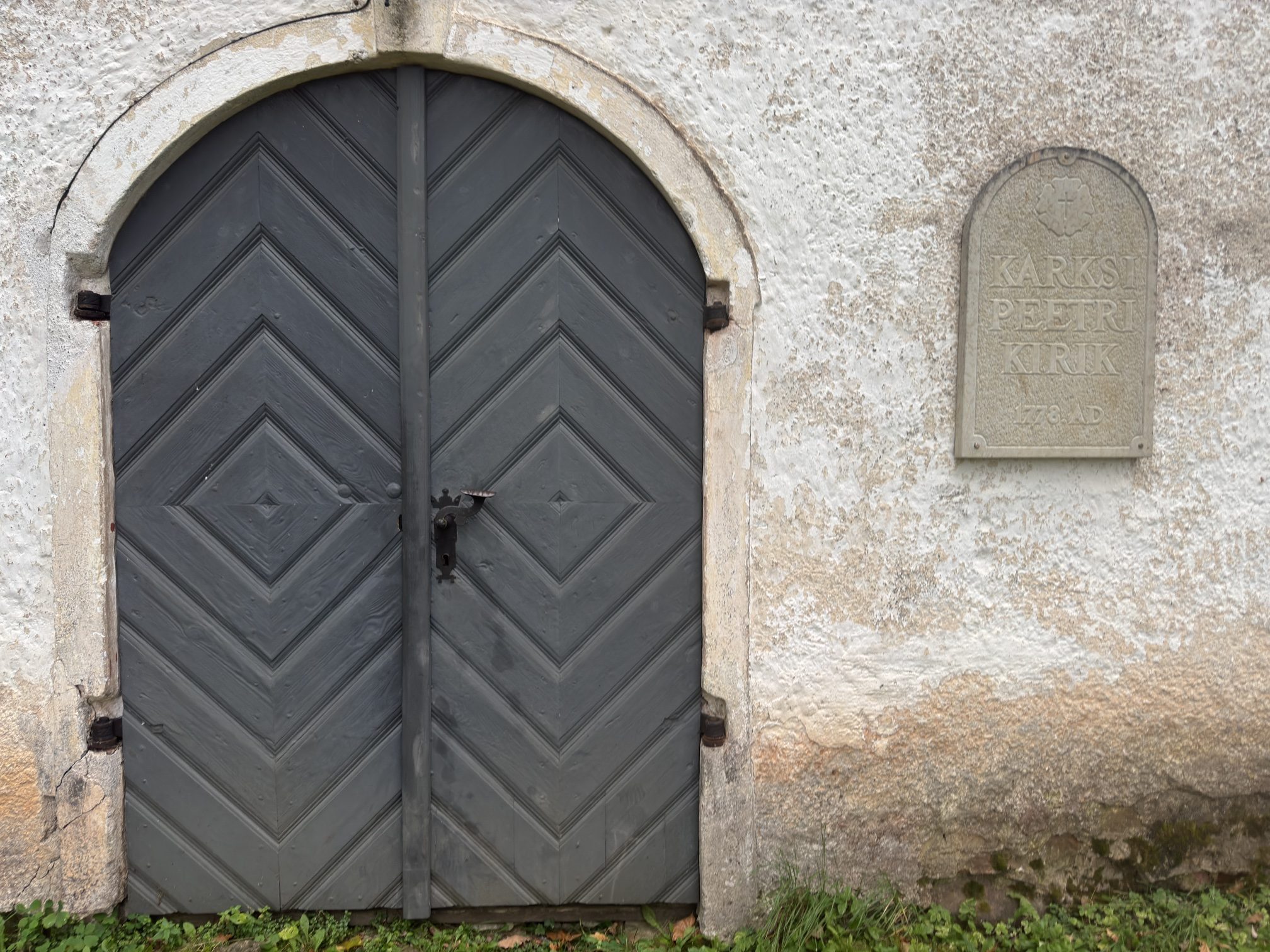
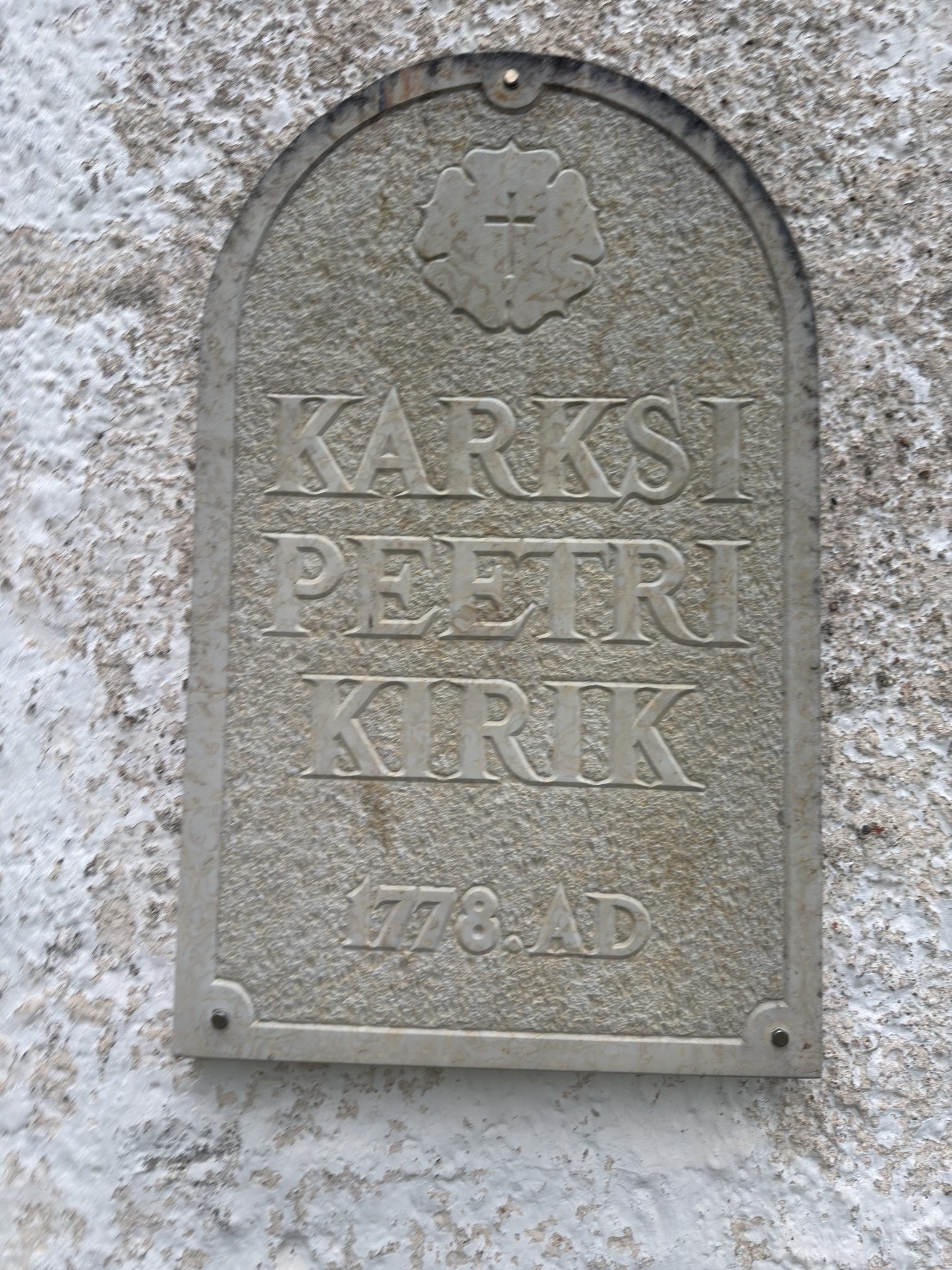
St Peter’s Church, Karksi, built in 1778 on the old castle site: the Koiks’ parish church, where Ida was confirmed in 1926. In Local history and photographs →
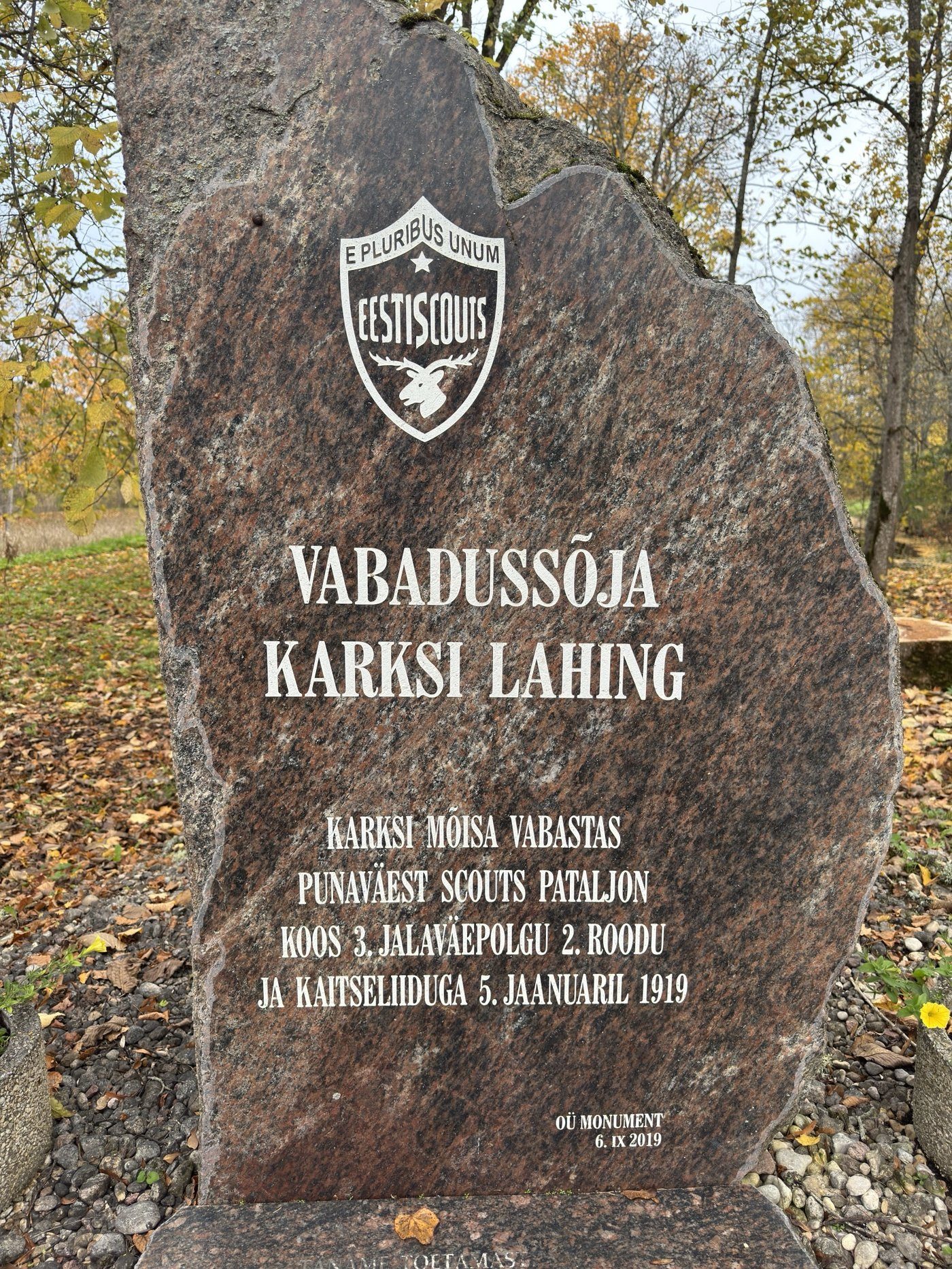
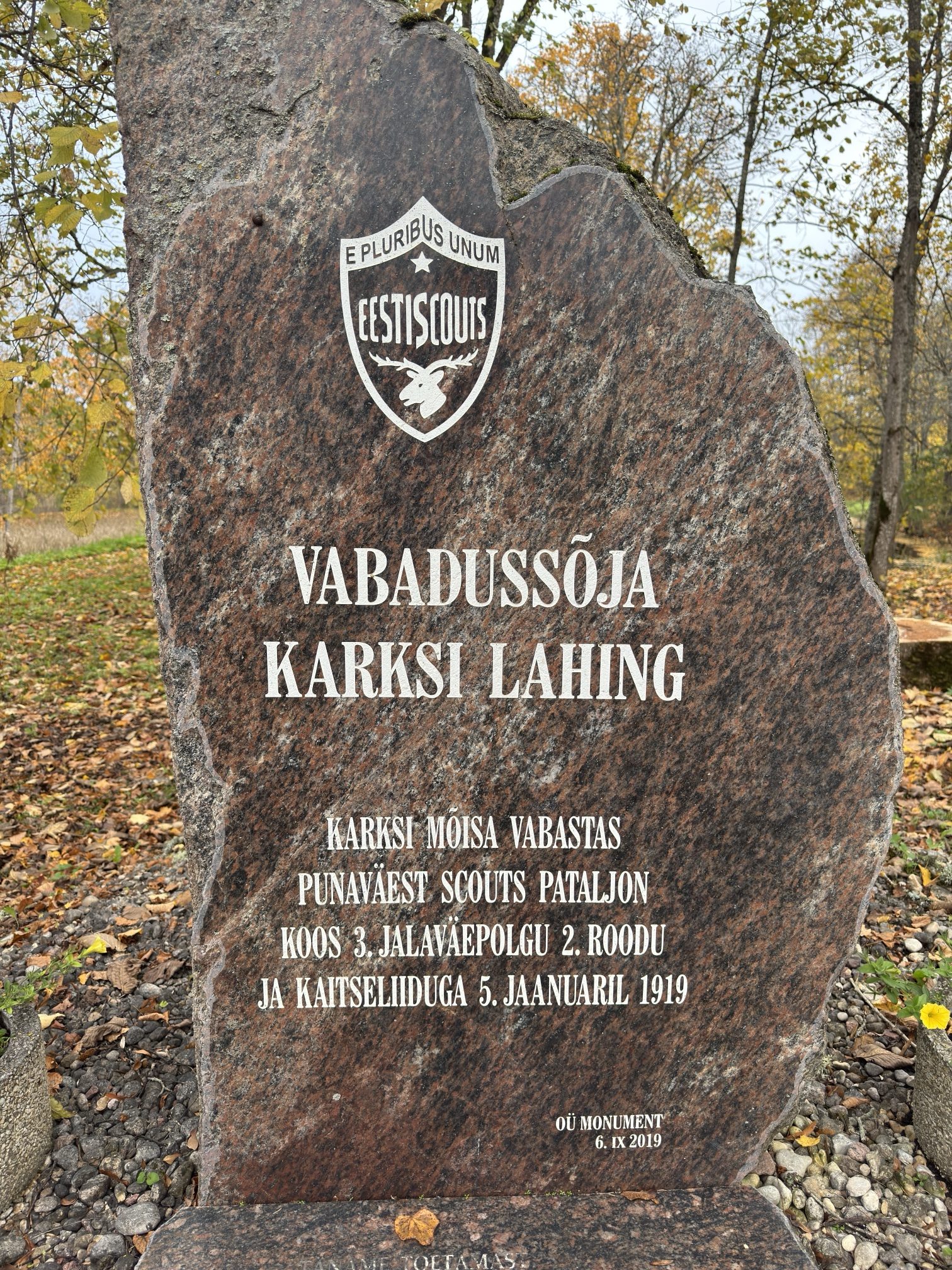
The memorial stone of 2019: “War of Independence. The battle of Karksi. The Red-occupied Karksi manor was freed by the Scouts Battalion with the 2nd company of the 3rd Infantry Regiment and the Defence League on 5 January 1919.” In Local history and photographs →
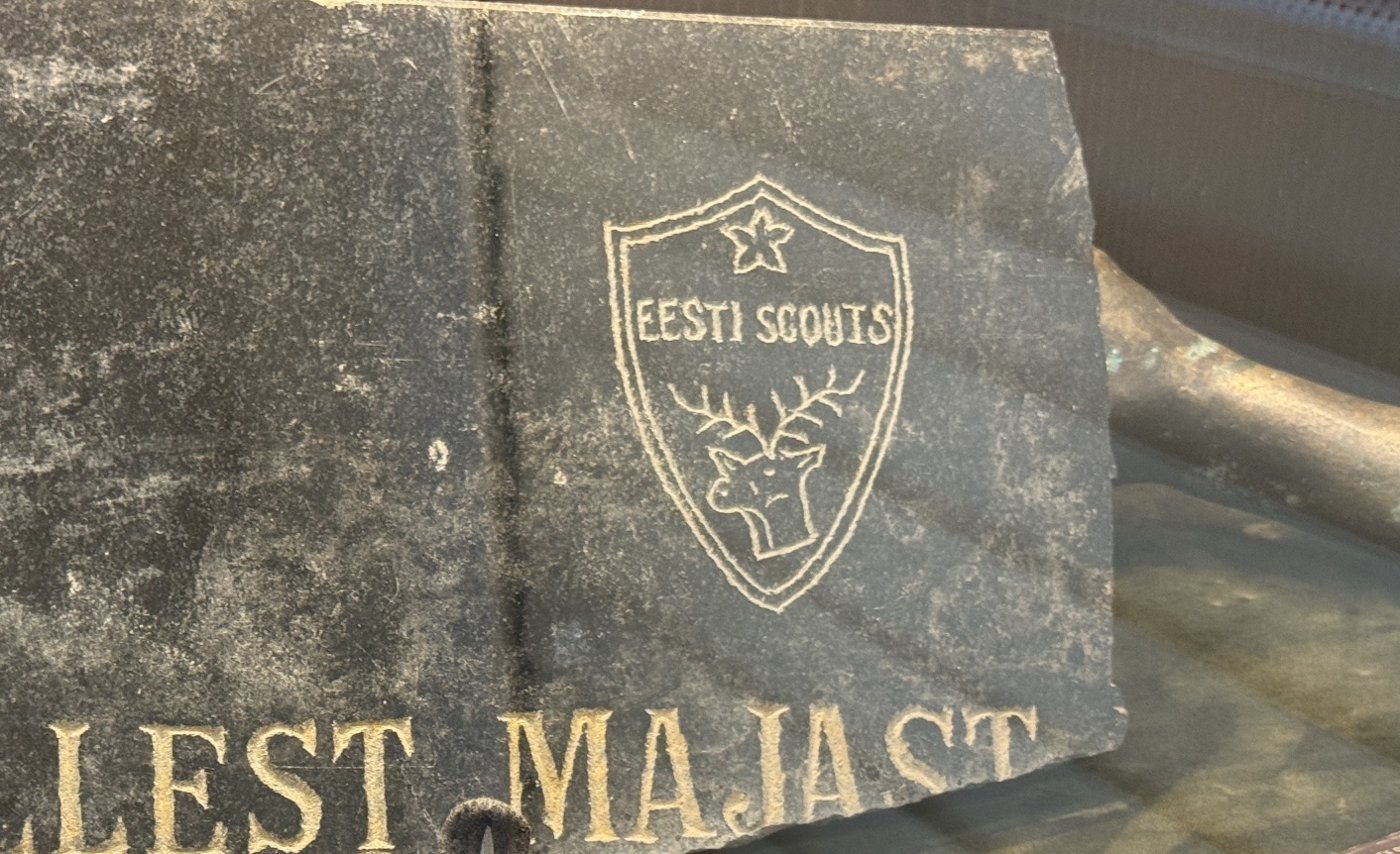
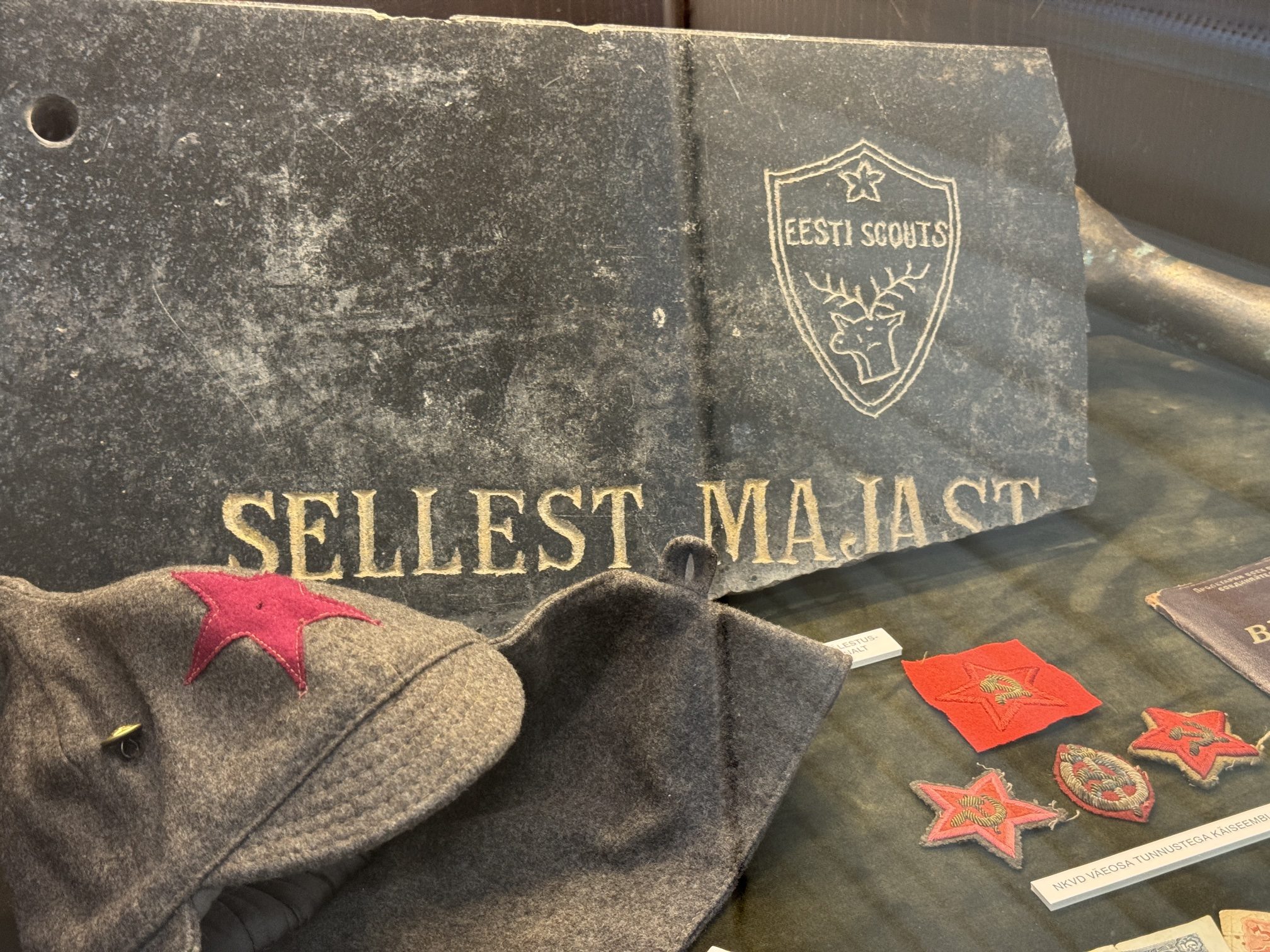
Fragment of a memorial plaque with the Scouts’ elk-head badge, “Sellest majast…” (“From this house…”), taken from the wall of the manor house.Viljandi Museum.In Local history and photographs →
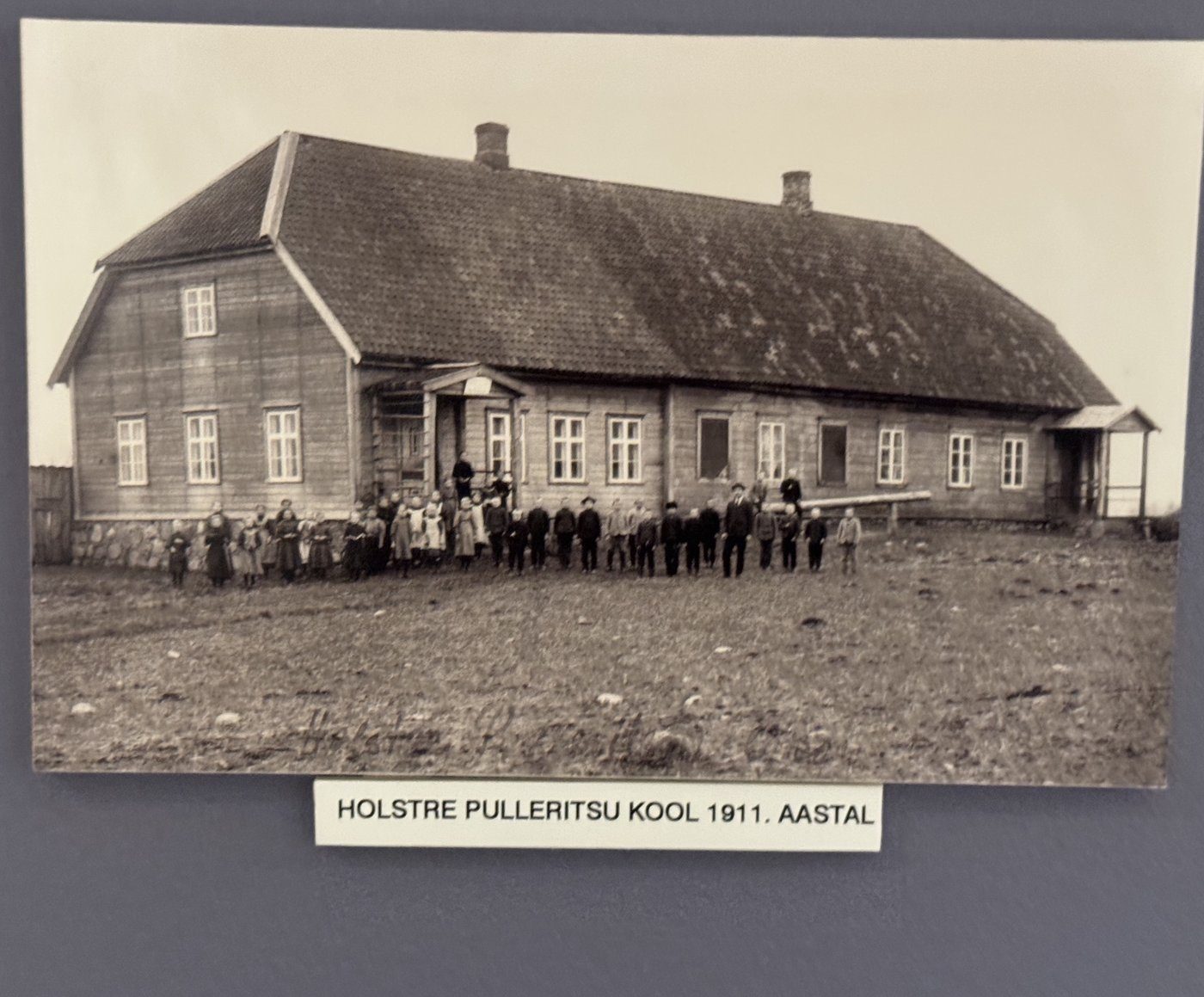
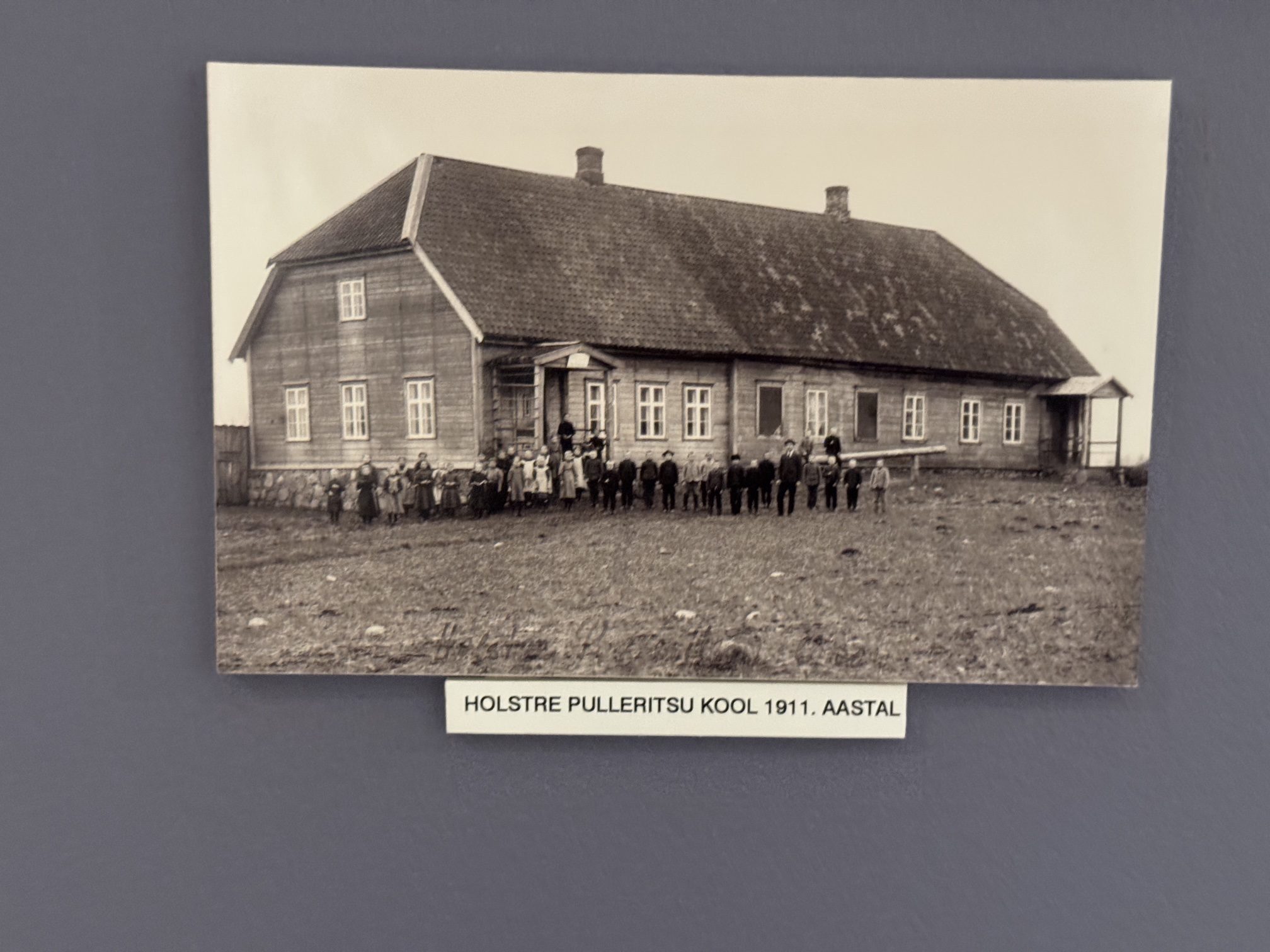
Holstre-Pulleritsu school, 1911. Some early Koik households came from a farm recorded as Koiga on Holstre manor, in Paistu parish; Elmar Koik’s own line is traced to Vana-Kariste.Viljandi Museum.In Local history and photographs →
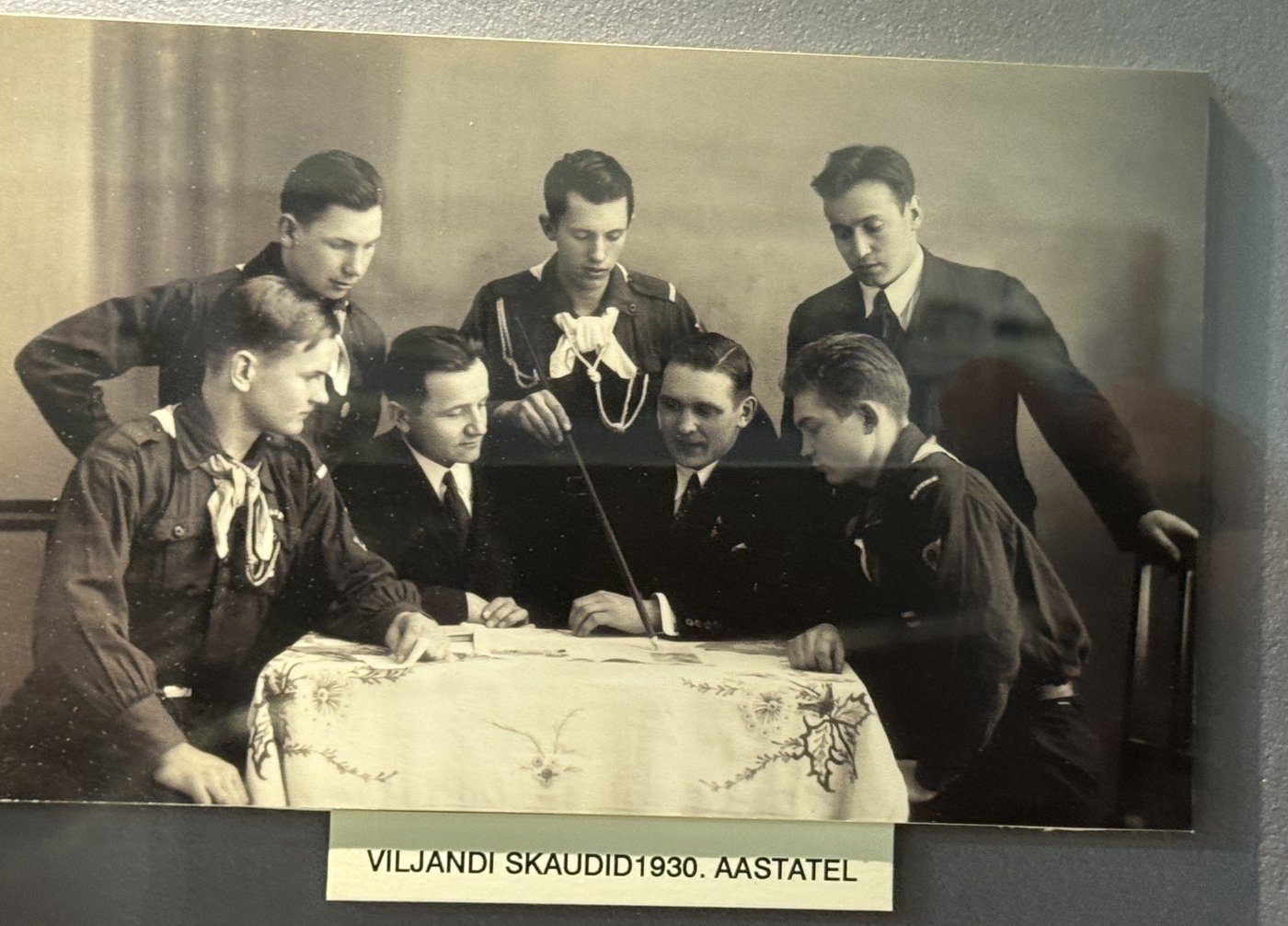
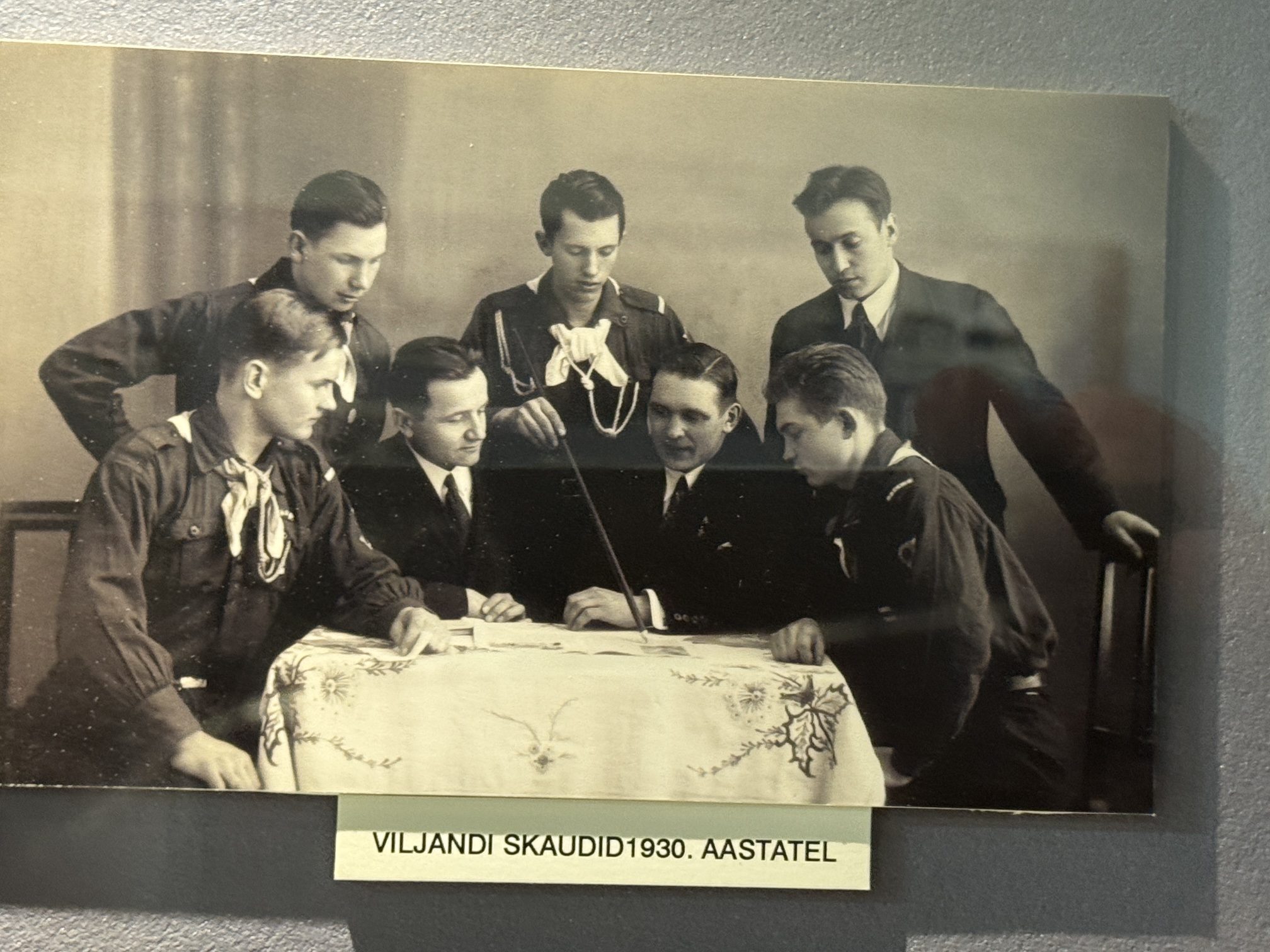
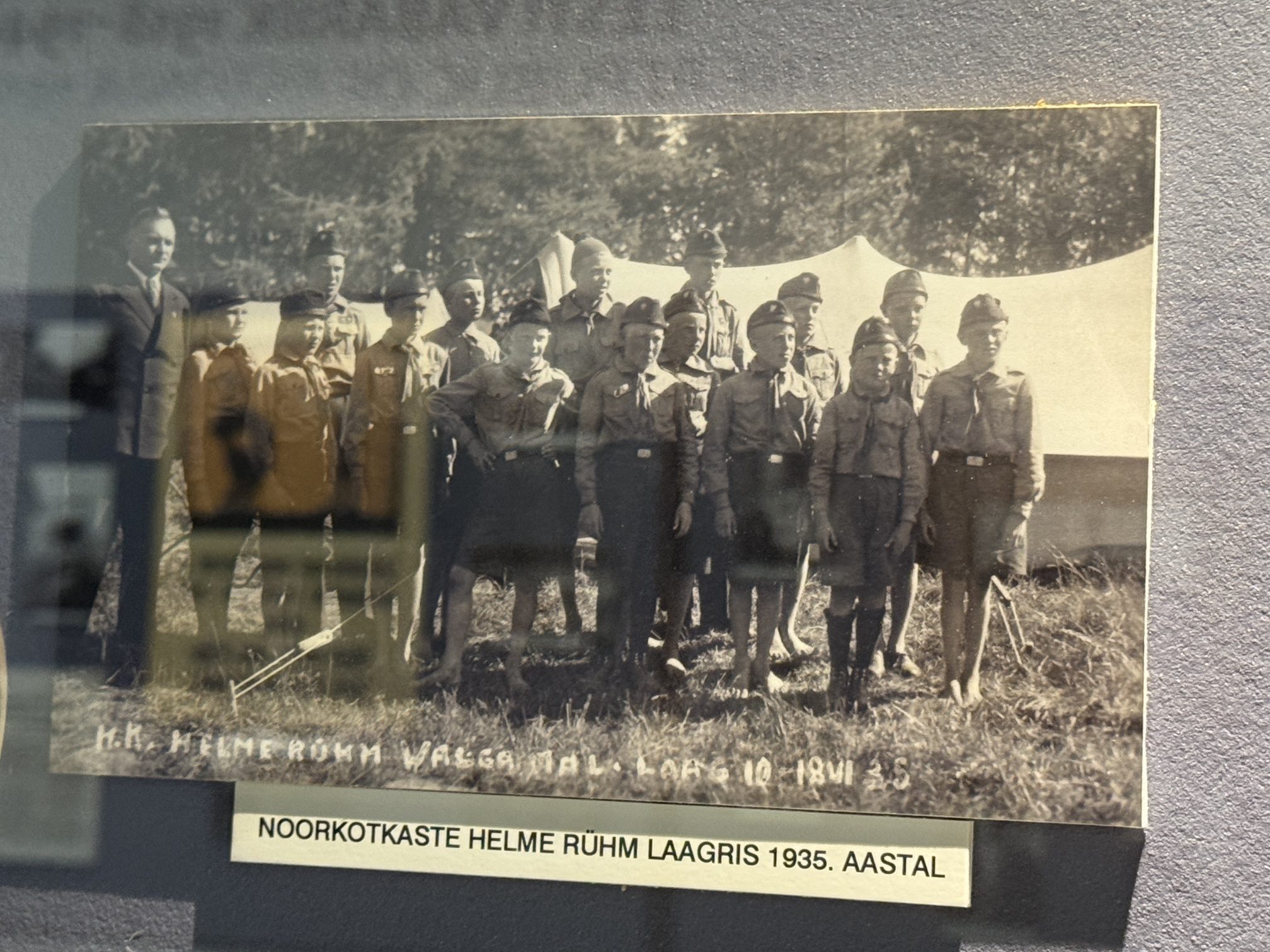
Scouts in Viljandi in the 1930s. Elmar Koik joined the movement in Karksi-Nuia in 1938; he is not identified in this photograph.Viljandi Museum.In Local history and photographs →
Further crops and details prepared for the history but not printed in this edition.
The General W. M. Black at Bremerhaven, October 1948: passengers at the rails beneath the “Ship to Freedom!” banner. Elmar Oswald and Hilda were aboard.US Army Signal Corps photograph 111-SC-310938; US Holocaust Memorial Museum, courtesy of NARA.
The EVE building in 1940, built on the site of the Leoke shop and home at Tartu 11; it is now the Grand Hotel Viljandi.Viljandi Museum display.
The back of the Leoke family’s Windsheim registration card, listing the daughters Virve and Pilvi and the family’s entry into Germany through Gotenhafen on 22 September 1944.Arolsen Archives.
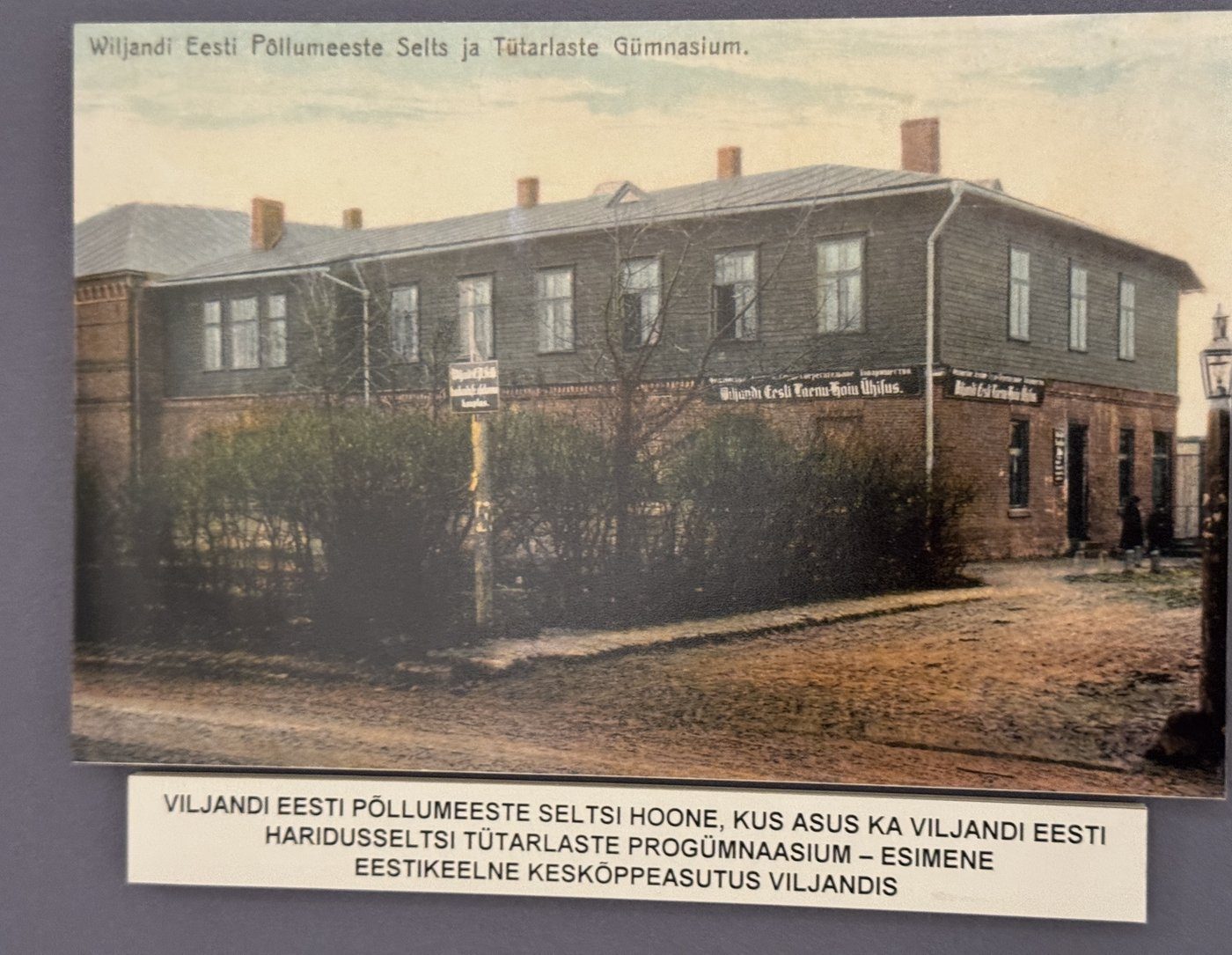
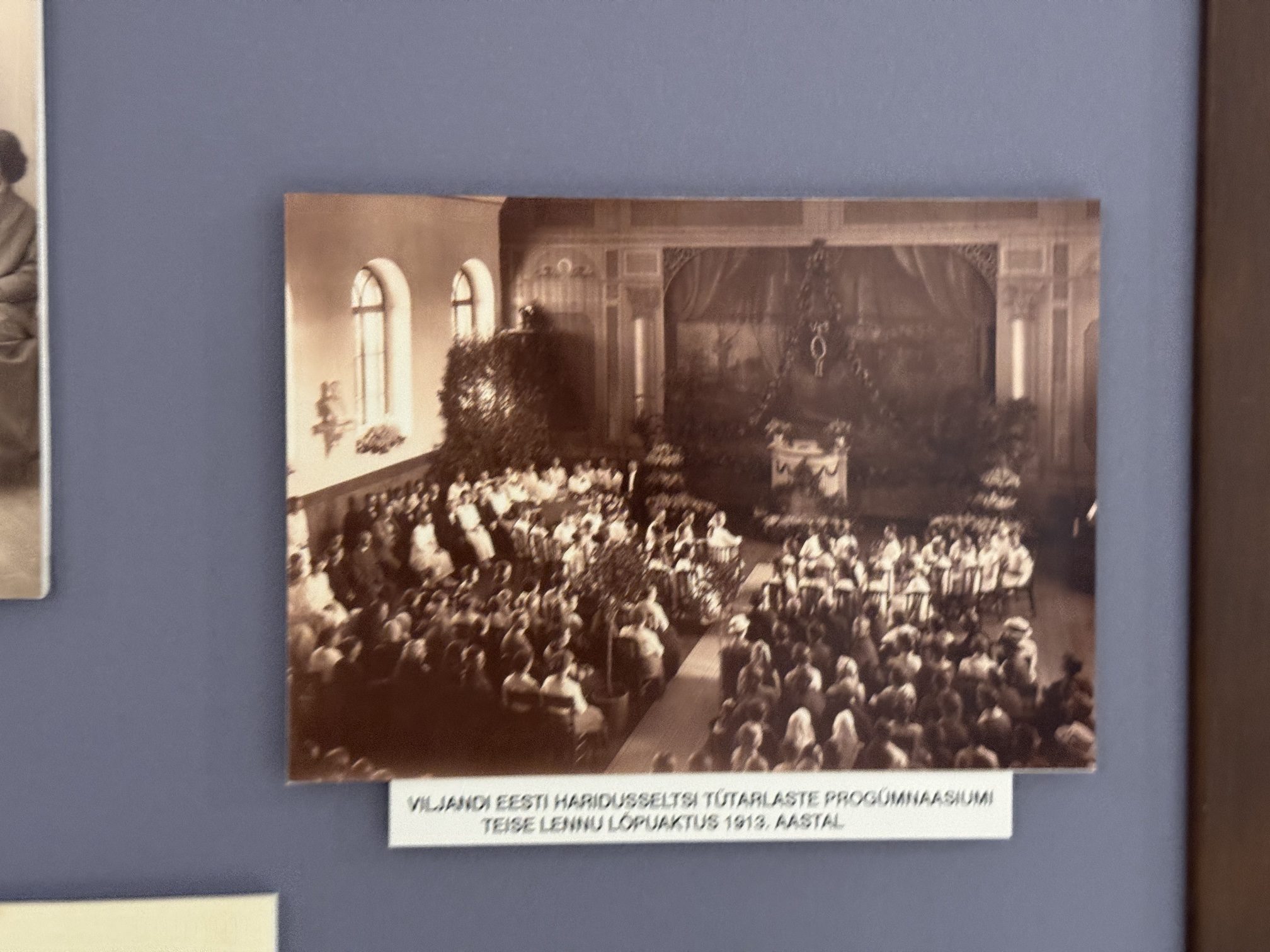
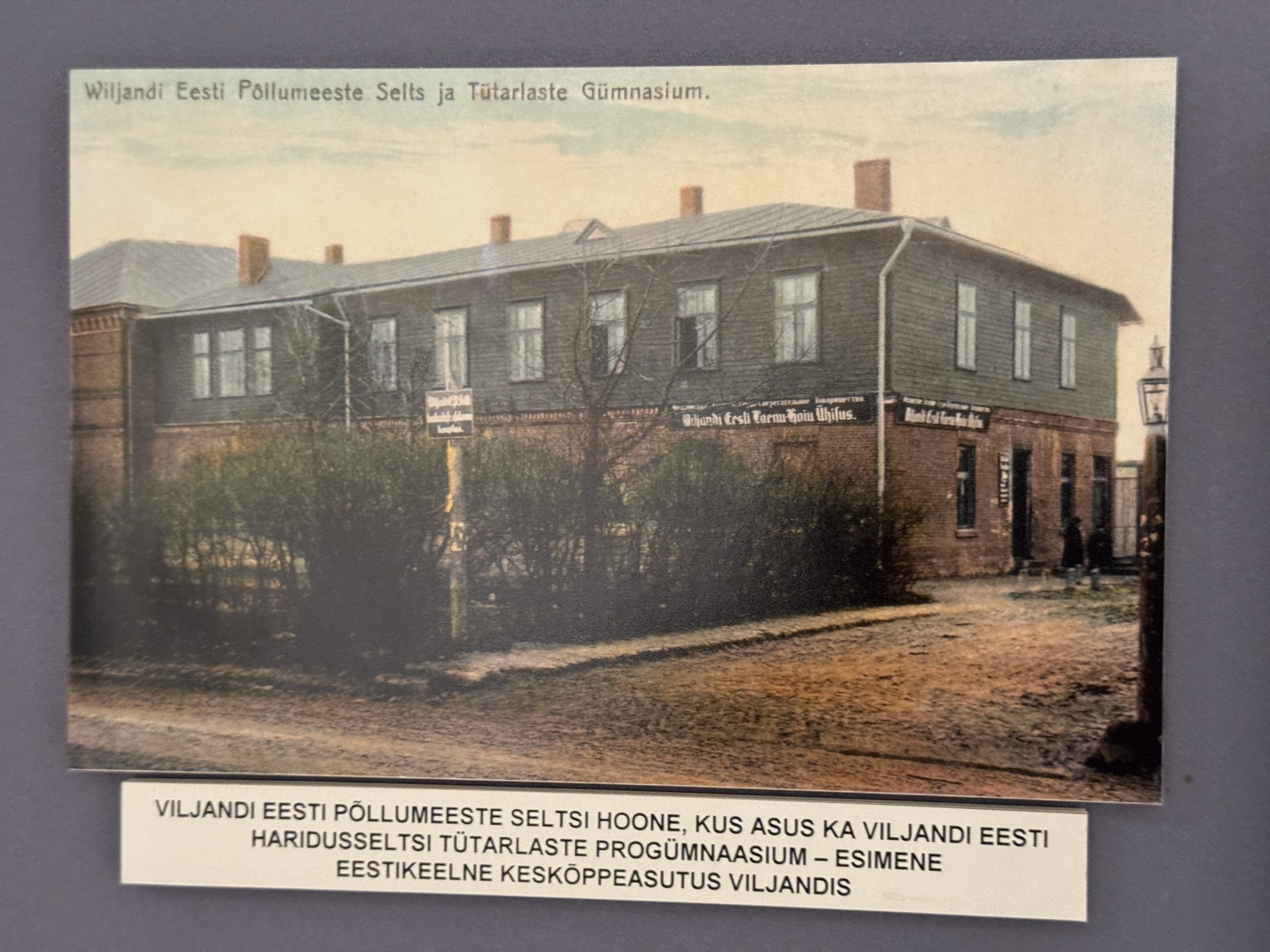
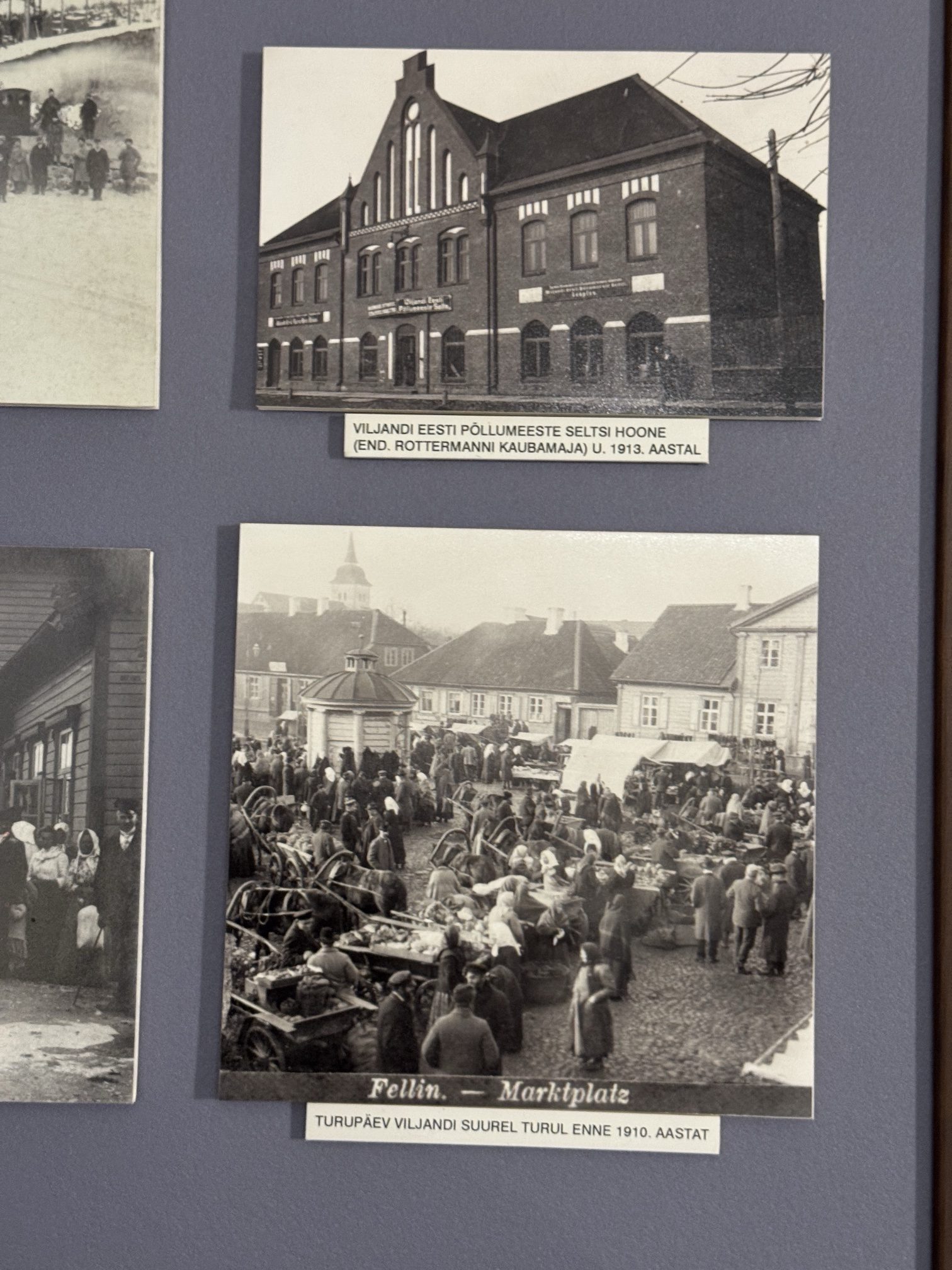
The Viljandi Farmers’ Society building, which housed the girls’ progymnasium.Viljandi Museum display.
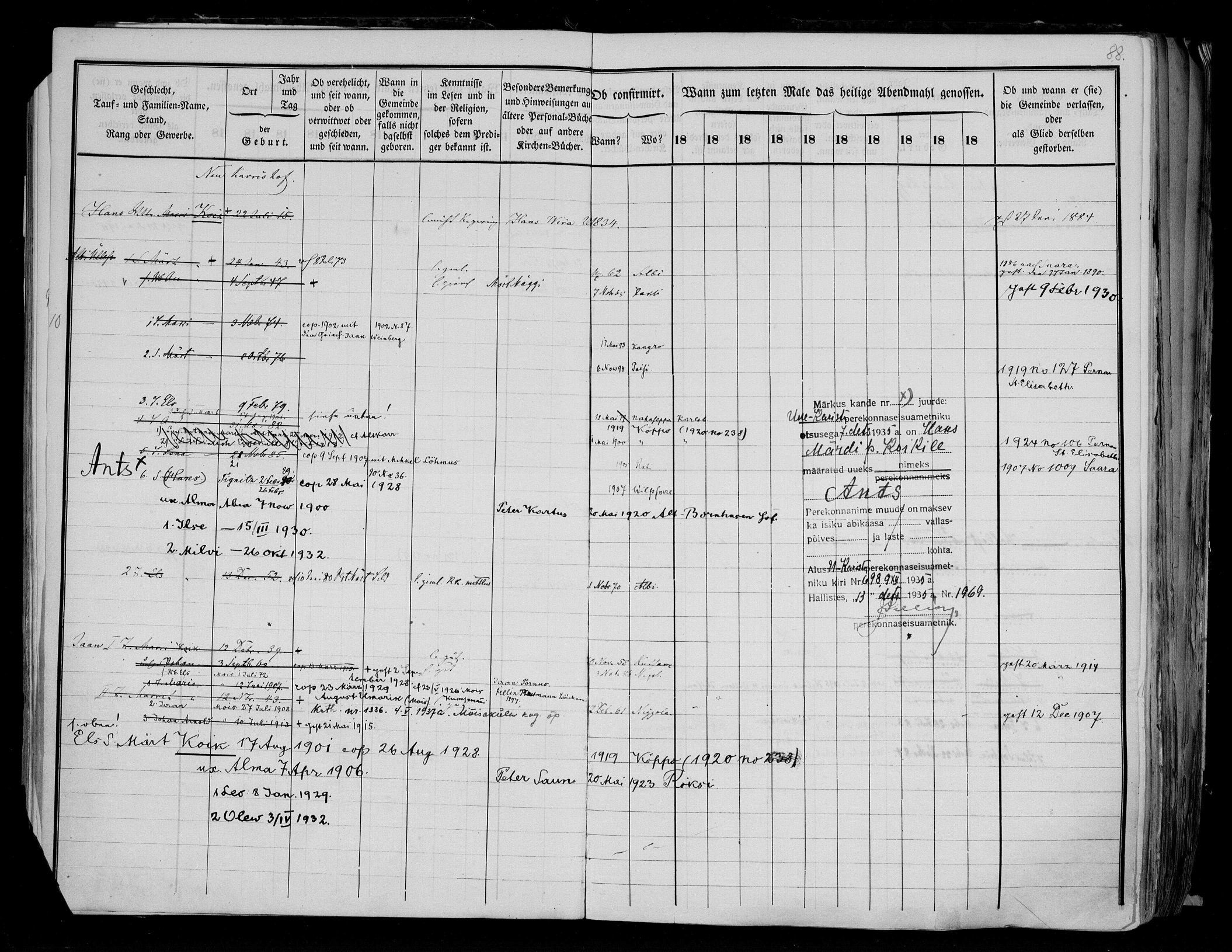
Halliste household register, page 88: the household of Märt and Ello Koik at Uue-Kariste. The Paistu records show that they were not Juhan’s parents.EAA.1275, Halliste congregation.
The Times-Picayune shipping column of 9 September 1949, listing the General R. L. Howze at New Orleans.
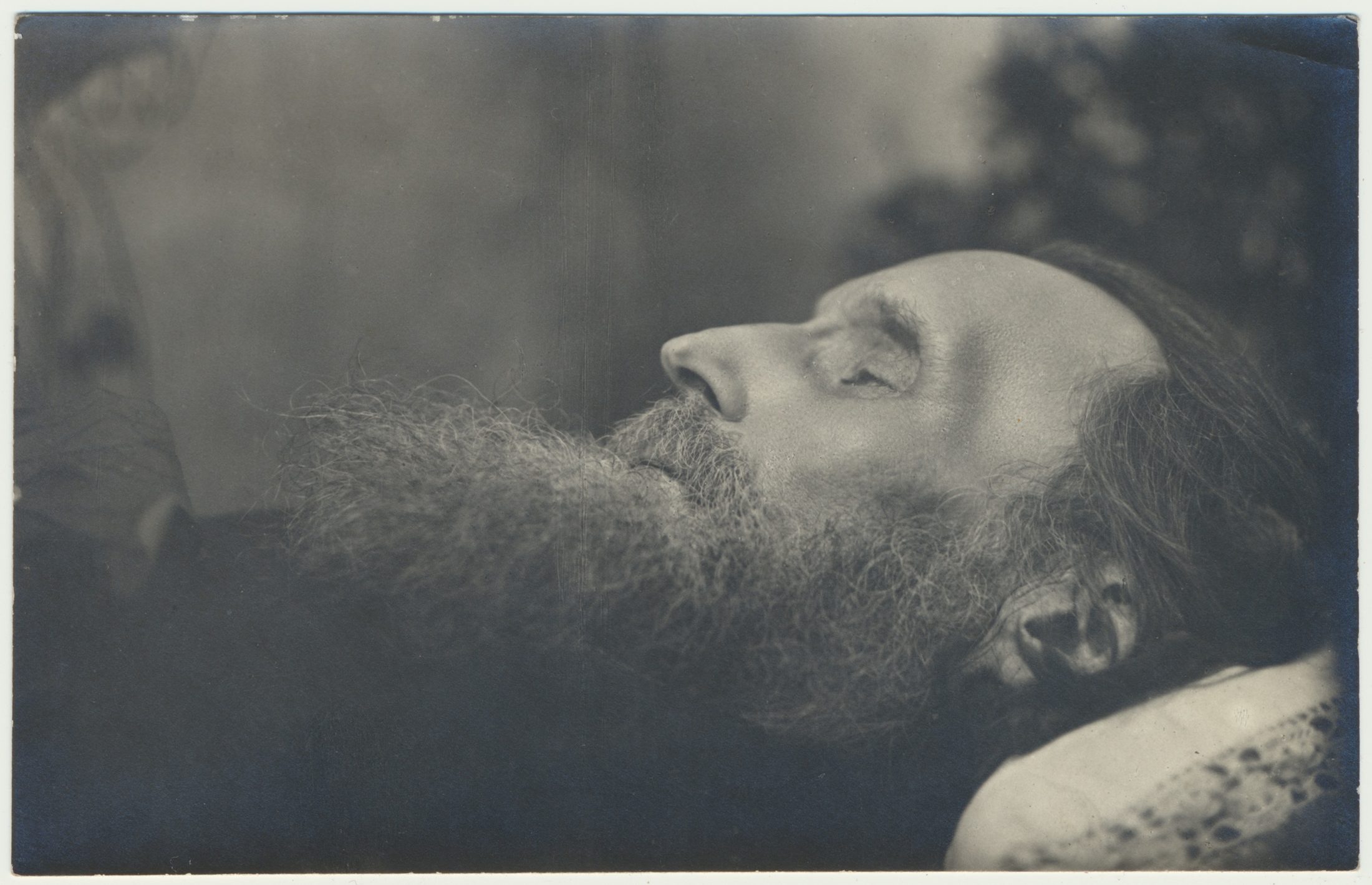
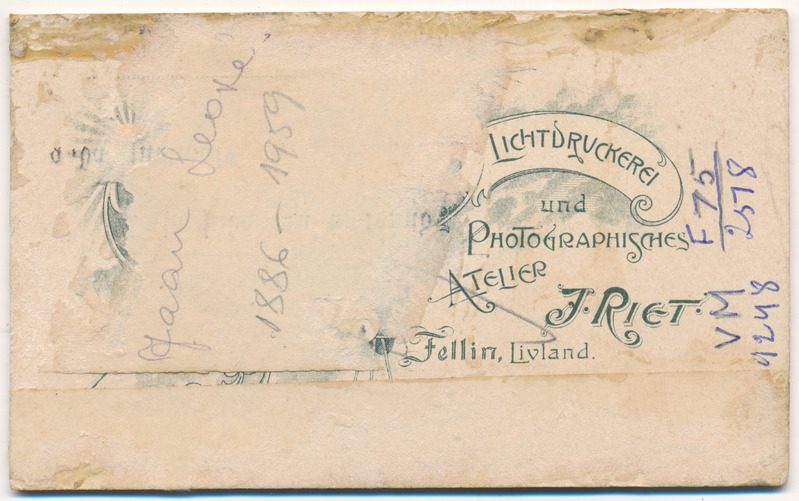
The back of Jaan Leoke’s portrait card, pencilled “Jaan Leoke 1886–1959”.Viljandi Museum, VM 9248 F 75:2518.
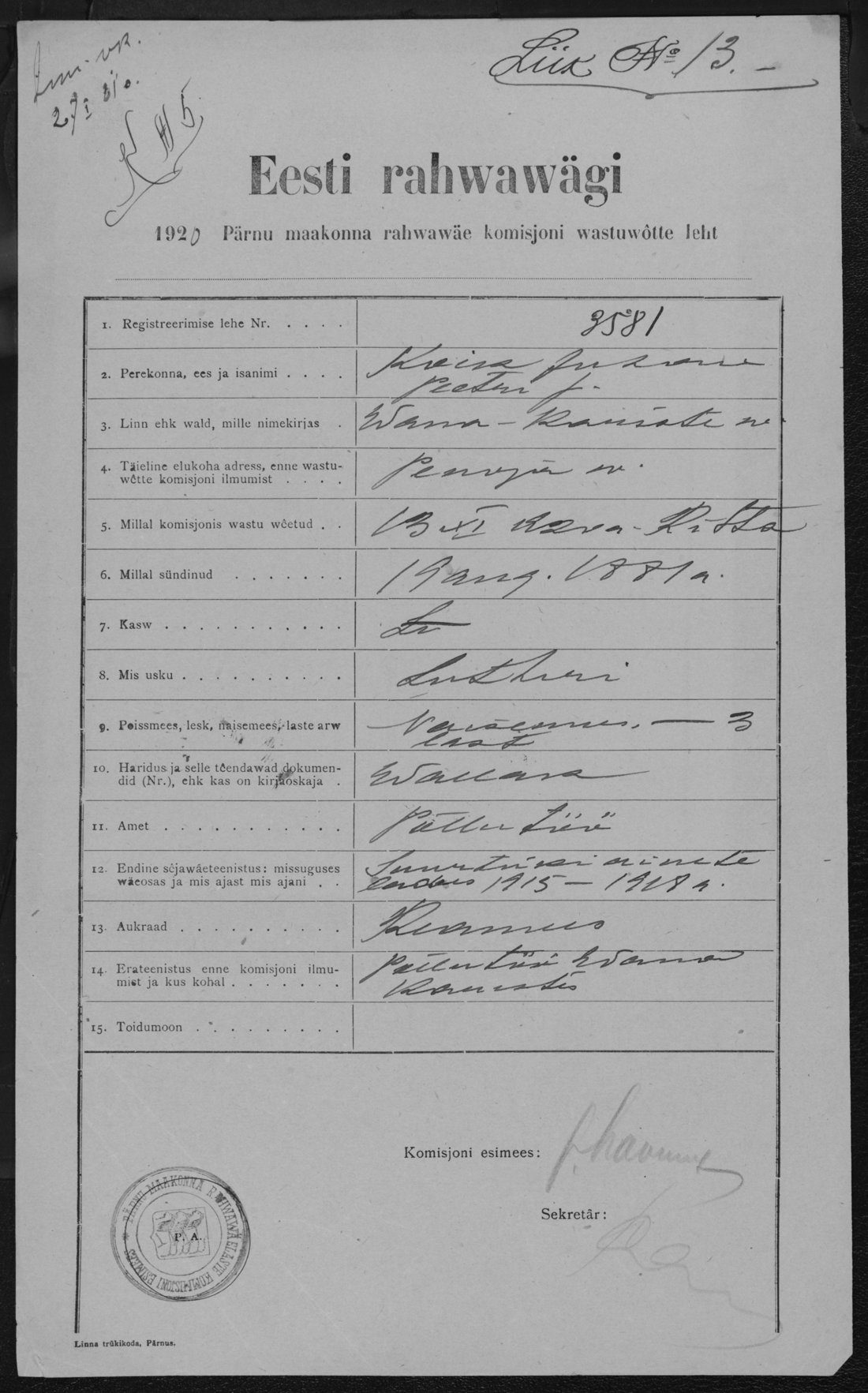
Juhan Koik’s intake sheet, Pärnu County People’s Army commission, November 1920: son of Peeter, born 19 August 1881, living at Penuja, farm laborer, married with three children, a private in 1915–1918.Estonian National Archives, ERA.680.3.9, image 268.
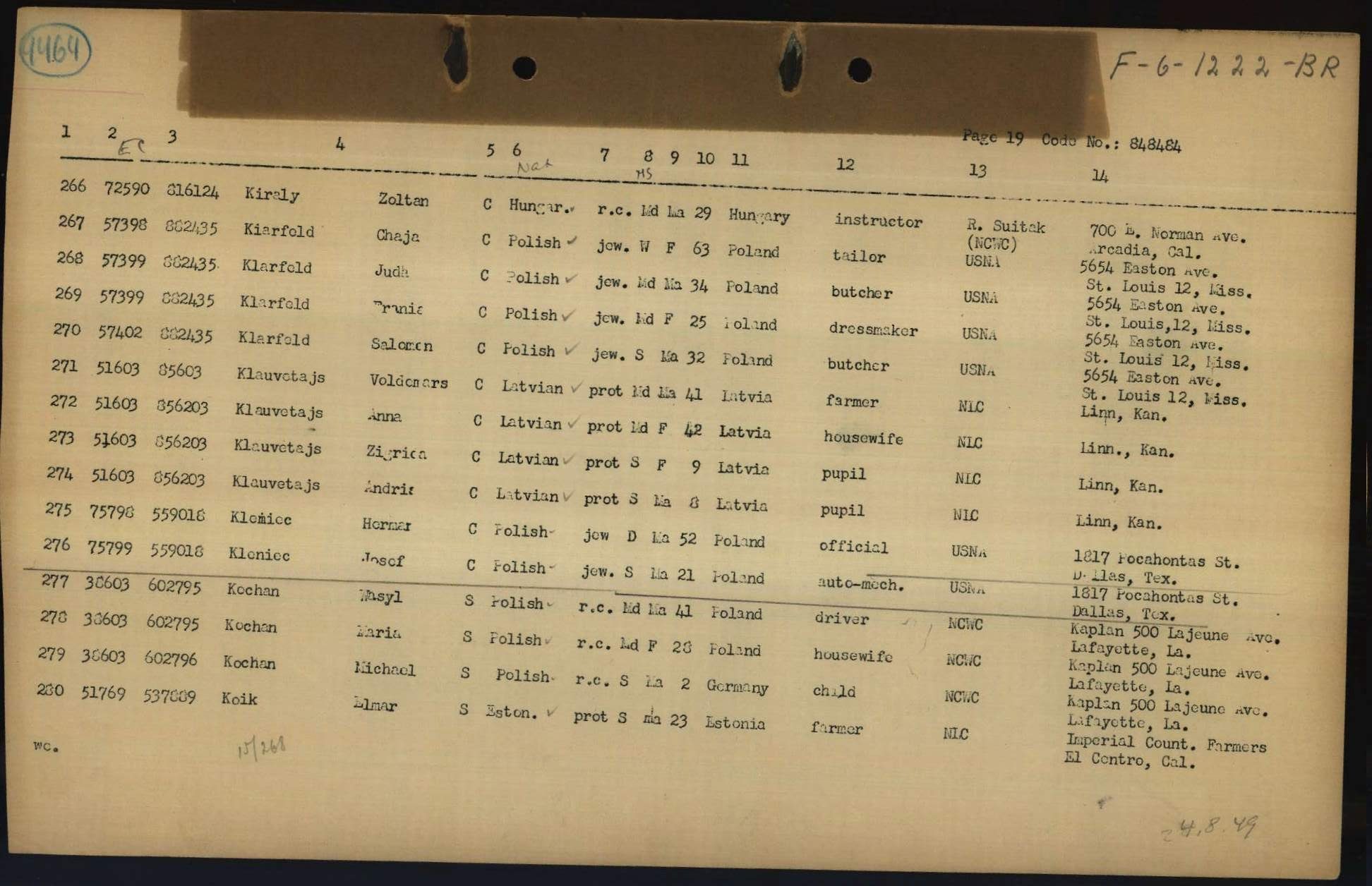
Elmar Koik on an IRO emigration list, 1949, bound for El Centro, California.Arolsen Archives.
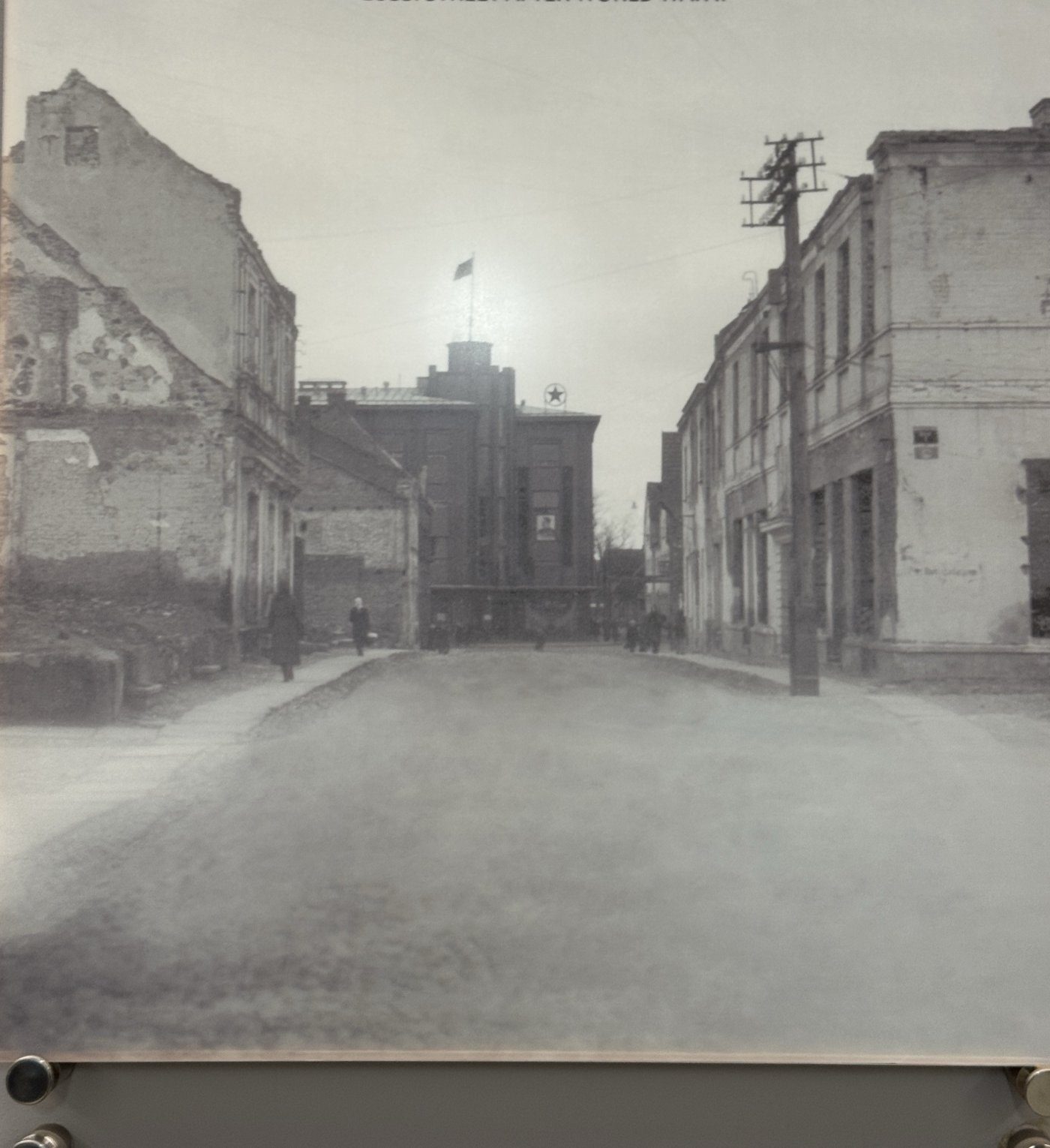
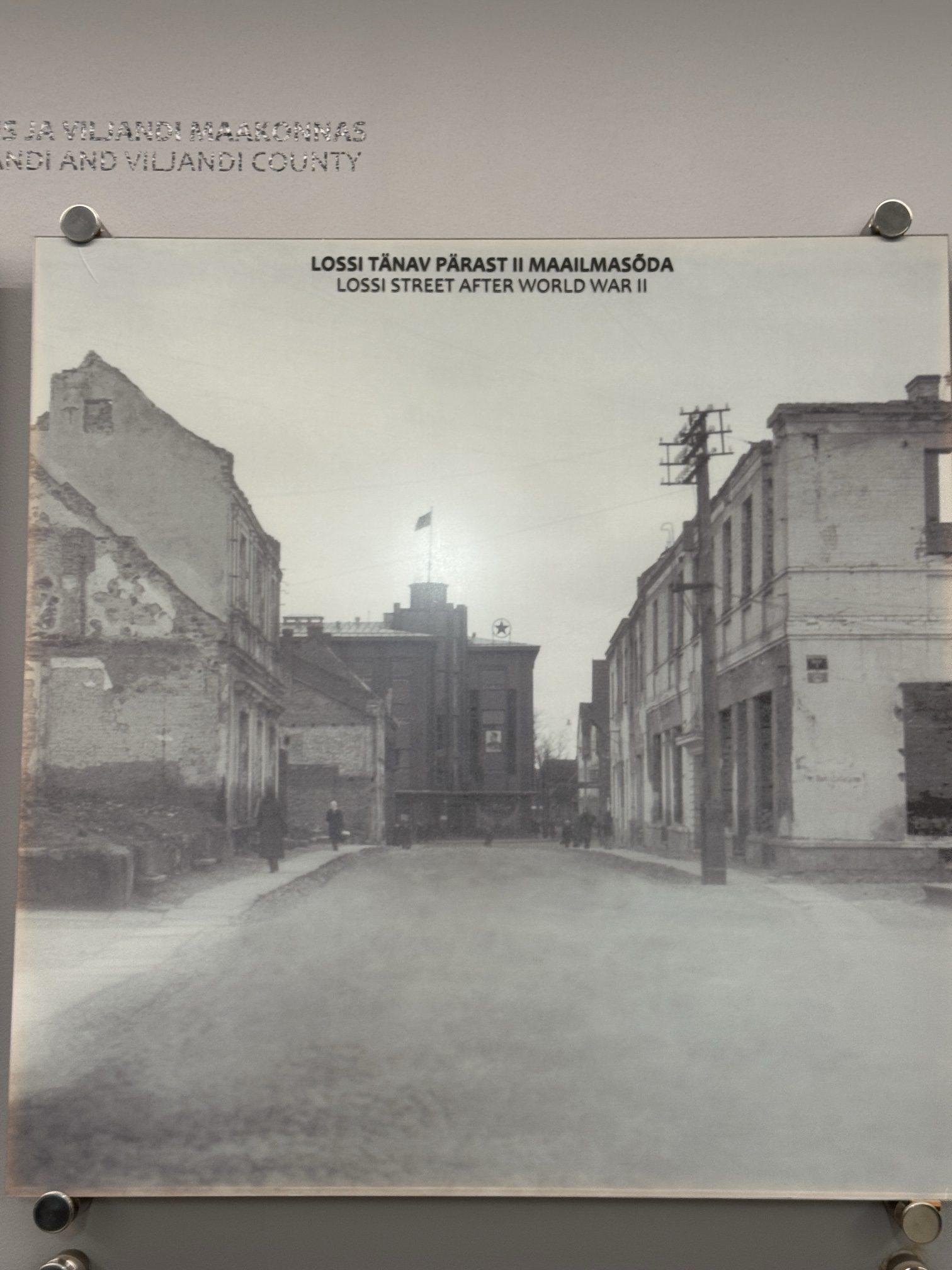
Lossi street in Viljandi after the Second World War.Viljandi Museum display.
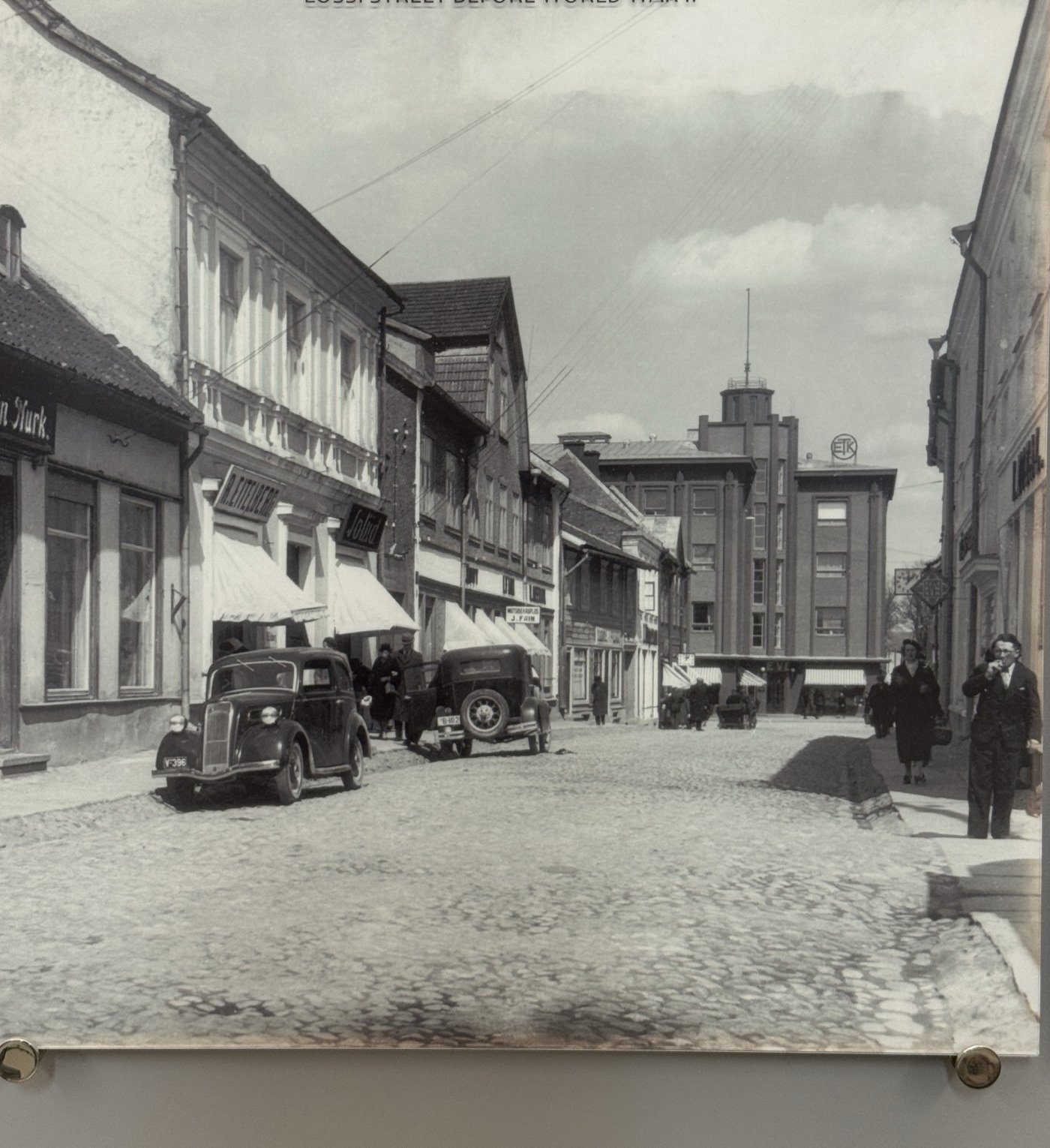
Lossi street in Viljandi before the Second World War.Viljandi Museum display.
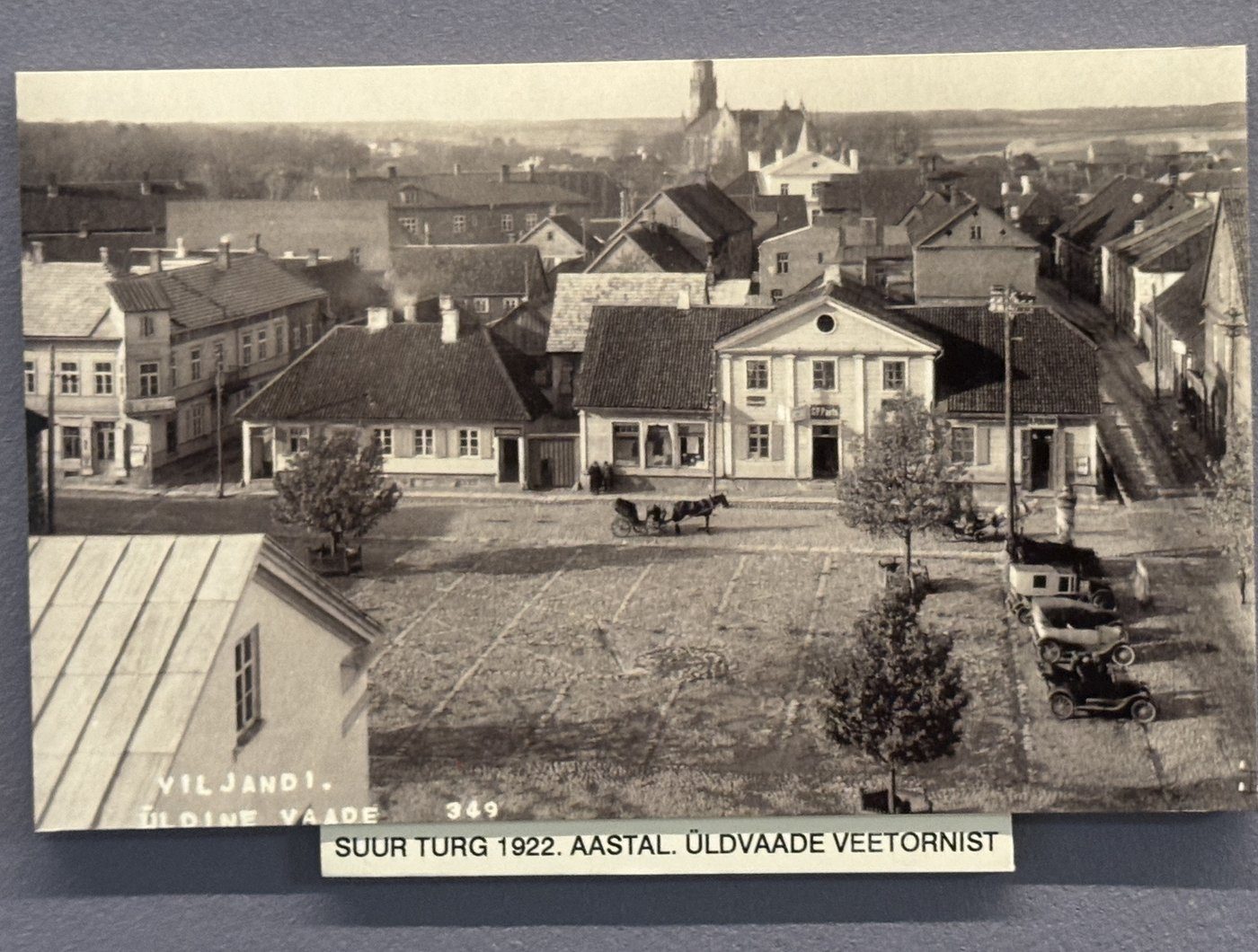
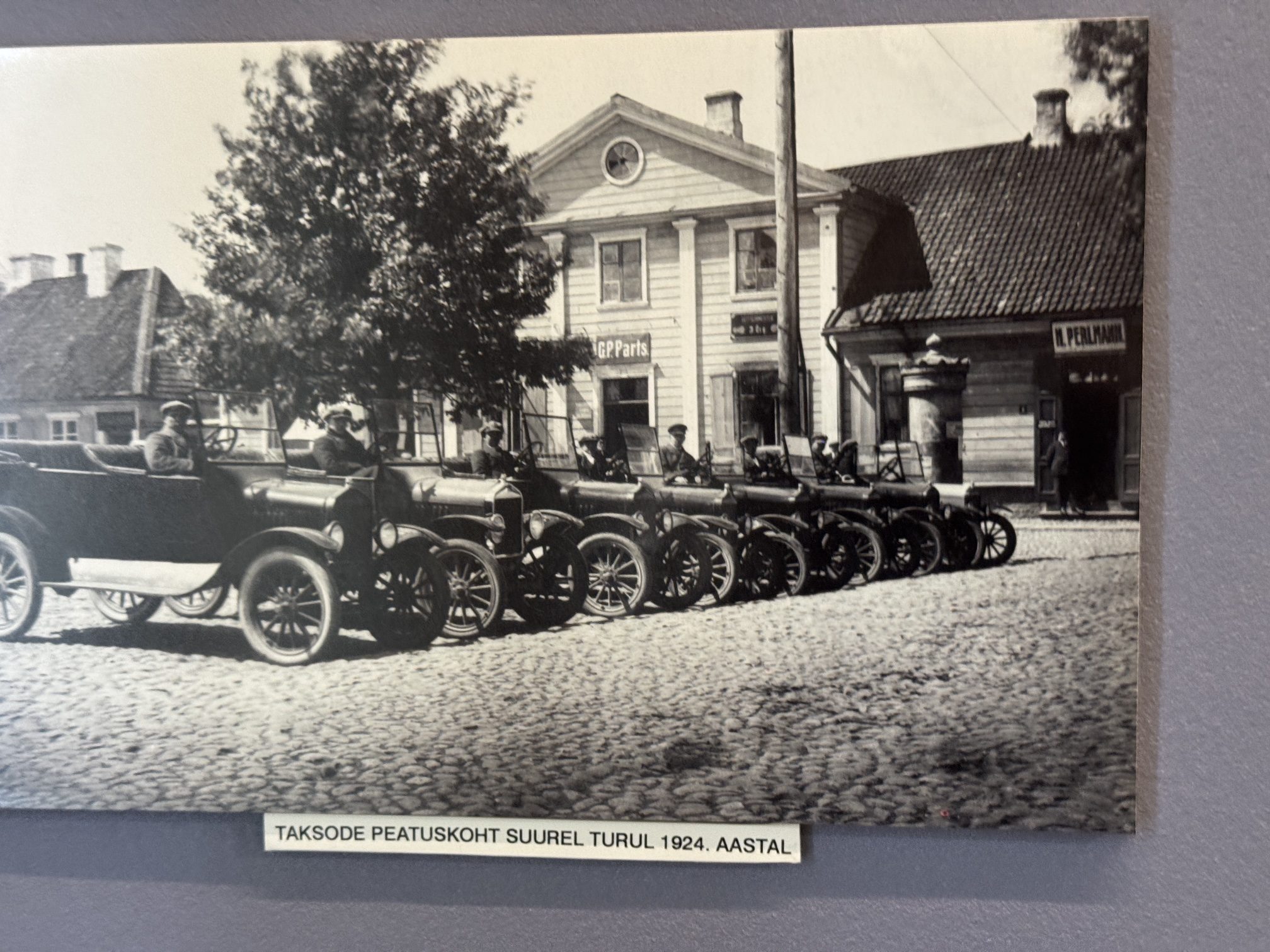
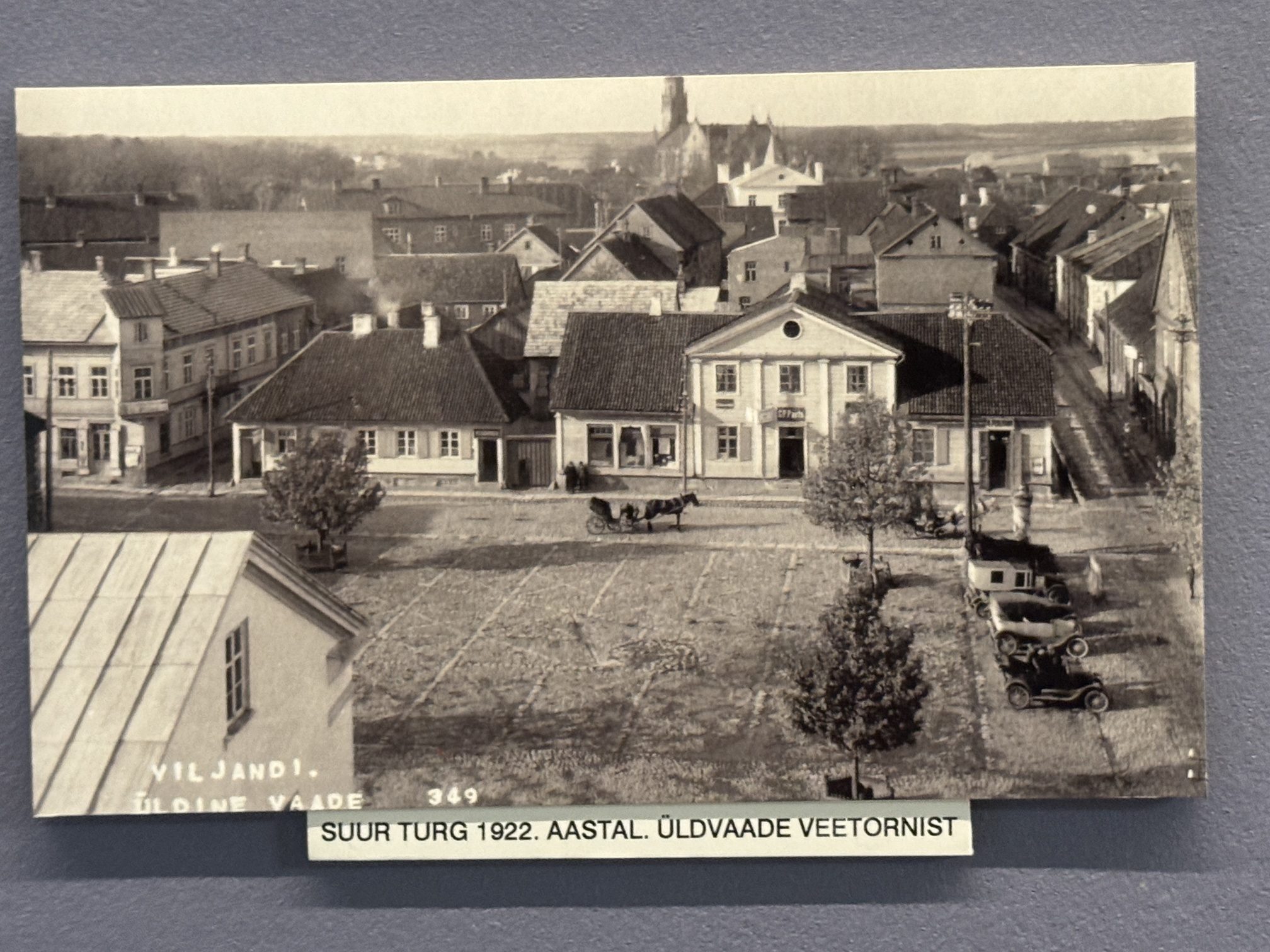
Viljandi’s Big Market in 1922, seen from the water tower.Viljandi Museum display.
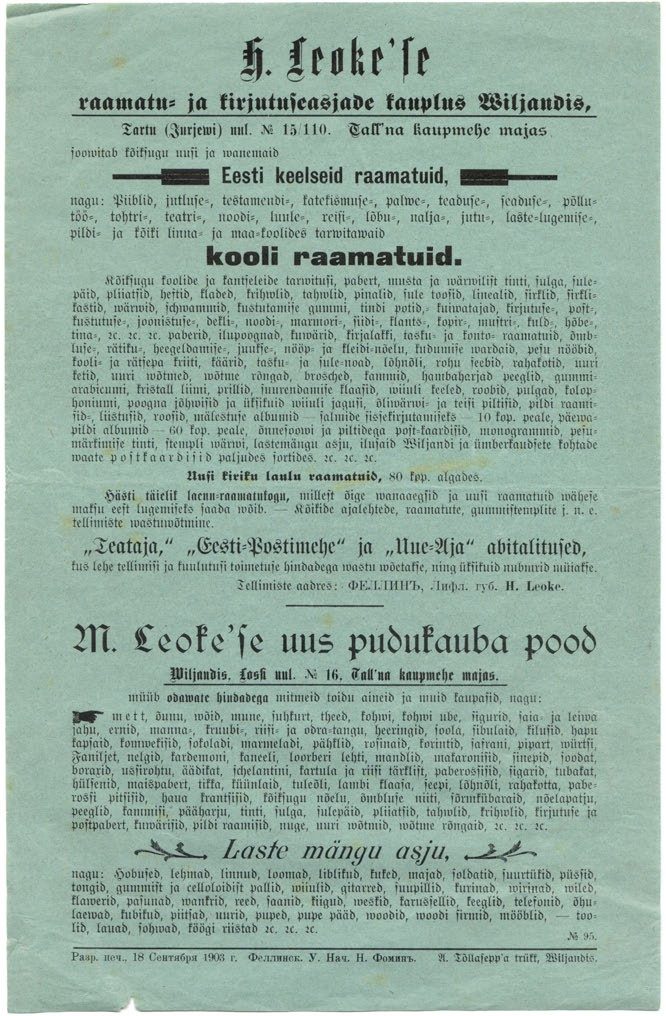
An advertisement for H. Leoke’s bookshop in Viljandi, with a second notice below for “M. Leoke’s new haberdashery shop”: Mari’s shop.Viljandi Museum.
A publisher’s mark with the initials H and L, probably Hans Leoke’s. The source of this image has not been recorded.
Viljandi Museum catalogue
Photographs of the family from the Viljandi Museum’s online catalogue (MuIS).
MU01 H Leoke book stand 1911 agricultural show: VMF 424-330 (public domain)